Where to Stay in Cartagena, Colombia: Best Areas & Hotels Guide
Choosing where to stay in Cartagena de Indias shapes your entire trip. This guide covers every major neighborhood, from the colonial Centro Histórico to the beach hotels of Bocagrande, with clear trade-offs, practical price context, and seasonal tips to help you book with confidence.
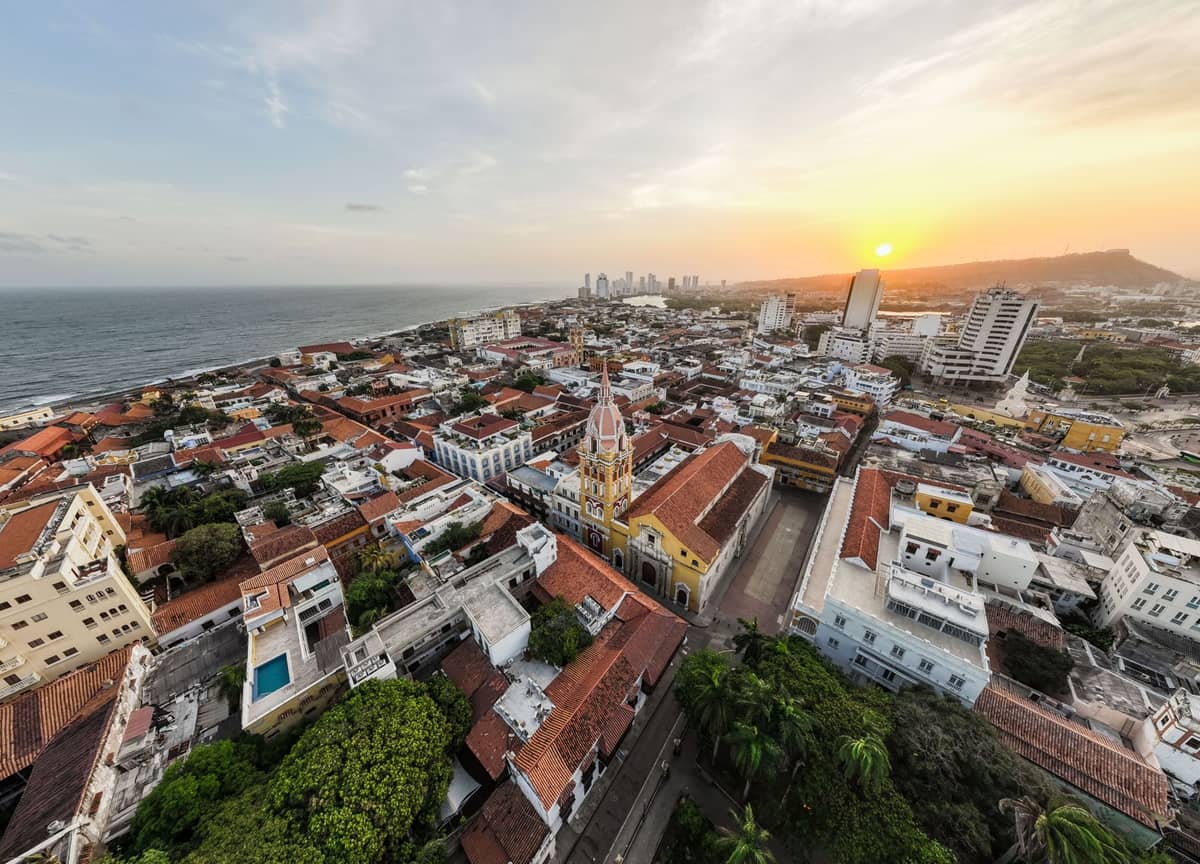
Plan and book this trip
Tools from our partner Travelpayouts help you compare flights and hotels. If you book through them, we may earn a commission at no extra cost to you.
Flights
Hotels map
TL;DR
- Stay in the Centro Histórico (Stare Miasto) for colonial architecture and walkable sightseeing; expect the highest prices and the most tourist foot traffic.
- Getsemaní is the best value neighborhood closest to the old city walls, with great street art, local restaurants, and boutique guesthouses.
- Bocagrande is the main beach-and-hotel strip with high-rise international chains. It is NOT the historic center, despite what many booking sites imply.
- Book December through March for dry, sunny weather; rates peak over Christmas and Carnival (January–February). May through November offers lower rates but afternoon rain is common.
- Rafael Núñez International Airport (CTG) sits about 3–7 km from the Walled City depending on your source. A taxi costs roughly 16,000–20,000 COP to Centro Histórico.
Understanding Cartagena's Layout Before You Book
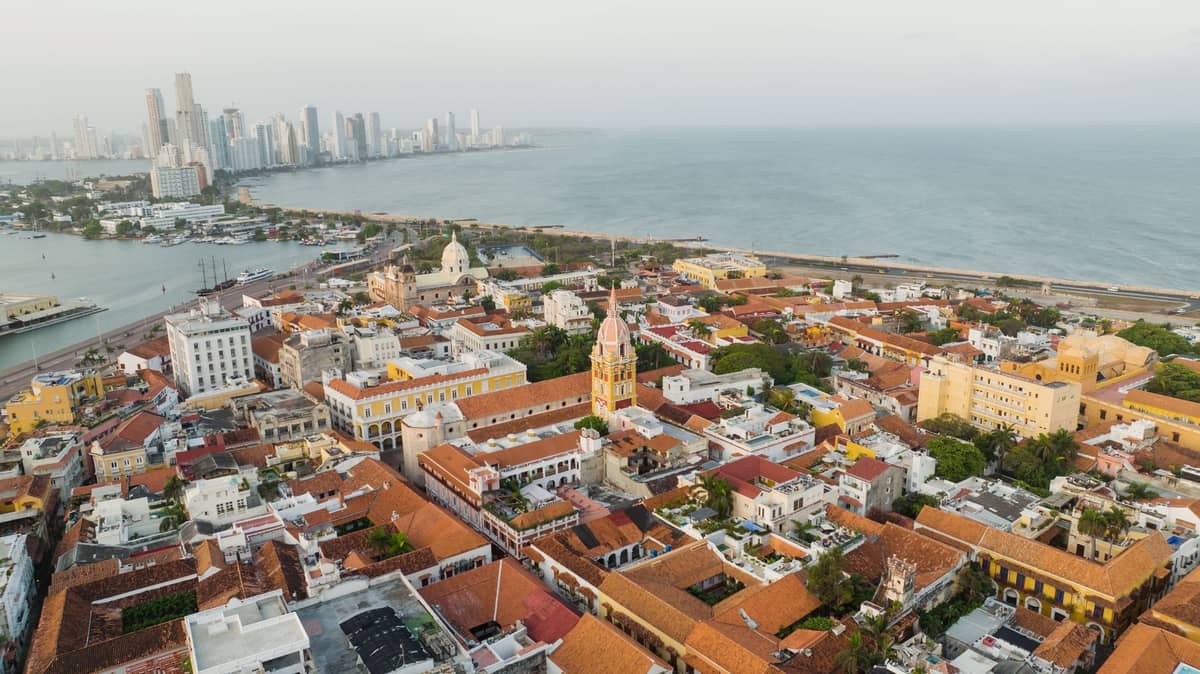
Cartagena de Indias, capital of Colombia's Bolívar Department, is not a single homogeneous city for tourists. It is a collection of distinct neighborhoods strung along the Caribbean coast, and where you stay determines what kind of trip you have. Many first-time visitors book into Bocagrande because the hotel names are familiar, then spend their first morning in a taxi trying to reach the colonial city they came to see. Avoiding that mistake starts with understanding the geography.
The historic core, known as the Centro Histórico or the Walled City, sits on a peninsula surrounded by fortified walls built during Spanish colonial rule. Immediately outside those walls to the south is Getsemaní, a dense urban barrio that has transformed significantly in the past decade. South of both, connected by a causeway-style road, is the modern hotel and beach district of Bocagrande, Castillogrande, and El Laguito. Manga, a quieter residential island, sits in the bay between the old city and Bocagrande. Each of these areas offers a fundamentally different experience. None is objectively better; they suit different travelers.
ℹ️ Good to know
Cartagena operates on Colombia Time (COT), UTC−5, with no daylight saving. The currency is the Colombian peso (COP). Spanish is the official language; English is spoken at most tourist-facing hotels and tour operators but is not widespread beyond those contexts.
Centro Histórico (The Walled City): Best for First-Timers and Sightseers
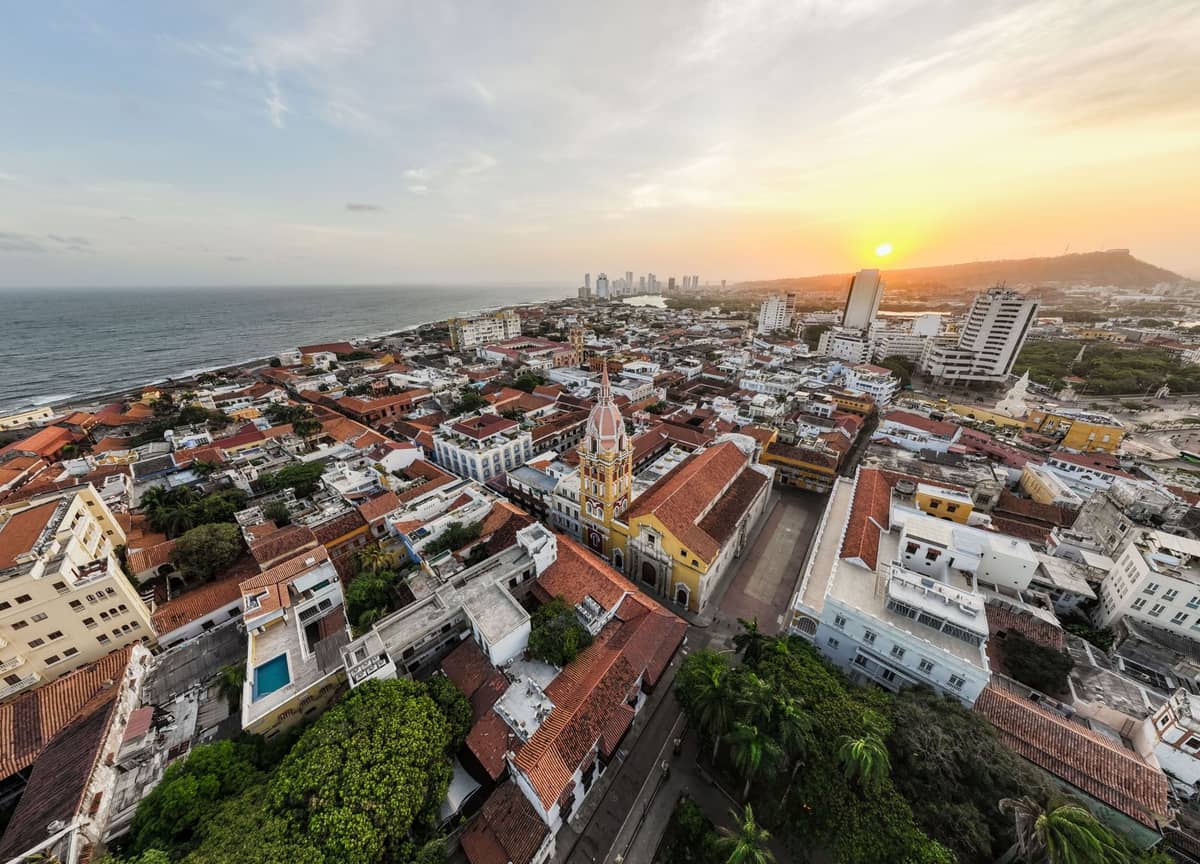
The UNESCO-listed Walled City is the reason most people visit Cartagena in the first place. Staying inside or immediately adjacent to the walls puts you within walking distance of the Castillo San Felipe de Barajas, the Catedral Santa Catalina de Alejandria, and the atmospheric evening crowds that gather along the ramparts at sunset. You can walk everywhere that matters without flagging down a taxi.
The trade-off is price and noise. The Centro Histórico has the highest hotel rates in Cartagena, and boutique properties inside the walls regularly charge $150–350 USD per night for a standard double during high season (December–March). Colonial mansions converted into small hotels, called casas boutique, dominate the accommodation scene here; they offer rooftop pools, atmospheric courtyards, and a romantic atmosphere, but the walls are thin and the streets below can be loud until midnight on weekends. If light sleep is a concern, request an interior-facing room.
The neighborhood of San Diego occupies the northern quarter of the Walled City and tends to be slightly calmer than the central El Centro district. It has a cluster of mid-range boutique hotels, independent restaurants, and craft galleries that make it a solid pick if you want to be inside the walls without paying the absolute premium prices charged closer to the Plaza de la Aduana. Both El Centro and San Diego are technically part of the same walled enclosure, but their character differs noticeably after dark.
- Best for First-time visitors, couples, heritage travelers, anyone prioritizing walkability to colonial sites
- Price range Mid-range to luxury; expect $80–350+ USD per night. Budget options are rare inside the walls.
- Drawbacks Expensive, crowded during peak season, limited parking, street noise on weekend nights
- Getting around Most attractions are walkable. Taxis and ride-hailing apps (Uber, inDrive) are easy to find.
Getsemaní: The Best-Value Base in Cartagena
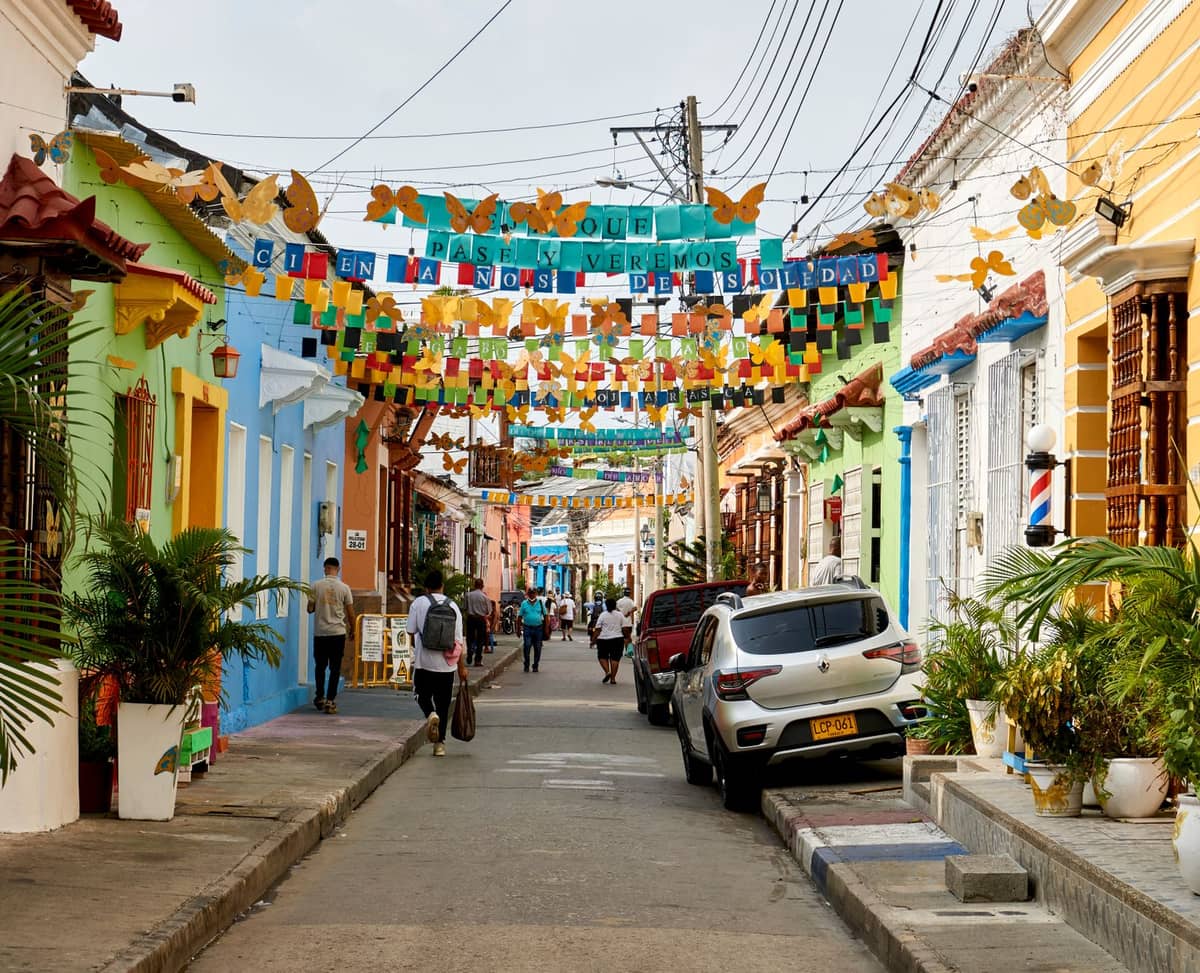
If the Walled City is Cartagena's polished living room, Getsemaní is the kitchen where everything actually happens. Sitting just outside the walls, a five-minute walk from the Torre del Reloj gate, this neighborhood underwent rapid gentrification through the 2010s and now occupies an interesting middle ground: part local barrio, part traveler hub, with some of the city's best small restaurants, craft cocktail bars, and the famous street murals that have become a draw in their own right.
Accommodation runs cheaper than the Walled City, with good boutique guesthouses and mid-range hotels typically ranging from $40–120 USD per night. The Iglesia de la Trinidad and its surrounding plaza function as a social hub for both locals and visitors in the evenings. The Getsemaní street art is genuinely impressive and concentrated enough to explore on a morning walk.
⚠️ What to skip
Getsemaní has improved significantly in safety terms over the past decade, but it is not uniform. The blocks immediately around Plaza Trinidad and the main pedestrian streets are well-traveled and generally safe. Venturing deeper into the barrio at night, particularly alone, warrants the same caution you would apply in any dense urban neighborhood in a Latin American city. Ask your guesthouse which streets to avoid after dark.
Getsemaní is the top pick for solo travelers, backpackers, digital nomads, and anyone who wants proximity to the old city without paying old-city prices. It also suits travelers interested in authentic local culture rather than a sanitized tourist bubble. The neighborhood's bar scene is concentrated enough that you can walk between venues without needing transport, which makes it a practical base for nightlife.
Bocagrande, Castillogrande, and El Laguito: The Beach Hotel Zone
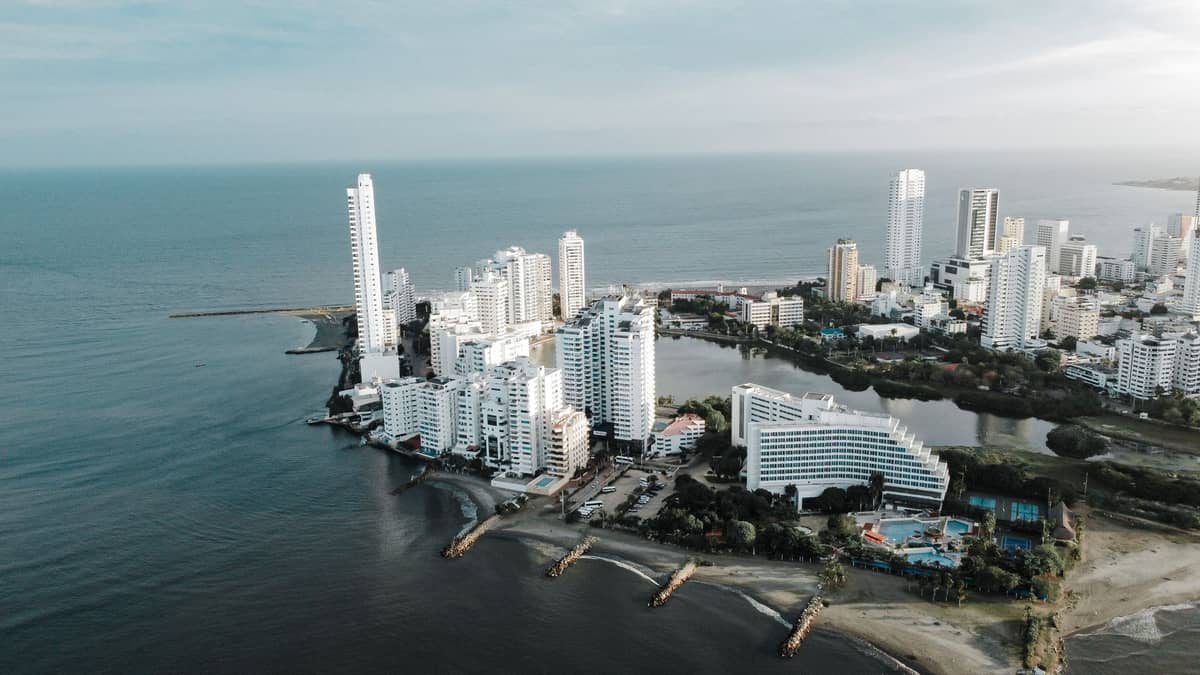
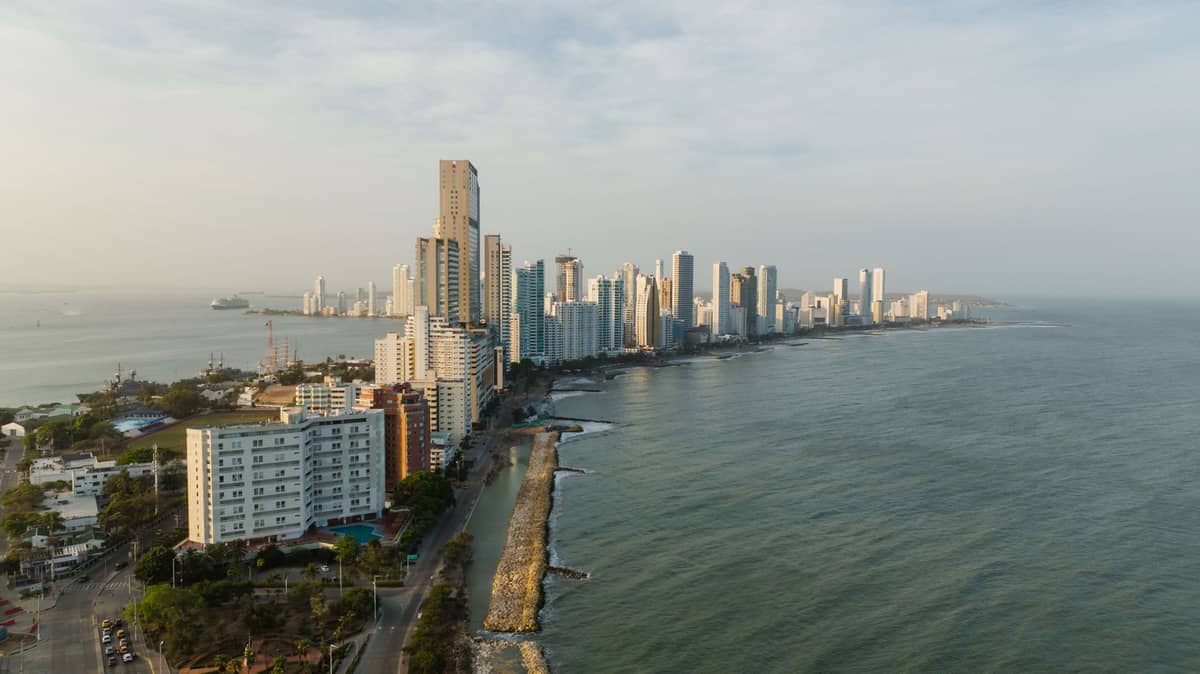
Bocagrande is the modern peninsula district that most closely resembles a conventional Caribbean resort strip. High-rise hotels, international chains, seafood restaurants, and a long urban beach define the area. It sits about 3 km south of the Walled City and is the largest concentration of hotel rooms in Cartagena. If you are traveling for beach access and want a pool, a gym, and a concierge who speaks English, Bocagrande is where those options are most densely clustered. The Bocagrande beach itself is swimmable but not Cartagena's cleanest or most picturesque; for that, you need to take a boat to the islands.
Castillogrande and El Laguito extend south from Bocagrande along the same peninsula. Castillogrande is more residential and somewhat quieter, popular with business travelers and longer-stay visitors. El Laguito sits at the peninsula's southern tip and has a mix of apartments and hotels with views over the bay. Both areas are typically 8–10 km from the airport via the main road, and taxis to the Walled City take roughly 15–20 minutes, traffic depending.
💡 Local tip
Do not confuse Bocagrande with the historic center. Many booking platforms list properties under 'Cartagena' without distinguishing between the two. Always check the map pin before booking. If you want to explore the colonial city on foot each morning, Bocagrande is too far to walk comfortably and will add taxi costs to every sightseeing day.
- Best for Families, beach-focused travelers, package holiday visitors, business travelers wanting chain-hotel reliability
- Price range Wide spread: budget towers from $50 USD, international 4-5 star hotels from $120–250+ USD per night
- Drawbacks Distance from the historic city, urban beach quality is average, generic atmosphere compared to the Walled City
- Getting around Taxis are cheap and frequent. The walk to Centro Histórico takes 30–40 minutes; most visitors take taxis.
Manga and Other Areas: Quieter Alternatives
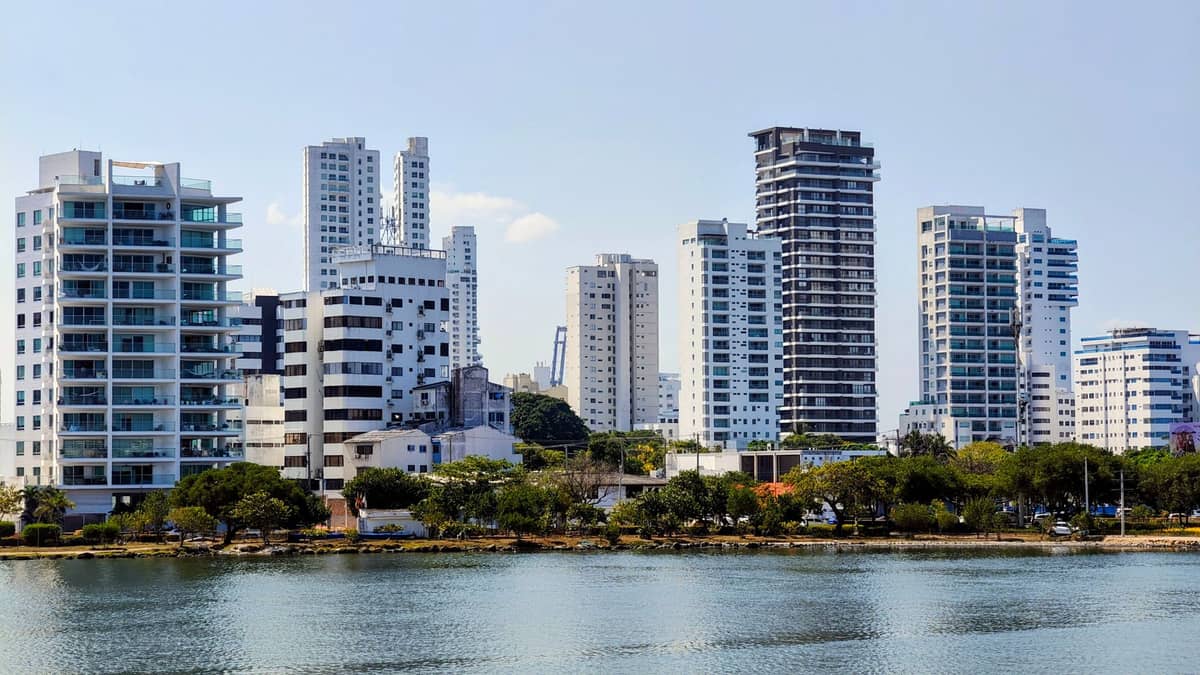
Manga is a residential island district sitting in Cartagena Bay between the old city and Bocagrande. It has a small selection of hotels and rental apartments, and appeals to travelers who want lower density, quieter streets, and a more local feel without straying far from the center. The island is connected by bridges and taxis are straightforward. It is not a tourist area in the conventional sense: there are few sightseeing draws here specifically, but the bay views and calmer pace suit longer stays.
For travelers who want to be completely outside the city center, the beaches of La Boquilla to the north of the airport offer a more low-key alternative. The La Boquilla beach area has a scattering of smaller guesthouses and is popular with travelers who want a quieter coastal base. It is, however, a significant commute from the Walled City. For island stays entirely, Islas del Rosario has a small number of eco-lodge options, though most visitors visit the islands on day trips.
Seasonal Timing and What It Means for Your Booking
Cartagena has a tropical wet-and-dry climate with temperatures staying broadly between 28–32°C (82–90°F) year-round. The dry season runs December through April, with January and February being among the driest months overall. This is also peak tourist season: hotel rates are highest, the Walled City fills up, and availability at popular boutique properties disappears weeks or months in advance. If you are planning a trip between Christmas and February, book accommodation as early as possible. For more detail on month-by-month conditions, see the seasonal guide. This is also peak tourist season: hotel rates are highest, the Walled City fills up, and availability at popular boutique properties disappears weeks or months in advance. If you are planning a trip between Christmas and February, book accommodation as early as possible. For more detail on month-by-month conditions, see the best time to visit Cartagena guide.
The rainy season (May through November) brings afternoon and evening downpours, particularly intense in September and October. Hotels are less crowded, rates drop noticeably, and you will have more negotiating power on longer stays or suites. The rain rarely lasts all day; mornings are typically clear. For budget travelers, May and November represent a sweet spot: occasional rain but prices considerably lower than peak. Avoid October if you have flexibility; it is statistically the wettest month. The rainy season (May through November) brings afternoon and evening downpours, particularly intense in September and October. Hotels are less crowded, rates drop noticeably, and you will have more negotiating power on longer stays or suites. The rain rarely lasts all day; mornings are typically clear. For budget travelers, May and November represent a sweet spot: occasional rain but prices considerably lower than peak. Avoid October if you have flexibility; it is statistically the wettest month.
December in particular sees a surge in both Colombian domestic tourists and international visitors. If you are planning a December trip, the guide on Cartagena in December covers what to expect in terms of crowds, events, and pricing. Couples planning a romantic stay should cross-reference the Cartagena couples guide for hotel recommendations suited to that type of trip.
✨ Pro tip
If you are staying in the Walled City during high season and want a rooftop pool, book directly with the hotel rather than through a third-party platform. Many boutique casas in the Centro Histórico offer complimentary extras, room upgrades, or early check-in when booked directly, which third-party platforms cannot match.
Practical Logistics: Getting In and Getting Around
Rafael Núñez International Airport (IATA: CTG) is located in the Crespo neighborhood, within the city's urban area. Transport guides place it approximately 3 km from the Walled City by the most direct route, though depending on traffic and the specific address, some routes run closer to 6–7 km. A metered or negotiated taxi to Centro Histórico typically costs around 18,000–30,000 COP; to Bocagrande, expect slightly more given the additional distance. Uber and inDrive operate in Cartagena and can be called from outside the terminal; apps typically quote fares in the $12–18 USD range to the Walled City, though this varies with demand. The Transcaribe public bus is the cheapest option at roughly COP 3,900, departing from a stop on Avenida Santander about a 10-minute walk from arrivals.
Once you are in the city, getting between neighborhoods is simple. Taxis are inexpensive by international standards. Within the Walled City and Getsemaní, walking is the most practical way to get around. For a broader breakdown of transport options between neighborhoods and to day-trip destinations, see the guide on getting around Cartagena. For travelers spending a focused few days here, the 3 days in Cartagena itinerary maps out how to structure your time efficiently from any of these bases.
FAQ
Is it better to stay in the Walled City or Bocagrande?
It depends on your priorities. The Walled City puts you inside Cartagena's colonial core, walkable to the major landmarks, best restaurants, and the evening atmosphere that defines the city. Bocagrande puts you closer to the beach and offers larger, more conventional hotel rooms at a wider range of price points, but adds a 15–20 minute taxi ride to the historic city every time you want to explore it. For a first visit, the Walled City or Getsemaní is the stronger choice. For families with young children or travelers whose main goal is beach time, Bocagrande makes more practical sense.
What is the safest area to stay in Cartagena?
The Centro Histórico (Stare Miasto), San Diego, and the main tourist streets of Getsemaní are generally considered safe for tourists, with a significant police and security presence during peak hours. Bocagrande is similarly low-risk. Like any city, risk increases in unfamiliar areas at night and when walking alone. Always check current advisories from your government's foreign affairs department before travel, as security conditions can shift.
How far is Bocagrande from the historic center?
Bocagrande is roughly 3 km by road from the Walled City. In a taxi with normal traffic, the ride takes about 10–15 minutes and costs around 8,000–12,000 COP. It is walkable in theory (about 35–40 minutes along the waterfront), but in Cartagena's heat and humidity, most people take taxis.
When is the cheapest time to book hotels in Cartagena?
The rainy season, May through November, offers the lowest hotel rates. May and November tend to have the best balance of reasonable weather and discounted prices. October is statistically the wettest month and should only be chosen if price is the overriding factor. Avoid booking December through February without reserving well in advance, as peak-season demand fills properties quickly and drives prices to their annual high.
Are there good hotels near Cartagena's beaches without staying in Bocagrande?
Yes. La Boquilla, north of the airport, has smaller guesthouses close to a quieter stretch of beach. Isla Barú has a handful of eco-lodges and resort properties close to Playa Blanca, though most visitors visit Barú on day trips rather than staying overnight. For a broader overview of beach options in and around the city, the Cartagena beaches guide covers the full range of accessible coastal spots.