Iglesia de la Santísima Trinidad: The Heart of Getsemaní
Built under a royal decree of 1642, the Iglesia de la Santísima Trinidad is one of Cartagena's oldest churches and the architectural centerpiece of Plaza de la Trinidad. The square in front of it functions as Getsemaní's living room, drawing locals every evening while travelers pass through on their way across the neighborhood.
Quick Facts
- Location
- Plaza de la Trinidad, Cra. 10 #25, Getsemaní, Cartagena de Indias, Colombia
- Getting There
- 10-15 min walk from the Torre del Reloj / Walled City entrance; short taxi ride from Bocagrande or the airport
- Time Needed
- 20-30 min for the church; 1-2 hrs if you linger in the plaza
- Cost
- Free entry; voluntary donations collected during mass
- Best for
- Architecture lovers, evening wanderers, travelers curious about Colombian neighborhood life
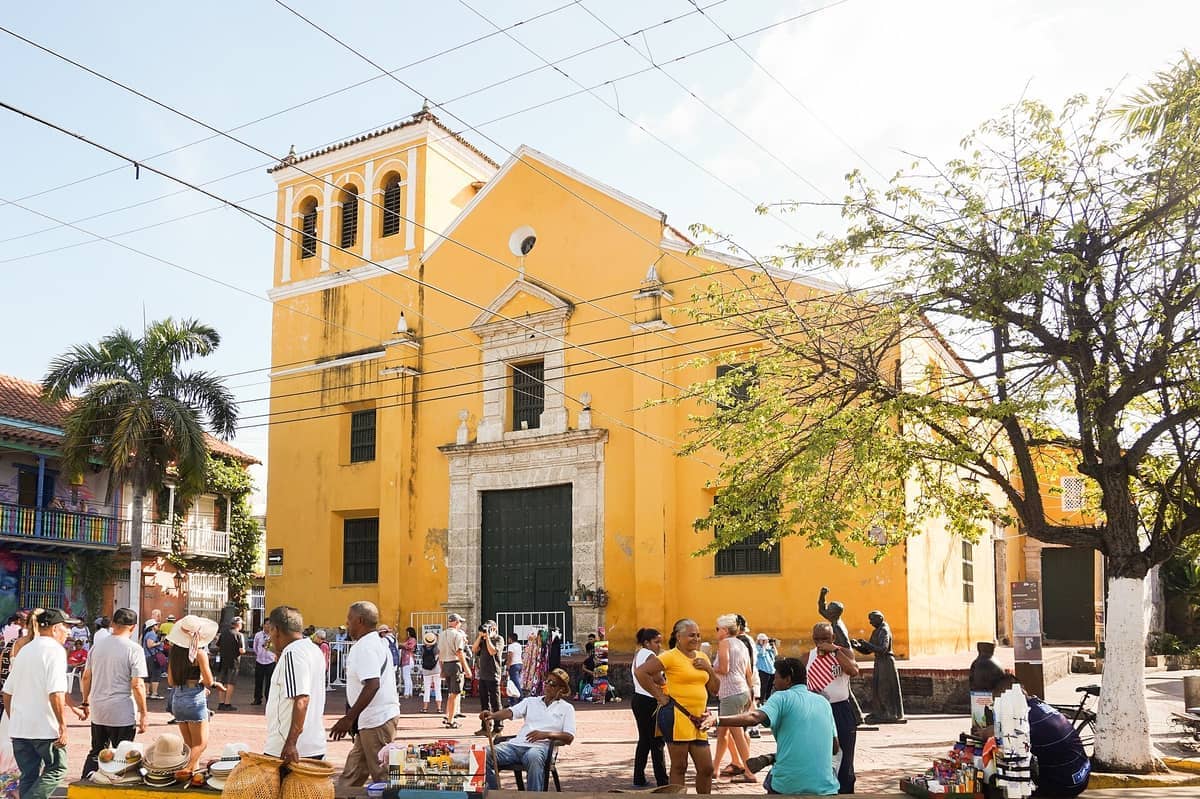
What the Iglesia de la Trinidad Actually Is
The Iglesia de la Santísima Trinidad, known in English as the Church of the Holy Trinity, sits on Plaza de la Trinidad in the heart of Getsemaní, the neighborhood that lies just outside Cartagena's famous Walled City. It is considered one of the two oldest churches in the city, with a royal authorization dating to 1643, and its cream-colored colonial facade remains the most recognizable landmark in a neighborhood that has changed dramatically in the last two decades.
What makes this church unusual is not just the building itself but the relationship between the building and the square in front of it. Plaza de la Trinidad is not a decorative forecourt: it is a fully functioning public space where children play football, vendors sell cold drinks, couples sit on low concrete benches, and older residents watch the evening go by. The church provides the backdrop, but the plaza provides the life.
ℹ️ Good to know
Visitor hours are generally listed as 08:30–12:00 and 14:00–17:00 Monday to Thursday, with shorter hours on Friday, and the church is usually closed to visitors on weekends outside of services. Mass is typically held at 19:00 on weekdays (most commonly Tuesday and Thursday) and at 09:00 and 19:00 on Sundays. Schedules can shift around religious holidays, so check locally before planning your visit around a specific time.
A Brief History Worth Knowing
Getsemaní was historically the neighborhood where enslaved Africans, free Black residents, artisans, and workers of mixed heritage lived, separated from the Spanish colonial elite who occupied the Walled City. The church authorized in 1642 was built to serve this community, and its dedication to the Holy Trinity was a deliberate echo of the city's main cathedral, though built for a population that sat outside the colonial hierarchy.
The church and plaza carry a particular historical weight: it was here, on the night of November 10 and 11, 1811, that the people of Getsemaní gathered and declared their support for Cartagena's independence from Spanish rule. The neighborhood is sometimes called the "cradle of Colombian independence" for this reason. That history is not signposted with any fanfare when you arrive, but it is worth carrying into the space.
Architecturally, the church follows the sober colonial style common to Cartagena's religious buildings: a single-tower facade, thick masonry walls, and restrained ornamentation. The facade underwent restoration work documented in local press in 2024, so the stonework you see today is in better condition than it was for much of the last century. For broader context on how this building fits into Cartagena's built environment, the colonial architecture guide covers the city's major religious and civic structures in detail.
Tickets & tours
Hand-picked options from our booking partner. Prices are indicative; availability and final rates are confirmed when you complete your booking.
Totumo Volcano and lunch at a VIP hotel from Cartagena
From 34 €Instant confirmationFree cancellationCity tour of Cartagena with entry to San Felipe castle
From 25 €Instant confirmationFree cancellationSan Andres Islands pontoon tour through the inner bay
From 26 €Instant confirmationFree cancellationGlass-bottom boat tour to San Andres aquarium and mangroves
From 21 €Instant confirmationFree cancellation
How the Experience Changes by Time of Day
In the morning, the plaza is quiet. A few locals cross it on their way to work, a vendor sets up fruit near the corner, and the church itself is either locked or open only for early mass. The light at this hour hits the facade directly from the east, which makes for clean photographs without shadow interference, but there is little social activity to observe.
Midday is the least rewarding time to be here. The heat in Cartagena between roughly 11:00 and 15:00 is intense year-round, temperatures regularly reaching 30–32°C, and the plaza offers limited shade. The church's thick walls keep the interior cooler than outside, which makes stepping in a practical relief as much as a cultural one.
Late afternoon through evening is when Plaza de la Trinidad becomes itself. From around 17:00 onward, residents begin filling the benches. Food carts appear. The smell of frying dough and fresh juices drifts across the square. Children chase each other past the church steps while their parents talk nearby. By 19:00, if you stay for the evening mass, you will hear the bells and watch the congregation file in past the open doors. This is the version of the church and plaza worth prioritizing.
💡 Local tip
Arrive at Plaza de la Trinidad around 17:30 on a weekday. Buy a cold drink from one of the plaza vendors, find a bench facing the church facade, and simply sit for half an hour before exploring the surrounding streets. This is how most visitors end up understanding Getsemaní better than any tour explains it.
Inside the Church
The interior is modest by the standards of the more visited churches in the Walled City. There is no grand gilded altarpiece competing for attention. The nave is relatively narrow, with simple wooden pews, whitewashed walls, and a modest altar. Devotional images and a few painted panels occupy the side chapels. The overall effect is of a working parish church rather than a museum-grade monument, which is precisely what it is.
The church is still an active place of Catholic worship, so standard norms apply: dress modestly (shoulders and knees covered), keep voices low, and avoid photographing people during mass. Outside of service times, brief photography of the interior is generally accepted, though this is not explicitly stated anywhere official.
Visitors who want to compare the atmosphere here with Cartagena's more elaborate religious interiors should also visit the Santuario de San Pedro Claver in the Walled City, which is significantly larger and contains one of the city's more significant colonial art collections. The Iglesia de la Trinidad is quieter and less curated, which may be a reason to prefer it or skip it depending on what you are looking for.
The Plaza as the Real Attraction
The honest assessment is that many people who enjoy this spot are drawn primarily to the plaza and its social atmosphere, with the church serving as a framing device. The square is surrounded by low colonial buildings, many now converted to hostels, restaurants, and cafes that feed into the energy of the space. Getsemaní's street art covers the walls on the side streets radiating from the plaza, and exploring those corridors is a natural extension of a stop here.
The neighborhood has gentrified significantly since the early 2010s. Budget accommodations and backpacker bars now sit alongside higher-end restaurants and boutique hotels. The change is visible and ongoing. At Plaza de la Trinidad, however, the core character of the space has so far persisted: this is still primarily a neighborhood gathering place, not a performance for tourists.
Getting There and Getting Around
The most straightforward approach from the Walled City is to walk through the Torre del Reloj gate and continue along Calle de la Media Luna or Calle del Arsenal into Getsemaní. The walk takes about 10 to 15 minutes at an easy pace and passes through the neighborhood's main commercial corridor before reaching the plaza.
Taxis and ride-hailing apps (Uber and inDrive both operate in Cartagena) can drop you directly at Plaza de la Trinidad. The ride from Bocagrande typically takes 10 to 15 minutes depending on traffic. From Rafael Núñez International Airport (IATA: CTG), located about 6–7 km away in the Crespo neighborhood, a taxi to Getsemaní usually falls into the official zone fare, typically in the low‑teens thousands of COP, though fares should be confirmed locally as they change.
The surrounding streets of Getsemaní use cobblestones and uneven paving in many sections, which can make navigation difficult for travelers with mobility limitations. The plaza itself is paved and relatively flat, but detailed accessibility information for the church interior is not currently documented in official sources.
⚠️ What to skip
Getsemaní has improved considerably in terms of safety over the past decade, but it remains a dense urban neighborhood with its own risks after dark. Stay aware of your surroundings on quieter side streets at night, keep valuables out of sight, and check current safety guidance before your trip.
Photography and Practical Notes
The best light for photographing the church facade falls in the morning, when the sun comes from the east and illuminates the stonework without the glare and shadow complexity that affects midday shooting. In the evening, warm artificial lighting and the ambient activity of the plaza create a completely different mood that works well for wide street-level shots including the surrounding buildings and crowd.
Wide-angle lenses are more useful than telephoto here: the plaza is large enough that you need to step well back from the church to fit the full facade in frame, but the interesting compositions often involve the foreground life of the square rather than just the building in isolation. Drone photography is subject to Colombian airspace regulations and should not be assumed permitted without prior clearance.
If you are building a full itinerary, this stop fits naturally into a longer walk through Getsemaní and across to the Walled City. A practical half-day route could start at the plaza, move through the neighborhood's murals, and exit via the Calle del Arsenal toward the historic center. The 3-day Cartagena itinerary provides a structured framework if you want to organize your time more formally.
Insider Tips
- Sunday morning mass at 09:00 draws the largest local congregation of the week. If you want to see the church functioning at its fullest as a parish rather than a tourist site, that is the time to be there, but sit in the back and be unobtrusive.
- The vendors at Plaza de la Trinidad in the early evening sell cold corozo juice (made from a tart Caribbean palm fruit) that you will not easily find in the Walled City's tourist restaurants. It is worth trying.
- The facades on the block surrounding the plaza change faster than anywhere else in Getsemaní as renovation work continues. If street art or architecture photography is your focus, the blocks immediately north and east of the church contain some of the neighborhood's most significant murals.
- The church bells at 19:00 on weekdays are audible from several blocks away and can serve as a useful orientation signal if you have gotten turned around in Getsemaní's grid of streets.
- Avoid combining this stop with a large organized tour group in the late afternoon if you want to experience the plaza as locals use it. The crowds that arrive on day-tour circuits tend to cluster briefly at the church and then leave, which disrupts the square's rhythm for about 20 minutes before it settles back.
Who Is Iglesia de la Trinidad For?
- Travelers interested in colonial religious architecture outside the main tourist circuit
- Anyone exploring Getsemaní on foot who wants a central orientation point for the neighborhood
- Evening wanderers who want to observe Cartagena's everyday neighborhood life rather than its curated tourist zones
- History-minded visitors interested in Cartagena's independence movement and Afro-Colombian heritage
- Photographers looking for authentic street-level compositions with people and colonial buildings together
Nearby Attractions
Other things to see while in Getsemaní:
- Calle del Arsenal
Calle del Arsenal stretches along the Bahía de las Ánimas in Getsemaní, blending colonial military history with an evolving lineup of bars, restaurants, boutique hotels, and terraces. Free to walk at any hour, it earns its reputation as one of Cartagena de Indias's most versatile streets.
- Getsemaní Street Art
Getsemaní's streets hold more than 200 murals spanning roughly a kilometre of open-air art. Free to walk at any hour, this officially recognised Cultural Heritage Neighborhood uses colour, symbolism, and raw scale to tell the story of a community that fought back against displacement — and won.