Santuario de San Pedro Claver: Cartagena's Most Profound Colonial Church
The Santuario de San Pedro Claver stands at the intersection of colonial architecture, Catholic devotion, and the history of slavery in the Americas. Built by Jesuits in the 17th century and dedicated to the Spanish priest who spent his life ministering to enslaved Africans arriving at Cartagena's port, this church, cloister, and museum complex carries a weight that most colonial monuments in the city simply do not. It is, by some distance, Cartagena's most historically significant religious site.
Quick Facts
- Location
- Plaza San Pedro Claver, Carrera 4 nº 30-01, Centro Histórico, Cartagena de Indias
- Getting There
- Walkable from most hotels in the walled city; taxi to Plaza San Pedro Claver from Bocagrande costs roughly COP 16,000–20,000
- Time Needed
- 1.5 to 2.5 hours for church, cloister, and museum
- Cost
- Official 2026 museum rates: COP 21,000 national adults / COP 30,000 international adults; reduced COP 13,000 national / COP 22,000 international (children, students, seniors 60+). Verify on sanpedroclaver.co before visiting.
- Best for
- History travelers, those interested in the African diaspora, architecture admirers, and anyone seeking quiet reflection away from the busiest plazas
- Official website
- sanpedroclaver.co
What the Santuario de San Pedro Claver Actually Is
The Santuario de San Pedro Claver is not simply a colonial church. It is a complex of three interlocking spaces: the baroque church itself, a colonnaded Jesuit cloister that wraps around an open courtyard, and a museum dedicated to the life and legacy of Saint Peter Claver (1580–1654). Together they occupy a full city block on the western edge of the historic center, facing a broad stone plaza that stays cooler than most parts of the old city thanks to afternoon shade from the bell tower.
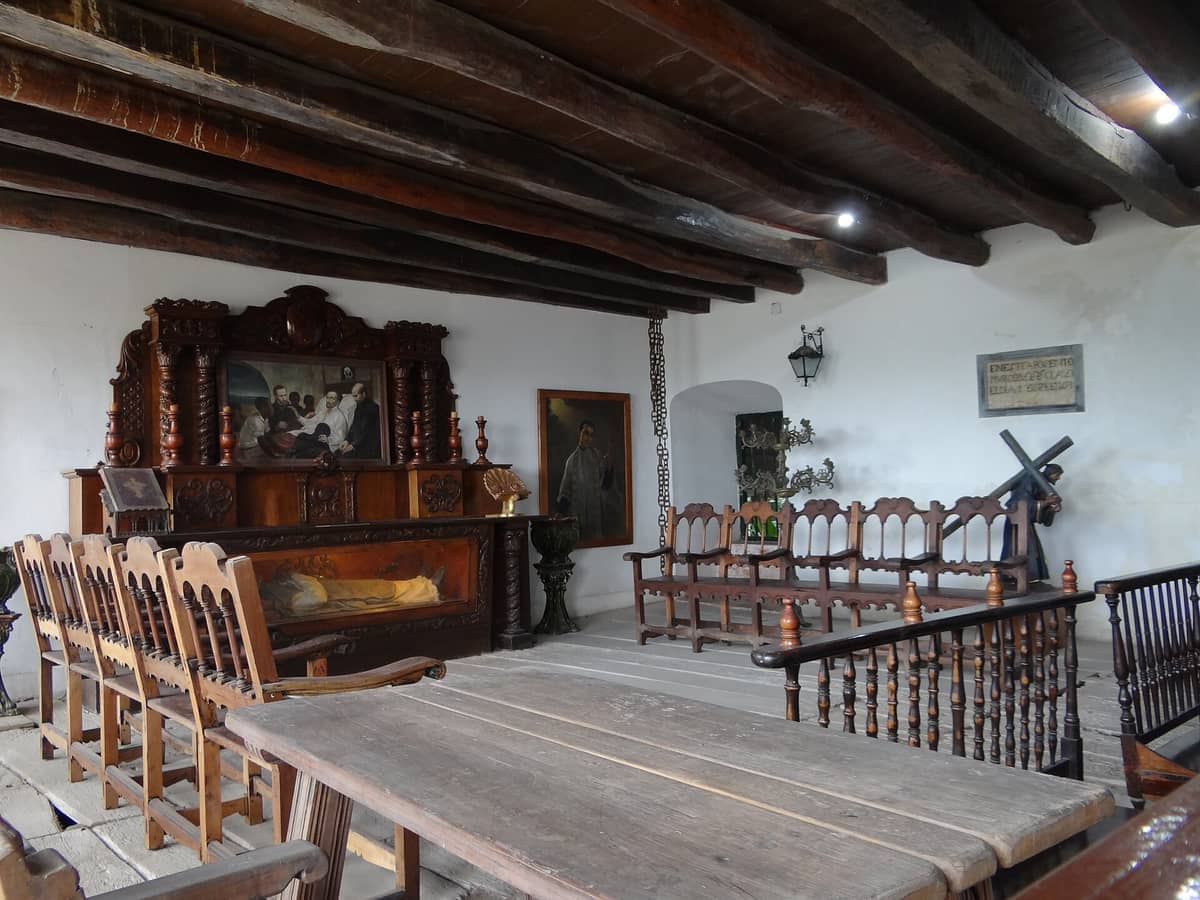
Peter Claver was a Spanish Jesuit who arrived in Cartagena around 1610 and spent the next four decades meeting slave ships at the port. Cartagena de Indias was then one of the largest slave-trading ports in the Americas, and Claver is documented to have baptized and provided basic care to an estimated 300,000 enslaved people over his lifetime. He was canonized in 1888 and his remains are enshrined beneath the main altar, visible through a glass case. That physical presence gives the church a pilgrimage quality that distinguishes it from Cartagena's purely ornamental colonial buildings.
ℹ️ Good to know
Opening hours: Monday–Friday 9:00–16:30, Saturday, Sunday, and holidays 10:00–16:00 (hours may shift on religious feast days, so a quick check at sanpedroclaver.co before you visit is worthwhile).
The Church: Architecture and Atmosphere by Time of Day
The facade faces Plaza San Pedro Claver and is relatively restrained by Colombian baroque standards: two square towers framing a single arched portal, built in coral stone that has oxidized to a warm ochre-grey over the centuries. The proportions are solid rather than ornate, and the main decorative investment was placed inside.
Morning visits, especially on weekdays before 11:00, are when the church earns its reputation. The interior is genuinely cool compared to the streets outside, the light enters at low angles through side windows, and the only sounds are footsteps on stone and the occasional distant city noise filtered through thick walls. The gilded main altarpiece catches the morning light differently than it does mid-afternoon, when the nave fills with a more diffuse glow. The reliquary case below the altar, containing the preserved remains of Saint Peter Claver, is lit year-round and attracts quiet clusters of Colombian pilgrims who kneel on the stone floor without ceremony.
By mid-afternoon, tour groups from cruise ships and hotels arrive in rotation, and the nave becomes noisier. The experience is still worthwhile, but the contemplative quality of the morning is largely lost. If you are a light sleeper who gets into the old city early, this is one of the most rewarding first stops in Cartagena.
💡 Local tip
Dress modestly before entering: shoulders and knees should be covered in the church. The cloister and museum have no strict dress code, but the same clothing that works for the church is fine throughout the complex.
Tickets & tours
Hand-picked options from our booking partner. Prices are indicative; availability and final rates are confirmed when you complete your booking.
Totumo Volcano and lunch at a VIP hotel from Cartagena
From 34 €Instant confirmationFree cancellationCity tour of Cartagena with entry to San Felipe castle
From 25 €Instant confirmationFree cancellationSan Andres Islands pontoon tour through the inner bay
From 26 €Instant confirmationFree cancellationGlass-bottom boat tour to San Andres aquarium and mangroves
From 21 €Instant confirmationFree cancellation
The Cloister: Cartagena's Most Underrated Courtyard
The Jesuit cloister adjoining the church is, architecturally, the most impressive part of the complex for many visitors. Three stories of rounded stone arches rise around a courtyard planted with large tropical trees, their canopies reaching the second-floor walkway. The combination of carved coral stone, terracotta tile floors worn smooth by centuries of foot traffic, and the sound of birds in the interior garden produces a sensory combination you do not find at Cartagena's louder attractions.
The cloister was originally the residential quarters and study rooms for the Jesuit community. It was built progressively through the 17th century and completed in its current form by the mid-17th century, around the time of Claver’s death. Today the galleries on the upper floors house sections of the museum, including pre-Columbian ceramics, colonial religious art, and documents related to Claver's ministry. The material is presented without the theatrical staging found in some Colombian heritage museums, which will suit some visitors and bore others.
The Museum: Human Rights, History, and What It Gets Right
The Santuario Museo San Pedro Claver, as it is formally called, positions itself as a museum of human rights and peace rather than a conventional religious or colonial history museum. That framing is genuine: the exhibits engage seriously with the history of the transatlantic slave trade as it passed through Cartagena, and Claver's story is presented not as simple hagiography but as a record of what one person did within a system he could not dismantle.
The collection includes colonial-era religious paintings, carved wooden altarpieces, pre-Columbian gold and ceramic pieces from the Zenú culture, and historical documents. Text panels are available in Spanish and English. The museum is modest in scale by international standards, but the curation is thoughtful, and the physical setting of the cloister adds a quality that no purpose-built museum building could replicate.
If the Zenú gold work interests you, the Museo del Oro Zenú is a short walk away in the historic center and covers that material in significantly more depth.
⚠️ What to skip
Photography inside the church nave is generally restricted, particularly near the reliquary. The cloister and museum areas are more permissive, but follow posted signs and staff guidance rather than assuming.
Practical Walkthrough: How to Pace Your Visit
The entrance ticket covers the church, cloister, and museum together. Official 2026 rates are COP 21,000 for national adults and COP 30,000 for international adults, with reduced rates of COP 13,000 / COP 22,000 for children, students, and seniors 60+. Confirm current prices at sanpedroclaver.co or at the ticket window on arrival.
A focused visit covering the church and cloister takes about 45 minutes. Adding the museum galleries properly brings the total to 1.5–2 hours. If you want to spend time sitting in the courtyard garden, which is one of the quieter places in the entire historic center on a weekday morning, allow a full two hours without feeling rushed.
The sanctuary sits just inside the walled city, a few minutes on foot from the Torre del Reloj and the main city gate. It also sits at the edge of the Centro Histórico, making it a natural first or last stop when entering or leaving the old city on foot.
The stone floors throughout the complex are uneven in places, and the stairways between cloister levels have no handrails in some sections. The site is a historic building and not fully adapted for wheelchair users; travelers with significant mobility impairments should contact the sanctuary directly before visiting.
Context: Why This Matters Beyond the Architecture
Cartagena's colonial beauty is real, and its historic center is genuinely one of the best-preserved in the Americas. But that preservation can sometimes paper over the violence that built it. The port that made Cartagena wealthy was a primary entry point for enslaved Africans brought to South America, and that history is not uniformly acknowledged at the city's heritage sites.
The Santuario de San Pedro Claver is one of the few places in the old city where that history is addressed directly rather than aestheticized. For travelers who want to understand Cartagena more fully, pairing a visit here with the Afro-Colombian culture context of the wider region gives the visit considerably more depth.
The sanctuary is also the site of regular masses attended by Cartagena's Catholic community. If you arrive during a service, the church interior is accessible for quiet observation but not for tourist circulation. Services are not typically listed in English-language visitor guides, so an early check at the entrance is advisable.
Who Should Think Twice
Travelers looking primarily for Instagram-friendly colonial color will find the Santuario less immediately photogenic than the brightly painted streets of the San Diego neighborhood or the panoramic views from the city walls. The interior palette is dark stone and aged wood rather than candy pastels. Visitors with very limited time in Cartagena who need to prioritize one or two stops might find that the cathedral or the walls offer a quicker visual payoff, though they will miss the historical substance this site provides.
Travelers focused on outdoor and beach experiences should note that the sanctuary is an indoor attraction with no natural light once inside the museum galleries. It pairs well with a morning in the historic center followed by an afternoon at the coast.
Insider Tips
- The plaza in front of the sanctuary is one of the few large open spaces in the old city that doesn't fill with vendors and noise by mid-morning. Arrive at opening time and you'll often have it nearly to yourself.
- The upper cloister gallery has a narrow window-level opening that looks directly down into the church nave, giving an unusual bird's-eye view of the interior that almost no visitor photographs.
- If you are visiting during the dry season (December–April), the courtyard garden is at its most manicured. During the rainy season (May–November), the tropical planting is denser and greener, which some visitors find more atmospheric.
- The gift shop at the exit sells religious items and local crafts at prices roughly comparable to the market stalls outside, without the negotiation pressure. Worth a look if you want to buy something without the hassle.
- The museum labels are bilingual (Spanish and English), but the Spanish versions occasionally contain more detail. If you read Spanish at any level, take a few extra minutes with those panels.
Who Is Santuario de San Pedro Claver For?
- History travelers who want to engage with Cartagena's colonial past beyond surface-level architecture
- Visitors interested in the African diaspora and the history of slavery in the Americas
- Architecture and art enthusiasts drawn to 17th-century Jesuit baroque in a preserved setting
- Travelers seeking a quiet, contemplative space away from the tourist-heavy plazas
- Religious pilgrims and Catholic visitors for whom the relics of Saint Peter Claver carry devotional significance
Nearby Attractions
Other things to see while in Centro Histórico (Ciudad Amurallada):
- Cartagena City Walls (Murallas)
The Murallas de Cartagena de Indias are the best-preserved colonial defensive walls in the Americas, ringing the historic center with roughly 3 kilometers of coral-stone ramparts, cannons, and Caribbean sea views within an 11-kilometer defensive system overall. Entry is free, the walk takes 1 to 3 hours depending on your pace, and the experience changes dramatically depending on the time of day you show up.
- Catedral Santa Catalina de Alejandría
Standing at the east corner of Parque de Bolívar in Cartagena de Indias, the Catedral Basílica Metropolitana de Santa Catalina de Alejandría is one of the oldest episcopal sees in the Americas. Construction began in the 16th century, and the building remains the seat of the Archbishop of Cartagena de Indias today. Entry is free, the doors open daily, and the surrounding plaza makes this one of the most rewarding stops in the entire Centro Histórico.
- Iglesia de Santo Domingo
The Iglesia de Santo Domingo is widely considered the oldest surviving church in Cartagena de Indias, anchoring a plaza that doubles as one of the historic center's most lively gathering points. The building itself rewards close inspection, while the square around it offers a completely different experience depending on the hour you arrive.
- India Catalina Statue
Standing at the entrance to Cartagena de Indias, the bronze India Catalina Statue has marked the city's identity since 1974. Free, open around the clock, and loaded with historical weight, it is the first landmark many visitors encounter and the last symbol they remember.