Iglesia de Santo Domingo: Cartagena's Oldest Church and Its Irresistible Plaza
The Iglesia de Santo Domingo is widely considered the oldest surviving church in Cartagena de Indias, anchoring a plaza that doubles as one of the historic center's most lively gathering points. The building itself rewards close inspection, while the square around it offers a completely different experience depending on the hour you arrive.
Quick Facts
- Location
- Plaza Santo Domingo, Centro Histórico, Cartagena de Indias, Colombia
- Getting There
- On foot from Torre del Reloj (10 min walk). No metro in Cartagena; taxis and ride-hailing apps serve the Walled City gates.
- Time Needed
- 30–60 minutes for the church; longer if you linger at the plaza
- Cost
- Generally free entry; attending Mass is the primary way to enter. Verify current access before visiting.
- Best for
- Colonial architecture, photography, people-watching, cultural history
What Is the Iglesia de Santo Domingo?
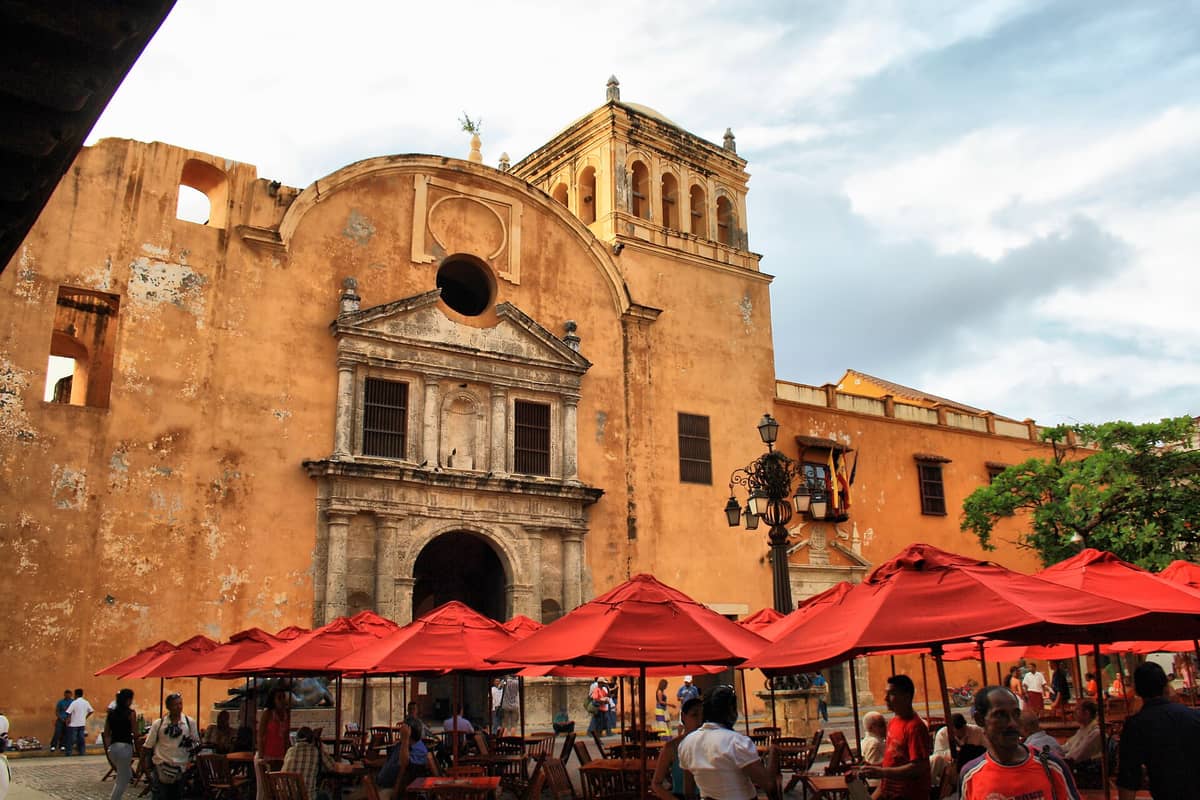
The Iglesia de Santo Domingo is generally regarded as the oldest church still standing in Cartagena de Indias, constructed by the Dominican order in the late sixteenth century. It anchors the Plaza Santo Domingo, a cobblestone square in the heart of the Centro Histórico that has become one of the most recognizable public spaces in northern Colombia. Unlike many colonial churches in Latin America that are set apart from daily life, Santo Domingo sits directly in the middle of a social hub where residents and visitors coexist in the same square at all hours.
The church's facade is relatively austere by Spanish colonial standards: thick coral-stone walls, a single tower that leans noticeably to one side (a well-documented architectural quirk, not a sign of structural failure), and a heavy wooden door that frames the entrance. The lean of the tower has been the subject of local legend for generations, and while the exact cause is debated, the visual effect is immediately noticeable from the plaza.
ℹ️ Good to know
The church is primarily a working Catholic parish. Entry is typically possible during Mass or designated visiting hours. Confirm current access and any entry protocols at the door, as these can change seasonally.
The Architecture: What to Look For
From the outside, the building's most striking feature is its scale relative to the surrounding colonial streetscape. The walls are built from the same warm honey-gold coral stone found throughout the Walled City, and the texture becomes especially vivid in the late afternoon when low sunlight cuts across the facade at an angle. At that hour, the surface reveals centuries of repair work, patches of mortar, and the slight irregularities that come from a building that has been modified, damaged by earthquakes, and reconstructed over hundreds of years.
Inside, the nave is wide and relatively unadorned, consistent with Dominican architectural philosophy, which favored simplicity over ornamental excess. The interior rewards visitors who take a moment to let their eyes adjust: carved wooden altarpieces, older devotional paintings darkened with age, and a ceiling structure that shows the practical engineering of colonial-era builders. For deeper context on how this building fits into Cartagena's broader architectural history, the colonial architecture guide covers the key buildings of the Walled City in sequence.
One detail worth seeking: the ornamental flourishes at the base of the columns inside, which show early examples of indigenous motifs being incorporated into Spanish ecclesiastical design. This syncretism, the blending of European Catholic iconography with local visual traditions, is a thread that runs through much of Cartagena's colonial heritage.
Tickets & tours
Hand-picked options from our booking partner. Prices are indicative; availability and final rates are confirmed when you complete your booking.
Totumo Volcano and lunch at a VIP hotel from Cartagena
From 34 €Instant confirmationFree cancellationCity tour of Cartagena with entry to San Felipe castle
From 25 €Instant confirmationFree cancellationSan Andres Islands pontoon tour through the inner bay
From 26 €Instant confirmationFree cancellationGlass-bottom boat tour to San Andres aquarium and mangroves
From 21 €Instant confirmationFree cancellation
Plaza Santo Domingo: The Real Draw for Most Visitors
For many visitors, the plaza surrounding the church is at least as interesting as the building itself. The square is paved with uneven cobblestones, shaded by a few trees, and ringed by colonial-era buildings that now house restaurants, bars, and cafes with outdoor terraces. In the early evening, tables push out into the square, musicians set up without formal arrangement, and the ambient noise becomes a layered mix of conversation, cumbia rhythms, and the clink of glasses.
The most photographed element of the plaza is the bronze sculpture of a reclining woman known locally as 'La Gorda' (Fernando Botero's Mujer Reclinada). The sculpture's sheer size and Botero's characteristically exaggerated proportions make it an irresistible focal point. At peak tourist hours, there is almost always a queue of visitors waiting to pose beside or on it. Early morning is the only time you will find the sculpture unoccupied.
💡 Local tip
For the best photograph of the Botero sculpture with the church facade in the background, position yourself on the far western edge of the plaza before 8:00 AM. The light is clean, the square is nearly empty, and the coral-stone facade glows in the morning warmth.
By contrast, avoid the plaza between roughly 11:00 AM and 2:00 PM if you dislike heat and crowds. The square has limited shade, and midday temperatures in Cartagena regularly reach 32°C (90°F) with high humidity. Cartagena's tropical climate means there is rarely a 'cool' time of day, but mornings before 9:00 AM and evenings after 5:00 PM are noticeably more comfortable.
Time of Day: How the Experience Changes
Early morning, before the restaurants open and before organized tour groups arrive, the plaza feels like a neighborhood space rather than a tourist destination. A few local residents cross it on their way to morning Mass. Street cleaners work the cobblestones. The church door may be open for early services, and from inside you can hear the low murmur of prayer against a backdrop of silence that disappears entirely by mid-morning.
Midday through mid-afternoon is the quietest period for the church interior (if open) but the most crowded for the outdoor space. Tour groups cycle through on predictable schedules, stopping at the Botero sculpture for photos before moving on. Vendors selling fruit, hats, and handmade jewelry work the edges of the square. The smell of arepas and fresh mango from nearby carts mixes with sunscreen and the faint mineral scent of old stone heated by the sun.
Evening is when the plaza genuinely transforms. Tables fill from around 6:00 PM onward. Live music, often vallenato or champeta depending on the venue, spills into the square. The church facade is lit from below, throwing warm amber light onto the coral-stone walls and making the leaning tower look almost theatrical. This is the version of Plaza Santo Domingo that most people remember, and it genuinely earns its reputation as one of the most atmospheric corners of the old city.
Historical and Cultural Context
The Dominican order established their presence in Cartagena in the late 1500s, and the Iglesia de Santo Domingo was central to that mission. The Dominicans were among the most influential Catholic orders in colonial Spanish America, responsible not only for religious conversion but also for education and, in darker chapters of colonial history, for involvement with the Inquisition. The Palacio de la Inquisición stands just a short walk away, and visiting both in the same morning gives a more complete picture of how colonial religious authority was exercised in this city.
Cartagena de Indias was one of the most important ports in the Spanish colonial empire, a transit point for both goods and enslaved people brought from Africa. The cultural legacy of that history is visible across the city. For visitors wanting to understand the full complexity of what Cartagena represents, the Afro-Colombian culture guide provides essential context that no single church visit can supply on its own.
Getting There and Getting Around
Plaza Santo Domingo sits near the center of the Walled City, roughly a ten-minute walk from the Torre del Reloj (the main gateway into the historic district). Torre del RelojTorre del Reloj (Clock Tower Gate) is the most practical entry point if you are arriving by taxi or on foot from outside the walls. The streets inside the Centro Histórico are narrow and largely pedestrianized in practice, so the final approach to the plaza is always on foot.
Cartagena has no metro or urban rail. Within the Walled City, walking is the only realistic option for short distances. Taxis and ride-hailing apps including Uber serve the gates of the historic district. If you are staying in Bocagrande or elsewhere outside the walls, a taxi or app-based ride to the edge of the Centro Histórico costs a modest amount (verify current fares before travel, as rates fluctuate).
💡 Local tip
Wear shoes with firm grip. The colonial cobblestones around Plaza Santo Domingo are beautiful but genuinely uneven, and smooth-soled sandals become a hazard after rain when the stones turn slick.
Photography and Accessibility Notes
The plaza is open on all sides and entirely outdoors, making it accessible to most visitors. However, the cobblestone surface presents challenges for wheelchair users and anyone with mobility limitations. The interior of the church, if entered, typically involves a step or raised threshold at the main entrance. There is no formal accessibility infrastructure documented for this site.
For photography, the most compelling compositions involve the contrast between the ancient coral-stone church and the contemporary life playing out in front of it: a child chasing pigeons, vendors in conversation, the Botero sculpture catching afternoon light. The building itself photographs best in the golden hour before sunset, when the stone takes on a deep amber warmth that no filter can replicate. A wide-angle lens captures the full scale of the facade and the square together; a longer lens picks out the texture of the tower stones and the lean that is so characteristic of this particular church.
Who Should Temper Their Expectations
Visitors expecting a peaceful, contemplative church experience will find the midday plaza atmosphere at odds with that goal. The square is social and at times loud, and the commercial presence (restaurants, vendors, organized tours) is hard to ignore. Those focused on interior church architecture should also note that access can be limited to Mass times, and the interior, while historically significant, is not as ornate as some other colonial churches in the region. The Santuario San Pedro Claver a few blocks away, offers a more extensive museum experience alongside its church and cloister.
Travelers visiting Cartagena during the rainy season (May through November, with the heaviest rains in September and October) should be aware that sudden afternoon downpours can sweep across the plaza with little warning. The covered terraces of the surrounding restaurants fill instantly when this happens. Carry a light waterproof layer if you plan to spend time outdoors in those months.
Insider Tips
- Mass times are the surest way to enter the church. Arrive five minutes early, be respectful of the service, and you will have access to the interior that most visitors who simply try the door never get.
- The restaurants on the western side of the plaza tend to have slightly lower prices than those with direct views of the Botero sculpture. The food is often the same; the table placement determines the markup.
- If you visit in the evening and hear live music starting up, check whether it is an organized paid performance or a spontaneous session before settling in. The free sessions are often better.
- The leaning tower is most visible from the northeastern corner of the plaza. Stand there and look up at a slight angle for the perspective that makes the lean most dramatic in photographs.
- Combine a morning visit here with a walk to the Catedral Santa Catalina de Alejandría and the Palacio de la Inquisición, which are both within five minutes on foot. The three sites together give a thorough sense of how the colonial civic and religious core of the city was organized.
Who Is Iglesia de Santo Domingo For?
- Architecture enthusiasts interested in Spanish colonial construction techniques and Dominican ecclesiastical design
- Photographers looking for a location that offers both monumental stone architecture and candid street-level human activity
- First-time visitors to Cartagena who want a single plaza that captures the social rhythm of the historic center
- Travelers combining a cultural walking route through the Walled City
- Evening diners who want atmosphere alongside their meal
Nearby Attractions
Other things to see while in Centro Histórico (Ciudad Amurallada):
- Cartagena City Walls (Murallas)
The Murallas de Cartagena de Indias are the best-preserved colonial defensive walls in the Americas, ringing the historic center with roughly 3 kilometers of coral-stone ramparts, cannons, and Caribbean sea views within an 11-kilometer defensive system overall. Entry is free, the walk takes 1 to 3 hours depending on your pace, and the experience changes dramatically depending on the time of day you show up.
- Catedral Santa Catalina de Alejandría
Standing at the east corner of Parque de Bolívar in Cartagena de Indias, the Catedral Basílica Metropolitana de Santa Catalina de Alejandría is one of the oldest episcopal sees in the Americas. Construction began in the 16th century, and the building remains the seat of the Archbishop of Cartagena de Indias today. Entry is free, the doors open daily, and the surrounding plaza makes this one of the most rewarding stops in the entire Centro Histórico.
- India Catalina Statue
Standing at the entrance to Cartagena de Indias, the bronze India Catalina Statue has marked the city's identity since 1974. Free, open around the clock, and loaded with historical weight, it is the first landmark many visitors encounter and the last symbol they remember.
- Las Bóvedas
Built in the late 1790s as military storerooms and later used as dungeons, Las Bóvedas are the last major colonial construction inside Cartagena's fortified perimeter. Today, 23 arched vaults house craft shops and galleries. Entry is free, and the structure sits at the northern end of the walled city in the San Diego district.