Calle del Arsenal: Getsemaní's Waterfront Street After Dark and in Daylight
Calle del Arsenal stretches along the Bahía de las Ánimas in Getsemaní, blending colonial military history with an evolving lineup of bars, restaurants, boutique hotels, and terraces. Free to walk at any hour, it earns its reputation as one of Cartagena de Indias's most versatile streets.
Quick Facts
- Location
- Getsemaní, Cartagena de Indias, Colombia — runs along the Bahía de las Ánimas from the Convention Center
- Getting There
- 10-15 min walk from the Torre del Reloj gate; taxi to 'Calle del Arsenal, Getsemaní' or 'Centro de Convenciones'
- Time Needed
- 30 min to stroll end-to-end; 2-4 hours if stopping for food and drinks
- Cost
- Free to walk. Individual venues charge separately for food, drinks, and events
- Best for
- Evening dining, nightlife, colonial history, photography, boutique hotel guests
- Official website
- colombia.travel/es/cartagena/recorre-la-calle-del-arsenal
What Calle del Arsenal Actually Is
Calle del Arsenal is a public cobblestone street running through the Getsemaní neighborhood along the edge of the Bahía de las Ánimas. It begins near Cartagena's Convention Center and extends into the heart of the barrio, lined on both sides with a mix of boutique hotels, open-terrace restaurants, bars, small clubs, and independent shops. There is no gate, no ticket booth, no closing time. The street belongs to the city.
What makes it worth understanding before you arrive is that it operates on two almost separate schedules. During the day it is quiet and photogenic, a good place to observe the fabric of a neighborhood that has gone through a dramatic decade of transformation. After 7 p.m., particularly Thursday through Sunday, the terraces fill, music spills out of doorways, and it becomes the social spine of Getsemaní's nightlife.
ℹ️ Good to know
Calle del Arsenal has no admission fee. The street itself is always open. Cover charges and minimum spends, if any, are set by individual venues and vary by night and event.
The History Behind the Name
The name Arsenal is not decorative. This stretch of waterfront was historically tied to Cartagena's naval infrastructure: the Apostadero, a Spanish colonial naval station, operated nearby, and the street formed part of the working port and market zone of Getsemaní. The Bahía de las Ánimas directly to the north was the anchorage where supply and military vessels moored.
Three bastions once stood along this side of the city. Two have been absorbed by development over the centuries. One survives: the Baluarte de San Lorenzo, known locally as El Reducto. It sits along the street largely without ceremony — no visitor center, no signage demanding your attention — which is exactly what makes it interesting. You can walk past an intact section of 17th-century military fortification on your way to dinner.
Getsemaní as a whole carries the weight of colonial Cartagena's less comfortable history. It was the neighborhood where enslaved Africans and free Black residents lived, separate from the walled city of Spanish colonists. Understanding that context changes how you read the street. For a fuller picture of the neighborhood's cultural layers, the Afro-Colombian culture guide for Cartagena is worth reading before your visit.
Tickets & tours
Hand-picked options from our booking partner. Prices are indicative; availability and final rates are confirmed when you complete your booking.
Baru Terrestre and Islas Del Rosario Pasadia full day tour
From 40 €Instant confirmationFree cancellationTotumo Volcano and lunch at a VIP hotel from Cartagena
From 34 €Instant confirmationFree cancellationCity tour of Cartagena with entry to San Felipe castle
From 25 €Instant confirmationFree cancellationSan Andres Islands pontoon tour through the inner bay
From 26 €Instant confirmationFree cancellation
The Street by Time of Day
Morning and Early Afternoon
Before noon, Calle del Arsenal belongs to residents and delivery workers. The cobblestones are still slightly damp from overnight cleaning. A few cafés open early for espresso and arepas. The light at this hour comes in low and direct from the east, throwing sharp shadows across colonial facades and making the textures of the stonework unusually readable. Photographers working on architectural detail will find this window — roughly 7 to 9 a.m. — more productive than the golden hour the city is famous for at sunset.
Midday is the street at its least interesting. The heat in Cartagena consistently reaches 30 to 32°C from late morning onward, and there is limited shade along parts of the route. Most locals retreat indoors. If you are walking the street as part of a broader Getsemaní exploration at this hour, move quickly and plan to duck into one of the air-conditioned hotel lobbies or sit under a fan on a covered terrace.
Late Afternoon and Sunset
The street reactivates around 5 p.m. as the temperature drops slightly and locals reappear. The western sky over the Bahía de las Ánimas produces some of the more dramatic sunsets in the city, particularly from October through January, when dry-season clarity sharpens the colors. Several rooftop terraces and bay-facing bar seats on Calle del Arsenal are directly positioned for this view. Arriving around 5:30 p.m. on a weekday gives you those seats before the evening crowd claims them.
Evening and Night
From about 7 p.m. onward, Calle del Arsenal shifts register entirely. Tables spread out across the cobblestones. The smell of grilled fish and sancocho mixes with cigarette smoke and the sweetness of tropical cocktails. Music is constant but not uniformly loud — some venues lean into vallenato and cumbia, others play reggaeton or electronic, and the acoustic layering of several competing terraces is part of the street's specific texture.
Bars like El Arsenal: The Rum Box (a popular rum-focused bar and restaurant on Calle del Arsenal) anchor the nightlife offer. The street stays active well past midnight on weekends. If you are staying in the walled city and want to understand why visitors increasingly choose to base themselves in Getsemaní instead, an evening on Calle del Arsenal provides the clearest answer.
💡 Local tip
Thursday night is when the street comes alive earlier than Friday or Saturday, with a local crowd rather than a predominantly tourist one. If you want the atmosphere without peak weekend noise levels, Thursday between 8 and 11 p.m. is a good window.
How to Walk the Street
The most natural entry point is from the Convention Center end, which is where the street begins and where taxis drop off. From there you walk eastward into Getsemaní proper, with the bay to your left if you are facing the street's interior. The full walkable stretch takes under 30 minutes at a leisurely pace, not including stops.
Watch for the Baluarte de San Lorenzo on your left as you move away from the Convention Center. It is easy to miss if you are not looking for it. The cobblestones here are authentic and uneven — comfortable footwear matters. Sandals work for an evening out, but anything with a narrow heel will be a problem. From Calle del Arsenal, side passages connect you toward the Plaza de la Trinidad and its church, which is the social heart of Getsemaní and worth a loop before or after your time on the main street.
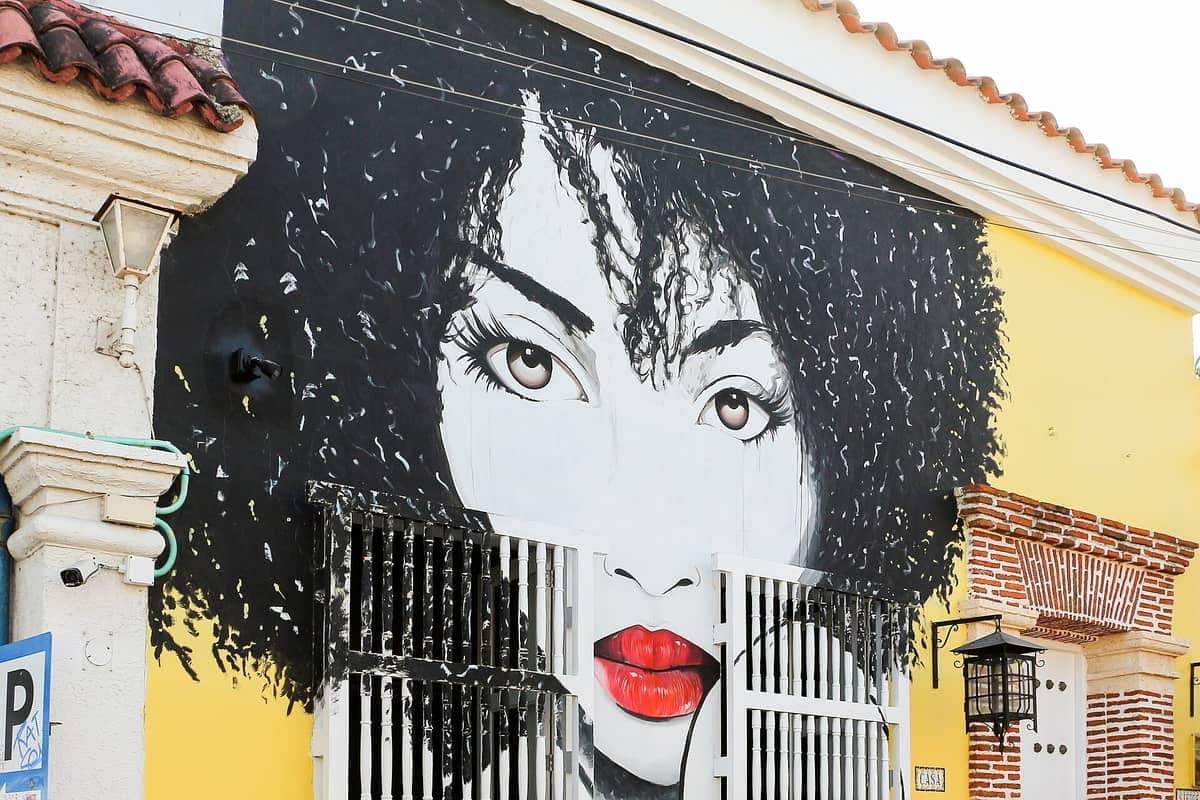
The street also connects naturally with the broader Getsemaní street art circuit, which has made the neighborhood one of the most painted urban canvases in Colombia. Several large murals appear on walls directly adjacent to Calle del Arsenal, so combining both in a single late-afternoon walk before dinner is straightforward.
Practical Details
Getting There
Calle del Arsenal is about a 10 to 15-minute walk from the Torre del Reloj, the main gate into the walled city. From the historic center, you cross the pedestrian bridge over the canal at the Media Luna side and continue toward the Convention Center. Taxis from anywhere in the centro histórico should cost under 10,000 COP for this short distance. Ride-hailing apps including Uber and inDrive also operate in Cartagena and can drop you directly at the street.
💡 Local tip
Ask your taxi driver for 'el Centro de Convenciones' rather than 'Calle del Arsenal' — most drivers orient to the Convention Center as the landmark, then the street is immediately visible.
Weather Considerations
Cartagena's dry season runs December through April, when evenings on Calle del Arsenal are warm but breezy and the bay provides some natural ventilation. From May through November, afternoon downpours are common — the street drains quickly but outdoor terraces do close temporarily during heavy rain. Bringing a lightweight rain layer between June and October is sensible if you are planning a full evening out. The cobblestones become slippery when wet.
Photography
The best photographic conditions are the early morning (empty street, direct eastern light) and the first hour after sunset (warm artificial lighting, active but not yet crowded terraces). The Baluarte de San Lorenzo photographs well against a clear sky in the late afternoon. During peak evening hours, the street is busy enough that candid street photography is easy and generally welcomed.
Accessibility
The cobblestone surface presents real challenges for wheelchair users and those with limited mobility. There is no single accessibility standard documented for the street, and individual venue entrances vary. The street is flat, which helps, but the stone surface is uneven in sections. If mobility is a concern, arriving by taxi to a specific venue address rather than walking the full length is worth considering.
Who Will Not Enjoy Calle del Arsenal
Visitors expecting a polished tourist promenade or a perfectly preserved heritage streetscape may find Calle del Arsenal uneven in a less literal sense too. The mix of colonial stonework, mid-century concrete buildings, and new hotel construction gives it a layered, sometimes rough visual quality. It is a working neighborhood street that happens to have become a nightlife destination, not a curated experience.
Those with no interest in bar culture or evening dining will find the street's daytime offer limited — a walk and a coffee, essentially. For that demographic, the nearby city walls or the Palacio de la Inquisición will return more per hour of visit time. Families with young children will find the evening atmosphere increasingly loud and adult-oriented after 9 p.m.
Insider Tips
- The rooftop terraces of the boutique hotels on Calle del Arsenal (including the GHL Collection Arsenal hotel) sometimes allow non-guests at the bar. Ask at reception — a sunset drink with a bay view from four floors up beats most paid viewpoints in the city.
- Pasaje Leclerc, a narrow passage that connects off Calle del Arsenal toward the interior of Getsemaní, is worth taking at least once. It cuts through older residential architecture and opens up away from the terrace noise.
- Venues on the bay-facing side of the street charge a small premium for the water view. The food quality is not always better than the inland-facing places across the cobblestones — look at what locals are eating before you sit down.
- The Baluarte de San Lorenzo (El Reducto) has no interpretive signage in English. Download a basic map of Cartagena's fortification system before you visit so the structure makes sense when you find it.
- If you are visiting during the December to January high season, arriving at your chosen venue before 7:30 p.m. to claim a table is not overcautious — outdoor seats genuinely disappear by 8 p.m. on weekends.
Who Is Calle del Arsenal For?
- Travelers using Getsemaní as a base who want their neighborhood's nightlife within walking distance
- History-focused visitors who want to see surviving colonial military fortifications in a non-museum context
- Couples looking for an evening itinerary that moves from sunset drinks to dinner without needing a taxi
- Photographers interested in street texture, murals, and the architectural contrast of Getsemaní
- Visitors on a second or third trip to Cartagena who have already done the walled city circuit and want to see where locals actually spend their evenings
Nearby Attractions
Other things to see while in Getsemaní:
- Getsemaní Street Art
Getsemaní's streets hold more than 200 murals spanning roughly a kilometre of open-air art. Free to walk at any hour, this officially recognised Cultural Heritage Neighborhood uses colour, symbolism, and raw scale to tell the story of a community that fought back against displacement — and won.
- Iglesia de la Trinidad
Built under a royal decree of 1642, the Iglesia de la Santísima Trinidad is one of Cartagena's oldest churches and the architectural centerpiece of Plaza de la Trinidad. The square in front of it functions as Getsemaní's living room, drawing locals every evening while travelers pass through on their way across the neighborhood.