Castillo de San Felipe de Barajas: Cartagena's Fortress Above the City
Perched on Cerro San Lázaro just east of Cartagena's walled city, the Castillo de San Felipe de Barajas is the largest Spanish colonial military fortress ever built in the Americas. Its tunnels, ramparts, and sweeping Caribbean views reward visitors who come prepared and arrive early.
Quick Facts
- Location
- Cerro San Lázaro, Cartagena de Indias, Bolívar, Colombia
- Getting There
- Taxi or ride-hail from Centro Histórico or Getsemaní (5–10 min); on foot from Getsemaní in roughly 15–20 min along Avenida del Pedregal
- Time Needed
- 1.5 to 2.5 hours
- Cost
- 38,000 COP (foreigners full rate); 33,000 COP (Colombian nationals); 16,000 COP (children 6–13, students/teachers with ID). Verify current prices on arrival and on the official site.
- Best for
- History enthusiasts, architecture lovers, photography, families with older children
What the Castillo de San Felipe de Barajas Actually Is
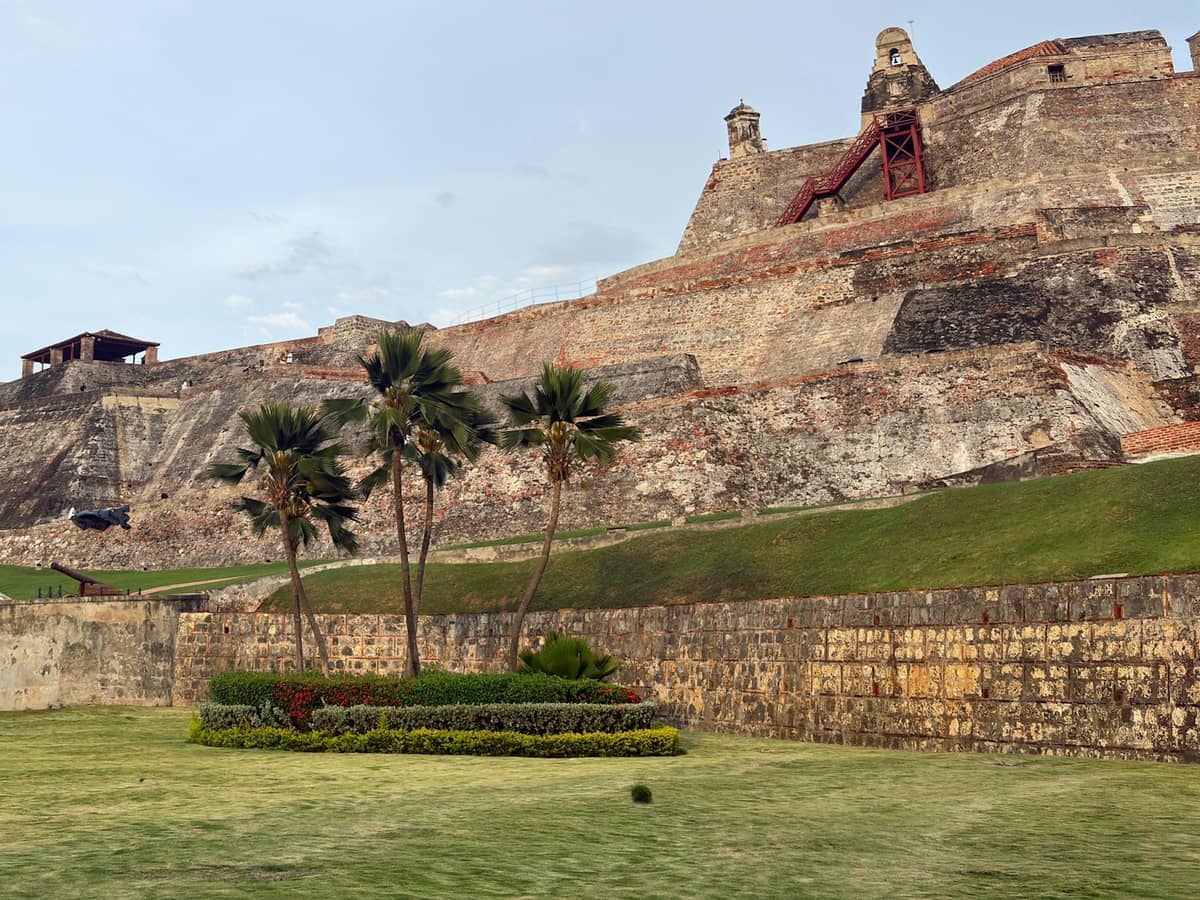
The Castillo de San Felipe de Barajas is not simply a fort. It is the largest Spanish military fortification ever constructed in the Americas, and standing at its base makes that fact feel less like a history-book claim and more like a physical reality. The walls rise in massive angled bastions of dark coral stone above Cerro San Lázaro, a natural hill that the Spanish recognized as the single most defensible high ground overlooking Cartagena's approach from the east. The scale is genuinely surprising, even for visitors who have seen photographs.
Construction began in 1536 on the original, much smaller fortification, but the structure that visitors walk today is overwhelmingly the result of expansions carried out through the 17th and 18th centuries, as Cartagena de Indias grew into one of Spain's most important ports for shipping gold and silver from the Americas back to Europe. The constant threat of pirate raids and rival naval powers, including a major assault by English Admiral Edward Vernon in 1741 that the fortress successfully repelled, drove each successive expansion. The result is a layered, interlocking system of walls, batteries, and underground tunnels designed to keep an attacker at a disadvantage at every stage of approach.
The fortress is a core component of Cartagena's UNESCO World Heritage-listed fortification system, which also includes the city walls encircling the historic center. Together they represent one of the most complete surviving examples of Spanish colonial military engineering in the world.
The Visit, Step by Step
The main entrance sits at the base of the hill on Carrera 17. After purchasing tickets at the booth near the gate, visitors follow a wide sloped ramp upward through successive outer walls before reaching the central upper fortifications. The ramp is paved but steep in sections, and the stone surface can be slippery when wet. Wear closed shoes with grip; sandals work in dry conditions but become a liability if the sky opens up.
💡 Local tip
Arrive at opening time (7:00 a.m.) to walk the upper terraces before the heat becomes serious. By 10:00 a.m., the exposed stone platforms radiate significant warmth and the crowds from tour groups begin to arrive. Bring water. There are vendors inside, but prices are higher than outside.
The tunnels are the feature most visitors remember. A network of low, arched passageways runs through the interior of the hill, originally used for troop movement, storing munitions, and collecting rainwater. The tunnels stay noticeably cooler than the open terraces, which makes them a relief in the midday heat. They are partially lit, but the light is uneven. A small flashlight or a phone torch is genuinely useful in the deeper sections, where the ceiling drops and the path narrows. Some visitors feel mildly claustrophobic in the longest stretches; if enclosed spaces are a concern, it is worth knowing that the experience above ground is equally rich.
Above ground, the upper battery platforms offer the best views in Cartagena that do not require a boat. From the highest point, you can see the domes and towers of the historic center to the west, the Bocagrande peninsula curving south into the Caribbean, and on clear mornings, the smudge of islands far offshore. The orientation means the light is best for photography in the early morning, when the sun is still low and to the east, casting long shadows across the stone ramparts.
Tickets & tours
Hand-picked options from our booking partner. Prices are indicative; availability and final rates are confirmed when you complete your booking.
City tour of Cartagena with entry to San Felipe castle
From 25 €Instant confirmationFree cancellationTotumo Volcano and lunch at a VIP hotel from Cartagena
From 34 €Instant confirmationFree cancellationSan Andres Islands pontoon tour through the inner bay
From 26 €Instant confirmationFree cancellationGlass-bottom boat tour to San Andres aquarium and mangroves
From 21 €Instant confirmationFree cancellation
How the Experience Changes by Time of Day
Early morning, roughly 7:00 to 9:00 a.m., is the most rewarding window. The air is still relatively cool, the stone has not yet absorbed the day's heat, and the site is quiet enough that you can hear the wind across the battlements and the faint sound of the city waking below. The colors of the stonework are richest in the angled early light.
By late morning, organized tour groups fill the ramps and upper terraces, and audio-guide commentary competes across multiple languages. This is not a bad time to visit if you are already inside and in the tunnels, which thin out even when the surface is crowded. Between noon and 2:00 p.m. the exposed platforms become genuinely harsh. The dark coral stone absorbs heat intensely, and there is almost no shade on the upper terraces. Visitors who arrive at midday without water tend to move through quickly rather than linger at the viewpoints.
Late afternoon, from around 4:00 p.m. until the 6:00 p.m. closing, brings softer light and somewhat cooler air. The site is less crowded than midday but still sees steady traffic. If you want the full experience, sunset from the upper ramparts can be striking, though note that the official closing time of 6:00 p.m. means you will be asked to leave before the sky fully transitions to dusk.
⚠️ What to skip
The fortress is open 7:00 a.m. to 6:00 p.m. daily, including weekends and public holidays. No seasonal schedule changes are indicated on the official site, but it is worth checking the official page before visiting during major Colombian national holidays.
History, Engineering, and What You Are Actually Looking At
Understanding the design philosophy of the castle transforms what might otherwise feel like a maze of stone walls into something coherent. The fortress uses a system of overlapping fields of fire: every approach to the hill is covered by cannon positions on multiple levels, meaning an attacker who breached the outer wall would still be exposed to fire from higher batteries. The angled bastions, rather than straight walls, were specifically engineered to deflect cannonballs and eliminate blind spots. This geometry is most obvious from the air, but even at ground level the logic of it becomes clear when you notice how the bastions project outward from the main wall mass.
The tunnel system served dual purposes: rapid troop movement between defensive positions without exposure above ground, and water collection from rainfall channeled into cisterns cut into the rock. The larger cisterns are visible from the tunnel paths and give a sense of how the garrison planned for extended sieges. During the 1741 attack by Vernon's fleet, an event that the Spanish remembered as a significant victory, the ability to hold out in well-supplied fortified positions was precisely what made the difference.
To understand the castle in full context, the Palacio de la Inquisición in the historic center and the Museo Naval del Caribe offer complementary perspectives on colonial-era Cartagena's political and military history. Together, the three sites sketch out the full picture of how the city functioned as Spain's most fortified port in the Caribbean.
Getting There and Practical Logistics
The castle sits on Carrera 17, east of the historic walled city and approximately 15 to 20 minutes on foot from Getsemaní, following Avenida del Pedregal toward the hill. The walk is flat until the final approach road, which slopes upward. In the heat of midday, most visitors opt for a taxi or a ride-hailing app rather than walk. From the historic center or Getsemaní, taxis typically charge a short-trip fare; confirm the price before getting in. Ride-hailing apps operating in Cartagena offer an alternative.
The surrounding area between the castle and the historic center makes for a reasonable walking route if you combine the visit with time in the walled city. The India Catalina statue stands at the entrance to the historic center along this axis, and from there the Torre del Reloj gateway is only a short walk further. Many visitors chain these stops into a single half-day route.
On the accessibility question: the sloped ramps allow wheelchair entry to some areas, but the tunnels, upper terraces, and many of the internal paths involve uneven cobblestones, stairs, and narrow passages. Visitors with significant mobility limitations will encounter real obstacles. Practical on-site accessibility should be confirmed locally before the visit, as conditions vary and on-site staff can advise on the most navigable routes.
Weather, Photography, and What to Bring
Cartagena sits in a tropical wet-and-dry climate, with a dry season broadly from December through April and a rainy season from May through November. Rain can arrive suddenly even in the dry season. The exposed stone surfaces of the upper terraces become slippery quickly when wet, so the footwear advice is not merely aesthetic. A light rain layer or a small umbrella adds little weight but provides meaningful insurance.
For photography, the early morning east-facing light catches the stone walls at their best. The upper viewpoints looking west toward the historic center are most rewarding in the hour or two before midday, when the city is still in partial shadow and the contrast between the colonial rooftops and the Caribbean behind them is sharpest. A wide-angle lens or a phone with a panoramic mode handles the upper terraces well. Inside the tunnels, any camera without good low-light performance will struggle; phone torches improve the result significantly but create flat, directional light.
If you are planning your overall itinerary, the 3 days in Cartagena guide places the castle logically within a broader route. For those watching their budget, the Cartagena on a budget guide covers which combination of sites gives the best value for admission costs.
Is It Worth Your Time? A Clear Assessment
The castle is frequently at the top of Cartagena itineraries, and that reputation is broadly deserved, though with qualifications. The scale, engineering, and views are genuinely impressive. The tunnel network provides an experience that is specific to this site and not easily replicated elsewhere in the city. The historical significance within the UNESCO World Heritage context is real and well-supported on-site.
The weaker points: the on-site interpretation is uneven. English-language signage exists but does not go deep. Official audio guides and licensed guides are available at the entrance and add real value for visitors who want the historical layer explained coherently, rather than reading abbreviated panels in the heat. Without some interpretive support, it is possible to spend an hour walking impressive stone paths without fully understanding what you are looking at.
Visitors who are primarily beach-focused and not particularly interested in military history may find two hours here a significant investment compared to other Cartagena options. That is not a criticism of the castle; it is an honest note about fit. For architecture and history enthusiasts, the castle rewards a full morning and is arguably the single most substantial historic site in the city.
ℹ️ Good to know
Licensed guides can be hired at the castle entrance and typically offer tours in Spanish and English. Agreeing on the price and duration before starting is advisable. A guided visit of 60 to 90 minutes adds meaningful context, particularly for the tunnel system and the story of the 1741 siege.
Insider Tips
- Buy your ticket at the booth before walking up the access ramp. There is no second ticket point further up, but the walk to realize you have missed it costs time and energy in the heat.
- The deeper tunnel sections are genuinely dark in places. A phone torch is standard practice among repeat visitors and the difference in what you can actually see is significant.
- If you want the upper terraces to yourself for photographs, arriving at 7:00 a.m. on a weekday gives you a window of 30 to 45 minutes before the first tour groups appear.
- The large stone cisterns visible from inside the tunnels are among the most underappreciated features of the site. They are not prominently labeled, but they explain how the garrison sustained a prolonged siege without access to outside water supplies.
- The view from the highest battery looking southwest toward Bocagrande is actually better for photography than the more commonly photographed view toward the historic center, particularly in the hour before sunset when the water turns luminous.
Who Is Castillo de San Felipe de Barajas For?
- History and military architecture enthusiasts who want to understand Cartagena's colonial defensive system in physical, not just theoretical, terms
- Photographers looking for elevated city views and dramatic stone textures in strong natural light
- Families with children aged 8 and older who can handle uneven terrain and will engage with the tunnel exploration aspect
- First-time visitors to Cartagena who want the single site that contextualizes the city's significance as Spain's most fortified Caribbean port
- Travelers combining a half-day of cultural sites with the historic center, using the castle as the anchor of a morning route
Nearby Attractions
Combine your visit with:
- Mercado de Bazurto
Mercado de Bazurto is where Cartagena actually shops for food. Far from the polished streets of the Walled City, this enormous working market is a sensory overload of fresh fish, tropical fruit, and cumbia drifting from open-air stalls. It rewards curious visitors who come prepared.
- Casa Museo Rafael Núñez
The Casa Museo Rafael Núñez preserves the lakeside El Cabrero home of Rafael Núñez Moledo, Colombia's most consequential 19th-century statesman. Free to enter and a short walk from the Old City, it offers a rare, unhurried look at the private life of the man who wrote the 1886 constitution and penned the national anthem.
- Convento de Santa Cruz de la Popa
Rising roughly 150 meters above sea level in Cartagena de Indias, the Convento de Santa Cruz de la Popa sits on the city’s highest natural point and one of its oldest religious sites. Visitors climb to a 17th-century Augustinian monastery for panoramic views, colonial architecture, and a surprisingly serene escape from the heat of the streets below.
- Isla Tierra Bomba
A short boat ride from Cartagena's historic center, Isla Tierra Bomba offers a compelling mix of Caribbean beach, colonial military history, and everyday Colombian coastal life. It is quieter than better-known island destinations, and honest about that tradeoff.