Bocagrande Beach: Cartagena's Urban Shoreline, Honestly Reviewed
Playa de Bocagrande is Cartagena's most accessible public beach, stretching for several kilometers along the Bocagrande peninsula. It's free to enter, lined with hotels and food vendors, and works best as a casual afternoon outing rather than a pristine Caribbean escape.
Quick Facts
- Location
- Carrera 1 with Calle 12, Playa 5, Bocagrande, Cartagena de Indias, Colombia
- Getting There
- 10 min by taxi from the historic center; bus and walking times vary
- Time Needed
- 2–4 hours
- Cost
- Free entry; beach chairs and umbrella rental approx. COP 20,000–30,000/day
- Best for
- Casual sunbathing, people-watching, families staying in Bocagrande hotels
What Bocagrande Beach Actually Is
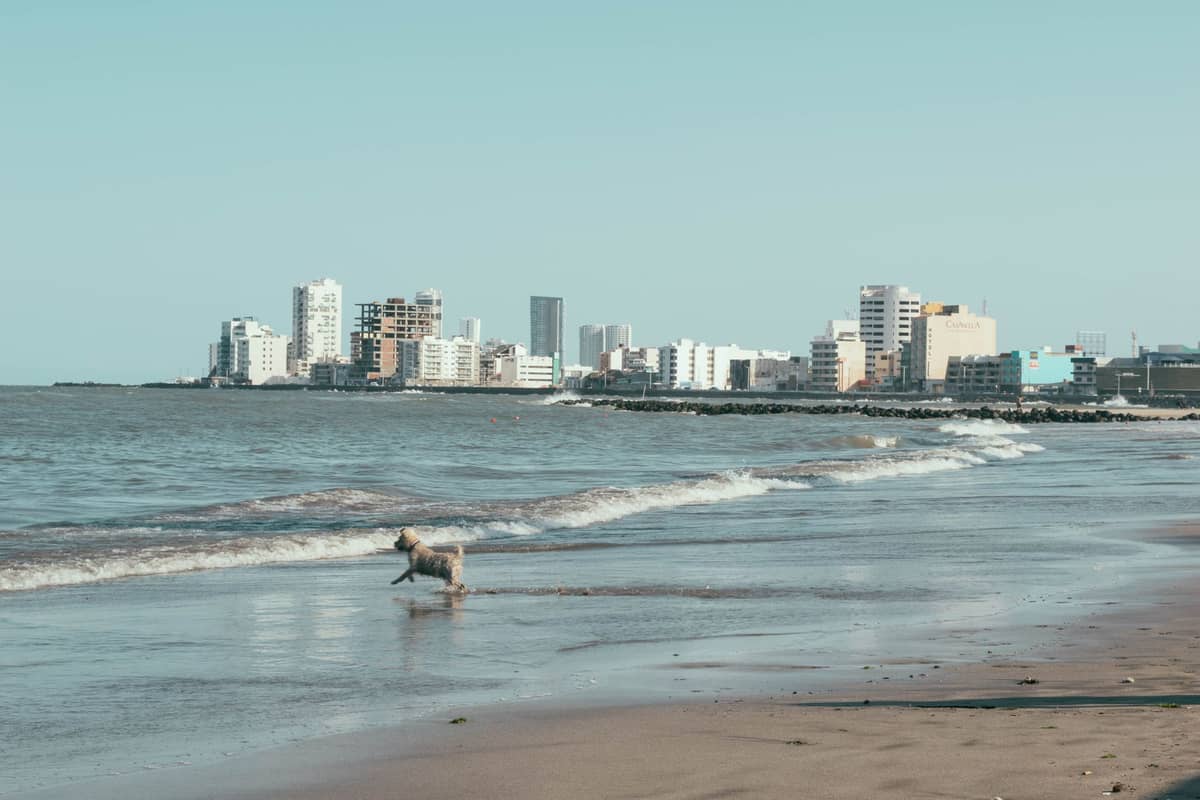
Playa de Bocagrande is Cartagena's main urban beach, a wide, open strip of sand running parallel to Avenida Malecón along the western edge of the Bocagrande peninsula. There are no entrance gates, no tickets, and no resort wristbands required. It is a genuine public beach in the middle of a city, which is both its greatest strength and its most honest limitation.
The beach is backed by a continuous row of high-rise hotels, apartment towers, and low-rise restaurants. On the sand itself, vendors work the entire length of the shore selling fruit, fried fish, arepas, cold drinks, and handcrafted jewelry. On a busy weekend afternoon the atmosphere is closer to a Colombian neighborhood party than a tranquil seaside retreat, and that distinction matters when deciding whether this is the right beach for you.
Travelers looking for clear turquoise water and quiet coves should look elsewhere. The best beaches near Cartagena for that kind of experience are the offshore islands and Barú, not the city peninsula. But if you want an immediately accessible, lively, and completely free beach within walking distance of your hotel, Bocagrande delivers.
The Beach at Different Times of Day
Early mornings, roughly 8 to 10 am, are the most rewarding time to visit. The light is softer, the sand has been groomed overnight, and the vendor crowds haven't yet arrived in full force. A few local joggers and families walk the water's edge, and the Malecón itself is calm enough for a proper stroll. The water is warmest near the surface at this hour and the smell of the sea is cleanest before the food stalls fire up their grills.
By mid-morning the beach fills steadily. Vendors begin setting up rows of plastic chairs and fabric-covered umbrellas, and the soundtrack shifts: cumbia from nearby speakers, the rhythmic call of coconut sellers, children shouting in the shallows. The sensory experience is intense and distinctly Colombian, which many visitors find genuinely enjoyable, though it is far from serene.
Late afternoon, from around 4 pm onward, the sun angle drops and the heat becomes more tolerable. The crowd thins slightly as families head back for dinner, and the golden light makes for noticeably better photographs. Official beach hours run until approximately 18:00, and the Malecón scene continues after that with evening walkers and couples. Arriving after 4 pm if you want sun, sand, and fewer bodies pressing around you is a practical strategy.
💡 Local tip
Best timing: arrive before 9 am or after 4 pm. Midday (11 am to 3 pm) is the hottest, most crowded, and most vendor-intensive window — bearable if you have an umbrella and cold drinks, but genuinely draining without them.
Tickets & tours
Hand-picked options from our booking partner. Prices are indicative; availability and final rates are confirmed when you complete your booking.
Totumo Volcano and lunch at a VIP hotel from Cartagena
From 34 €Instant confirmationFree cancellationCity tour of Cartagena with entry to San Felipe castle
From 25 €Instant confirmationFree cancellationSan Andres Islands pontoon tour through the inner bay
From 26 €Instant confirmationFree cancellationGlass-bottom boat tour to San Andres aquarium and mangroves
From 21 €Instant confirmationFree cancellation
The Neighborhood Context: Why Bocagrande Looks the Way It Does
Bocagrande developed as Cartagena's modern hotel and residential district through the second half of the twentieth century. Unlike the colonial cobblestone streets of the historic center, Bocagrande is a grid of wide avenues lined with concrete towers, shopping centers, and chain restaurants. It functions as the city's high-rise beach zone, roughly equivalent to what Copacabana is to Rio de Janeiro, though on a much smaller scale.
The peninsula sits southwest of the walled city, separated from it by a short stretch of road. Most of the major international hotel brands in Cartagena have properties here, which means the beach in front of them is, by extension, often accessible to non-guests. Public beach access is generally required on Colombian beaches.
The Bocagrande neighborhood itself is worth understanding before you visit the beach. The Malecón is a wide paved walkway running the entire length of the seafront, flanked by low walls and occasional vendors. Behind it, the street grid offers pharmacies, ATMs, supermarkets, and dozens of places to eat, making this one of the more self-contained areas of the city for visitors.
Practical Walkthrough: Arriving, Setting Up, and Getting Around
From the historic center, a taxi to Bocagrande takes roughly 10 minutes and costs a negotiated fare in the range of a few thousand pesos; agree on a price before you get in. Buses also run frequently between the center and Bocagrande and take 15 to 20 minutes. For those staying in the neighborhood itself, the beach is walkable from virtually any hotel.
Once on the sand, vendors will approach almost immediately offering chairs and umbrellas for rent. The going rate is approximately COP 20,000 to 30,000 per day depending on the season and how firmly you negotiate. Agreeing on a price before sitting down saves friction later. You are not required to rent anything; bringing your own towel is perfectly normal.
The accessible beach area at Playa 5 is one of the most important practical details on this page. Located at Carrera 1 with Calle 12, directly in front of the Hyatt Regency and ESTELAR hotels, it features a smooth boardwalk ramp, accessible seating, bathrooms, showers, and free beach wheelchairs (WaterWheels) available daily from roughly 8 am to 6 pm. This is the first dedicated wheelchair-accessible beach area in Cartagena, and it is a genuine service that makes the beach usable for travelers who would otherwise be excluded.
ℹ️ Good to know
Wheelchair access: Playa 5 (Carrera 1 with Calle 12) offers free beach wheelchairs, a paved ramp, accessible showers and bathrooms. Verify locally before your visit.
The Water, the Sand, and a Clear Assessment
The water at Bocagrande is warm year-round, consistent with Cartagena's tropical Caribbean position and temperatures that stay in the upper 20s Celsius. The sea here is generally calm, with low to moderate waves, which makes it suitable for children and casual swimmers. Strong currents are not a common issue along this stretch.
The water clarity, however, is not what you would find at the offshore islands. Bocagrande is an urban beach in a busy port city, and the water quality reflects that. It is not toxic or visibly polluted in the dramatic sense, but it is noticeably murky compared to the Caribbean postcard image. Snorkeling or any activity dependent on underwater visibility is not appropriate here.
The sand itself is pale and reasonably wide, though it narrows at certain sections near hotel entrances. The beach is cleaned regularly but vendor activity through the day means litter accumulates. If your reference point for a good beach is Playa Blanca on Barú or the Rosario Islands, Bocagrande will feel like a step down in setting. If your reference point is a free, walkable city beach with food, people, and atmosphere, it holds up well.
⚠️ What to skip
Don't bring valuables. Petty theft on busy urban beaches is a documented risk in Cartagena. Leave passports, laptops, and excess cash at your hotel. Keep a hand on your bag when seated and don't leave belongings unattended in the water.
Seasonal Conditions and When to Visit
Cartagena's dry season runs from December through April, and this is when Bocagrande Beach performs at its best. Rainfall is minimal, sunshine is consistent, and the sea is relatively calm. January and February are typically the driest months of the year.
The rainy season runs from May through November, with the heaviest rainfall concentrated in September and October. Afternoon downpours are common during this period, often arriving fast and lasting an hour before clearing. A beach morning followed by an afternoon spent exploring the old city is a practical approach during wetter months.
Humidity is high throughout the year, and midday temperatures consistently reach 30 to 32 degrees Celsius. Sun protection is not optional: the equatorial sun at this latitude is intense even on overcast days. Factor-50 sunscreen, a hat, and a rehydration plan are practical requirements, not suggestions.
Photography at Bocagrande Beach
The Malecón walkway offers the best composed shots of the beach, particularly looking south along the shoreline where the tower skyline creates an interesting urban-beach contrast. Early morning golden light on the towers is the most photogenic window. The beach itself during peak hours photographs as chaotic, which is authentic but may not match what you imagined.
For portraits or candid street photography, the vendor and family culture on the beach is genuinely rich material. Ask permission before photographing individuals, particularly the vendors who work the beach daily. Many are happy to engage, and a small purchase creates goodwill.
Insider Tips
- The sections of beach directly in front of major hotels tend to be slightly cleaner and better maintained than the open stretches between them — the hotels have incentive to keep their frontage tidy. Position yourself near a hotel entrance if cleanliness matters to you.
- Freshly cut fruit from beach vendors is genuinely good and costs very little. Mango with salt and lime is the standard local preparation and a reliable choice in the heat. Stick to vendors who cut fruit in front of you.
- If you want a quieter experience, walk to the southern tip of the Bocagrande peninsula toward El Laguito. The beach narrows there but the vendor density drops considerably, and it still faces open water.
- Negotiate chair and umbrella rental before you sit, not after. Once you're settled, the leverage shifts to the vendor. COP 20,000 is a reasonable starting point for a single chair and umbrella in low season.
- The Malecón is one of the better jogging and cycling routes in Cartagena, particularly in the early morning before the heat peaks. If you're staying in the neighborhood, a 6 am walk along the seafront gives you a version of Bocagrande that most day-trippers never see.
Who Is Bocagrande Beach For?
- Travelers staying in Bocagrande hotels who want a zero-effort beach day without transit
- Families with young children who need calm water and a wide, flat sand area
- Visitors with mobility limitations, specifically for the accessible Playa 5 facilities
- Budget travelers who want a free beach experience with food and drinks on hand
- Anyone seeking a people-watching afternoon with a cold drink and Colombian coastal atmosphere