Playa Marbella: Cartagena's Urban Beach for Locals and Curious Travelers
Playa Marbella is a free public beach in the Marbella neighborhood, just north of Cartagena's historic center. It attracts a local crowd rather than tourists, offering an unfiltered look at Caribbean city beach culture without the polished infrastructure of Bocagrande.
Quick Facts
- Location
- Marbella neighborhood, Avenida Santander, Cartagena de Indias, Colombia
- Getting There
- Transcaribe lines R50, R52C, SB100, T102, C017 stop near Playas de Marbella
- Time Needed
- 1–3 hours
- Cost
- Free entry; optional sunbed/umbrella rentals and food vendors charge in COP
- Best for
- Budget travelers, local culture, a quick Caribbean dip close to the old city
What Playa Marbella Actually Is
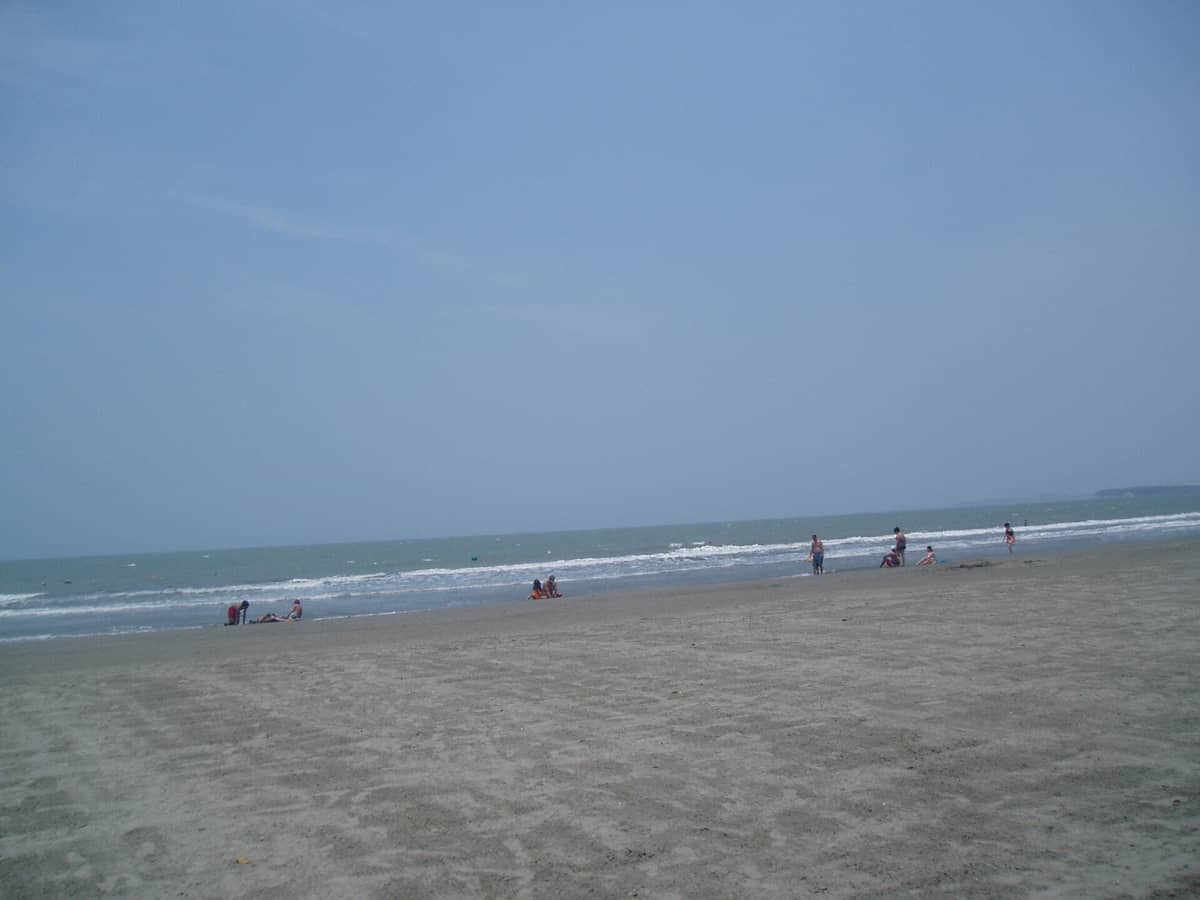
Playa Marbella, also known locally as Playas de Marbella, is a public urban beach that stretches along Cartagena's northern seafront, just a few kilometers from the colonial walls of the historic center. It sits on Avenida Santander in the Marbella neighborhood, technically within the Crespo corridor that runs between the old city and Rafael Núñez International Airport. This location makes it the most logistically convenient beach in Cartagena for anyone staying in or near the walled city.
The beach is managed by the District of Cartagena de Indias and entry is free. There are no gates, no ticketing booths, and no resort fences. What you get instead is a working-class Caribbean beach: vendors walking the sand selling fried fish and cold drinks, families spreading out on weekends, and a constant background noise from Avenida Santander's traffic. This is not a glossy postcard beach. It is honest, accessible, and distinctly local in character.
ℹ️ Good to know
The city of Cartagena provides free public toilets at Playas de Marbella, available from 8:00 a.m. during operating hours. This is a recent municipal improvement worth knowing before you arrive.
The Beach Experience: Morning, Afternoon, and Evening
Early mornings at Playa Marbella have a different rhythm entirely. By 7:00 or 8:00 a.m., the sand is relatively quiet, the light comes in low and golden off the Caribbean, and the air still carries some of the night's coolness before the humidity climbs. Joggers use the beachfront path, and a few fishermen are visible at the waterline. This is the best window for photography: the colors are clean, the crowds are thin, and the sea is often calm.
By midday, Marbella fills with people. On weekday afternoons it draws office workers and residents from nearby neighborhoods. On weekends and public holidays, the scene becomes significantly denser, with cumbia and vallenato drifting from portable speakers, children playing at the water's edge, and vendors moving steadily between towels and umbrellas. The smell of frying food from the beachfront stalls mixes with sunscreen and salt air. The water here is warm, consistent with Cartagena's tropical climate of 28–32°C year-round.
Lifeguard and organized service hours are generally reported to end around 6:00 p.m., though the beach itself remains accessible after dark as a public space. Sunset from the Marbella shoreline faces northwest across open Caribbean water, and on clear evenings the sky turns a deep copper before full dark. It is not a dramatic cliff-top sunset, but the horizon is unobstructed and the light can be striking.
Tickets & tours
Hand-picked options from our booking partner. Prices are indicative; availability and final rates are confirmed when you complete your booking.
Totumo Volcano and lunch at a VIP hotel from Cartagena
From 34 €Instant confirmationFree cancellationCity tour of Cartagena with entry to San Felipe castle
From 25 €Instant confirmationFree cancellationSan Andres Islands pontoon tour through the inner bay
From 26 €Instant confirmationFree cancellationGlass-bottom boat tour to San Andres aquarium and mangroves
From 21 €Instant confirmationFree cancellation
Water Quality and Practical Expectations
It is important to be direct about something most guides soft-pedal: Playa Marbella is an urban beach, and water quality has historically been inconsistent. Being located near the city's infrastructure, including the airport corridor and urban runoff areas, means that conditions can vary. After heavy rains, particularly during the rainy season from May to November, water clarity can decline noticeably. The sea here is rarely as clear as the waters around the Islas del Rosario or Playa Blanca.
During the dry season, roughly December through April, conditions improve. The water is warmer and calmer, rainfall is minimal, and the beach looks its best. January and February are among the driest months in Cartagena, and Marbella during this period can be genuinely pleasant for a casual swim. If your priority is pristine water and powdery sand, you will want to plan a separate day trip.
For travelers specifically seeking Cartagena's best swimming and snorkeling, the Islas del Rosario National Park and Playa Blanca on Isla Barú offer significantly clearer water and better coral visibility. Both require a boat and additional planning, but they represent a different category of beach experience altogether.
⚠️ What to skip
Avoid swimming at Playa Marbella immediately after heavy rain, particularly during the May–November rainy season, when urban runoff affects water quality. The dry season (December–April) offers more reliable conditions.
Getting There and Getting Around
From the historic center, Playa Marbella is reachable in 10–20 minutes by taxi. Drivers will know the beach by name. By Transcaribe bus, routes including T102 and C017 stop near Playas de Marbella on Avenida Santander, making it one of the more transit-accessible beaches in the city. Bus fares are minimal in Colombian pesos. Ride-hailing apps also operate in Cartagena, providing another straightforward option.
The beach is essentially at street level on Avenida Santander, with road access directly onto the sand. There are no stairs or significant terrain changes between the pavement and the beach, which means general step-free access exists from the street. Specific wheelchair provisions on the sand itself, such as beach wheelchairs or hard-surface ramps, are not documented in available sources.
If you are planning to pair Marbella with other nearby sights, the beach sits along the same coastal avenue that connects to the India Catalina statue and the northern edge of the old city. From there, the Cartagena city walls are a short walk inland, making a combined morning itinerary very practical.
What to Bring and How to Prepare
Given the tropical climate, sun protection is non-negotiable. Daytime temperatures sit between 28–32°C throughout the year with high humidity, and UV exposure at this latitude is intense even on overcast days. Reef-safe sunscreen, a hat, and sunglasses are essentials. The beach has shade umbrellas available from vendors, usually for a small fee in COP, but supply is limited during peak weekend hours.
Bring cash in Colombian pesos for vendors, sunbed rentals, and the informal food stalls that line the beachfront. Cold water, coconut water, fried fish, and empanadas are all available on the beach itself. There is no formal restaurant row at Marbella, so do not expect sit-down dining options directly on the sand. For a wider range of food nearby, the street food scene around the historic center is a short taxi ride away.
Cartagena's street food scene is one of the more underrated aspects of the city, and combining a morning at Marbella with an afternoon eating your way through the Centro Histórico makes for a well-rounded day.
💡 Local tip
Arrive by 8:00–9:00 a.m. on weekends to secure a good spot before the crowds build. By 11:00 a.m., the beach is noticeably busier and the available shade spots from rental umbrellas fill quickly.
Who This Beach Is Right For (and Who It Isn't)
Playa Marbella suits travelers who want a convenient, free beach day without committing to a full-day boat excursion. It is particularly well-suited to people staying in the historic center or Getsemaní who want sand and sea without the logistical complexity of organizing a trip to the islands. The local atmosphere is genuine and the people-watching is excellent. It also works well as an early morning walk or a late afternoon stop on the way back from the city walls.
Travelers primarily focused on water sports, snorkeling, or beach resorts will find Marbella underwhelming. For that experience, the complete Cartagena beaches guide covers the full range of options across the region, from the beach clubs of Bocagrande to the remote cays of the Rosario archipelago.
Families with young children should note that the beach has no designated shallow-water swim zones, and the surf can be inconsistent depending on wind conditions. The presence of vendors and foot traffic means it is not a quiet or isolated spot. Travelers seeking a secluded experience will need to look further afield.
Insider Tips
- The stretch of Playa Marbella closest to the airport end of Avenida Santander is generally quieter than the sections directly accessible from the main bus stops. If you walk a few minutes north along the sand, you will typically find more space.
- On weekday mornings during the dry season, the beach can be genuinely peaceful for an hour or two after sunrise. This is the window most travel photography of Marbella is shot in.
- Vendors selling fresh coconut water (agua de coco) charge less than the same item at any café in the historic center. Negotiating politely in Spanish is expected and standard practice.
- The public toilets provided by the city are available from 8:00 a.m. Free and reasonably maintained, they are located at the beach access points. Note their position when you arrive so you are not hunting for them later.
- If you are visiting Cartagena in December, which is technically the start of the dry season, Marbella sees a local holiday surge in the last two weeks of the month. Weekends in late December are among the busiest of the year.
Who Is Playa Marbella For?
- Budget travelers wanting free beach access without a boat trip
- Visitors staying in the historic center or Getsemaní looking for a quick half-day at the sea
- Travelers interested in everyday local Caribbean culture rather than resort atmosphere
- Early-morning walkers and photographers seeking golden-hour light on the Caribbean
- Cruise passengers with limited time who want a beach near the port
Nearby Attractions
Combine your visit with:
- Mercado de Bazurto
Mercado de Bazurto is where Cartagena actually shops for food. Far from the polished streets of the Walled City, this enormous working market is a sensory overload of fresh fish, tropical fruit, and cumbia drifting from open-air stalls. It rewards curious visitors who come prepared.
- Casa Museo Rafael Núñez
The Casa Museo Rafael Núñez preserves the lakeside El Cabrero home of Rafael Núñez Moledo, Colombia's most consequential 19th-century statesman. Free to enter and a short walk from the Old City, it offers a rare, unhurried look at the private life of the man who wrote the 1886 constitution and penned the national anthem.
- Castillo de San Felipe de Barajas
Perched on Cerro San Lázaro just east of Cartagena's walled city, the Castillo de San Felipe de Barajas is the largest Spanish colonial military fortress ever built in the Americas. Its tunnels, ramparts, and sweeping Caribbean views reward visitors who come prepared and arrive early.
- Convento de Santa Cruz de la Popa
Rising roughly 150 meters above sea level in Cartagena de Indias, the Convento de Santa Cruz de la Popa sits on the city’s highest natural point and one of its oldest religious sites. Visitors climb to a 17th-century Augustinian monastery for panoramic views, colonial architecture, and a surprisingly serene escape from the heat of the streets below.