La Boquilla Mangroves: Cartagena's Most Rewarding Ecotour
Just 15–20 minutes north of Cartagena's historic center, the mangrove channels of La Boquilla offer a rare combination of ecological richness and genuine cultural exchange. Guided by members of a 200-year-old Afro-Colombian fishing community, canoe tours through the Ciénaga de La Virgen reveal a quieter, greener side of the Colombian Caribbean.
Quick Facts
- Location
- La Boquilla, Cartagena de Indias — CRA. 2, Sector Boca Natural
- Getting There
- 15–20 min by taxi or private transfer from Centro Histórico; transport often included in tour packages
- Time Needed
- 2.5 hours (morning tour); 1.5 hours (afternoon tour)
- Cost
- Prices vary by group size and add-ons; confirm directly with Ecotours Boquilla via phone or WhatsApp
- Best for
- Nature lovers, families, travelers seeking cultural depth beyond the Walled City
- Official website
- ecotoursboquilla.com
What the La Boquilla Mangroves Actually Are
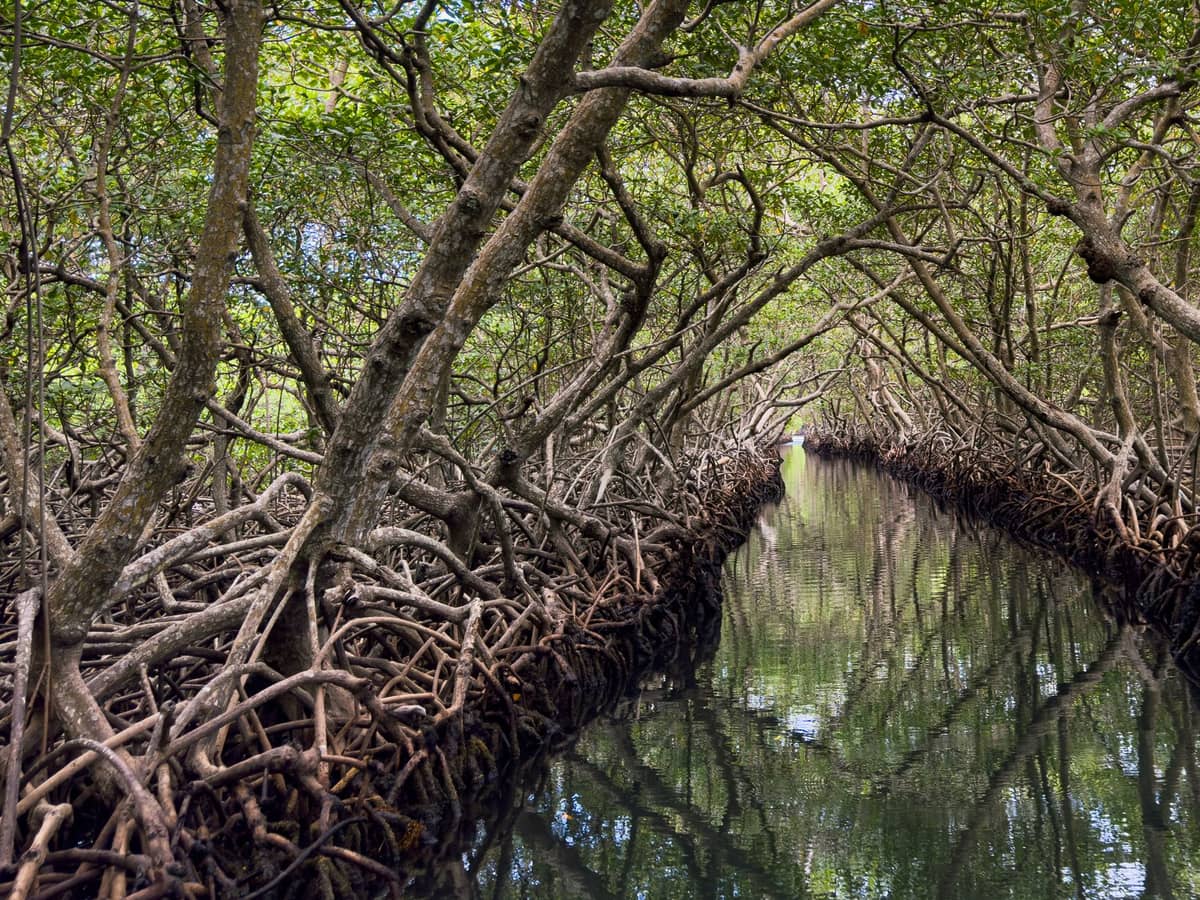
The La Boquilla Mangroves are not a park with ticket booths and paved paths. They are a living, working ecosystem threaded through the edges of Ciénaga de La Virgen, a coastal lagoon of roughly 22.5 square kilometers that sits between the Caribbean Sea and the urban sprawl of Cartagena de Indias. Three species of mangrove grow here, their prop roots submerged in brackish water, forming arched green tunnels narrow enough that a paddling guide needs to duck to navigate through them.
The most structured and consistently recommended way to experience this ecosystem is through Ecotours Boquilla, a community-run operation based at La Boquilla, CRA. 2, Sector Boca Natural, Cartagena. Their flagship program, the Bosque de Manglares (Mangrove Forest) tour, takes small groups by canoe into the interior channels, led by local guides who grew up fishing these same waters. This is not a polished nature resort experience. The boats are wooden, the docks are basic, and the guides navigate by memory. That is precisely what makes it worthwhile.
ℹ️ Good to know
Ecotours Boquilla runs tours daily, year-round, weather permitting. Morning sessions run 9:00 AM to 11:30 AM; afternoon sessions run 3:30 PM to 5:00 PM. Because prices vary by group size and optional extras (bilingual guide, lunch, transport), contact the operator directly via their website or WhatsApp before booking.
The Community Behind the Tours
La Boquilla is an Afro-descendant fishing village with more than 200 years of cultural tradition, located at the northernmost edge of Cartagena's urban boundary. The community has fished Ciénaga de La Virgen for generations using hand-thrown cast nets, a technique still practiced daily and often demonstrated during the longer ethno-tourism tours that Ecotours Boquilla also offers.
Understanding this context changes how you experience the mangrove tour. Your guide is not a trained naturalist from outside the area. He or she is likely someone whose grandparents cast nets in these same channels, and who can identify the blue crabs scuttling between roots not from a field guide but from decades of harvesting them. For travelers interested in Afro-Colombian culture beyond the colonial city, this adds a dimension that no museum can replicate. You can find more background in the Cartagena Afro-Colombian culture guide.
Tickets & tours
Hand-picked options from our booking partner. Prices are indicative; availability and final rates are confirmed when you complete your booking.
Glass-bottom boat tour to San Andres aquarium and mangroves
From 21 €Instant confirmationFree cancellationTotumo Volcano and lunch at a VIP hotel from Cartagena
From 34 €Instant confirmationFree cancellationCity tour of Cartagena with entry to San Felipe castle
From 25 €Instant confirmationFree cancellationSan Andres Islands pontoon tour through the inner bay
From 26 €Instant confirmationFree cancellation
Morning vs. Afternoon: When to Go
The morning tour, which runs from 9:00 AM to 11:30 AM, is the better choice for most visitors. Light filters through the mangrove canopy at low angles before 10 AM, creating the kind of dappled green glow that photographs well and simply feels more atmospheric. Bird activity is also significantly higher in the early hours. Herons pick along root edges, kingfishers dart between channels, and in quieter sections you can hear the hollow knock of a paddle against wood as the only sound.
The afternoon tour, from 3:30 PM to 5:00 PM, is shorter and better suited to travelers who want a late-day outing before dinner. The light at 4 PM turns golden and warm, which suits photography of the water's surface rather than the canopy interior. The tradeoff is that the lagoon can feel hazier in afternoon heat and bird activity has typically dropped off. On clear December-to-April dry-season days, the afternoon tour ends just as the sky begins to color, which is its own reward.
💡 Local tip
Bring insect repellent regardless of the time of day. The mangrove interior has almost no wind, and mosquitoes are active year-round, particularly in shaded channel sections. Long sleeves and light trousers are more effective than shorts and spray alone.
The Ecological Layer: What You Are Floating Through
Ciénaga de La Virgen supports three mangrove species, each occupying a slightly different hydrological zone. Red mangroves dominate the channel edges with their arching prop roots visible above the waterline. Their roots trap sediment, build land, and provide nursery habitat for juvenile fish and crustaceans. The blue crabs referenced in Colombia Travel's documentation of La Boquilla are among the most commercially important species in this lagoon and are visible from the canoe, clinging to root structures just below the waterline.
Mangroves are among the most carbon-dense ecosystems on Earth, storing several times more carbon per hectare than tropical rainforests. This is not a fact guides typically recite, but it is worth knowing: the slow paddle through these channels is ecologically significant in a way that most urban nature experiences are not. The presence of a functioning, community-managed ecotourism model here also matters. Revenue from tours gives the La Boquilla community a direct economic stake in keeping the mangrove intact against urban encroachment.
Getting to La Boquilla from Cartagena
La Boquilla sits roughly 15 to 20 minutes by car north of Cartagena's historic center, following the coastal road that passes near Rafael Núñez International Airport (CTG) toward the northern beaches. The simplest approach is a taxi or ride-hailing service from Centro Histórico or Bocagrande, which costs a modest fare that you should confirm with your driver before departing.
Ecotours Boquilla packages generally include round-trip transport from Cartagena's main tourist zones, including Bocagrande, Centro, and Getsemaní. If you are combining the mangrove tour with a morning at Playa La Boquilla, the beach is a short walk from the ecotour base, making a half-day combination very practical. Arrive a few minutes before your tour's start time; the wooden docks are not large and groups depart promptly.
Practicalities: What to Bring and What to Expect
The canoe boarding process involves stepping from a wooden dock into a low-sided boat. There are no handrails. For travelers with significant mobility impairments or balance concerns, this step is the main obstacle, and the operator does not list wheelchair or step-free infrastructure. If you have any doubts, contact Ecotours Boquilla directly before booking; their guides are described as providing personalized assistance and may be able to advise.
Wear shoes you do not mind getting wet, or sandals with a back strap. Flip-flops can slip on wet boat surfaces. A hat is essential in the open lagoon sections between channels. Sunscreen should be applied before you leave your hotel since you will have little opportunity once the tour begins. Cartagena's climate is tropical year-round, with daytime temperatures typically between 28 and 32°C (82–90°F); humidity inside the mangrove canopy is noticeably higher. For a broader view of seasonal timing, the best time to visit Cartagena guide covers the dry season (December to April) and rainy season (May to November) in practical detail.
⚠️ What to skip
During the heaviest rain months (September and October), water levels in the lagoon rise and channel navigation can be disrupted. Tours operate year-round but weather conditions apply. Check with the operator if you are visiting in peak rainy season.
Photography in the Mangroves
The interior of the mangrove channels is dark by mid-morning, even on sunny days. A phone camera will struggle with the contrast between the bright lagoon water visible at channel openings and the deep green shade overhead. A camera with manual exposure control, or one with a strong HDR mode, produces better results. Waterproof cases or a dry bag for electronics are advisable; small waves from passing motorized boats occasionally catch canoe passengers off guard in the open sections of the lagoon.
The most photogenic moments tend to be at channel entry and exit points, where mangrove arches frame open water. Early morning light also catches the root structures in ways that afternoon light does not. If bird photography is a priority, position yourself in the bow and minimize sudden movements; herons are tolerant of slow approaches but will flush if the canoe rocks sharply.
Insider Tips
- Book the morning tour if you have any interest in birds or photography. The 9 AM session gives you the best light and the highest activity from herons, egrets, and kingfishers before the lagoon heats up.
- Ask specifically for a bilingual guide when booking. Not all guides speak English, and the cultural and ecological commentary is a significant part of the experience. Ecotours Boquilla lists this as a paid add-on, but it is worth the extra cost.
- Combine the mangrove tour with a visit to Playa La Boquilla on the same morning. The beach is a short walk from the ecotour base and offers a complete contrast: open sea, vendors, and the fishing village's daily rhythm.
- Do not expect a polished eco-resort experience. The docks are simple, the canoes are wooden, and the experience is community-run. That authenticity is the point. Travelers who arrive expecting a resort-style operation tend to be disappointed; travelers who arrive ready to engage with local guides come away with the most memorable morning in Cartagena.
- If you are staying in Bocagrande or near the historic center, ask Ecotours Boquilla about their included transport. Paying for a separate taxi when transport is bundled into the tour price is an unnecessary expense.
Who Is La Boquilla Mangroves For?
- Nature and wildlife travelers who want more than beach time
- Families with children old enough to sit calmly in a canoe
- Travelers interested in Afro-Colombian community culture and traditions
- Photographers looking for a natural landscape contrast to Cartagena's colonial architecture
- Visitors on longer stays who have already covered the Walled City and want a half-day outing
Nearby Attractions
Other things to see while in La Boquilla:
- Playa La Boquilla
Playa La Boquilla sits at the northernmost tip of Cartagena, about 10 km from the historic center. A free public beach in an Afro-Caribbean fishing community, it includes Playa Azul La Boquilla, a section holding Blue Flag certification for cleanliness and safety, and draws a mix of local families, kitesurfers, and travelers looking for something less packaged than the city's resort strips.