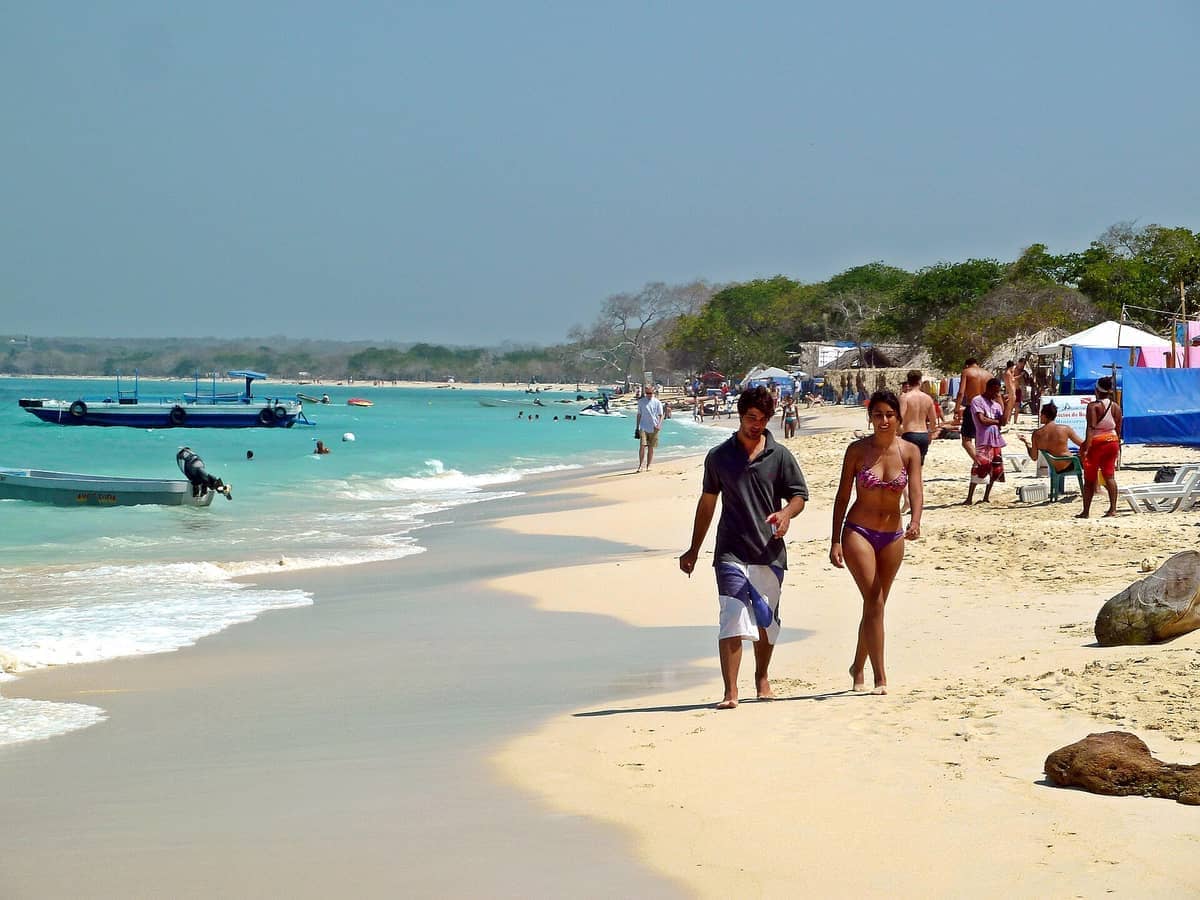
Isla Barú is a peninsula south of Cartagena de Indias, best known for Playa Blanca, one of Colombia's most celebrated Caribbean beaches. Reachable by road or boat, it draws day-trippers and overnight visitors looking for clear turquoise water and a slower pace than the city. The area ranges from lively beach clubs with sun loungers and cocktails to quieter stretches where local fishermen still work the shore.
Isla Barú sits roughly 30–35 kilometers south of Cartagena de Indias, separated from the mainland by a narrow channel and connected by road since 2014. It is defined almost entirely by its coastline, particularly Playa Blanca, a long arc of white sand that has become the reference point for Caribbean beach days in the region. The pace here is the opposite of the colonial city: no stone walls, no cathedral bells, just salt air, palm shade, and the sound of the Caribbean.
Orientation: Where Isla Barú Fits in the Cartagena Map
Isla Barú is technically a peninsula rather than a true island, but the distinction matters less in practice than its position: it lies to the southwest of Cartagena's main urban area, across the Canal del Dique and separated from the Bocachica channel by a narrow water crossing. The land bridge, completed in 2014, now allows vehicles to reach the peninsula from the Cartagena side without a boat, though the journey still takes between about 60 minutes and 1.5 hours depending on traffic and the route taken.
Administratively, Isla Barú falls within the Cartagena District but feels like a different world from the city's historic core. To the north, the Bocagrande peninsula and its high-rise hotels mark the urban edge of Cartagena. To the northwest of Barú, across open water, lie the Islas del Rosario, the national park archipelago that is a natural complement to any Barú visit. The peninsula's main orientation is north-south, with Playa Blanca on the northern Caribbean-facing coast and smaller villages and mangrove areas further inland and to the south.
Travelers building a mental map of the Cartagena region should think of Isla Barú as the beach appendix to the city: the Centro Histórico is where you explore colonial architecture and history, Getsemaní is where you eat and drink at night, and Isla Barú is where you go when you need sand under your feet. The Islas del Rosario sit just off Barú's western coast and are commonly combined into a single day trip by boat.
Character & Atmosphere: What Isla Barú Actually Feels Like
Arrive at Playa Blanca early on a weekday and the beach reads as something close to paradise: the sand is genuinely white and fine, the water shifts from pale turquoise in the shallows to a deeper blue-green offshore, and the coconut palms lean over the shore at angles that seem almost theatrical. The air smells of salt and frying fish. Local vendors set up their grills and fruit carts before 8 a.m., and for an hour or two the beach belongs almost equally to them and to the first visitors arriving by boat from Cartagena.
By late morning on weekends and during the dry season, the dynamic shifts dramatically. Tour boats unload hundreds of day-trippers, beach clubs crank up reggaeton, and vendors work the shoreline with persistence. The central stretch of Playa Blanca becomes crowded and noisy, with sellers offering massages, bracelets, coconut drinks, and fried snacks in rapid succession. This is not a criticism of the place; it is simply the reality of one of Colombia's most visited beaches, and it rewards those who plan around it.
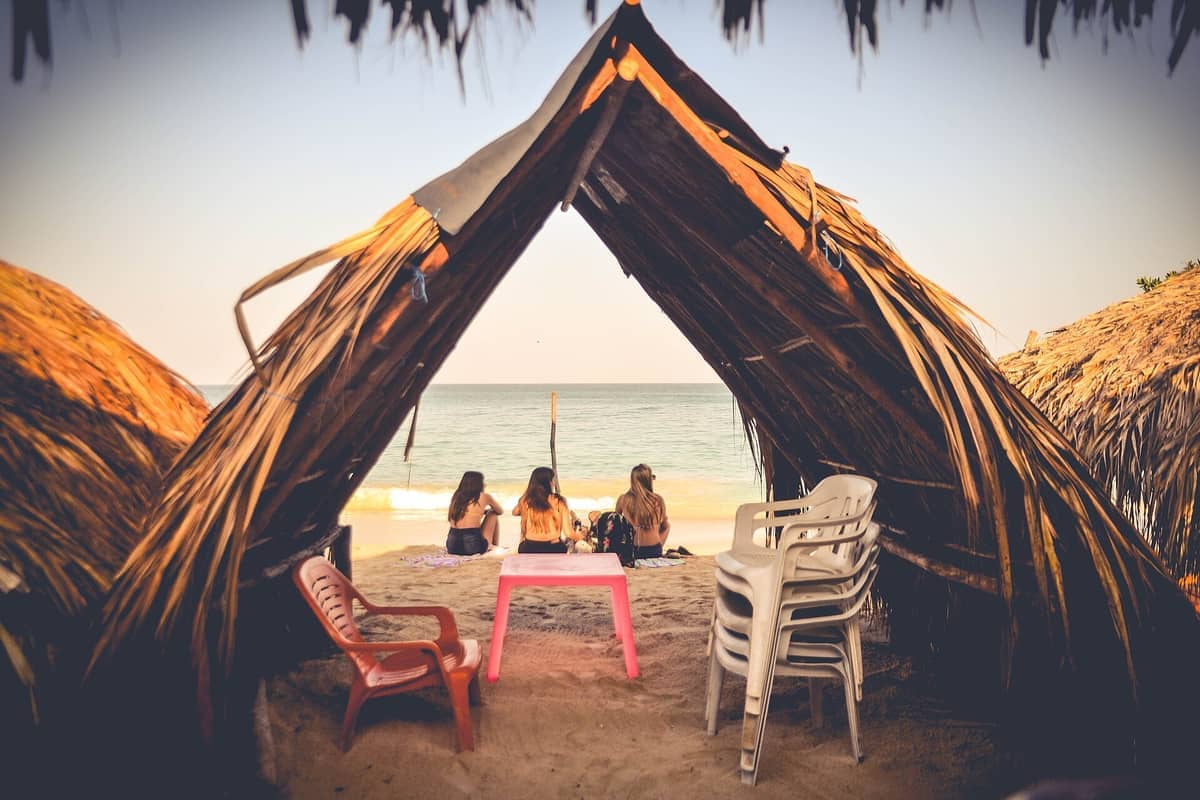
Walk 15 to 20 minutes east along the beach, away from the main boat drop-off area, and the crowd thins noticeably. The beach narrows slightly, the vendors become less frequent, and the atmosphere approaches something quieter. Overnight visitors who stay at one of the small guesthouses or eco-lodges near Playa Blanca experience a completely different version of the place: the evening light turns the water copper-orange, fishing boats return to shore, and after the day-trip boats leave, the beach returns to a pace that feels genuinely unhurried.
💡 Local tip
To experience Playa Blanca with manageable crowds, arrive before 10 a.m. or plan to stay overnight. The beach empties significantly after 4 p.m. when day-trip boats return to Cartagena, and the late afternoon light is spectacular.
What to See & Do on Isla Barú
The central draw is Playa Blanca, and most visitors do not need much else. The beach stretches for several kilometers, and simply swimming, floating in the warm Caribbean water, and eating fresh seafood on the shore constitutes a full and satisfying day. The water temperature hovers around 28–30°C year-round, and the Caribbean swells here are gentle enough for casual swimming.
Barú also serves as a logical departure or arrival point for trips to the Islas del Rosario National Park, a protected archipelago of small coral islands visible from the western shore of the peninsula. Many boat tours from Cartagena stop at both Playa Blanca and the Rosario Islands in a single day, though the combination can feel rushed. A more rewarding approach is to spend a night on Barú and take a dedicated morning boat to the Rosarios, returning by early afternoon.
For travelers interested in the wider coastal geography of the Cartagena region, the Cartagena islands guide provides useful context on how Barú, the Rosarios, and Tierra Bomba compare as day-trip and overnight destinations. Each has a distinct character, and understanding the differences helps avoid the common mistake of treating all three as interchangeable.
Swimming and snorkeling off Playa Blanca: the clearest water is in the morning before boat traffic stirs up sediment
Stand-up paddleboarding and kayak rentals available through beach clubs on the main strip
Boat excursions to the Islas del Rosario departing from the Playa Blanca pier area
Village walks through the small Afro-Colombian community of Barú town, a short distance from the beach
Mangrove exploration by kayak or small boat on the protected southern side of the peninsula
Beach horseback riding offered by local operators in the early morning and late afternoon hours
ℹ️ Good to know
The village of Barú itself, distinct from the beach, is home to an Afro-Colombian community with roots going back to the colonial era. It is about 10 km or a 20-minute mototaxi ride from Playa Blanca and offers a genuine contrast to the tourist-facing beach economy. Treat it as a community, not a photo opportunity.
Eating & Drinking: Food on the Beach and Beyond
The food scene on Isla Barú is almost entirely beach-focused and dominated by seafood. Along Playa Blanca, a line of informal restaurants and covered palapa-style eating areas serves grilled fish, fried mojarra, ceviche, and rice with coconut. These are not fine-dining establishments, but the quality is often excellent when you order what has just come off the boat. Whole grilled red snapper served with patacones (fried green plantain) and lime is the benchmark dish.
Coconut water sold directly from the nut is ubiquitous and genuinely refreshing in the heat. Several vendors also sell fresh fruit plates, corn arepas, and empanadas from portable setups on the sand. Prices on the beach are higher than in Cartagena city, particularly at the beach clubs, which add service charges and often require minimum consumption to use their loungers and umbrellas. Budget roughly 40,000 to 80,000 COP per person for a full meal and drinks at a beach restaurant, depending on how much seafood you order.
Several beach clubs have developed more polished food and drink menus in recent years, targeting the domestic tourism market that fills the beach on Colombian holiday weekends. If you are traveling during peak season (December through March) or a puente (long holiday weekend), booking ahead at one of these clubs for a sun lounger package that includes food and drinks can make sense. For context on the broader food culture of Cartagena, the Cartagena street food guide covers what to eat in the city before or after your beach day.
⚠️ What to skip
Some beach vendors and restaurant touts on Playa Blanca can be aggressive. Firmly but politely declining works better than ignoring. Agree on prices before ordering or accepting any service, particularly massages and braided hair, to avoid disputes afterward.
Getting There & Around: Road, Boat, and Everything Between
There are two ways to reach Isla Barú from Cartagena: overland by road or across the water by boat. Each has its advantages, and many travelers combine them, going one way and returning the other.
The road route, made possible by the bridge completed in 2014, runs south from Cartagena through Pasacaballos and across the canal crossing before continuing through the peninsula to Playa Blanca. The total distance is roughly 45 kilometers by road, and the journey takes between 45 minutes and 90 minutes by taxi or private car depending on traffic around the city's southern exits. Shared colectivos (minivans) depart from the area near the India Catalina monument and from Cartagena's main transport terminal, heading toward Barú. These are the cheapest land option but require some patience and may involve a short mototaxi ride for the final stretch to the beach.
The boat route runs from the Muelle de La Bodeguita or from the docks near the Centro Histórico, with departures typically concentrated in the early morning (around 8-9 a.m.) to get passengers to the beach before midday. Journey times range from 45 minutes to over an hour depending on the vessel and stops. Boat tours that include the Islas del Rosario are widely sold by agencies in Cartagena and depart from the same docks. The boat crossing offers better views and is the preferred option for those who get seasick in smaller vessels only on choppy days, which are more common from September through November.
Once on the peninsula, the main way to get around is by mototaxi (motorcycle taxi), which locals use to move between the beach, the village of Barú, and other points on the peninsula. There is no formal public transit on the island itself. For a full overview of how transportation works across the Cartagena region, the getting around Cartagena guide covers colectivos, taxis, ride-hailing apps, and boat connections in detail.
By road: taxi or private car from Cartagena, 60-90 minutes, approximately 80,000-120,000 COP one-way (verify current rates before travel)
By colectivo: shared minivan from India Catalina area or transport terminal, cheapest land option, journey time variable
By boat: organized day tours or scheduled shuttle launches from Muelle de La Bodeguita, 45-60 minutes, often including stops at Islas del Rosario
On the peninsula: mototaxis connect Playa Blanca to Barú village and other points; agree on fare before boarding
Where to Stay: Overnight Options on Isla Barú
Most visitors to Isla Barú come on day trips, but staying overnight changes the experience entirely. The main concentration of accommodation sits close to Playa Blanca, ranging from basic hammock rentals and budget guesthouses to a small number of more comfortable eco-lodges and beach hotels. Budget options typically offer a hammock or simple room for a few dollars a night, with shared bathrooms and no air conditioning. These are the right choice for travelers who want to experience the beach at sunrise and sunset without any other agenda.
More comfortable accommodation exists in the form of small boutique lodges and beach clubs that have added rooms or bungalows. These tend to be solar-powered or generator-dependent, so expectations around air conditioning reliability and hot water should be calibrated accordingly. Wi-Fi is limited or absent at most properties. The trade-off is complete: you lose urban convenience and gain the experience of having Playa Blanca almost to yourself in the early morning and evening hours.
For travelers who want beach proximity but prefer not to sacrifice hotel comfort, Barú can also be used as a day excursion from a base in Cartagena's Centro Histórico or Bocagrande. The where to stay in Cartagena guide breaks down the trade-offs between each neighborhood base and how each positions you for day trips to the coast and islands. Luxury travelers should also note that a small number of all-inclusive or high-end resort properties have developed near Barú in recent years; the Cartagena all-inclusive resorts guide covers these options in more detail.
Practical Considerations: Timing, Safety, and Realistic Expectations
Isla Barú is not a destination that suits every traveler. If your priority is colonial history, restaurant variety, nightlife, or urban convenience, you are better served staying in the city. Barú is for those who want the Caribbean beach experience that Cartagena's urban beaches, including Playa Marbella and Bocagrande beach, only partially deliver. The water at Playa Blanca is genuinely clearer and the sand genuinely whiter than anything on the city's immediate coastline.
On timing: the dry season (December through April) offers the most reliable weather for beach visits, with calm water, minimal rain, and strong sunshine. The best time to visit Cartagena guide covers seasonal trade-offs in detail. During the rainy season (May through November), particularly around September and October, Barú is less predictable: afternoon rain squalls can develop quickly, and boat crossings can be uncomfortable in choppy conditions. That said, the beach is also significantly less crowded, and some travelers prefer the quieter rainy-season version.
On safety: petty theft occurs on the beach, particularly in the midday rush when bags and belongings are left unattended on the sand. The standard precaution applies: bring only what you need for the day and keep valuables secured or with someone you trust. The beach itself is not dangerous, but the crowded conditions during peak hours create the opportunity for opportunistic theft. At night, the beach is almost empty and the area around overnight accommodation is quiet; standard urban safety concerns do not apply to the same degree as in parts of the city.
TL;DR
Isla Barú is the best Caribbean beach day trip from Cartagena: the water and sand genuinely exceed what the city's urban beaches offer.
Playa Blanca gets extremely crowded on weekends and Colombian holidays; arrive early or stay overnight to see it at its best.
Access is by road (45-90 minutes) or boat (45-60 minutes); many travelers combine Barú with an Islas del Rosario stop on the same boat tour.
Overnight stays transform the experience entirely, with empty beaches at sunrise and sunset, but accommodation is basic and infrastructure is limited.
Best suited for beach-focused travelers, couples, and anyone willing to plan around the crowds; not ideal for those who need urban comfort or need to avoid the midday tour-boat rush.
Three days is enough time to experience the best of Cartagena de Indias: the UNESCO-listed walled city, a boat trip to the Rosario Islands, the street art and nightlife of Getsemaní, and a memorable day trip beyond the city. This itinerary is built for first-time visitors who want depth, not just highlights.
Cartagena de Indias is a year-round destination, but when you go shapes everything from hotel rates to beach conditions. This guide breaks down the dry season, rainy season realities, peak holiday crowds, and the sweet-spot months that most travelers overlook.
Cartagena de Indias sits at the heart of Afro-Colombian history. From the UNESCO-recognized Cultural Space of San Basilio de Palenque to the living traditions embedded in Getsemaní and beyond, this guide covers the history, the neighborhoods, and the practical details for experiencing this heritage authentically.
Cartagena, Colombia has a small but well-defined selection of true all-inclusive resorts. This guide breaks down every major option, where they sit geographically, what's included, current price ranges, and the real trade-offs so you can book with confidence.
Cartagena's beach scene spans gritty urban strips, local fishing villages, and some of the most spectacular Caribbean coastline in South America. This guide covers every option, from the accessible shores minutes from the old city to the powdery white sands of Isla Barú and the coral-fringed Rosario Islands.
Cartagena de Indias holds one of the best-preserved colonial ensembles in the Americas, recognized as a UNESCO World Heritage Site. This guide covers every major building, practical entry details, the best times to visit, and what most travelers get wrong about exploring the historic center.
Cartagena de Indias delivers one of the Caribbean's most genuinely romantic settings: a UNESCO-listed walled city, warm turquoise waters, and a sunset that turns the stone ramparts gold every evening. This guide covers the best romantic activities, where to stay, when to visit, and how to avoid the tourist traps that can flatten an otherwise exceptional trip.
Docking at Cartagena de Indias gives you one of the Caribbean's great port days — colonial forts, walled-city streets, and beach escapes all within reach. This guide covers exactly how to get from the pier to the good stuff, what to prioritize with limited time, and what to skip.
December is one of Cartagena de Indias' busiest and most expensive months, but also one of its best for weather. This guide covers the climate, seasonal events, booking realities, and practical tips to make the most of a December visit to Colombia's Caribbean coast.
Cartagena sits at the gateway to some of the Caribbean's most rewarding island destinations. This guide covers the coral reefs of the Rosario Islands, the white sands of Playa Blanca on Barú, the quieter shores of Tierra Bomba, and the best beaches and nature trips you can reach by boat or road from the city.
From rooftop cocktails above the Walled City to salsa-soaked plazas in Getsemaní, Cartagena de Indias comes alive after dark. This guide covers every major nightlife zone, realistic price ranges, what to skip, and how to plan a great night out in Colombia's most atmospheric Caribbean city.
Cartagena de Indias has a reputation as an expensive Caribbean destination, but the reality is more nuanced. With the right neighborhoods, transport choices, and food strategy, a week in Colombia's most photogenic city is well within reach of budget travelers. Here is exactly how to do it.
Cartagena de Indias has one of the most rewarding street food scenes on the Caribbean coast of Colombia. This guide covers the essential snacks, the best neighborhoods and markets to find them, realistic price ranges, and clear advice on what to skip.
Cartagena de Indias works surprisingly well as a family destination, but it rewards planning. From the Oceanario at Islas del Rosario to the hop-on hop-off city bus, this guide covers the best kid-friendly activities, practical logistics, and the seasonal factors every parent needs to know before booking.
Cartagena de Indias is one of the Caribbean's great base camps. Within a few hours by boat or road, you can reach pristine coral islands, an Afro-Colombian UNESCO heritage village, a one-of-a-kind mud volcano, and mangrove lagoons barely touched by tourism. These are the best day trips to plan from the city.
Everything you need to navigate Cartagena de Indias, from landing at Rafael Núñez International Airport (CTG) to hopping between neighborhoods. Real fare ranges, TransCaribe basics, ride-hailing realities, and seasonal advice included.
Cartagena, Colombia draws millions of visitors each year, but the safety question deserves a straight answer. This guide breaks down neighborhood-by-neighborhood risk, the most common threats tourists actually face, and practical steps to stay safe without missing the city.
Cartagena de Indias is one of the Caribbean's most photogenic cities, but it comes with real trade-offs: heat, crowds, and tourist pricing. This guide cuts through the hype to help you decide if Cartagena Colombia deserves a spot on your itinerary.
Cartagena de Indias delivers a rare combination of UNESCO-listed colonial architecture, Caribbean waterfront, and a genuine luxury infrastructure that rivals any Latin American city. This guide covers where to stay, where to eat, what to do, and when to book to get the most out of a high-end visit to Colombia's crown jewel.
Cartagena de Indias packs colonial fortresses, Caribbean islands, street art, and serious food into one compact city on Colombia's northern coast. This guide cuts through the tourist noise with specific prices, opening hours, seasonal advice, and specific rankings to help you spend your time well.
Choosing where to stay in Cartagena de Indias shapes your entire trip. This guide covers every major neighborhood, from the colonial Centro Histórico to the beach hotels of Bocagrande, with clear trade-offs, practical price context, and seasonal tips to help you book with confidence.