Oceanario Islas del Rosario: What to Expect Before You Go
Oceanario Islas del Rosario, formally known as Oceanario Islas del Rosario CEINER, sits on Isla San Martín de Pajarales in the Rosario Islands archipelago off Cartagena, Colombia. It combines a working marine research center with public exhibits including open coral tanks, shark pools, and dolphin encounters. Getting there is part of the experience: access is by boat only, which shapes your entire day.
Quick Facts
- Location
- Isla San Martín de Pajarales, Islas del Rosario, Cartagena de Indias, Bolívar, Colombia
- Getting There
- Boat (lancha) from Muelle La Bodeguita in Cartagena; boat fare is separate from admission
- Time Needed
- Half-day minimum including transit; plan for a full day if combining with snorkeling or Playa Blanca
- Cost
- COP 40,000 adults / COP 30,000 children (ages 2–10) / Free under 2. Paid at the oceanarium ticket office. Boat transport not included.
- Best for
- Families with children, marine life enthusiasts, travelers combining a Rosario Islands day trip
- Official website
- oceanario.co
What the Oceanario Actually Is
Oceanario Islas del Rosario CEINER is not a theme park. It is a marine science and conservation center that doubles as a public aquarium, built on one of the coral islands of the Rosario archipelago, about 35 kilometers southwest of Cartagena de Indias. The institution operates under the name CEINER (Centro de Investigaciones de Ecosistemas del Caribe), which signals its dual identity as both a research facility and a visitor attraction.
The exhibits center on Caribbean marine ecosystems: coral reef tanks holding reef fish, rays, and sharks, plus outdoor sea pens used for dolphin programs. The surrounding water is the Corales del Rosario y San Bernardo National Natural Park, meaning the ecological context outside the fences is as significant as anything inside. Snorkeling in the adjacent shallows, if conditions allow, can feel more memorable than the tanks themselves.
ℹ️ Good to know
Admission (COP 40,000 adults / COP 30,000 children ages 2–10) is paid directly at the oceanarium entrance on arrival. It does NOT cover your boat transfer from Cartagena. Budget and book boat transport separately.
Getting There: The Boat Ride Is Part of the Experience
There is no road access to Isla San Martín de Pajarales. The only way in is by boat, and the standard departure point is Muelle La Bodeguita in Cartagena. Lanchas (small motorboats) and organized day-tour operators both depart from this dock, generally in the morning. The crossing takes roughly 45 minutes to an hour depending on sea conditions and the type of vessel.
Most visitors book the oceanarium as one stop on a broader Islas del Rosario day trip, which typically also includes snorkeling at a reef site and a stop at Playa Blanca. If you join one of these tours, confirm in advance whether the oceanarium admission is included in your tour price or charged separately on arrival. Many operators sell the boat transport but collect the entry fee at the gate.
Seas in the Rosario Islands are generally calm from December through April, the dry season. Between May and November, afternoon swells can pick up noticeably, and the crossing becomes choppier. Anyone prone to motion sickness should sit toward the center of the lancha and keep their gaze on the horizon. The ride itself, cutting across turquoise Caribbean water with the Cartagena skyline fading behind you, is genuinely pleasant in good conditions.
⚠️ What to skip
Opening hours have been reported as 08:00–17:00 by some listings and approximately 09:00–14:00 by others, with variation by season and weather. Verify current hours directly at oceanario.co before planning your trip, and arrive on the island well before early afternoon to avoid rushing.
Tickets & tours
Hand-picked options from our booking partner. Prices are indicative; availability and final rates are confirmed when you complete your booking.
Baru Terrestre and Islas Del Rosario Pasadia full day tour
From 40 €Instant confirmationFree cancellationSan Andres Islands pontoon tour through the inner bay
From 26 €Instant confirmationFree cancellationSan Andres Island guided tour in Chiva bus
From 17 €Instant confirmationFree cancellationTotumo Volcano and lunch at a VIP hotel from Cartagena
From 34 €Instant confirmationFree cancellation
What You'll See Inside
The entry path leads through a series of open-air and semi-covered exhibit areas. The coral reef tanks are the centerpiece: large circular pools where you can observe angelfish, parrotfish, moray eels, nurse sharks, and smaller reef species in close proximity. The water clarity varies with weather and maintenance cycles; on calm, sunny days, the tanks are genuinely vivid. After heavy rain or in rough sea conditions, visibility drops noticeably.
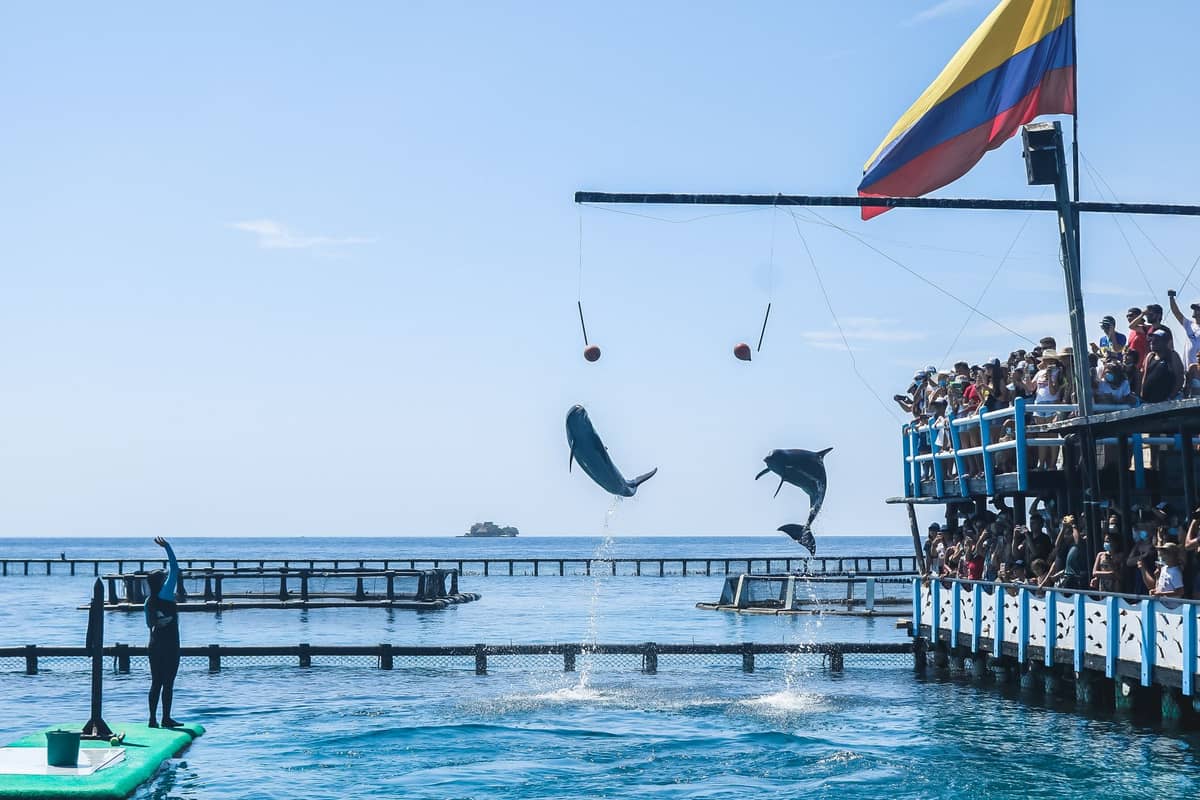
Dolphin encounters are among the most-discussed features. The dolphins are housed in sea pens rather than enclosed pools, meaning they are in actual seawater with tidal movement. Interaction sessions are scheduled, typically offering options to watch from the dock or participate at an additional cost. If this is a priority for your group, confirm what is included in standard admission versus paid upgrade programs before you arrive, as pricing structures can change.
Beyond the main tanks, the grounds include sea turtle areas and sections with manatees, both species that the institution has been involved in recovering and rehabilitating for Caribbean ecosystems. Informational signage exists but is primarily in Spanish, so non-Spanish speakers will get more from the visit if they research the species beforehand or tour with a guide who explains context.
Time of Day and Crowd Dynamics
The island sees its peak crowd between roughly 10:00 and 13:00, when most day-tour boats arrive in clusters. Tour groups from Cartagena tend to overlap at the same reef and island stops, so the oceanarium can feel congested around the dolphin pen and main tanks during this window. Families with young children who tire easily should aim to be on the first boat of the day, arriving as close to opening as possible.
By early afternoon, the crowd begins thinning as tour boats prepare for return departures. The late morning light, when the sun is high and the water bright, gives the best tank visibility and the most photographable conditions. Overcast mornings mute the colors considerably, though the experience itself is unaffected.
💡 Local tip
Photography tip: bring a waterproof camera or a dry bag for your phone. Spray from boat travel and the open-air tank areas will reach your gear. The tanks photograph best from above at a slight angle when sunlight is directly overhead, usually between 10:00 and 12:00.
Combining the Oceanario With a Broader Islands Day
Most travelers visit the oceanarium as one element of a full Rosario Islands itinerary that also includes snorkeling, time on a beach, and lunch. Playa Blanca on Isla Barú is a common add-on for operators running this route, though it requires a longer day and earlier departure. Be realistic about your energy levels: boat travel, tropical heat, and saltwater immersion are tiring, and cramming too many stops into one day often means doing each one hurriedly.
If you have children who are primarily interested in the marine exhibits, the oceanarium alone may justify a half-day trip. Adults traveling without children may find the hour or two at the facility feels short relative to the travel involved and may prefer a tour that weights snorkeling and beach time more heavily.
Practical Notes: What to Bring and Wear
- Reef-safe sunscreen: conventional chemical sunscreens are damaging to coral ecosystems and are increasingly restricted in national park waters. Check your product before leaving Cartagena.
- Cash in Colombian pesos for the entry fee, which is paid at the ticket office on arrival. Card acceptance on the island is not guaranteed.
- Swimwear under your clothes if you plan to participate in water activities or cool off near the tanks.
- Water and snacks: food and drink options on the island are limited. Bring more water than you think you need; tropical heat and boat transit are dehydrating.
- Light reef shoes or sandals with grip: wooden dock surfaces and wet rocks around tank areas can be slippery.
- A small dry bag for your phone, wallet, and any electronics.
On accessibility: the oceanarium is reached exclusively by boat, which creates practical limitations for visitors with significant mobility restrictions. The on-island paths are generally flat and unpaved. No official accessibility statement was available at the time of writing; travelers with specific needs should contact the facility directly at oceanario.co before booking.
Practical Assessment: Is It Worth the Trip?
The Oceanario Islas del Rosario is genuinely interesting for families with children and anyone who wants to see Caribbean marine species up close. It is not a world-class large-format aquarium. If you are comparing it to major international facilities, it will feel modest. What it has instead is location: you are on a real Caribbean island within a protected national park, and the surrounding reef ecosystem that makes the Rosario Islands worth visiting is visible beyond the exhibit fences.
Travelers who have already snorkeled in the Rosario Islands and seen reef fish in the wild may find the enclosed tanks feel anticlimactic by comparison. Conversely, for travelers who cannot snorkel or prefer a structured experience, the oceanarium offers a comfortable way to observe the same species. The dolphin and manatee programs carry ethical considerations that some visitors factor into their decision; research the current practices before committing.
As part of a well-planned three-day Cartagena itinerary, a half-day devoted to the Rosario Islands with a stop at the oceanarium is a reasonable use of time, especially if you are traveling with children or marine biology enthusiasts. As a standalone destination requiring a return trip from Cartagena, the logistics demand more commitment than the facility alone would justify for most adult travelers.
Insider Tips
- Book your boat departure the evening before, not on the morning of your visit. Lanchas and tour operators at Muelle La Bodeguita fill up quickly during high season (December through March), and showing up without a reservation means waiting or being turned away.
- The dolphin interaction sessions that go beyond watching (in-water contact) cost more than standard admission. Prices for these programs are set separately and change periodically. Ask the operator or ticket office directly on arrival rather than relying on third-party listings for current rates.
- If your boat tour includes lunch, confirm where that lunch stop is on the itinerary. Some operators stop for food before the oceanarium, which means arriving at the facility in the early afternoon rush. If possible, request the oceanarium first, lunch second.
- Bring COP in small denominations. Change is not always available at informal island food stalls, and card readers on the island may be unreliable depending on mobile signal strength.
- The best visibility in the tanks correlates directly with recent weather. If Cartagena has had heavy rain in the previous 24–48 hours, sediment runoff affects water clarity throughout the archipelago. Check the forecast and, if possible, time your visit during a clear spell mid-dry-season.
Who Is Oceanario Islas del Rosario For?
- Families with young children who want to see sharks, turtles, and dolphins in a structured setting
- Travelers combining a full Rosario Islands day with snorkeling and beach time
- Marine biology and reef ecology enthusiasts wanting context for what they will see snorkeling
- Visitors who cannot snorkel or swim but still want an immersive Caribbean marine experience
- Those visiting Cartagena during the December–March dry season when sea crossings are calmest
Nearby Attractions
Other things to see while in Islas del Rosario:
- Islas del Rosario National Park
Parque Nacional Natural Corales del Rosario y de San Bernardo stretches across 120,000 hectares of Caribbean Sea off the coast of Cartagena de Indias. It protects some of Colombia's most extensive coral reef systems alongside mangrove forests, seagrass beds, and dozens of small coral islands. This is the closest serious marine wilderness to the city, reachable by boat in under two hours.