Museo de Arte Moderno de Cartagena: Colonial Walls, Contemporary Art
The Museo de Arte Moderno de Cartagena occupies a beautifully preserved colonial structure at Plaza de San Pedro Claver in the historic center. With over six decades of collected works and a rotating program of contemporary exhibitions, it offers a thoughtful counterpoint to the city's colonial monuments.
Quick Facts
- Location
- Plaza de San Pedro Claver, Centro Histórico, Cartagena de Indias
- Getting There
- On foot from most historic center hotels (5–15 min walk); taxis from Bocagrande run about COP 10,000–15,000
- Time Needed
- 45–90 minutes
- Cost
- Foreign adults COP 25,000 | Colombian adults COP 20,000 | Children/students/seniors (Colombia) COP 10,000 | Foreign children COP 15,000
- Best for
- Art lovers, architecture enthusiasts, midday heat escape, culture-focused travelers
- Official website
- mamcartagena.org
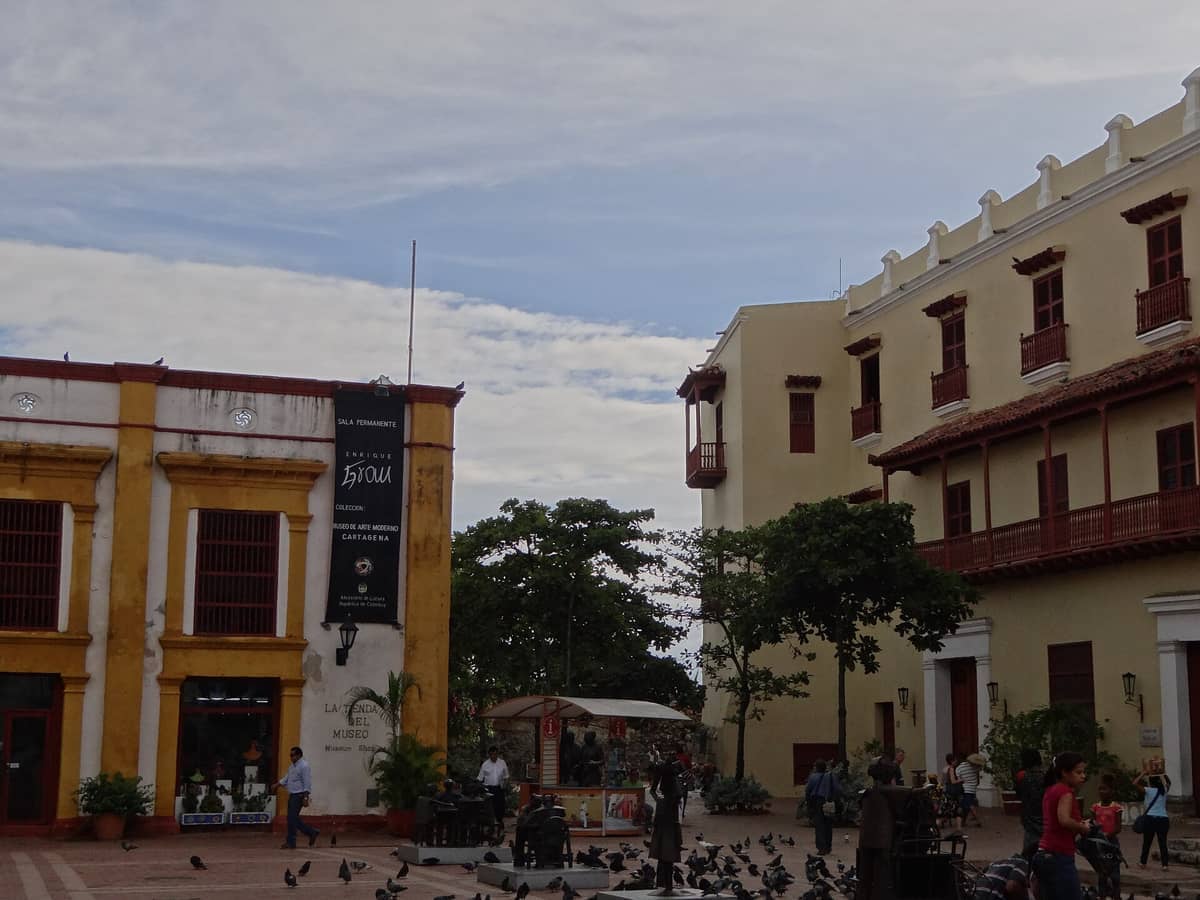
What the Museo de Arte Moderno de Cartagena Actually Is
The Museo de Arte Moderno de Cartagena, commonly abbreviated MAMC, is one of Colombia's older modern art institutions, with a collection history spanning several decades. It sits at Plaza de San Pedro Claver in the heart of the Centro Histórico, directly adjacent to the Santuario de San Pedro Claver, one of the city's most significant colonial churches. The building itself is a 17th-century colonial structure, its thick whitewashed walls and interior courtyard a deliberate contrast to the contemporary and modern works displayed inside.
This is not a sprawling national museum. Its scale is intimate, the kind of place where you can move slowly through three or four exhibition rooms without feeling rushed or overwhelmed. That scale is part of its appeal. It functions as a genuine cultural institution for the city, not just a tourist attraction, hosting rotating exhibitions alongside its permanent collection of Colombian and Latin American modern art.
ℹ️ Good to know
The museum is closed every Monday. If a public holiday falls on a Monday, it opens that day and closes on the following Tuesday instead. Check the official site at mamcartagena.org before visiting if your trip falls around a Colombian public holiday.
The Building: Why the Architecture Matters Here
Walking into the MAMC from the glare of Plaza de San Pedro Claver, the first thing you notice is the temperature drop. Colonial construction in Cartagena was designed for the Caribbean heat: walls half a meter thick, high ceilings, and a central open courtyard that channels air through the building. In a city where afternoon humidity can make outdoor exploration feel punishing, the museum's interior offers genuine relief.
The tension between the colonial shell and the modern works inside gives the MAMC a character that purpose-built white-cube galleries rarely achieve. Paintings and sculptures that might feel clinical in a contemporary space take on a different weight here, surrounded by colonial masonry. It is worth pausing in the courtyard, which provides a quiet break from the foot traffic outside. The plaza it sits on is also home to the Santuario de San Pedro Claver, so the immediate surroundings reward a slow walk before or after your visit.
Tickets & tours
Hand-picked options from our booking partner. Prices are indicative; availability and final rates are confirmed when you complete your booking.
Totumo Volcano and lunch at a VIP hotel from Cartagena
From 34 €Instant confirmationFree cancellationCity tour of Cartagena with entry to San Felipe castle
From 25 €Instant confirmationFree cancellationSelf-guided e-Scavenger Hunt in Cartagena Colombia
From 31 €Instant confirmationFree cancellationNight tour of Cartagena de Indias aboard a Limo Chiva
From 10 €Instant confirmationFree cancellation
The Collection and Exhibitions
The permanent collection focuses on Colombian modern art, with particular strength in work from the Caribbean coast region. You will find paintings, drawings, and sculptures across media, with some pieces reflecting Afro-Colombian and Caribbean cultural currents that distinguish Cartagena's artistic identity from Bogotá-centric narratives of Colombian art history.
The rotating exhibition program is where the museum shows most ambition, bringing in contemporary Colombian and Latin American artists alongside occasional international shows. Exhibitions change several times per year, so even returning visitors may encounter something new. For cultural context on how Afro-Colombian heritage shapes the arts in this region, the Cartagena Afro-Colombian culture guide provides useful background before your visit.
Wall text and labels are predominantly in Spanish. Visitors who do not read Spanish will still be able to engage visually with the work, but will miss curatorial context. There is no dedicated audio guide in English available based on current information from the museum's site.
When to Visit and What to Expect at Different Hours
The museum opens at 11:00 a.m. Tuesday through Sunday, closing at 6:00 p.m. Tuesday to Friday and at 5:00 p.m. on weekends. Arriving close to opening time on weekday mornings is the most reliable way to have the galleries almost to yourself. Tour groups and school visits tend to cluster in late morning and early afternoon, so if you arrive at 11:00 a.m. on a Tuesday, Wednesday, or Thursday, you can move through the rooms at your own pace without queuing around guided groups.
Saturday and Sunday see lighter crowds than you might expect from a city this busy with visitors, partly because the MAMC sits just off the main tourist circulation routes. The plaza outside gets busy with vendors and visitors to the Santuario, but the museum interior remains relatively calm. Saturday and Sunday closing time is 5:00 p.m., one hour earlier than the 6:00 p.m. weekday closing, so plan accordingly.
💡 Local tip
The 12:30–2:30 p.m. window is the hottest and most uncomfortable time to be walking the historic center. The museum is an excellent destination for this slot: air moves through the colonial building, the rooms are cool, and you avoid peak street heat before resuming outdoor exploration in the late afternoon.
Cartagena's rainy season runs from May through November, with the heaviest rainfall in September and October. Rain here tends to arrive in concentrated afternoon bursts rather than all-day drizzle. The museum makes a practical refuge if you get caught in one of these downpours while exploring the historic center. During the dry season from December through April, visitor numbers across the city are higher, but the MAMC rarely reaches a capacity where entry feels crowded.
Getting There and Practical Logistics
The museum is located at Plaza de San Pedro Claver in the Centro Histórico. If you are staying within the walled city, it is almost certainly walkable from your accommodation, typically 5 to 15 minutes depending on where you are based. The streets around San Pedro Claver can be confusing on first approach since several alleys in this neighborhood do not appear clearly on standard map apps. Look for the church tower as a landmark and navigate toward it.
From Bocagrande or Castillogrande, a taxi to the historic center costs roughly COP 10,000–15,000 and takes 10–20 minutes depending on traffic. The Transcaribe bus system serves the city but navigating it to a specific address in the old town is not straightforward for first-time visitors. For general orientation around the city, the guide to getting around Cartagena covers your options in detail.
Admission prices as verified in early 2025: foreign adult visitors pay COP 25,000. Colombian adults pay COP 20,000. Children, students, and seniors with Colombian ID pay COP 10,000. Foreign children, students, and seniors pay COP 15,000. These prices are relatively modest by international museum standards and well within reach for most budgets. Online ticket purchase is available through the museum's website.
⚠️ What to skip
Ticket prices and opening hours can change. Verify current details at mamcartagena.org before your visit, especially around Colombian public holidays when the schedule shifts.
Photography, What to Bring, and Real Limitations
Photography policies in Colombian museums vary by exhibition and often by individual artwork, depending on licensing agreements. As a rule, assume photography without flash is permitted in permanent galleries and ask staff before photographing anything in temporary exhibitions. Staff at the MAMC are generally approachable if you ask politely in Spanish.
Bring water. The museum does not have an on-site café as of current information. The plaza outside has vendors selling fruit and cold drinks, but once you are inside you will not find refreshments. Given Cartagena's heat, arriving already hydrated makes the visit more comfortable.
A note on honest expectations: the MAMC is not Bogotá's Museo Nacional or a major international art institution. Visitors expecting a large, encyclopedic collection will be underwhelmed. What it offers is something more specific: a carefully curated glimpse into Colombian and Caribbean modern art, housed in a genuinely beautiful colonial building, in one of the most architecturally significant urban centers in South America. If that proposition interests you, the visit is well worth the hour. If you are primarily interested in Cartagena's colonial history and architecture rather than its art, your time might be better spent exploring the city walls or the Palacio de la Inquisición nearby.
Combining the MAMC with the Surrounding Area
Plaza de San Pedro Claver is one of the more rewarding squares in the historic center to spend time in. The Santuario de San Pedro Claver church fronts the plaza and is open to visitors independently of the museum. A few minutes' walk away, the Museo Naval del Caribe offers a completely different historical perspective on the city's colonial past and its role as a Caribbean port. Building a half-day itinerary around this cluster, starting at the MAMC when it opens, then exploring the church and the naval museum in the afternoon, covers three distinct institutions without requiring transport between them.
The colonial architecture of Cartagena is most readable in the streets immediately surrounding the museum, where you can observe the layered history of Spanish colonial building styles in a relatively compact area. The light in this part of the old city is particularly good for photography in the morning hours, before the sun climbs directly overhead and bleaches the color from the facades.
Insider Tips
- Arrive at opening time on a weekday (11:00 a.m., Tuesday to Friday) for the closest thing to a private viewing experience the museum offers. Groups rarely appear before noon.
- The internal courtyard is the best spot in the building for natural light photography. Ask at the entrance if you can spend a few minutes there even after finishing the galleries.
- Exhibition programming is not always updated in real time on the museum's social media. If a specific show is the reason for your visit, email or call the museum directly before committing to the trip.
- The plaza outside hosts informal vendors who can be persistent. A polite but firm 'no gracias' is sufficient. Keep your bag zipped and in front of you in the plaza, though the museum interior itself is calm and secure.
- If you are visiting in the December to March high season, the museum is a useful anchor for a midday pause. Plan outdoor historic center exploration for the morning and late afternoon, with the museum filling the hot midday hours.
Who Is Museo de Arte Moderno de Cartagena For?
- Travelers interested in Colombian and Latin American modern art beyond the major Bogotá institutions
- Architecture enthusiasts who want to experience a colonial interior adapted for contemporary use
- Visitors seeking a cool, quiet break from the heat and street activity of the Centro Histórico
- Culture-focused travelers building a full day around the San Pedro Claver plaza area
- Anyone on a second or third visit to Cartagena who has already covered the major colonial monuments
Nearby Attractions
Other things to see while in Centro Histórico (Ciudad Amurallada):
- Cartagena City Walls (Murallas)
The Murallas de Cartagena de Indias are the best-preserved colonial defensive walls in the Americas, ringing the historic center with roughly 3 kilometers of coral-stone ramparts, cannons, and Caribbean sea views within an 11-kilometer defensive system overall. Entry is free, the walk takes 1 to 3 hours depending on your pace, and the experience changes dramatically depending on the time of day you show up.
- Catedral Santa Catalina de Alejandría
Standing at the east corner of Parque de Bolívar in Cartagena de Indias, the Catedral Basílica Metropolitana de Santa Catalina de Alejandría is one of the oldest episcopal sees in the Americas. Construction began in the 16th century, and the building remains the seat of the Archbishop of Cartagena de Indias today. Entry is free, the doors open daily, and the surrounding plaza makes this one of the most rewarding stops in the entire Centro Histórico.
- Iglesia de Santo Domingo
The Iglesia de Santo Domingo is widely considered the oldest surviving church in Cartagena de Indias, anchoring a plaza that doubles as one of the historic center's most lively gathering points. The building itself rewards close inspection, while the square around it offers a completely different experience depending on the hour you arrive.
- India Catalina Statue
Standing at the entrance to Cartagena de Indias, the bronze India Catalina Statue has marked the city's identity since 1974. Free, open around the clock, and loaded with historical weight, it is the first landmark many visitors encounter and the last symbol they remember.