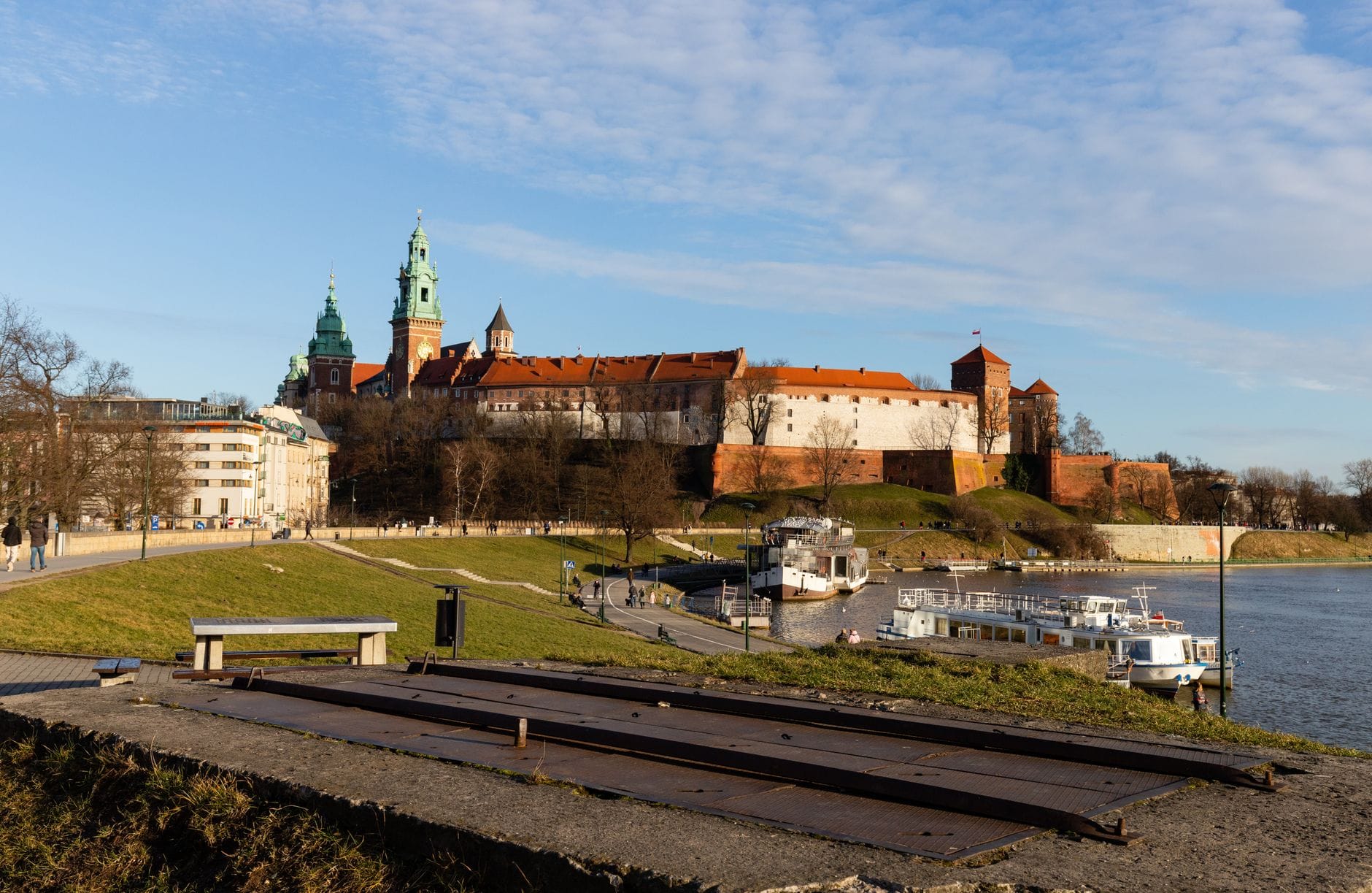
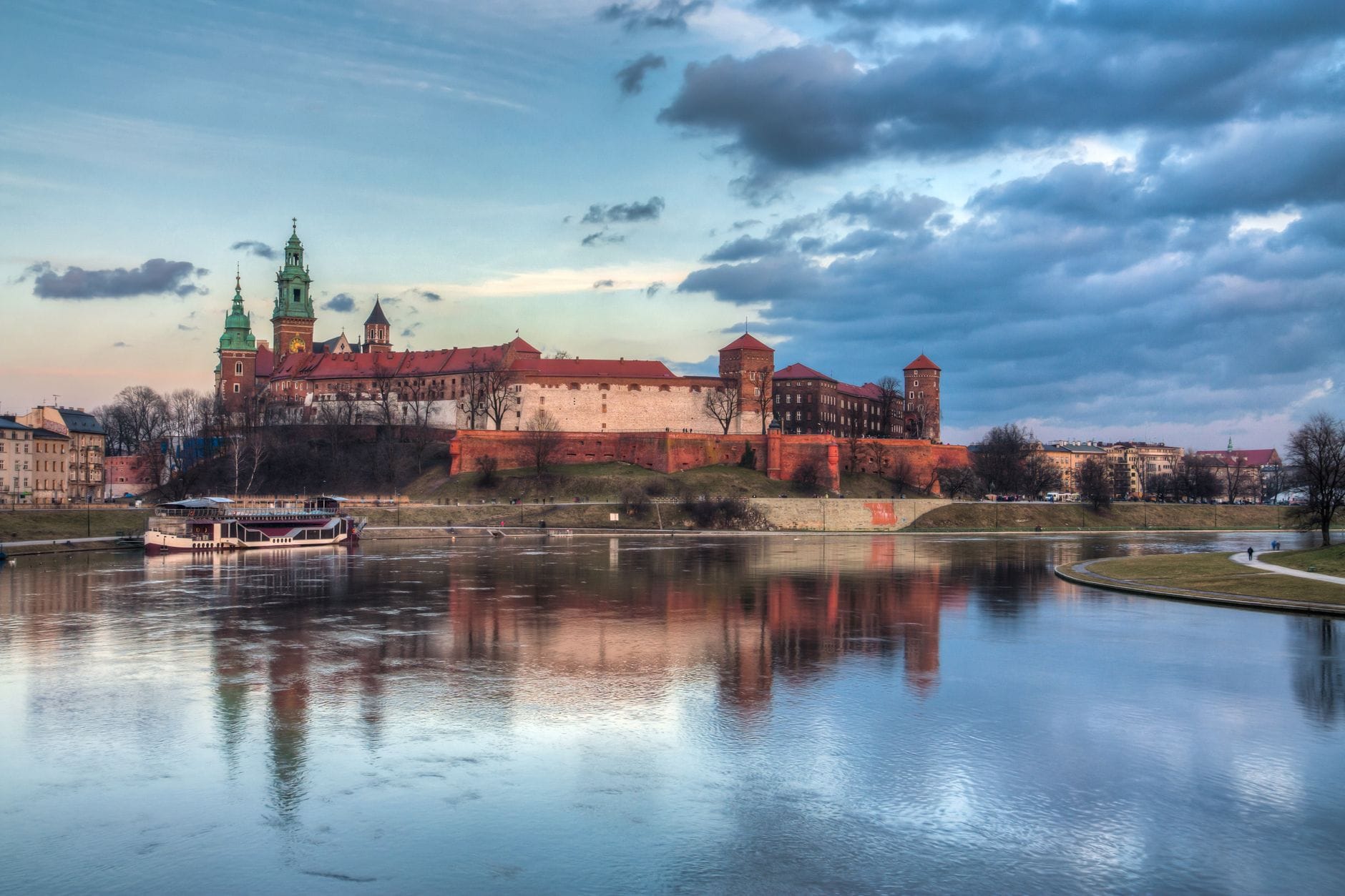
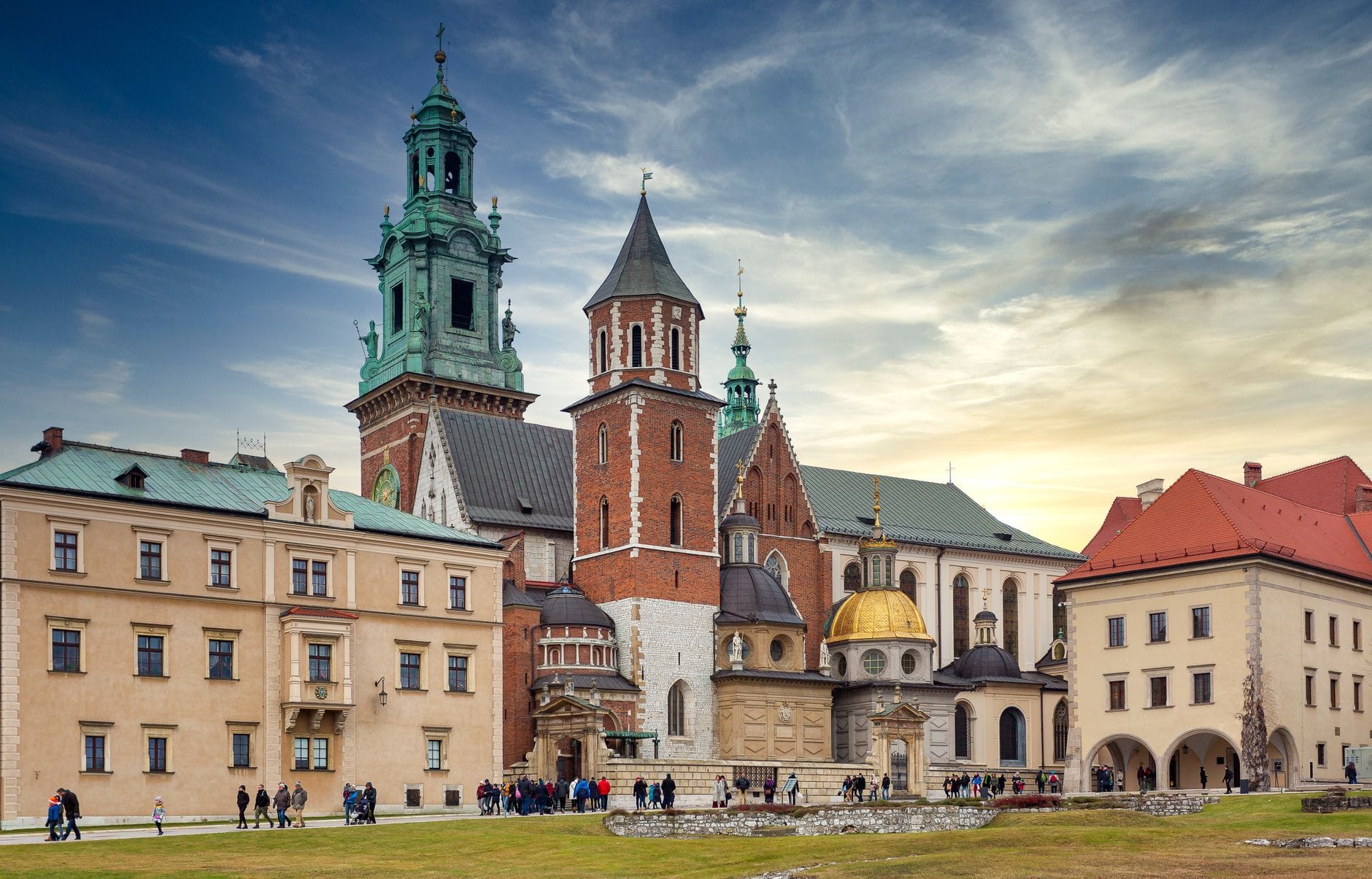
Wawel Hill rises above the Vistula River at the southern edge of Kraków's Old Town, carrying the full weight of Polish royal history on a single limestone outcrop. The castle and cathedral that crown the hill served as the seat of Polish kings for centuries, and today form one of the most visited and historically significant sites in Central Europe. No visit to Kraków is complete without at least a walk up to the ramparts.
Wawel Hill is not a neighborhood in the conventional sense but something rarer: a self-contained citadel at the centre of Poland's national identity. Rising above the Vistula on a limestone bluff, it holds a royal castle, a cathedral where kings were crowned and buried, and a dragon legend that is older than recorded history. For anyone spending time in Kraków, it is the fixed point around which everything else orients.
Orientation: Where Wawel Hill Sits in Kraków
Wawel Hill occupies the southwestern corner of Kraków's Old Town, rising about 228 metres above sea level from the flat plain of the Vistula valley. The hill is physically compact, but its footprint on the city's geography is enormous. It sits roughly 700 metres south of Rynek Główny (the Main Market Square), close enough to walk from the square in under ten minutes, yet distinctly separate from the urban fabric around it.
The practical boundaries of the hill are defined by the walls of the Wawel complex itself rather than by street lines. Podzamcze Street runs along the northern base of the hill, connecting it to the Old Town. Bernardyńska Street curves around the southern and eastern flanks, while the western side drops steeply toward the Vistula embankment. The main visitor entrance is from the north, via the broad ramp that ascends from Podzamcze past the Coat of Arms Gate.
To the south across the river lies the district of Podgórze, which is clearly visible from the castle ramparts. To the east, the former Jewish quarter of Kazimierz begins just a few blocks away, making Wawel a natural pivot point for anyone walking between the Old Town and those southern neighborhoods.
ℹ️ Good to know
The official address of the Wawel complex is Wawel 5, 31-001 Kraków. The hill is entirely car-free: vehicle access is restricted, and all visitors arrive on foot via the surrounding streets and gates.
Character and Atmosphere: What It Feels Like on the Hill
Wawel Hill operates on a different rhythm from the rest of Kraków. Early in the morning, before the ticket offices open, the outer courtyard and ramparts are quiet in a way that almost nothing else in the city centre is. The light comes in low from the east, casting long shadows across the cathedral's Baroque spires and gilded clocks. A few joggers come up from the embankment path, and the cathedral bells mark the hour. In those first hours, the scale of the place settles on you: this limestone platform has been continuously occupied for at least 50,000 years, and the stones underfoot carry that weight.
By mid-morning, the dynamic changes completely. Tour groups arrive in volume, particularly between 10:00 and 14:00. The internal courtyard of the Royal Castle fills with visitors from across Europe and beyond, audio guides in hand, queues forming at each ticketed entrance. The atmosphere becomes that of a major heritage site under heavy load: worth the effort, but requiring patience and some tactical movement if you want a photograph without crowds.
Late afternoon brings a slower pace again. The light on the Vistula to the west turns gold, and the views from the northern rampart looking back toward the Old Town become spectacular. Locals use the outer walkways for an evening stroll, particularly in summer, when the embankment paths below the hill fill with cyclists and families. After the complex closes for the day, the hilltop becomes fully peaceful, and the illuminated silhouette of the castle and cathedral visible from the river is one of Kraków's defining images.
What to See and Do on Wawel Hill
The two dominant structures on the hill are the Wawel Royal Castle and the Wawel Cathedral. Each requires a separate ticket and represents a distinct historical layer, so treat them as two separate experiences rather than a single attraction.
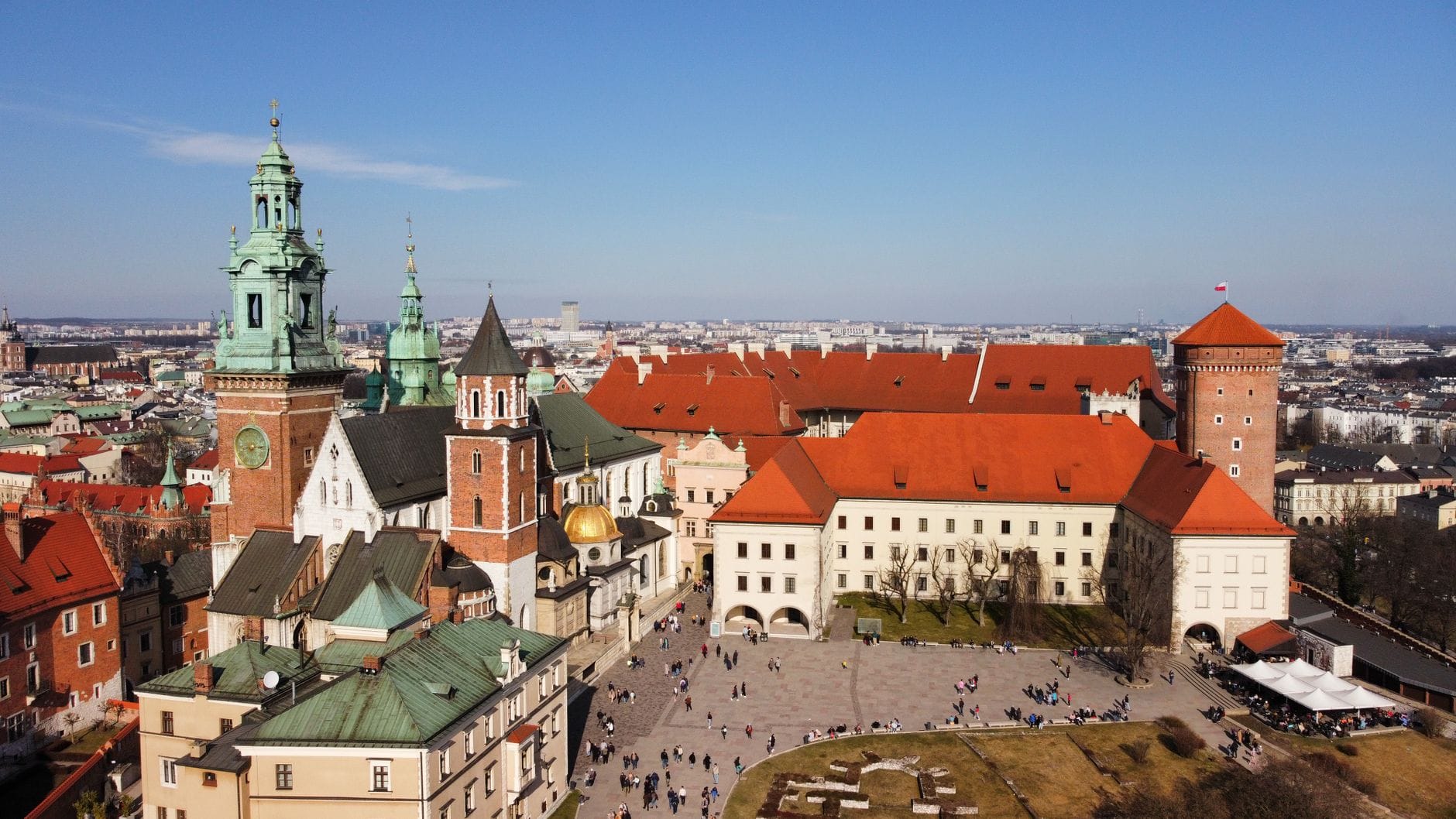
The Royal Castle was the principal residence of Polish kings from the early 11th century until the capital moved to Warsaw in 1596. What stands today is largely a Renaissance structure rebuilt in the early 16th century under King Sigismund I, and the arcaded inner courtyard is one of the finest examples of Italian Renaissance architecture in Central Europe. Inside, the State Rooms on the upper floors display an extraordinary collection of 16th-century Flemish tapestries commissioned by King Sigismund II Augustus, as well as royal furniture, paintings, and armour. The Royal Private Apartments offer a more intimate look at court life. There is also a dedicated Oriental Art collection and a Crown Treasury and Armoury, each ticketed separately.
Wawel Cathedral, consecrated in 1364, served as the coronation and burial church of Polish monarchs for centuries. The interior is dense with chapels, each belonging to a different royal dynasty or noble family, and the Sigismund Chapel (Kaplica Zygmuntowska), completed in 1533, is regarded as one of the purest Renaissance structures in Poland. The cathedral crypt holds the tombs of kings and national heroes, including Tadeusz Kościuszko and Marshal Józef Piłsudski. Climbing the Sigismund Tower to see the great bronze Sigismund Bell, cast in 1520 and rung only on major national occasions, is worth the narrow staircase.
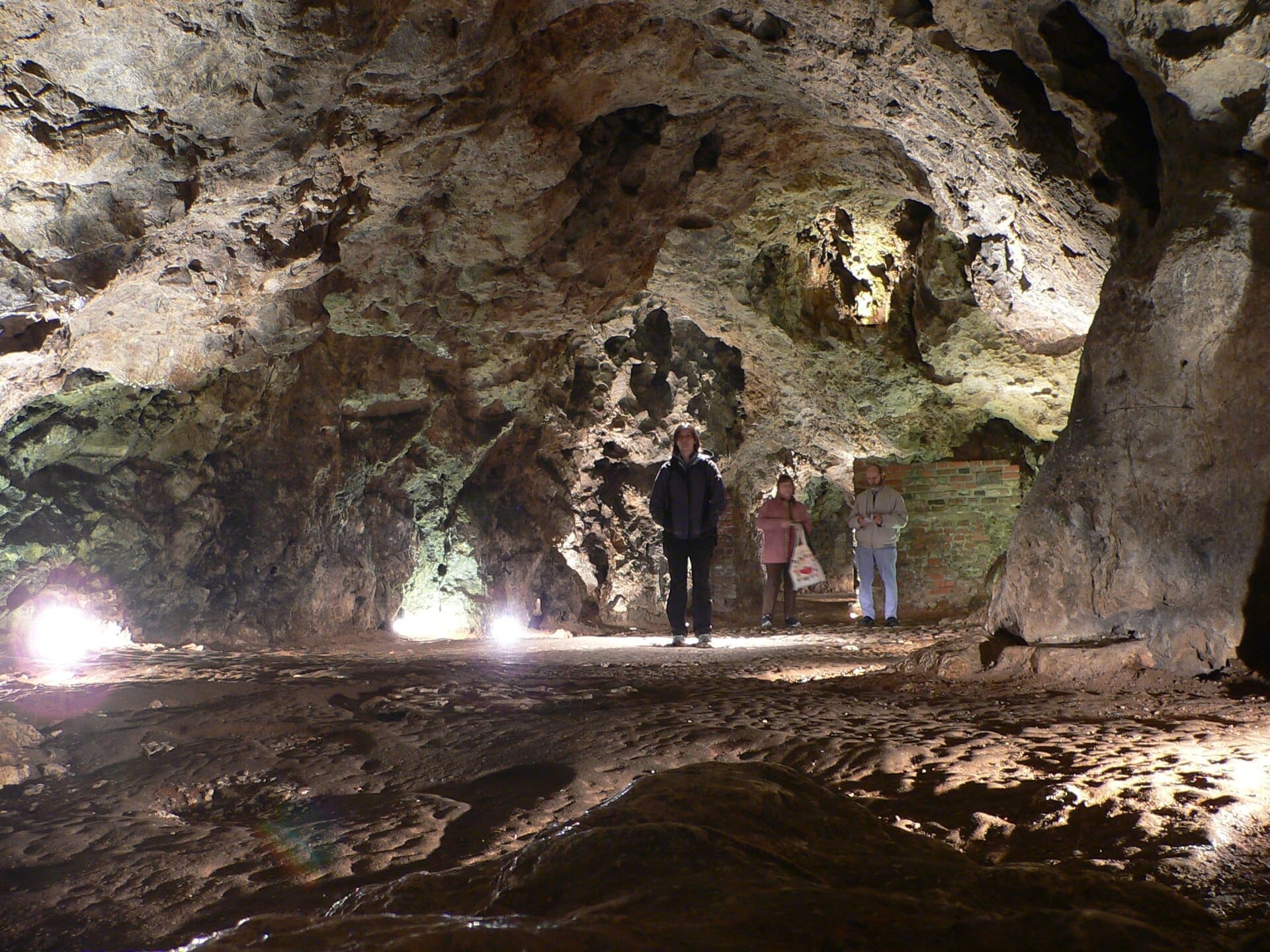
At the northern base of the hill, cut into the limestone itself, is the Dragon's Den (Smocza Jama), a natural cave of about 270 metres associated with the legend of the Wawel Dragon. The cave is accessed via a separate entrance near the river and exits near a fire-breathing bronze dragon sculpture on the embankment. It is family-friendly, inexpensive, and takes about 15 minutes to walk through. The legend itself, in which a clever cobbler defeats the dragon using a sheep stuffed with sulphur, is one of the oldest documented Polish folk tales.
Wawel Royal Castle: State Rooms, Royal Private Apartments, Crown Treasury and Armoury, Oriental Art collection
Wawel Cathedral: main nave, royal chapels, Sigismund Bell tower, royal crypt
Dragon's Den cave with the Wawel Dragon statue at the exit
The outer ramparts and northern terrace: free to access, excellent city views
The Lost Wawel exhibition: archaeological remains and early medieval rotunda in the castle's basement
⚠️ What to skip
Tickets for the most popular parts of the castle, particularly the State Rooms, sell out early on busy days, especially in summer. A fixed number of timed-entry tickets are available each day. Book online before you arrive or come early in the morning when the ticket office opens. Entry to the cathedral and Dragon's Den is ticketed separately from the castle exhibitions.
History: Why Wawel Matters to Poland
The limestone outcrop has been settled since the Palaeolithic period, but its emergence as a centre of political power dates to around the 10th century, when the first Piast dynasty rulers established their seat here. The early Romanesque cathedral and castle structures from that period were built over and rebuilt repeatedly, and archaeological layers going back to the earliest settlements are visible in the Lost Wawel exhibition beneath the castle courtyard.
For five centuries, from roughly 1038 to 1611, Wawel was the seat of the Polish monarchy, and by extension the administrative and spiritual centre of the Polish state. Even after King Sigismund III Vasa relocated the capital to Warsaw, Kraków and Wawel retained their symbolic primacy: coronations continued to be held in the cathedral until the late 18th century, and Polish kings continued to be buried here. During the Partitions of Poland (1795 to 1918), when Poland ceased to exist as an independent state and its territory was divided between Russia, Prussia, and Austria, Wawel functioned as a place of national memory and mourning. Burials of national figures, from poet Adam Mickiewicz to Marshal Piłsudski, reinforced its role as a secular and sacred national shrine.
During World War II, the Nazi governor Hans Frank occupied Wawel Castle as his official residence, removing or looting much of the art. A significant portion of the collection, including the Flemish tapestries, had been evacuated before the occupation and survived the war in Canada. Their eventual return to the castle after 1961 was treated as a major cultural event. This history of loss and recovery runs through every room in the castle and gives the collections a significance that goes beyond aesthetics.
Eating and Drinking Near Wawel Hill
There are no restaurants or cafés on the hill itself beyond a small cafe kiosk near the castle courtyard, suited to a quick coffee between exhibitions. For anything more substantial, you need to descend to the surrounding streets. The nearest concentration of options is along the Vistula embankment (Bulwar Czerwieński and Bulwar Dietla), where several casual restaurants and bars with outdoor seating take advantage of the river views and the castle silhouette above.
Walking ten minutes northeast brings you to the southern end of the Old Town and streets like Grodzka and Kanonicza, which run parallel to Wawel Hill and carry a mix of restaurants, cafés, and wine bars aimed at both locals and visitors. Kanonicza Street in particular is one of the best-preserved medieval streets in Kraków, lined with Renaissance townhouses and several good restaurants. Another ten minutes east on foot puts you in Kazimierz, where the food and drink scene is considerably more varied, with everything from Polish traditional cooking to Jewish-style cuisine and Middle Eastern options.
For a broader picture of what to eat in the city, the guide to Kraków's food scene covers local specialities including żurek (sour rye soup), pierogi, and obwarzanek (the city's distinctive ring-shaped pretzel sold from street carts, including those at the base of the hill).
Getting There and Around
Wawel Hill is most easily reached on foot from the Old Town. From Rynek Główny, walk south along Grodzka Street for roughly 700 metres until the street opens toward the hill; the northern ramp up to the castle entrance is clearly visible. This walk takes about 10 minutes at a comfortable pace and passes several notable buildings along Grodzka, including the Baroque Church of Saints Peter and Paul.
By tram, the closest stops are Wawel and Stradom, served by multiple lines running along the ring road (Dietla/Starowiślna corridor) east of the hill. From the Wawel tram stop, the walk up to the castle entrance takes about 5 minutes. Trams connect these stops directly with Kraków Główny railway station (the main rail hub, roughly 1.5 kilometres northeast) and with Kazimierz to the south.
The Vistula embankment path along the base of the hill is accessible by bicycle and connects westward toward the Dębniki district and Tyniec Abbey, and eastward through Kazimierz and Podgórze. It is one of Kraków's most pleasant cycling routes. For comprehensive navigation advice across the city, the guide to getting around Kraków covers tram routes, cycling, and the city's bike-share system.
💡 Local tip
Vehicle access to the hill is restricted and parking on the hill itself is prohibited. Do not try to drive up. The most practical approach is always on foot from the Old Town or by tram to the Wawel or Stradom stops.
Where to Stay
Wawel Hill itself has no accommodation, and the immediately surrounding streets are residential or institutional. For a base that puts you within comfortable walking distance, the southern section of the Old Town (particularly streets like Kanonicza and Grodzka) offers boutique hotels in historic buildings at premium prices. Kazimierz, just to the east, provides a wider range of price points and a livelier street-level atmosphere. For a full comparison of where to base yourself in Kraków, the Kraków accommodation guide breaks down each area by traveller type and budget.
Staying within a 10-minute walk of Wawel is a genuine advantage if your priority is visiting the castle and cathedral: you can arrive early before tour groups, return for a second visit in the late afternoon, and enjoy the riverside embankment after dark without needing transport. The tradeoff is that this part of the city is quieter at night and more expensive than areas like Kazimierz or the streets north of the Old Town.
Practical Tips and What to Know Before You Go
Wawel is a meaningful stop on any multi-day Kraków itinerary. If you are planning two or three days in the city, the two-day Kraków itinerary typically places Wawel on the first morning, when energy is high and crowds are thinnest. For a broader self-guided circuit that connects Wawel with the surrounding streets, the Kraków walking tour guide traces a logical route from the Main Market Square down to the hill and on into Kazimierz.
Entry to the outer grounds, ramparts, and northern terrace is free and open during daylight hours. The ticketed exhibitions each have their own opening hours, which vary by season and are subject to change: always check the official Wawel Royal Castle website before your visit. The cathedral has its own separate schedule and ticket system.
Dress codes apply inside the cathedral: shoulders and knees should be covered. The site is also a functioning religious space, and visitors should be respectful during services. The castle is a museum space with no particular dress requirement beyond practical footwear for cobblestone surfaces and stairs.
ℹ️ Good to know
Wawel Hill is stroller-accessible on most of the outer pathways, but the castle's internal staircases and the Sigismund Bell tower involve steep, narrow steps. The Dragon's Den cave involves a descent and ascent on uneven stone steps and may not be suitable for visitors with mobility difficulties.
If your time in Kraków is limited but you want to understand the city's deeper history, the Kraków Underground Museum beneath Rynek Główny complements a visit to Wawel well, showing the medieval layers of the city that preceded the hill's Renaissance transformation.
TL;DR
Wawel Hill is the historical and symbolic centre of Poland, holding the Royal Castle and Cathedral within a single compact, walkable complex above the Vistula River.
Best visited early in the morning to avoid peak crowds; the outer grounds and ramparts are free and worth the walk even without a museum ticket.
Multiple separate tickets are required for different exhibitions: plan at least half a day to cover the castle State Rooms, Cathedral, and Dragon's Den.
Ideal for history-focused travellers, anyone interested in Polish royal heritage, and visitors who want context for everything else they will see in Kraków.
Not the right place to base a night out or find a meal: descend to Kanonicza Street, the Vistula embankment, or Kazimierz for food and drink after your visit.
Two days in Kraków is enough time to cover the Royal Capital's greatest hits without rushing. This itinerary covers the Old Town, Wawel Hill, Kazimierz, and Podgórze in a logical, walkable order, with honest guidance on day trips, booking pitfalls, and what actually fits into a weekend.
Three days is the sweet spot for Kraków. Long enough to cover the Royal Castle, the Jewish Quarter, and a serious day trip without rushing, short enough that you won't run out of things to do. This itinerary breaks it down day by day, with honest advice on costs, timing, and what to skip.
Auschwitz-Birkenau is 65-70 km from Kraków and one of the most significant historical sites in the world. This guide covers every practical detail: how to book mandatory timed entry, how to get there by train, bus, or organized tour, what to expect at both sites, and how to plan your day without stress.
Kraków punches well above its weight as a museum city. This guide covers the finest collections in the Old Town, Kazimierz, Podgórze, Wawel Hill, and beyond, with practical advice on free days, booking ahead, and how to sequence your visits.
Kraków rewards visitors year-round, but timing makes a real difference to your experience. This guide breaks down every season, from spring's mild sightseeing windows to December's Christmas markets, so you can match your trip to your priorities.
Kraków sits at the centre of one of Central Europe's richest day-trip networks. Within two hours you can descend into a UNESCO salt mine, walk the grounds of the world's most significant Holocaust memorial, or stand in the shadow of the Tatra Mountains. This guide covers the best excursions, with honest advice on timing and logistics.
Kraków rewards budget travellers more than almost any other European city. From a medieval market square and riverside walks to free museum days and a communist-era district, here's how to fill your itinerary without opening your wallet.
Kraków's tram and bus network is affordable, frequent and covers every major district. This guide covers MPK Kraków tickets, airport transfers, ride-hailing fares, night services and the common mistakes that catch visitors out.
Kraków ranks among the safest major cities in Europe, with a crime index of around 24.9 and a U.S. State Department Level 1 travel advisory. This guide covers the real risks tourists face, from pickpockets on trams to nightlife scams, plus practical advice on safe neighborhoods, solo travel, and getting around after dark.
The Kraków Christmas Market on Rynek Główny is one of Central Europe's most atmospheric seasonal events, running from late November into the New Year across multiple locations. This guide covers exact dates, opening hours, what to buy and eat, how to get there, and how to avoid the most common mistakes first-time visitors make.
Kraków rewards curiosity beyond its famous squares and castles. This guide uncovers the city's lesser-known museums, quiet districts, ancient earthworks, and local markets that most visitors walk straight past.
Kraków holds one of Europe's most significant concentrations of Jewish heritage, from the medieval synagogues of Kazimierz to the haunting remains of the Podgórze Ghetto. This guide covers every major site, the best order to visit them, seasonal considerations, and the historical context that makes these places meaningful.
Kraków has one of Central Europe's most energetic nightlife scenes, spanning cellar clubs in the Old Town to craft-cocktail bars in Kazimierz. This guide covers where to go, when to arrive, what to pay, and what to skip.
Nowa Huta is unlike anywhere else in Poland. Built from scratch in 1949 as a model socialist workers' city, this eastern district of Kraków preserves Soviet-era architecture, monumental avenues, and a steelworks that once employed 40,000 people. This guide covers what to see, how to get there, and how to make the most of your visit.
Kraków remains one of Europe's best-value city breaks, but knowing where to spend and where to skip makes the difference. This guide breaks down real daily costs, the best free attractions, cheap eating options, and smart strategies to stretch every złoty.
Steven Spielberg's Schindler's List was filmed almost entirely in Kraków, Poland, using real streets, courtyards, and the actual factory where Oskar Schindler saved over 1,000 Jewish workers. This guide breaks down every major filming location, separates film myth from historical fact, and tells you exactly how to visit each site.
Kraków rewards shoppers who go beyond the obvious. This guide covers the city's best markets, streets, and specialty shops — from amber at the Cloth Hall to vintage finds in Kazimierz — with practical details on prices, hours, and what to avoid.
Three main transport options connect Kraków and Prague: direct and semi-direct trains, intercity buses, and low-cost flights on selected days. This guide breaks down journey times, realistic costs, booking logistics, and which option actually suits your trip.
Kraków's Old Town (Stare Miasto) is one of Europe's most walkable historic centres, compact enough to cover on foot in a half-day without a guide. This route takes you along the Royal Route from the Barbican through Rynek Główny to Wawel Castle, with practical timing, entry fee breakdowns, and clear advice on what to skip.
Kraków is one of Central Europe's most rewarding cities for families. From a fire-breathing dragon and underground salt mines to cheap milk bars and a largely car-free Old Town, this guide covers everything parents need to plan a memorable trip to Kraków, Poland with children in tow.
Zakopane sits about 105 km south of Kraków in the Tatra Mountains and makes one of the best day trips from the city. This guide covers every transport option, realistic costs, what to do once you arrive, and the seasonal factors that can make or break the trip.
Kraków is Poland's most historically rich city, home to a UNESCO-listed Old Town, royal castle, Jewish quarter, and some of Europe's most important WWII memorial sites. This guide covers the best things to do in Kraków across every interest and budget, with practical detail on tickets, timing, and logistics.
Wawel Hill is the historical heart of Kraków, Poland, home to the Royal Castle and the Wawel Cathedral — two separate sites with separate tickets, hours, and experiences. This guide covers everything you need to plan a smart, well-timed visit, from ticket prices and booking logistics to what's worth your time inside.
Kraków is one of Central Europe's great food cities, with a cuisine built on centuries of Polish tradition. This guide covers the essential dishes to try, where to find the real thing, and how to eat well without paying tourist-trap prices.
Choosing where to stay in Kraków shapes your entire trip. This guide breaks down every major neighborhood by price, vibe, and proximity to sights, so you can pick the right base without second-guessing yourself.
The Wieliczka Salt Mine is one of Poland's most visited attractions, sitting just 14 km from central Kraków. This guide covers everything you need to know before you go: which route to choose, how to book tickets, what the underground visit actually involves, and the practical details most guides skip.