Dragon's Den (Smocza Jama): Kraków's Ancient Cave Beneath Wawel Hill
Carved into the limestone bedrock of Wawel Hill over 25 million years ago, the Dragon's Den (Smocza Jama) is one of Kraków's oldest and most atmospheric stops. A short underground walk through three chambers ends at the Vistula riverbank, where a fire-breathing bronze dragon greets you. It is low-cost, quick, and interesting for what it is.
Quick Facts
- Location
- Wawel 5, 31-001 Kraków — western slope of Wawel Hill, exit onto the Vistula Boulevards
- Getting There
- Tram/bus stop 'Wawel'; roughly 15–20 min walk south-west from Rynek Główny
- Time Needed
- 20–35 minutes for the cave; pair it with Wawel Castle for a half-day
- Cost
- Small entry fee (approx. 9 PLN adult); tickets at machines near the entrance or online. Verify current price at wawel.krakow.pl
- Best for
- Families with children, mythology enthusiasts, anyone visiting Wawel Hill
- Official website
- wawel.krakow.pl
What Is Smocza Jama?
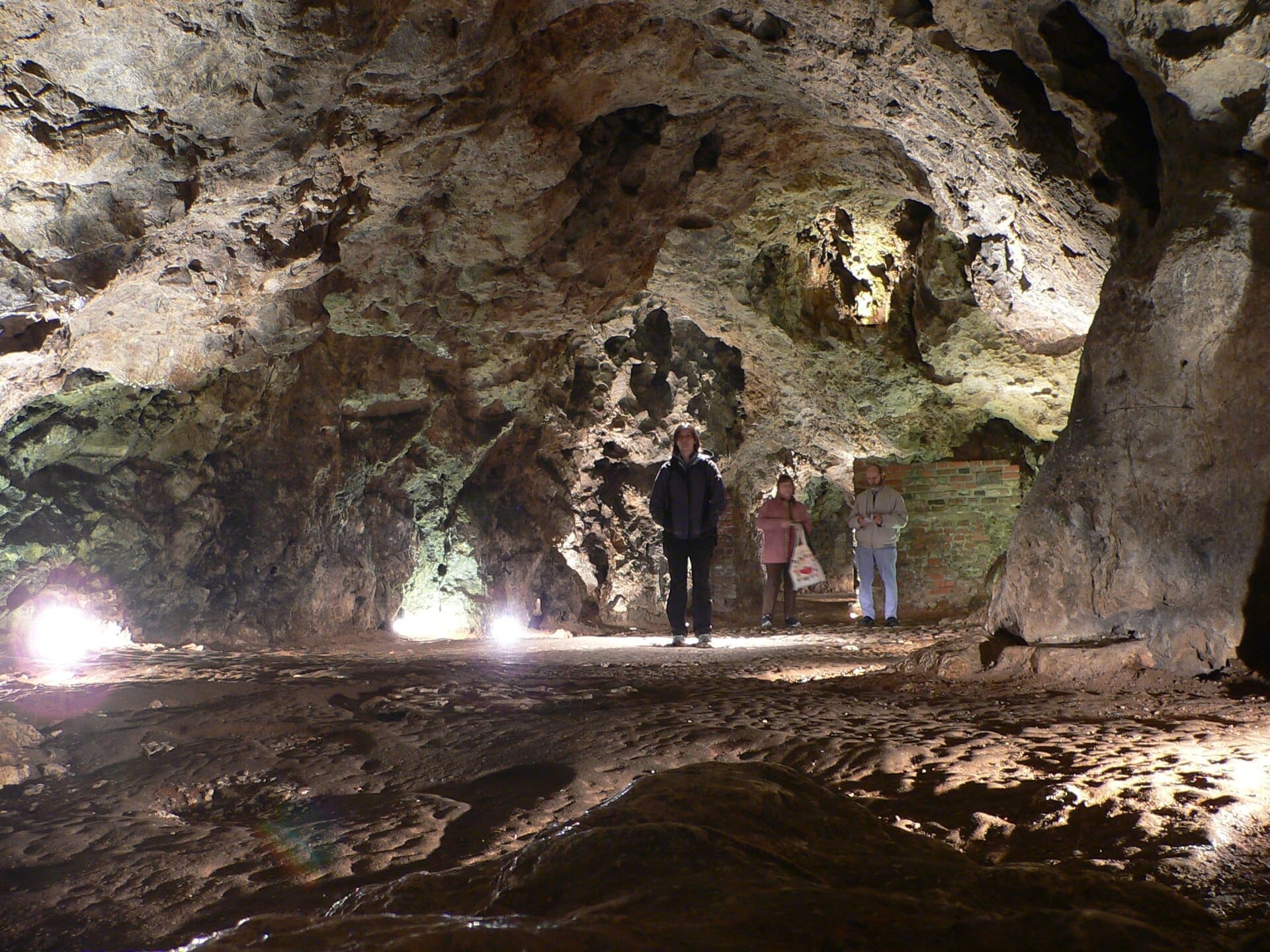
Smocza Jama, or Dragon's Den, is a natural limestone karst cave running through the base of Wawel Hill in central Kraków. The total cave system extends roughly 270 metres, though the tourist route covers 82 metres of three connected chambers, descending via a 21-metre spiral staircase and exiting onto the Vistula riverbank promenade. It is managed as part of the Wawel Royal Castle complex and is open seasonally, generally from late April through the end of October.
The cave itself was formed over 25 million years ago through the slow dissolution of limestone by slightly acidic groundwater, a process typical of karst geology. Inside, you will notice the characteristic damp smell of mineral rock, water seeping along the walls in places, and the echo of footsteps bouncing off low ceilings. The chambers are well-lit, but the surfaces underfoot can be slick, and the air is noticeably cooler than outside, typically by several degrees even on warm summer days.
💡 Local tip
Wear shoes with grip. The path through the cave is paved but the constant moisture makes some sections slippery, particularly near the lower chambers. Sandals or smooth-soled shoes are a bad idea here.
The Legend That Made It Famous
The Dragon's Den owes its cultural staying power to one of Poland's most enduring founding myths. According to legend, a fearsome dragon called the Wawel Dragon (Smok Wawelski) once inhabited this cave and terrorised the people of early Kraków, devouring livestock and demanding tributes of young women. The dragon was eventually outrageously outwitted not by a knight, but by a clever cobbler's apprentice named Skuba, who stuffed a sheep carcass with sulphur. The dragon ate it, grew unbearably thirsty, drank from the Vistula until it exploded, and the city was saved.
The myth is thought to date to the early Piast dynasty period, and it is woven deeply into Kraków's civic identity. Polish chronicles first recorded the Wawel Dragon story in the 13th century, while the cave itself appears to have been known and used by humans from the 16th century onward. Historical records suggest it served at various points as a storehouse and, less glamorously, as a brothel. The dragon legend, however, has proven far more durable than either of those functions.
At the cave exit on the Vistula riverbank stands the Wawel Dragon sculpture by Bronisław Chromy, installed in 1972. Every few minutes, the dragon's mouth emits a real flame, triggered by a gas burner. It is one of the more photographed spots along the Vistula riverbank, and children in particular tend to enjoy the fire-breathing effect. Tourists with mobile phones and a bit of patience can trigger the flame by sending an SMS to a number displayed on a sign near the statue.
Tickets & tours
Live prices and dates from our booking partner. If you book, we may earn a commission at no extra cost to you.
Krakow's Old Town hidden gems guided tour with a local expert
From 10 €Instant confirmationFree cancellationPinocchio Garden of Lights exhibition in Krakow
From 10 €Instant confirmationEntrance ticket for the Legends of Krakow robotic show
From 9 €Instant confirmationFree cancellationWieliczka Salt Mine guided tour with hotel pickup from Krakow
From 58 €Instant confirmationFree cancellation
Walking Through the Cave: What to Expect
Entry is from the top of Wawel Hill, near the western side of the castle complex. After buying a ticket from the machine at the entrance (or at the Wawel Castle ticket office, or in advance online), you approach a narrow stone doorway and begin the descent: a tight spiral staircase dropping 21 metres into the hillside. The staircase is the most physically demanding part of the experience and is not accessible to wheelchair users or those with significant mobility limitations.
Once inside, the route leads through three chambers. The spaces are not cavernous in the dramatic sense; the ceilings stay relatively low and the passages are narrow enough that larger groups moving in opposite directions require some negotiation. The cave has small underground pools, smooth limestone formations along the walls, and interpretive lighting that picks out the rock textures without overdoing the theatrical effect. The total walk takes around 10 to 15 minutes at a leisurely pace.
The route is one-directional, exiting through a low doorway onto the Vistula Boulevards at the base of Wawel Hill. From there, you are standing by the riverbank, with the dragon statue just ahead. This exit point is convenient if you want to walk along the river afterward, but note that returning to the top of Wawel Hill requires walking around the base and back up one of the main paths, which takes about 10 minutes.
⚠️ What to skip
The entry staircase involves 21 metres of steep spiral descent. There is no wheelchair access and no lift. People with claustrophobia may find the narrower passages uncomfortable. The cave is not suitable for pushchairs or prams.
When to Visit and How Crowds Behave
The cave is open seasonally. Based on published schedules, hours run from 10:00 to 17:00 in April, May, June, September, and October; and 10:00 to 20:00 in July and August. The ticket office closes 15 minutes before the official closing time each day. The cave is closed from November through March.
Peak crowds coincide with mid-morning school groups in late spring and with the July and August tourist high season. The cave is small inside, and a queue of 30 people entering in quick succession makes the experience noticeably more pressured. Arriving at opening time (10:00) or in the late afternoon, roughly an hour before closing, tends to mean quieter conditions. Weekend mornings in July are the most crowded periods to avoid if you have flexibility.
Combining the cave visit with a broader exploration of Wawel Hill makes practical sense. The Wawel Castle and Wawel Cathedral both require separate tickets and considerably more time. Plan the cave as a 20-minute interlude within a longer Wawel morning, not as a standalone destination requiring a dedicated trip.
Photography and the Dragon Statue
Inside the cave, photography is permitted. The artificial lighting works reasonably well for phone cameras in the wider chambers, though the narrower passages and lower light near the pools will test anything without decent low-light capability. The textured limestone walls photograph well at close range. Flash tends to flatten the rock surfaces, so if your camera handles ISO adjustments, natural cave-light shots produce more interesting results.
Outside, the dragon statue draws a crowd almost continuously during opening hours. The best light for photographing the statue falls in the morning, when sunlight hits the western riverbank before the castle's shadow extends down the hill. The flame trigger via SMS means you can time your shot, though the flame itself lasts only a couple of seconds and requires some anticipation. A burst shot mode on a phone camera is the most reliable method for capturing the fire.
How It Fits Into a Kraków Itinerary
The Dragon's Den works best as part of a Wawel Hill visit rather than a reason to visit Wawel Hill on its own. If you are following a two-day Kraków itinerary, Wawel is typically covered on the first morning, and the cave fits naturally at the end of that block, since its exit takes you directly down to the riverbank where you can then walk east toward Kazimierz.
For families, the cave pairs well with a walk along the Vistula and the playgrounds and open spaces nearby. The dragon legend resonates strongly with younger children, and the fire-breathing statue makes for a satisfying conclusion. More detail on family-friendly options in Kraków can be found in our guide to Kraków with kids.
Be realistic about what the cave is: it is a short, inexpensive, historically interesting underground walk with a strong folklore backstory. It is not a show cave with dramatic stalactite formations or an extended underground tour. Visitors expecting geological spectacle comparable to purpose-built cave attractions will find it modest. At its actual price point and time commitment, however, it delivers good value within a broader Wawel visit.
ℹ️ Good to know
The Dragon's Den is closed from 1 November through 31 March. If you are visiting Kraków in winter, the cave will not be accessible. The Wawel Dragon statue outside remains visible year-round, but the cave entrance and underground route are shuttered during the colder months.
Insider Tips
- The SMS flame trigger for the dragon statue is displayed on a sign near the sculpture. Having a local SIM card or roaming enabled saves the fumble of finding the number when the moment comes.
- The cave exit drops you directly onto the Vistula Boulevards. From there, it is a 25-minute flat walk east along the river to Kazimierz, making this a natural transition point if you are planning to explore the Jewish Quarter in the afternoon.
- Ticket machines near the cave entrance accept cards, but having cash as a backup is sensible. The machines can queue up during peak hours; buying at the main Wawel Castle ticket office slightly uphill avoids the bottleneck.
- The cave temperature stays noticeably cooler than outside. On hot summer days this is a relief, but on a cold October morning, bringing a light layer is worth the thought.
- If you are visiting with a school-age group or on a weekday in May or June, expect organised school groups between 10:00 and 12:00. Arriving after 14:00 on weekdays in those months significantly reduces the chance of sharing the narrow passages with 40 ten-year-olds.
Who Is Dragon's Den (Smocza Jama) For?
- Families with children aged 5 and up who want an engaging, low-cost, short activity tied to a genuine folklore story
- First-time visitors to Kraków covering Wawel Hill who want to complete the hill's main attractions in a single morning
- History and mythology enthusiasts interested in early Polish legend and the cultural origins of the Wawel Dragon story
- Travellers on a budget looking for a meaningful add-on to a free Wawel Hill walk
- Anyone who enjoys geological curiosities: the cave's karst limestone formation is over 25 million years old and visibly distinct from the castle architecture above it
Nearby Attractions
Other things to see while in Wawel Hill:
- Vistula Riverbank (Bulwary Wiślane)
The Vistulan Boulevards stretch along both banks of the Vistula River beneath Wawel Hill, offering Kraków's most popular free outdoor space. Built between 1907 and 1913 as flood-protection embankments, they now serve as a walking, cycling, and socialising hub with views of one of Poland's most iconic skylines.
- Wawel Royal Castle
Wawel Royal Castle is Poland's most significant royal residence, perched on a limestone outcrop above the Vistula River. From its Renaissance arcaded courtyard to its treasury of crown jewels and Leonardo da Vinci's Lady with an Ermine, the castle holds centuries of Polish history within a single hilltop complex. Entry to the hill and courtyard is free; exhibitions require timed tickets.
- Wawel Cathedral
The Archcathedral Basilica of Saint Stanislaus and Saint Wenceslaus, known as Wawel Cathedral, is the coronation and burial church of Polish kings. Standing on Wawel Hill in its present Gothic form since 1364, it combines Gothic architecture, Renaissance chapels, and baroque interiors into one of the most historically charged buildings in Central Europe.
Planning a trip? Discover personalized activities with the Nomado app.