Vistula Riverbank (Bulwary Wiślane): Kraków's Riverside Escape
The Vistulan Boulevards stretch along both banks of the Vistula River beneath Wawel Hill, offering Kraków's most popular free outdoor space. Built between 1907 and 1913 as flood-protection embankments, they now serve as a walking, cycling, and socialising hub with views of one of Poland's most iconic skylines.
Quick Facts
- Location
- Bulwar Inflancki, Kraków (both banks of the Vistula, around Wawel Hill and Kazimierz)
- Getting There
- Tram/bus stops at Wawel, Jubilat, or Rondo Grunwaldzkie; short walk downhill from Wawel Castle
- Time Needed
- 1–3 hours for a leisurely walk; open 24/7, year-round
- Cost
- Free. Optional river cruises approx. 9–13 EUR per person (verify locally)
- Best for
- Evening strolls, cycling, picnics, sunset photography, and escaping the Old Town crowds
- Official website
- www.krakow.pl/instcbi/35742/inst/11682/1041/Bulwary-Wislane.html
What the Vistula Riverbank Actually Is
The Bulwary Wiślane, officially the Vistulan Boulevards in Kraków, are a series of paved embankment promenades running along both banks of the Vistula River, primarily around Wawel Hill and extending into the Kazimierz and Podgórze districts. They are not a park in the manicured sense. What you get instead is a wide, mostly flat riverside walkway with stone retaining walls stepped down toward the water, scattered benches, occasional food kiosks and bar boats, and a natural flow of joggers, cyclists, families, and students that gives the place its particular atmosphere.
The boulevards were engineered between 1907 and 1913 by Roman Ingarden, primarily as hydraulic flood-protection structures rather than leisure infrastructure. The recreational function came later, as the city grew around them. They now form part of the Kraków Technology Trail (Krakowski Szlak Techniki), recognised on 6 April 2006.
💡 Local tip
Access is free and unrestricted at all hours. You do not need to plan around opening times, which makes this a reliable option on Mondays when many Kraków museums are closed.
The View from the Riverbank: What You'll Actually See
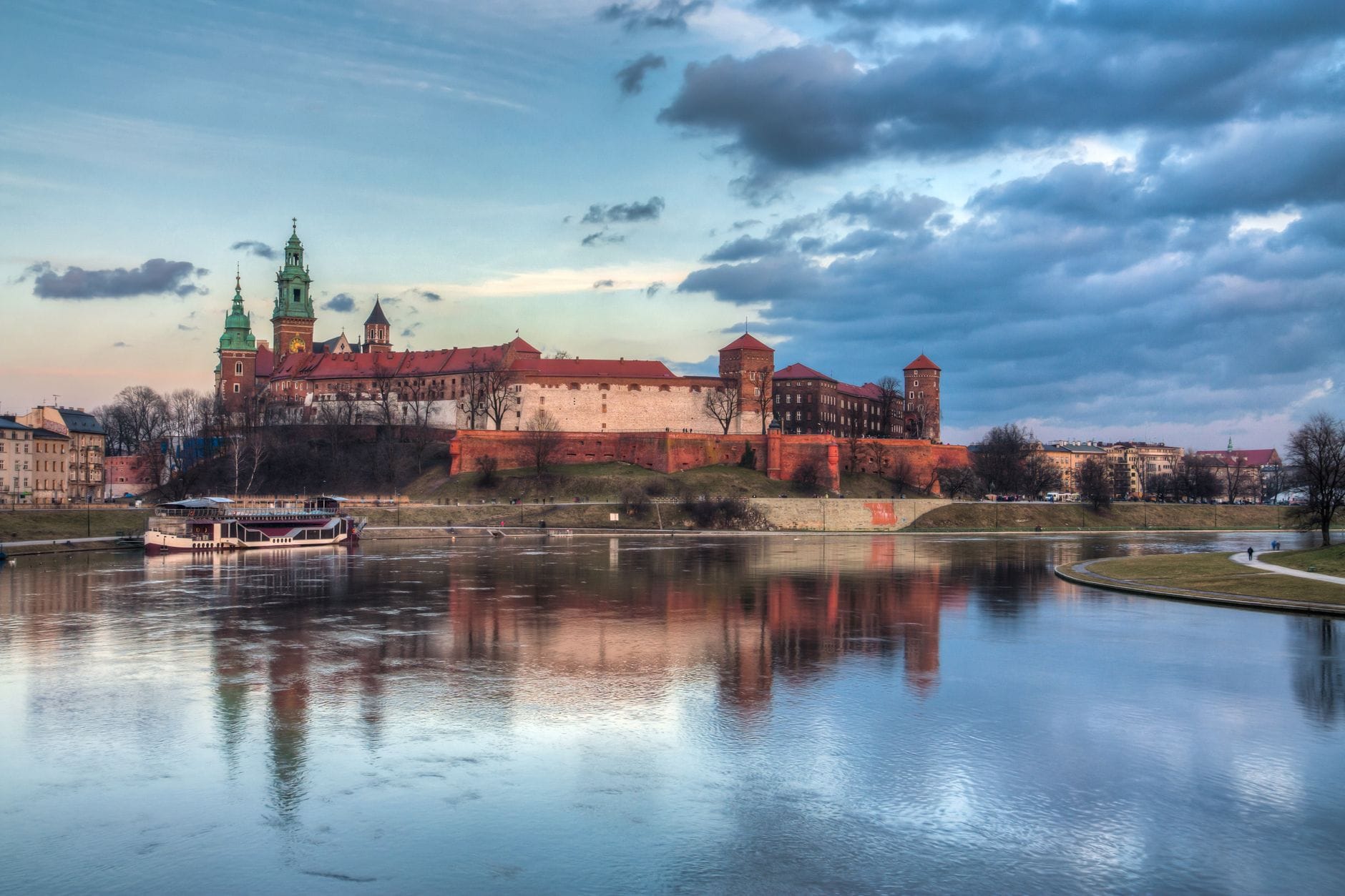
The most striking visual from the northern (Old Town) bank is Wawel Hill rising directly above you, with Wawel Castle and Wawel Cathedral stacked on its limestone outcrop. From the water level, the hill reads as dramatically vertical. Early morning, when mist sits on the river, the silhouette of the castle towers can look almost theatrical. By midday the light is flat and the hill just looks large. The hour before sunset, when the sandstone walls catch the low western light, is when the view rewards photography most.
The southern bank, in the Podgórze district, gives you the inverse angle: Wawel Hill recedes into a long, composed skyline that also takes in the spires of the Old Town. Serious photographers often prefer this side precisely because the distance creates perspective. The two banks are connected by several bridges including the Bernatek Footbridge, known locally for the locks and hanging figures that have accumulated on its structure.
Tickets & tours
Live prices and dates from our booking partner. If you book, we may earn a commission at no extra cost to you.
Guided Wawel tour with lunch and Vistula River cruise
From 70 €Instant confirmationFree cancellationVistula River cruise and Wieliczka Salt Mine group tour
From 78 €Instant confirmationFree cancellationKrakow sightseeing catamaran cruise on the Vistula River
From 23 €Instant confirmationFree cancellationSightseeing Cruise on Vistula River in Krakow
From 19 €Instant confirmationFree cancellation
How the Riverbank Changes Through the Day
Early morning, between roughly 6 and 9am, the boulevard belongs to runners and dog walkers. The light is usually soft, the stone embankments are cool and smell faintly of the river, and the bar boats moored along the bank are still closed and quiet. This is the easiest time to walk at your own pace without negotiating around other visitors.
From mid-morning through the afternoon, cyclists appear in greater numbers, and the lower sections closer to Wawel fill with tourists who have walked down from the castle. The atmosphere is sociable rather than peaceful. Food trucks and kiosk operators set up near the main access points, and you can usually find coffee, zapiekanka, and ice cream without going far.
Evenings from around 6pm are when the riverbank becomes most alive, particularly in the warmer months from May through September. The bar boats, which are permanently moored vessels converted into floating bars, draw a young local crowd. Music carries across the water. Groups spread blankets and bottles on the embankment steps. The smell of grilled food mixes with the cool air coming off the river. If you want to experience this side of Kraków's social culture, an evening here is more revealing than any bar interior in the Old Town.
⚠️ What to skip
Summer evenings near the bar boats can get loud well past midnight. If you are staying in accommodation close to the riverbank, check proximity before booking.
Walking the Riverbank: A Practical Route
Most visitors start from the northern bank near Wawel Castle, accessed by walking downhill from the castle itself or from the tram stops at Wawel or Jubilat. From here, the natural direction is eastward toward Kazimierz, where the embankment path eventually meets the Bernatek Footbridge. Crossing to the southern bank and walking back west gives a round-trip loop of roughly 3 to 4 kilometres, which takes about an hour at a relaxed pace without stops.
The path surface is paved and generally well-maintained. Cyclists and pedestrians share much of the space informally, so keep aware of bikes passing on your left. Access between the street level and the embankment level is mostly via stone staircases, though several sections have sloping ramps used by cyclists that also work for pushchairs and, depending on gradient, for wheelchair users. Accessibility is uneven across the full length, so visitors with mobility considerations should check individual access points in advance.
If you want to extend the walk, the riverbank path eventually connects westward past Wawel toward the Tyniec direction, and eastward the route passes through the Kazimierz shoreline and into Podgórze. For a structured walk that ties the riverbank into the broader city, the Kraków walking tour guide provides a useful framework.
Seasonal Differences: What to Expect by Month
The riverbank experience shifts considerably with the seasons. In summer (June through August), temperatures regularly reach the low to mid-twenties Celsius and the embankments are at their most active. This is also when summer rainfall peaks, and afternoon thunderstorms can arrive quickly. There is little natural shelter on the boulevard, so carry a light jacket or plan for indoor alternatives nearby.
Spring and early autumn, broadly May to June and September, offer the most comfortable walking conditions. The air is cooler, crowds are thinner than peak July, and the light stays good well into the evening. Late autumn brings falling temperatures and a quieter, more reflective atmosphere. The river can sit under morning fog for hours.
Winter is genuinely cold in Kraków, with temperatures frequently around or below zero between December and February. The boulevard does not close, and a midday winter walk with Wawel Hill under snow and almost no one around has its own appeal. The bar boats are mostly shut until spring. Dress for wind off the water, which intensifies the cold noticeably compared to the sheltered Old Town streets.
ℹ️ Good to know
For a full picture of when Kraków rewards a visit across all its attractions, see the best time to visit Kraków overview.
River Cruises and On-Water Options
Several operators run short boat cruises from the riverbank, typically lasting around 60–90 minutes and covering a stretch of the Vistula with Wawel Hill as the centrepiece view. Prices are approximately 8 to 10 EUR per person, though this should be verified locally as rates and operators change seasonally. Departure points are usually visible near the main Wawel-area embankment. Booking on arrival at the embankment is generally possible, though popular summer departure slots can sell out in the afternoon.
The river cruise is a reasonable addition for visitors who want a different angle on Wawel Castle and the skyline, particularly those who have already walked the streets around it. It is not essential, but it offers a genuinely different perspective on the city's relationship with the Vistula.
What to Know Before You Go
Flat, comfortable shoes are sensible given the stone steps and uneven sections of the lower embankment. The paved promenade itself is easy walking, but getting down to and back up from river level involves stone staircases at most access points. Sunscreen matters in summer: there is limited tree shade across the central sections closest to Wawel.
Photography is unrestricted and there are no ticket checkpoints or formal entry points. The view of Wawel from the southern bank is one of the most reproducible skyline shots in Kraków, but it requires crossing to the Podgórze side. If you are already planning to visit the Schindler's Factory Museum in Podgórze, combining it with a riverbank walk back across the Bernatek Footbridge makes practical sense as a half-day route.
There is no admission fee for any section of the boulevard. Bring your own water if walking in summer, as kiosk pricing near tourist areas in Kraków is higher than supermarket prices a street or two back from the embankment.
Insider Tips
- The southern (Podgórze) bank gives better photographs of Wawel Castle because you get the full hill in frame. Cross the Bernatek Footbridge from Kazimierz and walk back west to find the clearest sightlines.
- Bar boats are at their best from around 7pm on weekday evenings in summer: busy enough to have atmosphere, not yet as crowded as weekend nights. Most serve local beers at prices significantly below Old Town bar rates.
- The Bernatek Footbridge is also notable for the hanging sculptural figures added by artists Jerzy Kędziora: easy to walk past without noticing unless you look up.
- If you want the Wawel mist shot, arrive by 6:30am in late spring or autumn when temperature differences between the river and air are greatest. The mist usually burns off within an hour of sunrise.
- Cyclists can rent bikes from several rental points near the Old Town and reach the riverbank within minutes. The route extends well beyond the central section in both directions, making it a genuinely usable cycling corridor rather than just a short tourist promenade.
Who Is Vistula Riverbank (Bulwary Wiślane) For?
- Visitors who want outdoor time without paying entry fees, particularly after a heavy day of museum visits
- Couples looking for an evening walk with a meaningful view and access to riverside bar boats
- Cyclists wanting a flat, scenic route that connects the Old Town, Kazimierz, and Podgórze
- Early risers who want Kraków's most iconic skyline shot without crowds
- Families needing space to move freely between structured sightseeing stops
Nearby Attractions
Other things to see while in Wawel Hill:
- Dragon's Den (Smocza Jama)
Carved into the limestone bedrock of Wawel Hill over 25 million years ago, the Dragon's Den (Smocza Jama) is one of Kraków's oldest and most atmospheric stops. A short underground walk through three chambers ends at the Vistula riverbank, where a fire-breathing bronze dragon greets you. It is low-cost, quick, and interesting for what it is.
- Wawel Royal Castle
Wawel Royal Castle is Poland's most significant royal residence, perched on a limestone outcrop above the Vistula River. From its Renaissance arcaded courtyard to its treasury of crown jewels and Leonardo da Vinci's Lady with an Ermine, the castle holds centuries of Polish history within a single hilltop complex. Entry to the hill and courtyard is free; exhibitions require timed tickets.
- Wawel Cathedral
The Archcathedral Basilica of Saint Stanislaus and Saint Wenceslaus, known as Wawel Cathedral, is the coronation and burial church of Polish kings. Standing on Wawel Hill in its present Gothic form since 1364, it combines Gothic architecture, Renaissance chapels, and baroque interiors into one of the most historically charged buildings in Central Europe.
Planning a trip? Discover personalized activities with the Nomado app.