Schindler's Factory Museum: What to Expect Before You Go
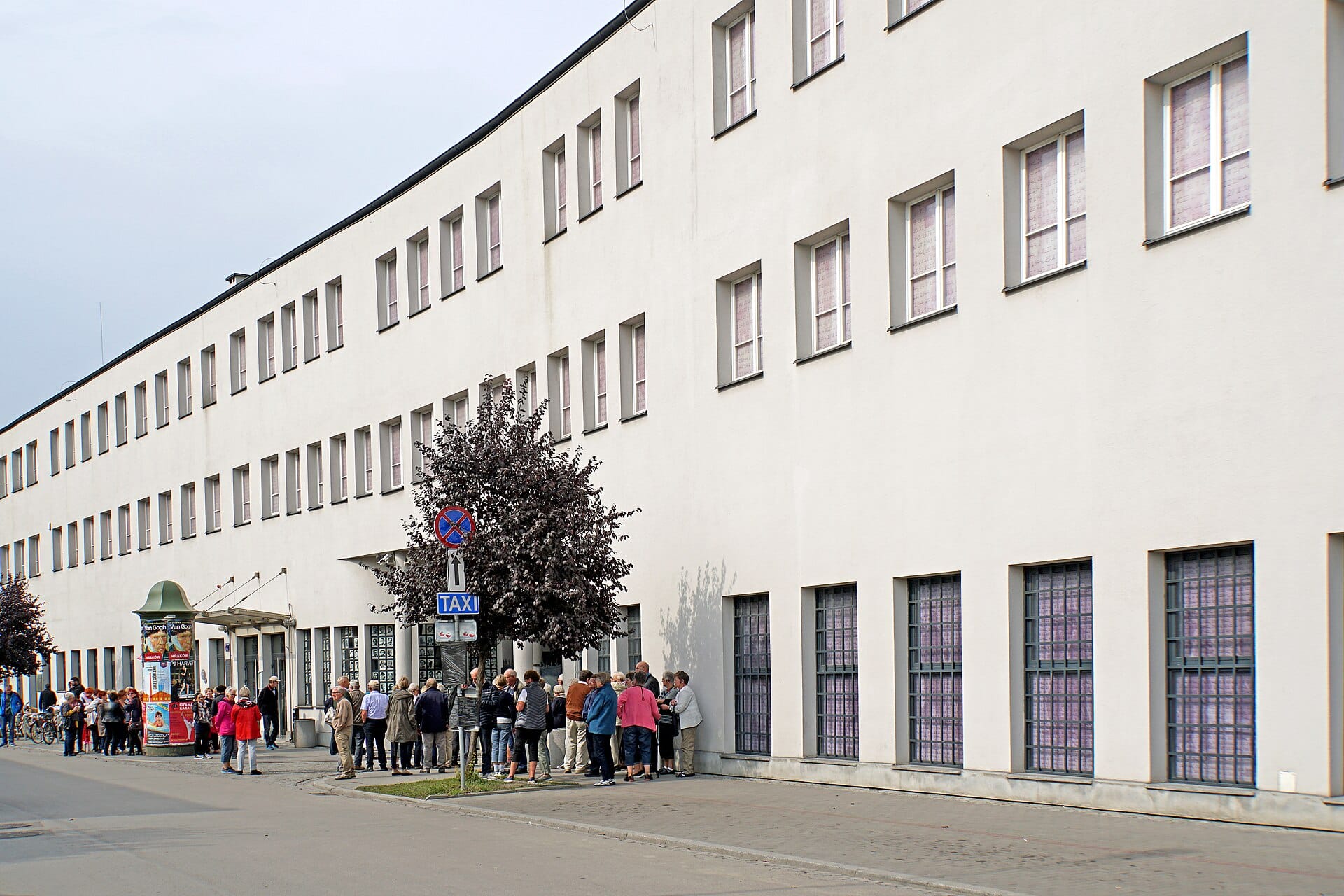
Oskar Schindler's Enamel Factory in Kraków's Zabłocie district is one of Poland's most significant WWII history museums. Housed in the original administrative building of the Deutsche Emailwarenfabrik, it tells the story of Nazi occupation through immersive, room-by-room exhibits that go far beyond the story of one man.
Quick Facts
- Location
- ul. Lipowa 4, Zabłocie, Podgórze district, Kraków
- Getting There
- Tram to Limanowskiego (lines 6, 13, 23), Bohaterów Getta (lines 3, 9, 19, 24, 50), or Zabłocie (lines 11, 20)
- Time Needed
- 2–3 hours minimum; allow more if you read all panels
- Cost
- 60 PLN regular / 45 PLN reduced / 120 PLN family; free on Mondays (limited tickets — book ahead)
- Best for
- WWII history, Holocaust remembrance, cultural travel, film history enthusiasts
- Official website
- muzeumkrakowa.pl/en/branches/oskar-schindlers-enamel-factory
What Is Schindler's Factory Museum?
Oskar Schindler's Enamel Factory, officially called the Podgórze branch of the Museum of Krakow, occupies the original administrative building of the Deutsche Emailwarenfabrik (DEF) at ul. Lipowa 4. This is the actual factory where Oskar Schindler, a German industrialist and Nazi Party member, employed Jewish workers from the Kraków Ghetto and ultimately protected more than 1,000 of them from deportation and death.
The museum's permanent exhibition is titled 'Kraków Under Nazi Occupation 1939–1945,' and that framing matters. This is not a film tie-in attraction or a shrine to one individual. It is a serious, carefully constructed history museum that uses the factory's physical spaces — corridors, offices, production halls — to walk visitors through the full arc of the German occupation of Kraków: from the early days of 1939 through the liquidation of the ghetto, forced labor, deportations, and liberation.
Schindler himself is present throughout, but the exhibition deliberately resists any mythology. Rooms address the complexity of his motivations, the experiences of the Jewish workers he employed, and the broader civilian population of Kraków caught in the machinery of occupation. Visitors looking for a simple heroic narrative may find the exhibition more challenging and more nuanced than they expected.
ℹ️ Good to know
The museum is a branch of the Museum of Krakow (Muzeum Krakowa), not a private attraction. Its curatorial standards and historical approach are consistent with an established public institution.
The Exhibition: Room by Room
The route through the museum is structured chronologically and spatially. You enter into reconstructed scenes from pre-war Kraków — a marketplace, a pharmacy interior, fragments of ordinary Jewish and Polish life before 1939. The contrast these scenes create with what follows is intentional and effective. The reconstruction is detailed: glass shop fronts, period signage, the particular stillness of a preserved moment.
As the route progresses, the tone shifts. Documents, photographs, maps of the ghetto's boundaries, and first-person testimony recordings fill the rooms dealing with the occupation years. The exhibition uses audio-visual installations, original artifacts, and reconstructed environments rather than relying purely on display cases. Some rooms are loud with ambient sound; others are deliberately quiet. The effect accumulates.
Schindler's actual office has been preserved and can be entered. It is a small room, furnished with period pieces, and it carries a strong atmosphere. For many visitors, this is the moment where the building's history becomes tangible. The worn desk, the window looking onto the factory yard — these details do more than any panel text.
The exhibition concludes with rooms addressing the post-war period and the fate of Kraków's Jewish community. For visitors who want to continue exploring this history, the Ghetto Heroes Square is a short walk away, and the Eagle Pharmacy Museum — which tells the story of the ghetto from inside its borders — sits on the same square.
Tickets & tours
Live prices and dates from our booking partner. If you book, we may earn a commission at no extra cost to you.
How the Experience Changes by Time of Day
Monday mornings, when free admission is available, attract the longest queues. Visitors arrive well before opening at 10:00, and free tickets run out quickly. If you are planning a Monday visit specifically for the free entry, arrive at least 30 minutes before opening. The museum closes at 15:00 on Mondays, which is significantly earlier than other days — factor this into your itinerary.
Tuesday through Sunday, the museum opens at 09:00 and closes at 20:00. The first 90 minutes after opening are generally the quietest period of the day. Group tours — often including school groups and organized tour buses — tend to arrive mid-morning, between 10:00 and 12:00. By late afternoon, visitor numbers thin again, and the final hour before last entry (typically 1.5 hours before closing) offers a more contemplative atmosphere.
💡 Local tip
Book timed-entry tickets online in advance, especially for summer visits and weekends. The museum uses a timed slot system. Walk-up availability is not guaranteed during peak season. You will need to show ID alongside your online ticket at the entrance.
The exhibition's interior spaces are climate-controlled and well-lit regardless of weather outside. Rain or cold does not diminish the experience here the way it would at an outdoor site. That said, the walk from the tram stop to the entrance is exposed, so check conditions before heading out in winter.
Historical and Cultural Context
The Deutsche Emailwarenfabrik was established at Lipowa 4 in 1937. Schindler, an ethnic German from Moravia, acquired the factory in 1939 following the German occupation of Poland. He initially employed Jewish workers because they were cheaper under Nazi labor laws — a fact the museum does not soften. Over time, his motivations appear to have shifted, and by the end of the war he had spent much of his personal fortune keeping his workers alive and off the deportation lists.
The surrounding district of Zabłocie, within Podgórze, was the industrial fringe of the Kraków Ghetto. The ghetto itself — established by the German authorities in 1941 — was located across the Vistula from the historic city centre, in what had been a predominantly Polish working-class neighborhood. Jewish residents from across Kraków were forced to relocate there. The ghetto was liquidated in 1943, its population deported to Auschwitz-Birkenau and other camps.
For a fuller picture of the Podgórze district's wartime history, the guide to Schindler's List filming locations in Kraków covers the places where Spielberg's 1993 film was shot — many within walking distance of the factory itself.
Getting There and Getting Around
The factory is located in Zabłocie, a post-industrial neighborhood that has changed significantly in the past two decades. The streets around Lipowa 4 are now a mix of converted warehouses, new residential buildings, and the occasional remnant of heavy industry. It does not feel like a tourist precinct, which is part of its appeal.
By tram, the most convenient stops are Limanowskiego (lines 6, 13, 23) and Bohaterów Getta (lines 3, 9, 19, 24, 50). The Zabłocie tram stop (lines 11, 20) is also within walking distance. Kraków does not have a metro system, so tram and bus are the primary public options.
On foot from Kazimierz, the factory is roughly a 20-minute walk across the Vistula via the Powstańców Śląskich bridge. This route passes through territory that was central to the wartime story, and walking it adds context that a tram ride does not provide.
⚠️ What to skip
The museum is closed on the first Tuesday of every month. Double-check this before visiting, particularly if you are planning around a Monday free-entry day followed by a Tuesday return visit.
Photography and Practical Notes
Photography for personal, non-commercial use is generally permitted inside the museum, though specific rooms — particularly those with reconstructed scenes or sensitive content — may have restrictions. Signs are posted where photography is not allowed. Flash photography is inappropriate throughout, both practically and out of respect for the subject matter.
The exhibition involves a significant amount of reading. Panel text is available in Polish and English. Audio guides are available and worth considering if you want depth beyond the written panels. The route through the museum covers multiple floors and involves some narrow corridors and doorways. Visitors with specific mobility requirements should contact the museum directly before visiting, as detailed step-free access information is not consistently published on the official branch page.
Plan for at least two hours, and more if you engage fully with the text and audio components. Many visitors find that three hours passes without noticing. If you are combining this with a broader day in Podgórze, the Jewish quarter guide covers the Kazimierz and Podgórze heritage sites together in a logical sequence.
Is It Overhyped?
Schindler's Factory draws large numbers partly because of Spielberg's film, and visitors who arrive expecting a cinematic experience or a replica film set will find something more demanding and more worthwhile. The museum does not romanticize its subject. It is emotionally heavy in places, deliberately uncomfortable in others, and long enough to cause real fatigue if you are not prepared.
That said, it is one of the best-executed WWII history museums in Poland. The production values are high, the curatorial approach is rigorous, and the building itself adds a layer of authenticity that no purpose-built museum could replicate. Visitors who find this type of immersive, text-heavy historical exhibition rewarding will consider it time very well spent. Those who prefer brief, visual-only experiences may struggle with the density of content.
If you are planning a day trip to Auschwitz-Birkenau on the same day as this museum, reconsider. The combined emotional weight of both sites in a single day is significant. Spread them across separate days if possible.
Insider Tips
- Monday free entry costs nothing, but the ticket supply is limited and the hours are shorter (10:00–15:00 only). Arrive before the museum opens and go directly to the ticket desk or confirm the free ticket process on the official website before your visit.
- The museum's final rooms, which address post-war memory and the displacement of survivors, are often rushed by visitors running low on energy or time. Budget your stamina accordingly — they contain some of the exhibition's most thought-provoking material.
- The café on site is modest. If you plan to spend three hours inside, eat beforehand. The surrounding Zabłocie neighborhood has a small but growing number of casual restaurants within five minutes' walk.
- Visiting on a weekday morning in late September or October puts you ahead of summer crowds and school group season. The natural light in the courtyard area, briefly visible between sections, is worth noticing at this time of year.
- If you are buying tickets online, the Museum of Krakow's official site (muzeumkrakowa.pl) is the correct booking platform. Avoid third-party resellers charging markups for 'skip the line' access — the timed entry system already manages queues effectively when booked directly.
Who Is Schindler's Factory Museum For?
- History travelers with a serious interest in WWII and the Holocaust
- Visitors who have seen Schindler's List and want the historical layer behind the film
- Travelers combining Kraków's Jewish heritage sites across Kazimierz and Podgórze
- School and university groups studying 20th-century European history
- Anyone spending two or more days in Kraków who wants to understand the city beyond its medieval centre
Nearby Attractions
Other things to see while in Podgórze:
- Eagle Pharmacy Museum (Apteka pod Orłem)
The Eagle Pharmacy Museum on Plac Bohaterów Getta in Podgórze preserves the only pharmacy permitted to operate inside the Kraków Ghetto during World War II. It tells the story of Tadeusz Pankiewicz, a Polish pharmacist who used his position to shelter, supply, and assist the Jewish community under Nazi occupation. Small in scale, enormous in weight.
- Ghetto Heroes Square (Plac Bohaterów Getta)
In the Podgórze district, Plac Bohaterów Getta marks the exact spot where the Kraków Ghetto's Jewish residents were assembled for deportation to concentration and extermination camps. Seventy empty metal chairs of varying sizes stand across the square as a permanent memorial, free to visit at any hour.
- Cricoteka (Tadeusz Kantor Museum)
Housed in a striking former power plant on the Vistula riverbank in Podgórze, Cricoteka is both an archive and a museum dedicated to Tadeusz Kantor, one of the twentieth century's most radical theatre directors. The building itself is worth the visit.
Planning a trip? Discover personalized activities with the Nomado app.