Auschwitz-Birkenau Memorial and Museum: What to Know Before You Go
The Auschwitz-Birkenau Memorial and Museum, located near the town of Oświęcim about 70 km from Kraków, is one of the most significant Holocaust memorial sites in the world. Entry to the grounds is free, but advance registration is required. A visit here demands time, preparation, and emotional readiness.
Quick Facts
- Location
- Więźniów Oświęcimia 55, 32-600 Oświęcim, Poland (approx. 70 km from Kraków)
- Getting There
- Train from Kraków Główny to Oświęcim, then local bus or ~25-min walk to Auschwitz I. Free shuttle runs between Auschwitz I and Birkenau.
- Time Needed
- 4–6 hours minimum; a full day is recommended
- Cost
- Entry to grounds is free; guided tours with Museum educators are available for a fee. Advance entry card reservation required via visit.auschwitz.org
- Best for
- History, Holocaust education, commemorative visits
- Official website
- www.auschwitz.org/en
What Is Auschwitz-Birkenau and Why It Matters
The Auschwitz-Birkenau Memorial and Museum occupies the grounds of the largest Nazi German concentration and extermination camp complex operated during World War II. Between 1940 and 1945, more than 1.1 million people, the vast majority of them Jewish, were murdered here. The site was inscribed on the UNESCO World Heritage List in 1979 under the name 'Auschwitz Birkenau German Nazi Concentration and Extermination Camp (1940–1945)', a designation that reflects its significance not as a tourist attraction but as irreplaceable physical evidence of one of history's worst crimes.
The Museum itself was established in 1947, on the initiative of survivors, on part of the former camp complex. Today it consists of two main sites: Auschwitz I, the original concentration camp where visits begin, and Auschwitz II-Birkenau, roughly 3 km away, which was the much larger extermination camp. A free shuttle bus connects the two.
Most visitors come as a day trip from Kraków, and that is entirely feasible, but the visit should not be treated casually. This is a place of mourning as much as education. Coming informed and with sufficient time makes a meaningful difference.
⚠️ What to skip
Entry cards must be reserved in advance online at visit.auschwitz.org. Walk-in access is extremely limited and cannot be relied upon, especially during summer months. Book as early as possible, ideally weeks ahead.
Auschwitz I: The Main Camp
Your visit begins at Auschwitz I, the original camp established in June 1940 in converted Polish army barracks. The entrance gate bears the infamous inscription 'Arbeit Macht Frei' (Work Sets You Free), a phrase whose cynicism is felt physically the moment you pass beneath it. The brick buildings here are better preserved than those at Birkenau, and many have been converted into exhibition blocks.
Inside the blocks, the permanent exhibitions present harrowing evidence: rooms filled with hundreds of kilograms of human hair, canisters of Zyklon B, mountains of shoes, suitcases marked with names and addresses, eyeglasses, and prosthetic limbs. These are not reconstructions. They are original objects confiscated from victims. The display of children's shoes is a moment that stops nearly every visitor.
Block 11, known as the 'Death Block', was used for punishment and early experiments with the use of Zyklon B as a killing agent. The courtyard between Blocks 10 and 11 contains the execution wall, where thousands of prisoners were shot. The first crematorium and gas chamber at Auschwitz I, partially damaged and later reconstructed, is located at the edge of the main camp.
💡 Local tip
The exhibition blocks at Auschwitz I are indoors and can feel claustrophobic during peak summer visits when large groups move through simultaneously. Arriving when the site opens at 07:30 gives you quieter access to these spaces before tour groups arrive in volume.
Tickets & tours
Live prices and dates from our booking partner. If you book, we may earn a commission at no extra cost to you.
Auschwitz II-Birkenau: The Scale of Industrialized Murder
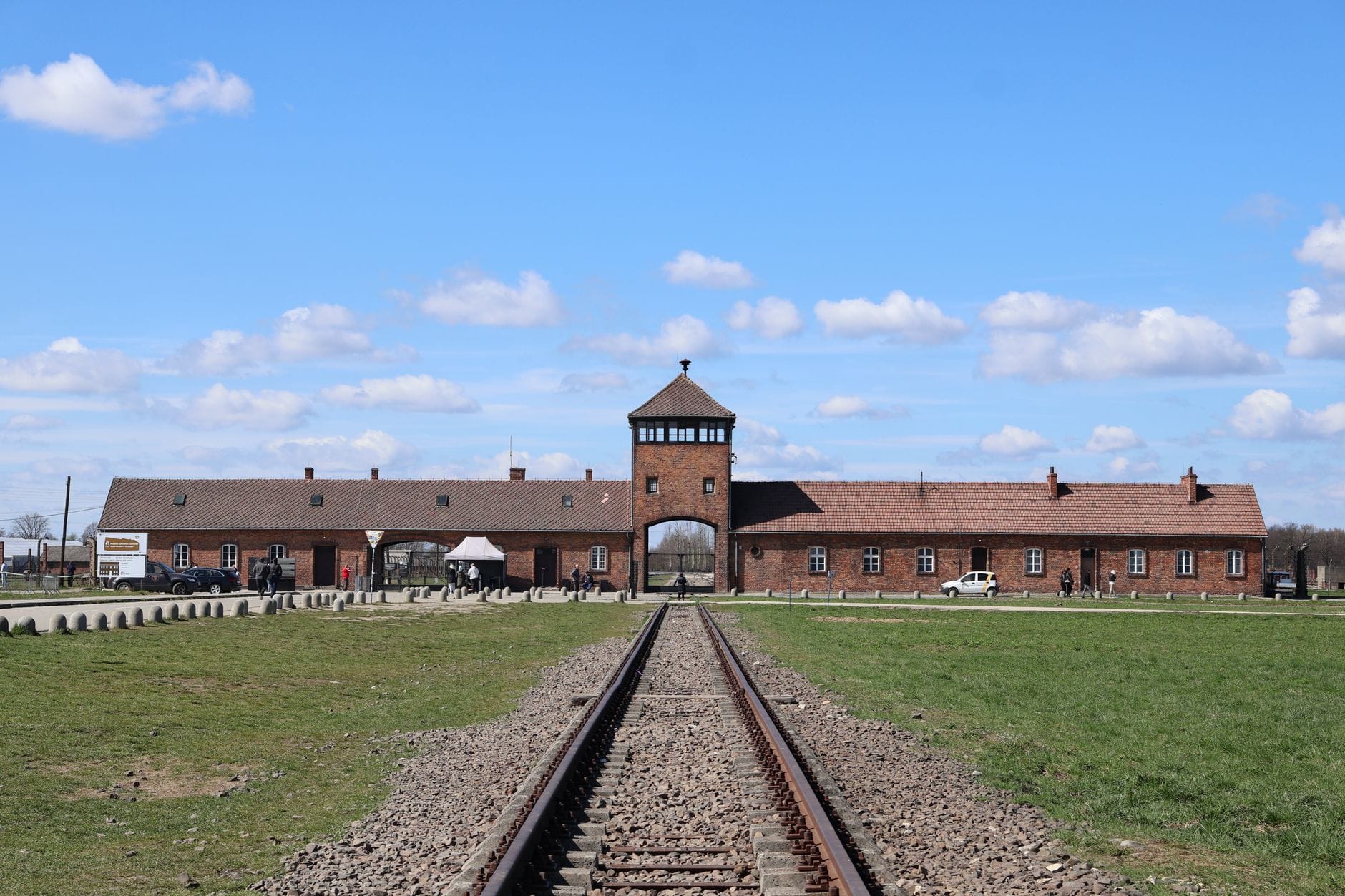
The free shuttle from Auschwitz I to Birkenau takes about five minutes. Nothing fully prepares you for the scale of what you see when you step through or climb the watchtower above the main gate. Birkenau stretches across roughly 175 hectares. Row upon row of wooden and brick barracks extend in both directions, with the rail line running straight through the center to where the four main crematoria once stood.
The crematoria were blown up by the retreating SS in January 1945, but the ruins remain. The International Monument to the Victims of Fascism, unveiled in 1967, stands between the remains of Crematoria II and III. This is the site of commemorative ceremonies, including the annual International Holocaust Remembrance Day on January 27, and the March of the Living each spring.
The wooden barracks used for sleeping are terrifyingly cramped. Three-tiered wooden bunks, originally designed for horses, held up to eight or more prisoners each. Visiting one of the preserved barracks in the women's section or the men's quarantine camp makes the living conditions viscerally real in a way that photographs rarely convey. The ground is uneven, the light is dim, and the scale of the suffering registered here becomes impossible to abstract.
Allow at least 90 minutes at Birkenau. The site is large, partly exposed to weather, and requires walking on gravel and uneven paths. On cold or wet days, this section of the visit is considerably more challenging physically, though those conditions can make the scale of the site feel even starker.
Guided Tours vs. Self-Guided Visits
The Museum offers guided tours led by certified Museum educators. These are available in multiple languages and are strongly recommended, particularly for first-time visitors. The educators provide historical context that significantly deepens understanding of what you are seeing. Individual exhibits can be walked without a guide, but the narrative thread matters here.
Tour formats from Kraków vary widely, so compare what is included before booking: transport, entry-card reservation, an educator-led Museum tour, and enough time at both Auschwitz I and Birkenau.
Organized tours from Kraków are also common. Many operators offer minibus transport combined with a Museum-certified guide. If you book through an external provider, verify that their guide is certified by the Museum itself, as this affects both quality and access to certain areas. The guide to Auschwitz tours from Kraków covers the main transport and booking options in detail.
Those who prefer to visit independently can reserve a free entry card and walk through both sites at their own pace. Audio guides are available for rent. Independent visits work well if you have already done preparatory reading, such as Primo Levi's 'If This Is a Man' or Timothy Snyder's 'Bloodlands', which provide essential historical framing.
ℹ️ Good to know
Between roughly 10:00 and 15:00, both sites are busiest. During summer months, the paths between blocks can be congested with large tour groups. Arriving at 07:30 or arriving after 15:00 (if your entry card allows) results in a markedly quieter and more reflective experience.
Practical Visit Information
The Museum is open every day of the year except January 1, December 25, and Easter Sunday. Opening hours are seasonal: during June, July, and August, the site is open from 07:30 to 19:00, with visitors permitted to remain on site up to 90 minutes after the last entry time. Hours are shorter in winter months. Always check the official visiting page at auschwitz.org before your trip, as hours can also change on commemorative dates.
By train from Kraków Główny station, you can reach Oświęcim in roughly 1.5 to 2 hours depending on the service. From Oświęcim station, the Museum is approximately 2 km away, reachable by local bus or on foot in about 25 to 30 minutes. Driving is possible, with a parking area near the main entrance. GPS coordinates for the main entrance: 50.0266 N, 19.20363 E.
Wear comfortable, weather-appropriate shoes. Birkenau involves considerable walking on gravel and grass. There are no cafes inside the memorial grounds. A small café and book shop are located near the Auschwitz I visitor center. Bring water, particularly in summer. Large bags must be left in the cloakroom. Security checks are conducted at the entrance.
Accessibility across the site varies. Auschwitz I has more paved paths, while Birkenau's terrain is considerably more uneven. For current wheelchair access and assistance options, consult the official visiting section. Those planning a broader Kraków history itinerary may also want to visit the Schindler's Factory Museum in Podgórze, which documents the Nazi occupation of Kraków itself, and the Ghetto Heroes Square, both within the city.
Emotional Preparation and Visitor Conduct
Auschwitz-Birkenau is not a conventional museum visit. Many people find certain exhibitions deeply distressing, particularly the displays of personal belongings and the documentation of children among the victims. There is no shame in stepping outside a block to take a breath. The site is quiet by convention: visitors generally lower their voices, and there is an unspoken, widely observed etiquette of respectful behavior throughout.
Photography is permitted in most outdoor areas and some indoor spaces, but there are specific zones where it is prohibited, particularly around the display of human remains. Signs indicate where photography is not allowed, and these restrictions should be respected without exception. Selfie behavior that would be normal elsewhere is out of place here.
Children under 14 are generally not recommended for a visit by the Museum itself, given the nature of the content. Families with older teenagers should use their judgment based on the child's maturity and preparation. The visit requires sustained emotional engagement and the ability to process difficult historical material over several hours.
💡 Local tip
Before visiting, the Museum's own educational website offers preparatory reading and virtual tours. Spending even 30 minutes with this material beforehand makes the in-person visit considerably more meaningful.
Who Might Not Find This Visit Right for Them
Those looking for a quick stop between other sightseeing activities in Kraków should reconsider. A visit under two hours leaves most of Birkenau unseen and much of Auschwitz I unexplored. Treating this as a checkbox rather than a serious engagement does a disservice to both the site and yourself. If you have limited time, the Schindler's Factory Museum in Kraków provides a well-produced account of the Nazi occupation and may be a more appropriate alternative within a short schedule.
Similarly, very young children are not suited to this experience. The Museum itself advises that the site is not appropriate for children under 14. Families visiting Kraków with younger children have many excellent alternatives, including family-friendly activities across the city.
Insider Tips
- Book your entry card on visit.auschwitz.org as soon as your travel dates are confirmed, especially for summer visits. Slots at popular times disappear weeks in advance.
- A 07:30 arrival puts you at the site before the majority of organized tour groups. The first hour at both Auschwitz I and Birkenau is significantly quieter and allows for more personal engagement with the spaces.
- The free shuttle between Auschwitz I and Birkenau runs regularly, but during peak hours there can be a wait. Walk the 3 km between sites if the weather allows: the walk itself, through the former camp perimeter, adds geographic context.
- Bring your own food and water. There is a café near the Auschwitz I visitor center but no refreshment options at Birkenau. The visit is long and physically demanding, particularly in summer heat or winter cold.
- Polish złoty (PLN) is useful for the cloakroom, audio guide rental, and the bookshop. Card payment is generally accepted, but having cash avoids any issues.
Who Is Auschwitz-Birkenau Memorial & Museum For?
- Visitors with a serious interest in Holocaust history and World War II
- Students and educators on study or school trips
- Travelers building a broader itinerary around Kraków's wartime history
- Those observing International Holocaust Remembrance Day (January 27) or the March of the Living
- Anyone who has read foundational Holocaust literature and wants to see the physical sites
Nearby Attractions
Combine your visit with:
- Jordan Park
Founded in 1889 by physician Henryk Jordan, this 20-hectare municipal park just west of the Old Town has been Kraków's go-to outdoor space for families, joggers, and skaters for over a century. Entry is free, the facilities are practical, and the crowd is almost entirely local.
- Ojców National Park
Ojców National Park, established in 1956 and covering just 21.46 km², packs limestone ravines, bat-filled caves, medieval castle ruins, and forested walking trails into a compact valley only 16 km north of Kraków. It rewards visitors with striking geology, real quiet, and a pace completely different from the city.
- Stary Kleparz Market
Stary Kleparz has operated as a public market since the mid-14th century, making it the oldest continuously running marketplace in Kraków. Free to enter, open six days a week from early morning, and stocked with local produce, dairy, flowers, and street food, it gives visitors a clear window into how the city actually shops.
- Tyniec Abbey
Founded around the mid-11th century, traditionally attributed to King Casimir I the Restorer, the Benedictine Abbey of Tyniec sits on a dramatic limestone promontory above the Vistula River, roughly 13 km southwest of Kraków's Old Town. Equal parts working monastery, open-air museum, and scenic escape from the city, it rewards travelers willing to make the journey.
Planning a trip? Discover personalized activities with the Nomado app.