Ojców National Park: Poland's Smallest Park, One of Its Most Rewarding
Ojców National Park, established in 1956 and covering just 21.46 km², packs limestone ravines, bat-filled caves, medieval castle ruins, and forested walking trails into a compact valley only 16 km north of Kraków. It rewards visitors with striking geology, real quiet, and a pace completely different from the city.
Quick Facts
- Location
- Ojców, 16 km north of Kraków city centre (Kraków-Częstochowa Upland)
- Getting There
- Bus from Kraków (check current routes at Małopolska regional transport); car or taxi also common
- Time Needed
- 3–5 hours for a comfortable visit; full day if you plan to hike multiple trails
- Cost
- Park entry free; paid sites include Łokietek Cave 30/21 PLN, Dark Cave 20/14 PLN, and Ojców Castle 22/15 PLN
- Best for
- Hikers, families, history lovers, anyone needing a break from Kraków's crowded Old Town
- Official website
- opn.gov.pl/ojcow-national-park
What Ojców National Park Actually Is
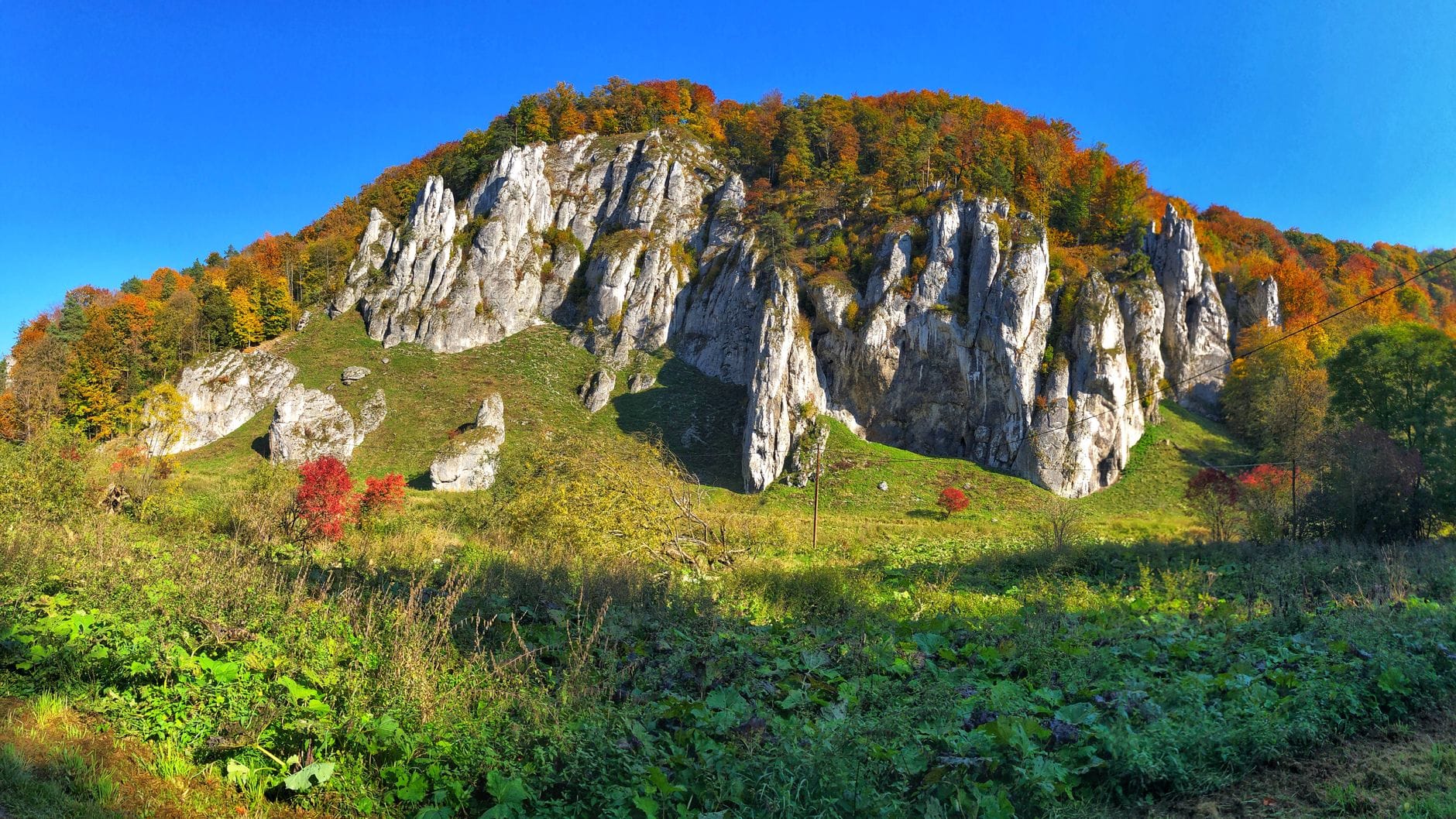
Ojcowski Park Narodowy (Ojców National Park) is Poland's smallest national park, covering about 21.46 km², and it sits in a limestone river valley carved over millennia by the Prądnik and Sąspówka streams. The park was established in 1956, protecting a landscape of white rock spires, cave systems, old-growth forest, and the ruins of two medieval castles. For a patch of land this compact, the variety of what you find here is unusual.
The setting is a deep, narrow valley, which means arriving by road involves dropping down from the plateau and suddenly finding yourself among overhanging limestone cliffs and dense tree cover. The temperature noticeably drops on warm days. The air smells of wet rock and forest floor. On weekday mornings in spring or autumn, you may walk entire trail sections without passing another person.
💡 Local tip
Ojców is a popular weekend day trip from Kraków, especially in May, June, and September. Arrive before 10:00 on Saturday or Sunday to have the main trails largely to yourself. Midweek visits are noticeably quieter at any time of year.
The park is part of the broader Kraków-Częstochowa Upland, a limestone plateau stretching north toward Częstochowa. If you are planning multiple days in the region, the day trips from Kraków guide covers how Ojców fits alongside other excursions like Wieliczka and Tyniec.
The Landscape: What You Are Actually Looking At
The dominant geological feature is Jurassic limestone, formed around 150 million years ago when this part of Poland was a shallow sea. Erosion over millions of years has produced the formations the park is now famous for: steep-sided ravines, free-standing rock pillars, and a network of caves, many of which shelter one of the highest concentrations of bat species in Poland. The park protects 17 species of bat, a significant ecological fact rather than a footnote.
One of the most photographed formations is Maczuga Herkulesa (Hercules' Club), a limestone pillar that rises dramatically above the valley floor near Pieskowa Skała Castle. It stands roughly 25 metres tall and leans visibly, which makes it look structurally improbable from below. Reaching the viewpoint requires a short walk from the main trail and is worth the small detour.
The valley floor is threaded by the clear Prądnik stream, and in wetter months the sound of moving water accompanies most of the lower trail sections. The forest cover is mixed, with beech and hornbeam dominant on the slopes, and the canopy creates deep shade that makes summer visits comfortable even on warm days.
Tickets & tours
Live prices and dates from our booking partner. If you book, we may earn a commission at no extra cost to you.
Caves, Castles, and the Historical Layer
The two most visited sites within the park are Ojców Castle and Pieskowa Skała Castle. Ojców Castle, near the park's main village, survives only as ruins, specifically a gatehouse tower and fragments of wall perched above the valley. The ruins date to the medieval period and sit at the top of a short climb from the valley floor. The view from the base of the tower, looking back down into the ravine, gives a clear sense of why medieval builders chose this location: the terrain itself was a defensive asset.
Pieskowa Skała Castle at the northern end of the park is a different proposition entirely. Unlike Ojców, it is intact and operates as a branch of the Wawel Royal Collections, housing a museum of European decorative arts. The building is Renaissance in core structure with later Baroque modifications, set on a cliff edge above the Prądnik valley. The arcaded inner courtyard is architecturally comparable to courtyards you would find in Italy from the same period. Entrance to the castle museum requires a separate ticket from the park entry fee; check the current schedule before visiting as hours vary seasonally.
The Łokietka Cave (King Łokietek's Cave), also within the park boundary, is a limestone cave system associated by local legend with King Władysław Łokietek, who reportedly sheltered there in the 14th century. Guided cave tours are available; the cave is cool year-round (roughly 9°C inside regardless of the outside temperature), so a light layer is worth bringing even in summer.
ℹ️ Good to know
The cave interior stays around 9°C throughout the year. In summer, the contrast with outside air temperature can feel sharp. Bring a light jacket even when the day is warm.
Walking the Trails: A Practical Walkthrough
The park has a network of marked trails, and the most popular route follows the main Prądnik valley from the village of Ojców north toward Pieskowa Skała, a distance of roughly 7–8 km one way along the valley floor. This route is largely flat, follows the stream closely, and passes the major points of interest including the castle ruins, rock formations, and cave entrances. It is manageable for most fitness levels and appropriate for older children.
Steeper trails climb onto the limestone plateau above the valley. These offer views down into the ravine and connect to the broader upland landscape, but they are less clearly signposted than the valley route and can be slippery after rain. Proper footwear matters here: the rock surface becomes greasy when wet and offers very little grip to smooth-soled shoes.
There is no shuttle between the main park entrance at Ojców and Pieskowa Skała Castle. If you walk the full valley route one way, you will need to either retrace the route, arrange pickup at the northern end, or plan for a longer loop. Checking the trailhead maps posted at the park entrance before setting off is strongly recommended.
⚠️ What to skip
The park does not have comprehensive wheelchair-accessible trails. The main valley path has compacted sections but also uneven ground, tree roots, and stream crossings. Visitors with mobility limitations should check current trail conditions with the park administration before visiting.
Opening Hours, Tickets, and Seasonal Differences
The park's visitor facilities operate on seasonal hours. As listed on the official park site: from 20 April through August, 9:00 to 18:30; September, 9:00 to 17:30; October, 9:00 to 16:30; November, 9:00 to 15:00. The park landscape itself is accessible beyond these hours, but visitor centres, cave tours, and castle access operate within the facility schedule. December through March opening arrangements should be confirmed directly with the park administration before your visit.
Admission to the park itself is free, but individual visitor sites charge separate fees. Official OPN prices list Łokietek Cave at 30 PLN regular / 21 PLN discounted, Dark Cave at 20 PLN regular / 14 PLN discounted, and Ojców Castle at 22 PLN regular / 15 PLN discounted. All prices should be verified at opn.gov.pl before travel, as they are subject to change.
Seasonally, spring is arguably when the park looks best. Beech trees leaf out in a pale green that catches morning light along the valley floor, wildflowers appear on the slope margins, and the streams run fuller from snowmelt. Autumn brings reliable colour to the canopy, particularly in October, but the shorter facility hours mean less time before sites close. Winter visits are quiet and the rock formations look stark and clear without foliage, but cave tours may not operate and road access can be affected by ice.
For broader context on when conditions in the Kraków region suit outdoor trips, the best time to visit Kraków guide breaks down seasonal trade-offs across both city and countryside attractions.
Getting There from Kraków
Ojców is approximately 16 km north of Kraków city centre in the Kraków-Częstochowa Upland. By car, the drive takes around 30–40 minutes depending on traffic and the specific entry point you are targeting within the park. Parking is available near the village of Ojców but fills up quickly on summer weekends; arriving before 9:30 on busy days avoids the worst of it.
Public bus service connects Kraków to Ojców, operated through the Małopolska regional network. Routes and timetables change seasonally and should be checked through the official Małopolska transport portal or at Kraków's main bus station before your trip. Journey time by bus is typically longer than by car due to the route and stops involved. There is no direct train connection to the park.
If you are navigating Kraków's public transport system more broadly, the getting around Kraków guide covers tram, bus, and taxi options across the city and its surrounding region.
Who This Works For, and Who Should Think Twice
Ojców is a good fit for visitors who want quiet natural scenery, some history without major queues, and the experience of being clearly outside a city. It suits families with children who can walk 3–5 km, geology or ecology enthusiasts, photographers working with landscape or architectural subjects, and anyone who finds Kraków's Old Town crowds wearing after a few days.
It is less suitable for visitors with very limited time who are trying to squeeze in an excursion alongside Wawel Castle, Kazimierz, and the salt mine on the same trip. The park does not have a dramatic single centrepiece the way Auschwitz or Wieliczka does; it rewards those who are willing to walk and look. If you need your day trip to be high-impact and compact, the park may feel underwhelming compared to what is available closer to Kraków's centre.
For visitors weighing their day trip options, Wieliczka Salt Mine and Tyniec Abbey offer quite different experiences at different distances from the city — worth comparing before you commit to a schedule.
Visitors with significant mobility limitations will find the park challenging. The valley terrain is uneven and the most interesting sites involve climbing. This is worth stating plainly rather than leaving it as a surprise on arrival.
Insider Tips
- The park's bat population is most active at dusk from late spring through early autumn. If you are near the cave entrance or the ruined castle walls at dusk, you may see large numbers emerging. It is a striking sight and costs nothing extra.
- The village of Ojców has a small number of restaurants and a café, but options are limited and they fill up at peak times. Bringing your own food and water is practical and means you can eat on the trail rather than waiting for a table.
- Pieskowa Skała Castle's inner courtyard is architecturally exceptional by any standard, not just in a Polish context. Even visitors with no interest in the decorative arts collection inside will find the courtyard worth the walk north along the valley.
- Trail markers use the standard Polish colour-coded system (red, blue, green, yellow). Picking up a trail map at the park entrance or downloading the AllTrails route before you lose mobile signal saves significant navigation uncertainty later in the walk.
- The best light for photography in the valley is mid-morning when sun angle clears the eastern ridgeline and illuminates the cliff faces from the side. By early afternoon the valley floor can be in shade, which flattens the rock textures considerably.
Who Is Ojców National Park For?
- Walkers and hikers looking for accessible trail time within day-trip distance of Kraków
- Families with children who are comfortable walking 4–6 km on varied terrain
- Geology, ecology, or cave enthusiasts, given the park's Jurassic limestone formations and exceptional bat diversity
- History-oriented visitors who want medieval castle ruins without the queues and crowds of Kraków's major sites
- Photographers working with landscape subjects, particularly rock formations, forest light, and Renaissance architecture at Pieskowa Skała
Nearby Attractions
Combine your visit with:
- Auschwitz-Birkenau Memorial & Museum
The Auschwitz-Birkenau Memorial and Museum, located near the town of Oświęcim about 70 km from Kraków, is one of the most significant Holocaust memorial sites in the world. Entry to the grounds is free, but advance registration is required. A visit here demands time, preparation, and emotional readiness.
- Jordan Park
Founded in 1889 by physician Henryk Jordan, this 20-hectare municipal park just west of the Old Town has been Kraków's go-to outdoor space for families, joggers, and skaters for over a century. Entry is free, the facilities are practical, and the crowd is almost entirely local.
- Stary Kleparz Market
Stary Kleparz has operated as a public market since the mid-14th century, making it the oldest continuously running marketplace in Kraków. Free to enter, open six days a week from early morning, and stocked with local produce, dairy, flowers, and street food, it gives visitors a clear window into how the city actually shops.
- Tyniec Abbey
Founded around the mid-11th century, traditionally attributed to King Casimir I the Restorer, the Benedictine Abbey of Tyniec sits on a dramatic limestone promontory above the Vistula River, roughly 13 km southwest of Kraków's Old Town. Equal parts working monastery, open-air museum, and scenic escape from the city, it rewards travelers willing to make the journey.
Planning a trip? Discover personalized activities with the Nomado app.