Wieliczka Salt Mine: The Underground Cathedral Near Krakow
Thirteen kilometers southeast of Krakow, the Wieliczka Salt Mine descends deep into the earth, revealing carved chapels, salt-crystal chandeliers, and nearly 300 km of tunnels built over seven centuries of continuous mining. It has been welcoming tourists since 1722 and was inscribed on the UNESCO World Heritage List in 1978.
Quick Facts
- Location
- Wieliczka, 13–15 km southeast of central Krakow. Address: ul. Jana Mikołaja Daniłowicza 10, 32-020 Wieliczka
- Getting There
- Frequent trains and buses from Krakow city centre; journey approx. 25–30 minutes, fare from around 4–6 PLN one way
- Time Needed
- 3–4 hours including travel from Krakow; the guided Tourist Route covers ~3.5 km underground
- Cost
- Standard guided tour tickets start around 103 PLN; tour packages from Krakow including transport typically cost from approx. US$38 / 150 PLN. Verify current rates at kopalnia.pl
- Best for
- History lovers, families, architecture enthusiasts, and anyone visiting Krakow for more than a day
- Official website
- www.kopalnia.pl
What the Wieliczka Salt Mine Actually Is
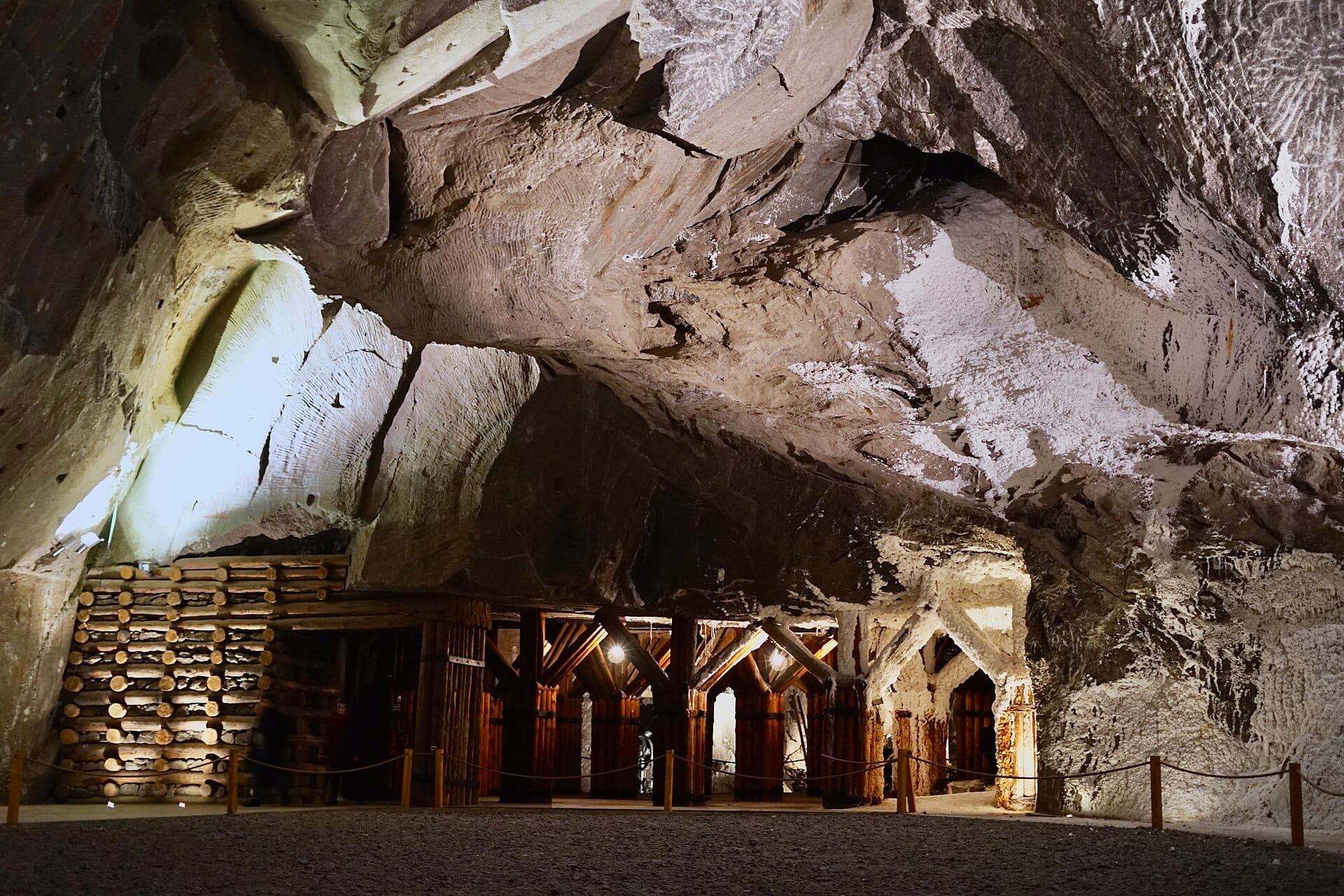
The Wieliczka Salt Mine (Polish: Kopalnia Soli Wieliczka) is not a museum built to look like a mine. It is the real thing: an industrial salt extraction complex that operated continuously from the 13th century until 1996, when commercial production finally ceased. Over those seven centuries, miners carved chambers, chapels, and corridors through solid salt rock, leaving behind an underground world that extends to a depth of about 327 meters and roughly 287 to 300 kilometers of tunnels.
Tourists have been visiting since 1722, which makes it one of the oldest tourist attractions in Europe in continuous operation. In 1978, it was inscribed on the UNESCO World Heritage List as one of the first 12 sites globally to receive that designation. The scale is staggering: visitors on the standard Tourist Route walk approximately 3.5 kilometers and see perhaps 2 percent of the total mine.
ℹ️ Good to know
Opening hours for the Tourist Route are often around 08:00–18:00, with English-language guided tours running more frequently in July and August (approximately every 30 minutes from 08:30). Check kopalnia.pl for current seasonal schedules before you travel.
The Descent: What Happens From the Moment You Arrive
The entrance is deceptively ordinary: a low building on the edge of a Polish town that looks more like a regional administrative office than the gateway to a UNESCO site. Inside, the queue forms quickly. Peak summer mornings can see waiting times that push the tour start back by 20 to 30 minutes, even with a pre-booked ticket. Arriving before 09:00 on weekdays meaningfully reduces that wait.
The actual descent begins with 378 wooden steps spiraling down the Danilowicz Shaft. The air immediately changes: cooler, noticeably humid, and carrying a faint mineral sharpness that is impossible to miss. By the time you reach the first major chamber at around 64 meters below ground, the temperature has settled at a consistent 14 to 16 degrees Celsius. This stays constant year-round, which means the mine is genuinely pleasant in summer and cold in January. Bring a light layer regardless of when you visit.
Guides lead groups of up to 40 people through the route, which takes roughly two to two and a half hours underground. The pace is structured but not rushed. Wooden walkways underfoot, salt-grey walls on either side, and chambers that open without warning into spaces dozens of meters high: the spatial experience keeps shifting in ways that hold attention well beyond the first few rooms.
Tickets & tours
Live prices and dates from our booking partner. If you book, we may earn a commission at no extra cost to you.
St. Kinga's Chapel: The Centerpiece of the Route
St. Kinga's Chapel, situated approximately 101 meters underground, is the single most impressive space in the entire mine. At 54 meters long, 18 meters wide, and 12 meters high, it functions as a working Catholic church: masses are held here, and weddings take place in it. Everything in the chapel, from the chandeliers to the relief carvings on the walls to the floor tiles, is made of salt.
The chandeliers deserve particular attention. They are constructed from salt crystals that have been shaped and polished to the point where they catch light like glass. Looking up at them, it takes a moment to register that they are not crystal at all but compressed mineral deposits carved by hand over generations of miners who treated their craft as devotional labor. The relief panels depicting scenes from the life of St. Kinga and the Last Supper were executed by miners working in their spare time, not by professional sculptors.
The chapel absorbs most groups for 15 to 20 minutes. If you lick the wall (visitors do; guides expect it), you will taste pure salt. The walls are slightly rough to the touch, with a granular texture like coarse stone rather than the smooth surface you might expect from something described as a crystal.
💡 Local tip
Photography is allowed throughout the mine without flash restrictions in most areas. St. Kinga's Chapel is especially photogenic in the lower ambient light: use a wide-angle lens if you have one, as the full scale of the space is hard to capture otherwise. Tripods are not permitted on the guided route.
Beyond the Chapel: Lakes, Legends, and the Route's Lesser-Known Moments
The Tourist Route covers about 20 chambers across three of the mine's nine levels, and St. Kinga's Chapel, while the centerpiece, is far from the only point of interest. Earlier in the route, the Copernicus Chamber contains a salt statue of the astronomer, who visited the mine in the late 15th century. The carving is not delicate work but there is something appropriate about a figure carved from the same mineral that funded the Polish crown for centuries.
Underground lakes appear at several points. The water has a greenish tint in certain lighting conditions and is saturated with dissolved salt to the point where it is denser than the sea. These chambers tend to be quieter as groups pause and the acoustic properties of the space become more apparent: voices carry oddly, and the silence when a guide stops talking is the particular kind of silence you only find deep underground.
The route also passes through chambers that illustrate the working history of the mine: tools, machinery, and reconstructed mining equipment from different eras give context to the scale of the extraction operation. These sections tend to hold the attention of adults more than children, while the chapel and the carved figures tend to produce the opposite reaction.
Practical Walkthrough: Getting There and Back
The most straightforward route from Krakow is by train or bus from Krakow Główny station (the main railway station) or nearby bus stops. The journey takes approximately 25 to 30 minutes and costs from around 4–6 PLN one way, making it far cheaper than organized tour transport. The mine entrance in Wieliczka is a short walk from both the train station and the main bus stop. For visitors combining the mine with other sites near the city, the day trips from Krakow guide covers transport options and timing in more detail.
Organized tours from Krakow typically start at around 150 PLN and include transport and admission. The convenience is real, particularly for first-time visitors who want to avoid navigating public transport, but the pricing premium is substantial compared to independent travel. The trade-off is time flexibility: tour groups run on fixed schedules and you will have less freedom to linger at specific points.
The exit from the Tourist Route is via elevator, not the stairs you descended. The lift deposits you in a different part of the mine's upper complex, which contains a café, a souvenir shop, and a small exhibition area. Allow 20 to 30 minutes after the tour ends if you want to eat or browse before heading back to Krakow.
⚠️ What to skip
Mobility considerations: the Tourist Route involves approximately 800 stairs during the descent, long walking distances of 3.5 km, and uneven surfaces in places. The mine does have elevator access for visitors with limited mobility, but specific arrangements require advance booking through the official site at kopalnia.pl. Do not assume standard accessibility without checking first.
Historical and Cultural Context
Salt was among the most strategically valuable commodities in medieval Europe: it preserved food before refrigeration existed and was taxed heavily by every state that could control its supply. The Wieliczka mine, along with the nearby Bochnia mine, effectively financed the Polish crown during the Piast and Jagiellonian dynasties. At peak production, the mine's output represented a substantial fraction of the Polish state's revenue.
The mine sits in the Krakow metropolitan area, 13 to 15 kilometers from the city center. That proximity is not coincidental: Krakow served as the royal capital of Poland for centuries, and the mine's wealth underwrote much of the city's construction and cultural patronage. The relationship between the mine and the city it funded is worth holding in mind when you visit Wawel Castle or walk through the Krakow Old Town: salt money built a significant part of what you are looking at.
Commercial salt extraction ceased in 1996, but the mine did not close. It transitioned to tourism, which it had been accommodating in parallel since the 18th century, and also operates as a venue for health tourism: the microclimate at lower levels is used therapeutically for respiratory conditions, and there is a dedicated underground sanatorium on levels that the Tourist Route does not reach.
How the Experience Changes by Season
The underground temperature of 14 to 16 degrees Celsius does not vary with the calendar. What does vary is crowd density and tour frequency. July and August bring the highest visitor volumes, with English-language tours departing approximately every 30 minutes. Outside peak season, English tours run less frequently and advance booking becomes more important to avoid long waits or being assigned to a non-English group.
Spring and early autumn (May to June, September) offer a reasonable balance: fewer visitors than midsummer but regular English-language tour departures. Winter visits are quieter, which some travelers prefer for the reduced crowding in chambers and the contrast between the cold above ground and the consistent mine temperature below. For a broader view of when to plan your trip, the best time to visit Krakow guide covers seasonal considerations across the city.
One honest note: the Wieliczka Salt Mine is one of the most visited attractions in Poland, and peak-season crowds do affect the experience. In the largest chambers, including St. Kinga's Chapel, groups can merge and the space can feel less contemplative than it would with fewer people. This is not a reason to avoid it, but it is worth factoring into your expectations and your timing.
Insider Tips
- Book tickets directly at kopalnia.pl before you travel, especially for English-language tours in July and August. Walk-in availability at peak times is unreliable and the ticket queue adds time you could spend inside.
- Take the train from Krakow Główny rather than a package tour if budget matters. At around 4–6 PLN each way, it is roughly the same journey time as a coach transfer but dramatically cheaper, and the Wieliczka train station is a short walk from the mine entrance.
- Wear closed-toe shoes with a grip sole. The walkways are wooden and can be slippery in places due to the mine's humidity. The temperature underground stays around 14–16°C regardless of season, so a light jacket in a day bag is worth bringing even in summer.
- If you want more than a general impression of the mine's history, read briefly about the Piast dynasty's use of salt revenues before you visit. The context transforms the experience from impressive spectacle to something with genuine historical weight.
- The exit elevator deposits you in a different location from the entrance, so factor in the walk back to the entrance area if you arrived by a specific route or parked nearby. The souvenir shop near the exit sells salt products and carved salt objects, some of which are genuinely high quality.
Who Is Wieliczka Salt Mine For?
- First-time visitors to Krakow with at least two days in the city who want to cover the region's major UNESCO sites
- Families with children aged 8 and up, who tend to respond strongly to the scale of St. Kinga's Chapel and the underground lakes
- History and architecture enthusiasts interested in medieval industrial heritage and its relationship to Polish political history
- Travelers visiting in any season, since the underground environment is weather-independent
- Anyone who finds above-ground sightseeing physically tiring, as the walking pace underground is slower and the route is level for long stretches
Nearby Attractions
Combine your visit with:
- Auschwitz-Birkenau Memorial & Museum
The Auschwitz-Birkenau Memorial and Museum, located near the town of Oświęcim about 70 km from Kraków, is one of the most significant Holocaust memorial sites in the world. Entry to the grounds is free, but advance registration is required. A visit here demands time, preparation, and emotional readiness.
- Jordan Park
Founded in 1889 by physician Henryk Jordan, this 20-hectare municipal park just west of the Old Town has been Kraków's go-to outdoor space for families, joggers, and skaters for over a century. Entry is free, the facilities are practical, and the crowd is almost entirely local.
- Ojców National Park
Ojców National Park, established in 1956 and covering just 21.46 km², packs limestone ravines, bat-filled caves, medieval castle ruins, and forested walking trails into a compact valley only 16 km north of Kraków. It rewards visitors with striking geology, real quiet, and a pace completely different from the city.
- Stary Kleparz Market
Stary Kleparz has operated as a public market since the mid-14th century, making it the oldest continuously running marketplace in Kraków. Free to enter, open six days a week from early morning, and stocked with local produce, dairy, flowers, and street food, it gives visitors a clear window into how the city actually shops.
Planning a trip? Discover personalized activities with the Nomado app.