Henryk Jordan Park: Kraków's Original Public Sports Park
Founded in 1889 by physician Henryk Jordan, this 20-hectare municipal park just west of the Old Town has been Kraków's go-to outdoor space for families, joggers, and skaters for over a century. Entry is free, the facilities are practical, and the crowd is almost entirely local.
Quick Facts
- Location
- Aleja 3 Maja 11, 30-059 Kraków (adjacent to Błonia Common, west of Old Town)
- Getting There
- Tram or bus to Cracovia / Muzeum Narodowe stop; short walk from Old Town
- Time Needed
- 45 minutes to 2 hours depending on activities
- Cost
- Free entry; some on-site rentals (e.g., boats) charge separately
- Best for
- Families with children, joggers, locals watching, budget travelers
- Official website
- zzm.krakow.pl/lista-parkow/209-park-im-henryka-jordana.html
What Henryk Jordan Park Actually Is
Henryk Jordan Park, officially Park im. Henryka Jordana w Krakowie, is a fenced municipal park of roughly 20.79 hectares located just a few blocks west of the Old Town, directly alongside Kraków's famous Błonia meadow. It is not a decorative garden or a tourist attraction in the conventional sense. It is a working public park, purpose-built for sport and physical activity, and it has operated in that role, with interruptions, since 1889.
The facilities include multiple sports fields, playgrounds for various age groups, a skate park, a climbing wall, a sledding hill, and a pond area. The paths are paved and wide enough for cycling. The park is described by the city's municipal green space authority as disabled-friendly, with infrastructure supporting pushchairs and wheelchairs throughout most of the main circulation routes.
ℹ️ Good to know
Opening hours are 06:00–22:00 daily, year-round. Entry is free at all times.
Visitors who arrive expecting the manicured formality of a historic garden will find something more utilitarian and more alive. This is where Kraków's parents bring children on Saturday mornings, where teenagers meet at the skate park on weekday afternoons, and where joggers do laps before work. If you want to spend an hour or two watching how the city actually uses its outdoor space, Jordan Park is a better option than the more photogenic Planty Park that rings the Old Town.
History: A Doctor's Vision for Urban Sport
The park owes its existence to Dr Henryk Jordan (1842–1907), a Kraków physician and professor who believed strongly in the connection between physical activity and public health. In an era when European cities were only beginning to grapple with the effects of industrialisation and overcrowding on children's wellbeing, Jordan convinced the city to dedicate land near Błonia to organised outdoor exercise. The park opened in 1889, laid out with the assistance of landscape designer Bolesław Małecki.
Jordan's concept was explicitly educational: the park was designed not just as open space but as a structured environment for children's physical development, with supervised activities and equipment designed to build strength and coordination. This made it one of the earliest municipal parks in Europe to be conceived around sport and youth recreation rather than aesthetic pleasure for adults.
The park was destroyed during World War II and subsequently rebuilt. The reconstruction preserved the park's identity as a sports and recreation space rather than converting it to more decorative uses, which explains why it feels purposeful rather than ornamental today. A monument to Dr Jordan stands within the park, and his name appears throughout Kraków's civic geography — testament to how seriously the city took his ideas.
Tickets & tours
Live prices and dates from our booking partner. If you book, we may earn a commission at no extra cost to you.
Entrance ticket for the Legends of Krakow robotic show
From 9 €Instant confirmationFree cancellationWieliczka Salt Mine guided tour with hotel pickup from Krakow
From 58 €Instant confirmationFree cancellationWieliczka salt mine guided tour from Krakow
From 60 €Instant confirmationFree cancellationAuschwitz-Birkenau Spanish Guided Tour with Hotel Pick-Up
From 44 €Instant confirmation
The Park at Different Hours
Early morning, especially on weekdays, is the quietest time. The park opens at 06:00 and the first hour or so belongs to joggers, dog walkers, and the occasional elderly visitor on a careful walk. The air carries the faint smell of grass and damp soil, particularly after rain, and the main paths are wide enough that you rarely feel crowded even in peak periods. The park's tree canopy, while not as dense as a forest park, provides genuine shade along the main internal routes.
Late morning on weekends brings the most concentrated crowd: families with young children arrive in numbers, the playgrounds fill, and the café and refreshment areas near the central section begin to see queues. This is when the park is loudest and most sociable. If you are visiting with children, this is the right time — there is a critical mass of other kids that keeps the playgrounds lively rather than empty. If you are looking for quiet, arrive before 09:00 or come on a weekday afternoon.
Summer evenings, especially from June through August, draw a different demographic: teenagers at the skate park, groups of young adults on the grass, and older residents on benches near the pond. The park stays open until 22:00, and those last two hours have a relaxed, unhurried quality. In winter, the sledding hill sees use after snowfall, giving the park a completely different character — quieter, colder, but not deserted.
What to Do Inside
The park's main infrastructure includes: multiple football and sports courts, playgrounds divided by age group, a skate park, an outdoor climbing wall, a pond with a small island, and a sledding hill. The path network allows for a comfortable loop of the entire park in roughly 25–30 minutes at a casual walking pace, or longer if you stop at facilities.
- Skate park: concrete ramps and rails near the western section; in use most afternoons and evenings
- Playgrounds: multiple areas, including equipment suited to toddlers and older children separately
- Climbing wall: outdoor structure, availability may be seasonal
- Pond area: central feature with greenery; boat rental may be available in warmer months (fee applies, verify on-site)
- Sledding hill: active in winter after snowfall
- Sports courts: used for football, basketball, and general recreation
- Paved paths throughout: suitable for cycling, pushchairs, and wheelchairs
One thing worth noting for visitors with very young children: the playground equipment is well-maintained by municipal standards, but this is not a theme park or commercial attraction. The equipment is functional and durable rather than elaborate. Children under about eight years old tend to get more from it than older kids, who gravitate toward the skate park or sports areas.
Getting There and Getting Around
The park sits on Aleja 3 Maja, with entrances also accessible from Reymonta Street and points along Błonia. From the Old Town, it is a reasonable walk west of roughly 15–20 minutes through the university district. Trams and buses stopping at or near the Cracovia or Muzeum Narodowe stops bring you within a few minutes' walk of the eastern entrance.
The park borders Błonia directly, which is Kraków's large open meadow used for major public events. Combining both in one outing makes sense: walk across Błonia first for open sky and views, then enter Jordan Park for facilities and shade. For a broader overview of how to fit this area into a visit to the city, the Kraków walking tour guide includes the western districts in one of its suggested routes.
Cycling is a practical way to reach the park from the Old Town or from the Kazimierz area. Kraków has an expanding cycle network, and the stretch along the Vistula toward the park passes several landmarks. If you are planning your transport around the city more broadly, the getting around Kraków guide covers tram, bus, and bike options in detail.
Honest Assessment: Who This Is and Is Not For
Jordan Park is not on most visitor itineraries, and for many tourists it probably should not be. If your time in Kraków is limited to two or three days and focused on history and architecture, there are more rewarding uses of your afternoon. The park has no exceptional visual drama, no must-see single feature, and no story that you will carry home from it the way you might from Wawel or Kazimierz.
Where it earns its place is for travelers who are spending more time in the city and want to see Kraków operating as a living place rather than a series of monuments. It is also especially useful for anyone traveling with children who need to run, climb, and burn energy between museum visits. Families who have already covered the main sights and need a low-cost, low-effort afternoon will find it useful. For free things to do with children in the city, it belongs on the same list as Kraków's free attractions.
Solo travelers on a tight schedule, or couples without children, are likely to find Błonia next door more satisfying for the same investment of time. The open meadow offers more visual space and is easier to pass through without a destination in mind.
⚠️ What to skip
The park is fenced and has defined opening and closing times enforced by the city. Arriving after 22:00 means the gates are locked. Plan accordingly, especially on short winter days.
Photography and Practical Notes
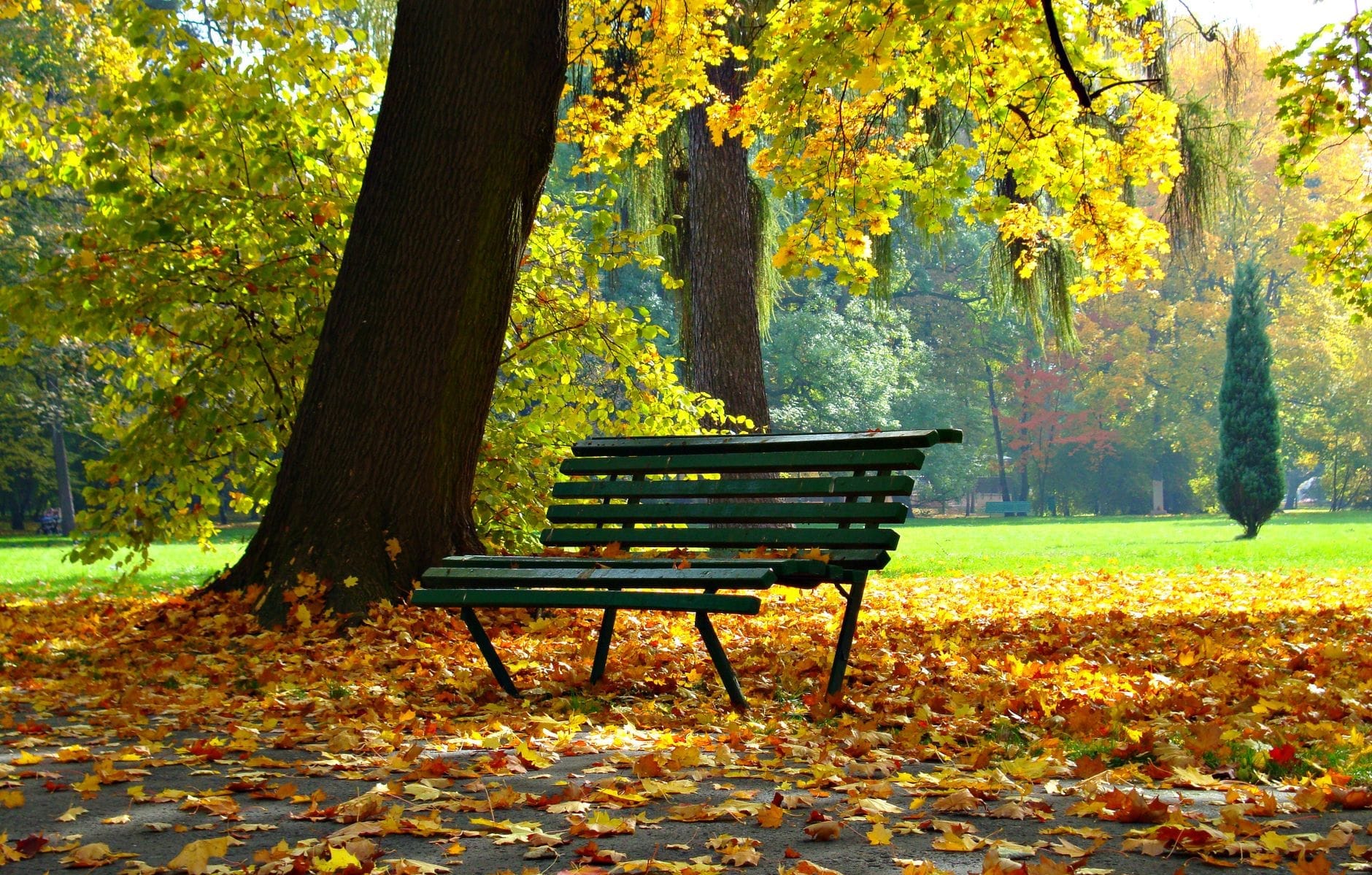
The park does not offer strong architectural or landscape photography opportunities in the way that Wawel or the Old Town do. The best photographic moments here are candid: children on playground equipment in late afternoon light, skaters at the ramp in the golden hour before the park closes, or the pond reflection on a still morning. Early morning in spring, when the trees are in leaf but the crowd has not yet arrived, gives the cleanest conditions.
If you are visiting Kraków in warm weather and have children with you, check the Kraków with kids guide for additional options including the botanical garden and family-friendly museum visits nearby.
Comfortable walking shoes are all you need. The paths are paved and well-maintained. There are benches throughout. Bring water in summer, as the on-site refreshment options can see queues on warm weekends. The park is suitable for pushchairs throughout, with no significant steps or barriers on the main routes.
Insider Tips
- The sledding hill in winter is used by local families after snowfall — if you visit in January or February after fresh snow, the atmosphere around that area is worth seeing even if you do not sled.
- Entrances from Reymonta Street and Ingardena Street are less used than the main Aleja 3 Maja entrance and tend to be less crowded, which matters on busy weekend mornings when the main gate area gets congested with pushchairs.
- The park is directly adjacent to Błonia — Kraków's large open meadow. Entering Jordan Park from the Błonia side allows you to combine both spaces in a single east-to-west walk without retracing steps.
- Weekday afternoons between 14:00 and 17:00 see a surge of school-age children using the sports courts and skate park after classes end. If you are not interested in that energy, early mornings or weekend evenings are calmer.
- The monument to Dr Henryk Jordan inside the park is easy to miss. It is worth spending two minutes with it: the inscription contextualises why the park was built, which makes the space itself more legible.
Who Is Jordan Park For?
- Families with children aged 2–12 who need active outdoor time between sightseeing
- Budget travelers looking for a free half-day option away from tourist crowds
- Longer-stay visitors who want to experience everyday Kraków life rather than landmarks
- Joggers and cyclists wanting a safe, car-free route near the city centre
- Winter visitors after snowfall, for the sledding hill and quiet morning atmosphere
Nearby Attractions
Combine your visit with:
- Auschwitz-Birkenau Memorial & Museum
The Auschwitz-Birkenau Memorial and Museum, located near the town of Oświęcim about 70 km from Kraków, is one of the most significant Holocaust memorial sites in the world. Entry to the grounds is free, but advance registration is required. A visit here demands time, preparation, and emotional readiness.
- Ojców National Park
Ojców National Park, established in 1956 and covering just 21.46 km², packs limestone ravines, bat-filled caves, medieval castle ruins, and forested walking trails into a compact valley only 16 km north of Kraków. It rewards visitors with striking geology, real quiet, and a pace completely different from the city.
- Stary Kleparz Market
Stary Kleparz has operated as a public market since the mid-14th century, making it the oldest continuously running marketplace in Kraków. Free to enter, open six days a week from early morning, and stocked with local produce, dairy, flowers, and street food, it gives visitors a clear window into how the city actually shops.
- Tyniec Abbey
Founded around the mid-11th century, traditionally attributed to King Casimir I the Restorer, the Benedictine Abbey of Tyniec sits on a dramatic limestone promontory above the Vistula River, roughly 13 km southwest of Kraków's Old Town. Equal parts working monastery, open-air museum, and scenic escape from the city, it rewards travelers willing to make the journey.
Planning a trip? Discover personalized activities with the Nomado app.