Stary Kleparz Market: Kraków's Oldest Marketplace, Still Feeding the City
Stary Kleparz has operated as a public market since the mid-14th century, making it the oldest continuously running marketplace in Kraków. Free to enter, open six days a week from early morning, and stocked with local produce, dairy, flowers, and street food, it gives visitors a clear window into how the city actually shops.
Quick Facts
- Location
- Rynek Kleparski 20, just north of the Old Town, between Basztowa and św. Filipa streets
- Getting There
- Tram/bus stop 'Stary Kleparz' directly adjacent; under 5 minutes on foot from Kraków Główny railway station
- Time Needed
- 30–60 minutes for a relaxed browse; longer if you plan to buy food or eat on-site
- Cost
- Free entry; goods paid directly to vendors in Polish złoty (PLN)
- Best for
- Food lovers, photographers, early risers, and anyone wanting to see Kraków outside the tourist circuit
- Official website
- www.starykleparz.com
What Stary Kleparz Actually Is
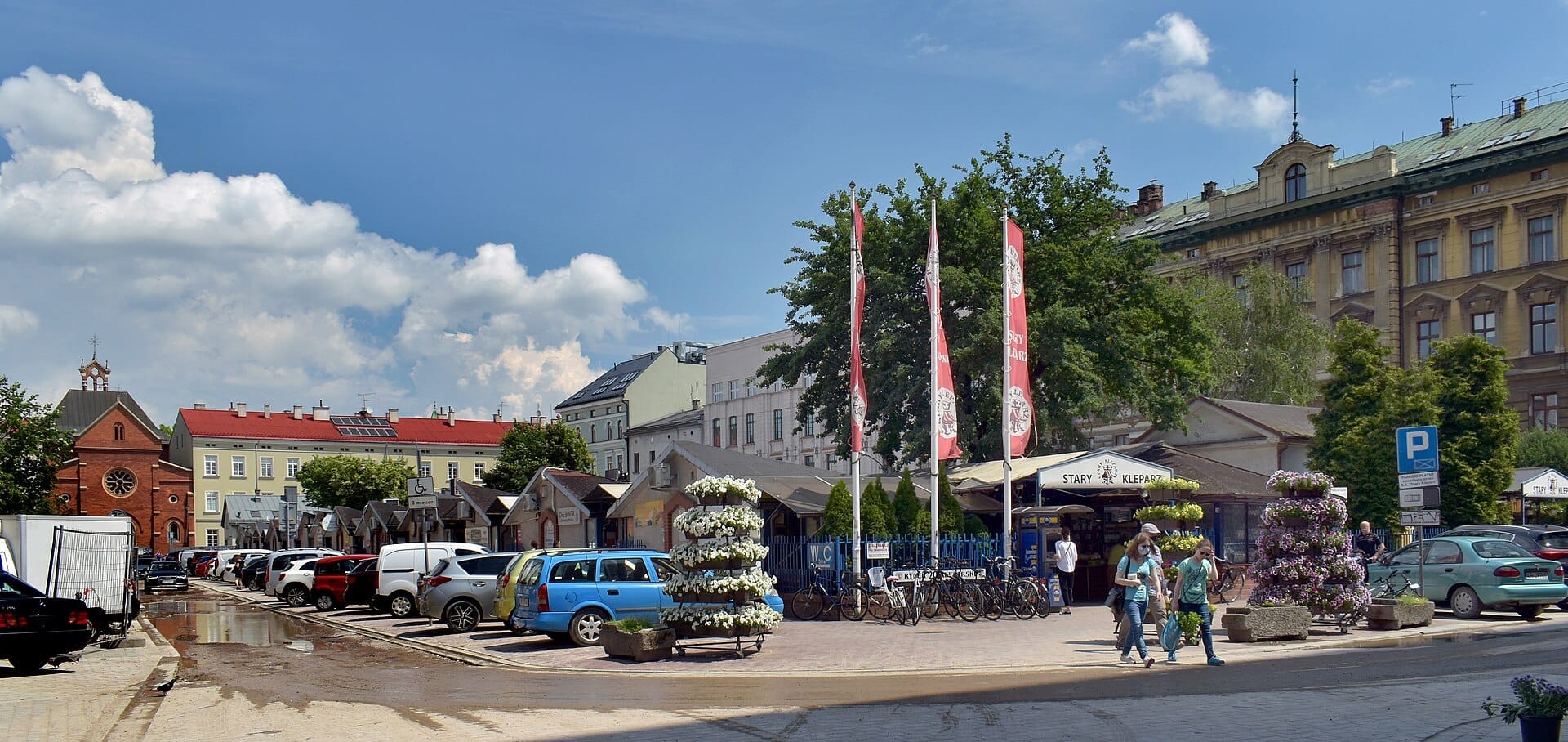
Stary Kleparz is an open-air market square in the heart of Kraków, operating on what was once the main commercial square of Kleparz, a separate town that was eventually absorbed into the city. The market has been running for centuries, making it one of the oldest continuously running marketplaces in Kraków. Today it occupies the western portion of that original square, framed by residential buildings, a handful of small cafes, and the constant movement of tram lines along Basztowa Street.
Unlike the manicured stalls around Rynek Główny, Stary Kleparz is where Kraków residents shop for food. Vendors sell seasonal vegetables, herbs, cut flowers, eggs, regional cheeses (especially oscypek, the smoked sheep's milk cheese from the Tatra Mountains), smoked meats, and dried mushrooms. It is utilitarian in the best sense: the stalls are straightforward, the prices are in złoty, and the crowd is predominantly local.
💡 Local tip
Bring cash. Most vendors at Stary Kleparz do not accept card payments. Small denominations in Polish złoty work best — vendors appreciate not having to break large notes early in the morning.
A Market Through the Hours
The market opens at 06:00 Monday through Saturday (08:00 on Sunday), and the early hours are the most rewarding for anyone interested in watching the place work. By 7am on a weekday, the flower sellers have arranged full buckets of seasonal blooms along the outer rows, the cheese vendors are setting out their rounds of bundz and oscypek, and retired locals are already filling cloth bags with vegetables. The air carries the smell of damp soil, fresh herbs, and somewhere nearby, fried food from one of the small snack stands.
By mid-morning the crowd shifts slightly: younger shoppers, tourists beginning to appear, the occasional food blogger photographing the same arrangement of dried mushrooms. The atmosphere stays relaxed but becomes noticeably busier. Saturday mornings are the peak, when the market draws both its largest local crowd and the most visitors from the Old Town. If you want to photograph the stalls without people in every frame, arrive before 8am on a weekday.
Afternoons are quieter and some vendors begin packing up before the official closing time. Hours may vary on public holidays, so it is worth checking the official site at starykleparz.com before visiting around Polish national holidays.
Tickets & tours
Live prices and dates from our booking partner. If you book, we may earn a commission at no extra cost to you.
Entrance ticket for the Legends of Krakow robotic show
From 9 €Instant confirmationFree cancellationWieliczka Salt Mine guided tour with hotel pickup from Krakow
From 58 €Instant confirmationFree cancellationWieliczka salt mine guided tour from Krakow
From 60 €Instant confirmationFree cancellationAuschwitz-Birkenau Spanish Guided Tour with Hotel Pick-Up
From 44 €Instant confirmation
History and Setting: 700 Years of Commerce on One Square
Kleparz was an independent town northeast of Kraków's medieval walls. It had its own market square, its own church, and its own civic identity before being formally incorporated into the city. The market square, known today as Rynek Kleparski, dates back centuries as a commercial site, making Stary Kleparz one of the oldest marketplaces in Kraków. The word 'stary' simply means 'old' in Polish, and locals use it to distinguish this square from newer commercial spaces in the city.
The physical square is not architecturally dramatic. The surrounding buildings are a mix of older tenement facades and 20th-century infill. There is no grand town hall, no fountain at the center, and no ornamental stonework to photograph. The historical weight is in the activity itself: the fact that people have been trading food on this ground for roughly 700 years. That context makes it worth knowing even if it is not visible in the stone.
The market sits just outside the ring of Planty Park, the green belt that replaced Kraków's medieval walls in the 19th century. The walk from the Kraków Barbican to Stary Kleparz takes under five minutes and is a natural extension of any tour of the northern Old Town.
What to Buy and What to Expect at the Stalls
The produce selection follows the Polish seasons closely. Spring brings bundles of radishes, young onions, and early strawberries. Summer is the peak for tomatoes, cucumbers, and soft fruits. Autumn means mushrooms, from cultivated button varieties to foraged forest species depending on the vendor, along with root vegetables and apples. Winter stalls thin out slightly but the flower sellers, cheese vendors, and egg sellers remain year-round fixtures.
Oscypek deserves specific mention. This smoked sheep's milk cheese, traditionally made in the Tatra Mountains and sold in decorative spindle shapes, is one of the Polish food products with EU protected designation of origin status. You will often find it at Stary Kleparz in firm, salty slices with a distinct smokiness.
The flower stalls occupy a large portion of the market and are among the more photogenic elements of the square. Cut flowers are sold in large bunches at prices well below what florists charge. Many locals stop here specifically for flowers, particularly around Polish name days and religious holidays, when demand spikes noticeably and the color selection broadens.
ℹ️ Good to know
Polish is the working language of the market. Basic transactions are easy with gestures and numbers, but learning a few words (dziękuję = thank you, ile kosztuje = how much) goes a long way and vendors respond warmly to the effort.
Getting There and Getting Around
The tram and bus stop named 'Stary Kleparz' sits close to the market square, making this one of the better-connected outdoor attractions in central Kraków. Multiple tram lines pass along Basztowa Street. From Kraków Główny railway station, the walk is a few minutes. From Rynek Główny (the Main Market Square), the walk north takes around ten minutes through the Old Town.
If you are planning a broader walk of central Kraków, Stary Kleparz fits naturally into a route that includes the Florian Gate and the northern edge of the Old Town. The market makes a practical breakfast stop before or after visiting the Barbican.
The square itself is open-air and level, with no steps at the main entrances. This makes it accessible to most visitors including those with pushchairs or limited mobility. No verified information is available on dedicated wheelchair-accessible toilet facilities within the market itself. Paid parking is available nearby but the transit connections make driving unnecessary for most visitors.
Photography at the Market
Stary Kleparz rewards patient photographers. The flower stalls offer the most obvious visual material: dense arrangements of color, especially in late spring and summer. The cheese and dried mushroom stalls have strong textural interest. However, the most compelling images often come from the vendor-customer interaction rather than the product arrangements themselves.
Always ask before photographing vendors directly. Most will agree, particularly if you have just bought something. Early morning light on weekdays is the most consistent: low and angled, with fewer crowds breaking the sight lines. Overcast days flatten the light but reduce harsh shadows on the flower buckets. Avoid trying to photograph the market at its Saturday peak if you want clean compositions; the crowds are significant and the lanes between stalls narrow.
Who Should Skip This and Who Will Get the Most from It
Stary Kleparz is not for everyone. If your time in Kraków is short and you are working through a list of major historical sites, this market does not compete with Wawel or the Cloth Hall for significance. It is a working food market, and on slow weekday afternoons it can feel underwhelming to visitors expecting a curated experience. The stalls are functional, not theatrical.
On the other hand, if you want to understand Kraków beyond its medieval core, this square offers something the Main Market Square cannot: a version of the city going about its daily business. Travelers with an interest in food, local culture, or market photography will find it worth the short detour. It also pairs well with a broader exploration using the Kraków walking tour route that covers the northern Old Town.
Insider Tips
- Arrive before 8am on a weekday if you want the most active atmosphere and the widest selection of produce. The best vendors sell out of premium items early.
- Look for oscypek from the Podhale/Tatra region if you want the protected traditional version, and ask vendors about origin before buying. It is not just a tourist prop here: locals buy regional cheese at the market regularly, which is a useful quality signal.
- Small cafes on the edges of the square serve coffee and zapiekanki (open-faced baguette sandwiches) from early morning. These make a far cheaper and more local breakfast than anything in the Old Town.
- Check the official site at starykleparz.com before visiting on Polish public holidays, as hours may differ from the standard schedule. The market occasionally closes for certain national holidays.
- If you want flowers to take back to your accommodation, the market prices are substantially lower than florists in the Old Town. Vendors will wrap them simply in paper, which keeps well for a day.
Who Is Stary Kleparz Market For?
- Food travelers who want to taste regional Polish products like oscypek and dried forest mushrooms in an authentic setting
- Early risers who want to see Kraków in motion before the tour groups reach the Old Town
- Photographers looking for color, texture, and candid street scenes
- Budget travelers: free entry, affordable street food, and a practical grocery stop
- Visitors who have already covered the main sights and want a less-scripted hour in the city
Nearby Attractions
Combine your visit with:
- Auschwitz-Birkenau Memorial & Museum
The Auschwitz-Birkenau Memorial and Museum, located near the town of Oświęcim about 70 km from Kraków, is one of the most significant Holocaust memorial sites in the world. Entry to the grounds is free, but advance registration is required. A visit here demands time, preparation, and emotional readiness.
- Jordan Park
Founded in 1889 by physician Henryk Jordan, this 20-hectare municipal park just west of the Old Town has been Kraków's go-to outdoor space for families, joggers, and skaters for over a century. Entry is free, the facilities are practical, and the crowd is almost entirely local.
- Ojców National Park
Ojców National Park, established in 1956 and covering just 21.46 km², packs limestone ravines, bat-filled caves, medieval castle ruins, and forested walking trails into a compact valley only 16 km north of Kraków. It rewards visitors with striking geology, real quiet, and a pace completely different from the city.
- Tyniec Abbey
Founded around the mid-11th century, traditionally attributed to King Casimir I the Restorer, the Benedictine Abbey of Tyniec sits on a dramatic limestone promontory above the Vistula River, roughly 13 km southwest of Kraków's Old Town. Equal parts working monastery, open-air museum, and scenic escape from the city, it rewards travelers willing to make the journey.
Planning a trip? Discover personalized activities with the Nomado app.