Self-Guided Walking Tour of Kraków Old Town: The Royal Route from Barbican to Wawel
Kraków's Old Town (Stare Miasto) is one of Europe's most walkable historic centres, compact enough to cover on foot in a half-day without a guide. This route takes you along the Royal Route from the Barbican through Rynek Główny to Wawel Castle, with practical timing, entry fee breakdowns, and clear advice on what to skip.
Tickets & tours
Live prices and dates from our booking partner. If you book, we may earn a commission at no extra cost to you.
TL;DR
- The full Royal Route loop from the Barbican to Wawel Castle covers roughly 1.2-1.5 km and takes 2-3 hours depending on how many interiors you enter.
- Kraków's Old Town is about 900 m across at its widest point, so most major sights are within a short walk of each other.
- Start by 09:00 to beat crowds; Rynek Główny gets noticeably busier after 10:30, especially in summer.
- Exterior views of every landmark on this route are free. Entry fees apply for St. Mary's Basilica interior, Wawel Castle, Wawel Cathedral, and the Rynek Underground Museum.
- You do not need a paid tour — the Royal Route streets are fully public. Use this guide alongside a free map from any Old Town InfoKraków office.
Why Walk the Old Town Yourself
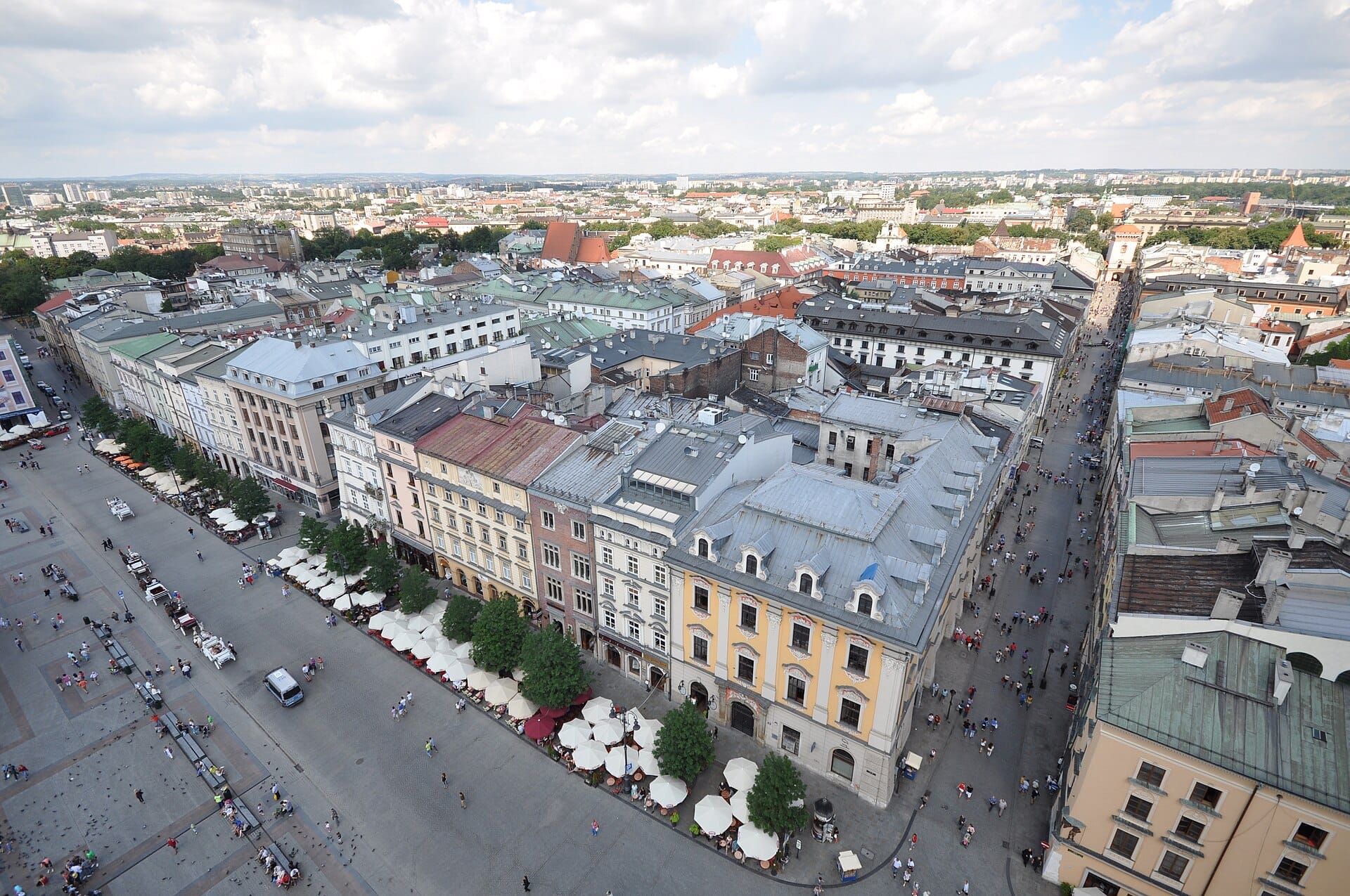
Kraków's Old Town was designated a UNESCO World Heritage Site in 1978, among the very first batch of listings worldwide. That status is justified: the medieval street grid, Gothic churches, and Renaissance market square survived World War II largely intact, which is exceptional in Central Europe. The result is a rare place where you can walk for hours and almost never look at a reconstruction.
A self-guided approach makes particular sense here because the Royal Route is linear, well-signed, and entirely on foot-friendly streets. You set the pace, linger in Collegium Maius as long as you like, or skip the Rynek Underground if queues are long. No group of 25 people, no earpiece, no fixed schedule.
ℹ️ Good to know
Kraków's official name is the Royal Capital City of Kraków (Polish: Królewskie Stołeczne Miasto Kraków). It is Poland's second-largest city Kraków's official name is the Royal Capital City of Kraków (Polish: Królewskie Stołeczne Miasto Kraków). It is Poland's second-largest city with around 807,000 residents, and the capital of Lesser Poland Voivodeship (województwo małopolskie). and the capital of Lesser Poland Voivodeship (województwo małopolskie).
The Route: Barbican to Wawel in Logical Order
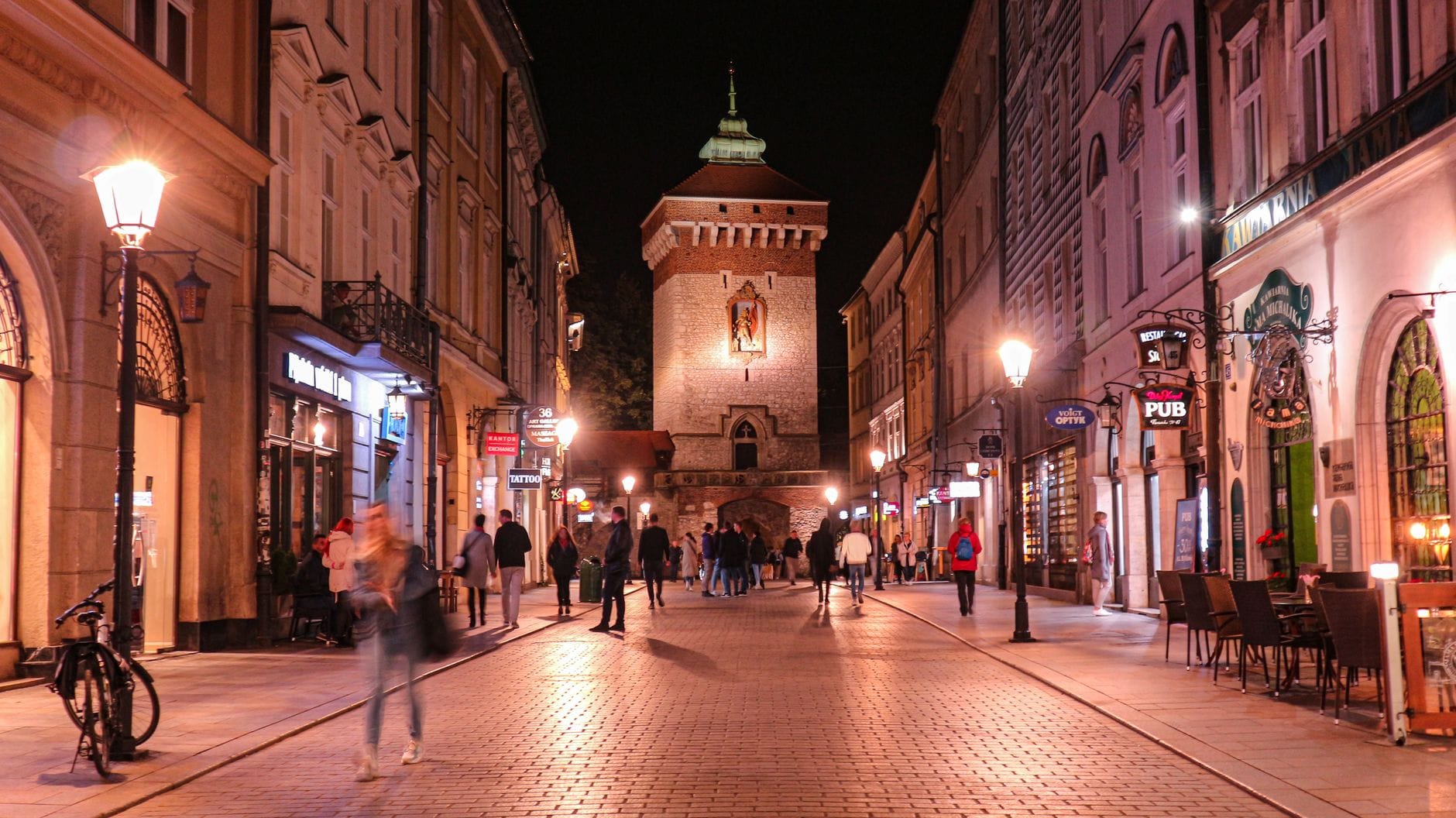
The traditional Royal Route runs north to south: starting at the Barbican, passing through the Florian Gate (Brama Floriańska), down ul. Floriańska to Rynek Główny, then south along ul. Grodzka to Wawel Hill. Walking it in this direction keeps the sun behind you in the morning, which matters for photography.
- 1. Barbican (Barbakan) The northernmost point of the route. This 15th-century circular fortification is one of the few surviving examples of its kind in Europe. A small entry fee covers the interior; the exterior is free and worth a few minutes even if you skip the inside.
- 2. Florian Gate (Brama Floriańska) Connected to the Barbican by a short neck of wall, the 14th-century Florian Gate is the main entry into the Old Town proper. Walk through it — this is the moment the scale of the medieval city reveals itself.
- 3. Ul. Floriańska The 300-metre street between the Florian Gate and Rynek Główny is lined with historic townhouses, cafes, and the former house of Jan Matejko (Poland's most celebrated 19th-century painter). Walk slowly here — the facades tell the story of centuries of rebuilding and restoration.
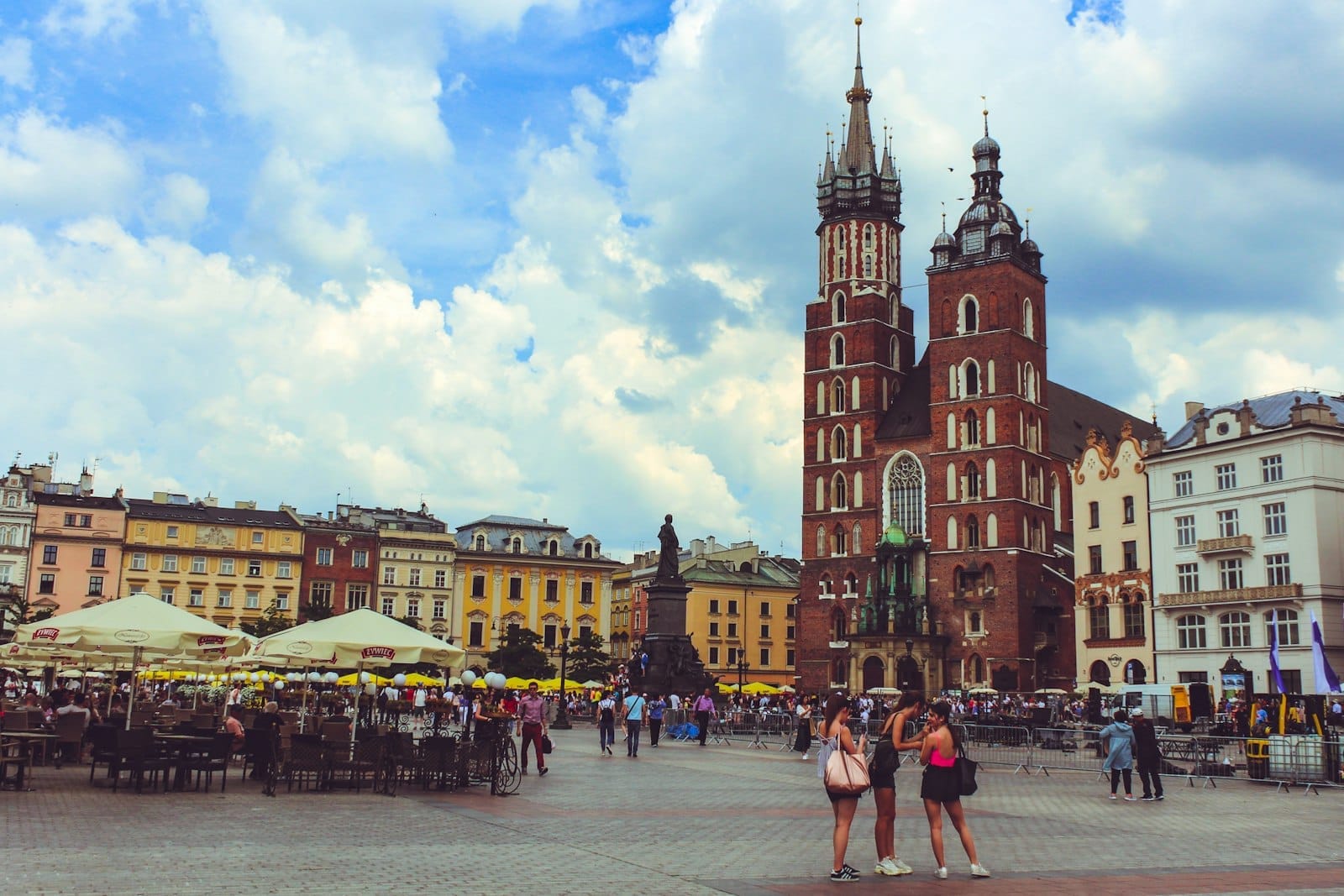
- 4. Rynek Główny (Main Market Square) At 200 m x 200 m, this is frequently described as Europe's largest medieval town square. The Cloth Hall (Sukiennice), St. Mary's Basilica, and the Town Hall Tower all face onto it. Budget at least 30-45 minutes here, more if you enter any interiors.
- 5. Collegium Maius A short detour west of the Main Square brings you to the oldest building of Jagiellonian University, founded 1364. The arcaded Gothic courtyard is one of the most photogenic spots in Kraków and is free to enter. Guided tours of the interior run on a fixed schedule — check times on arrival.
- 6. Ul. Grodzka The southern continuation of the Royal Route, Grodzka Street passes several important churches including St. Peter and Paul's Church and St. Andrew's Church. These are often overlooked by tourists rushing to Wawel, which is a mistake — the Baroque interior of St. Peter and Paul is worth a stop.
- 7. Wawel Hill The route ends at the top of Wawel Hill, where Wawel Royal Castle and Wawel Cathedral sit within a single walled complex. The hill itself and the courtyard are free to enter. Individual attractions inside (the State Rooms, Crown Treasury, Cathedral crypt) are ticketed separately and can sell out — book ahead in summer.
💡 Local tip
Start at the Barbican by 09:00 on weekdays. Rynek Główny is quieter before 10:30, and Wawel Castle ticket windows can have 30-45 minute queues by midday in July and August. Pre-booking Wawel tickets online is strongly recommended in peak season.
Timing, Distance, and What to Realistically Expect
The pure walking distance from the Barbican to the top of Wawel Hill is around 1.5 km. With the Collegium Maius detour and natural wandering around Rynek Główny, the total is closer to 2-3 km. That is not a demanding walk, but it does involve some uphill on Wawel Hill and a lot of standing on stone surfaces — wear comfortable shoes.
Time estimates depend entirely on how deep you go. A focused exterior-only walk from Barbican to Wawel can be done in 90 minutes. Add St. Mary's Basilica interior (around 30 minutes), a Wawel Castle exhibition (60-90 minutes each), and lunch on Rynek Główny, and you are looking at a full 4-5 hour day. Most visitors find 3 hours comfortable for a first visit covering the key stops without rushing.
- Exterior-only loop, Barbican to Wawel: 1.5-2 hours
- With St. Mary's Basilica interior: add 30-40 minutes
- With Rynek Underground Museum: add 60-75 minutes
- With one or two Wawel Castle exhibitions: add 90-120 minutes
- Full day with Collegium Maius guided tour and lunch: 5-6 hours
⚠️ What to skip
The Rynek Underground Museum (beneath the Main Square) is popular and has timed entry slots. Queues without a pre-booked ticket can exceed one hour in peak summer months. If this is a priority, book online before your visit.
Entry Fees and What Is Actually Free
One of the most common misconceptions about the Old Town walk is that it costs a lot. In reality, you can walk the entire Royal Route from the Barbican to the gates of Wawel Castle without spending a single złoty. The streets, the Planty park encircling the Old Town, the castle courtyard, and all exterior views are free.
Entry fees apply for specific interiors. St. Mary's Basilica charges a modest fee for tourists (the entrance used by worshippers for prayer is free). Wawel Cathedral has a separate ticket from the castle; both are priced individually. The Barbican interior is also ticketed separately. Prices across these attractions are reasonable by Western European standards — budget around 100-150 PLN per person if you plan to enter several interiors.
For travellers keeping costs down, the free elements of this walk — the architecture, the square, the castle courtyard views, the Planty gardens — are substantial. See our guide to free things to do in Kraków for more on stretching your budget without missing the city's best.
Key Stops in Detail: What to Look for and What to Skip
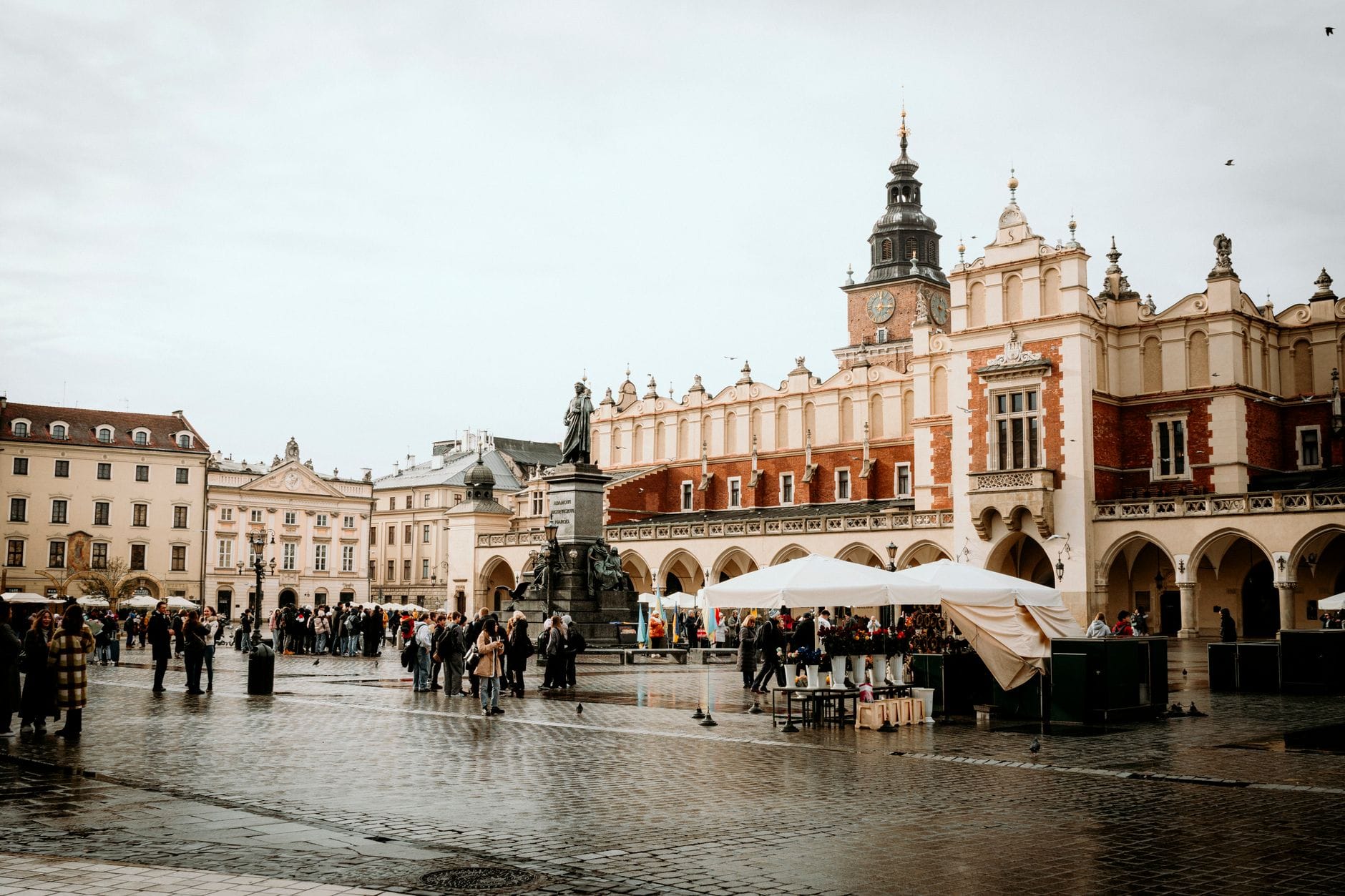
Rynek Główny deserves more attention than most walkers give it. Beyond the obvious landmarks, look for the details: the medieval Cloth Hall (Sukiennice) has a first-floor gallery of 19th-century Polish painting that is consistently undervisited and excellent. The Town Hall Tower can be climbed for views over the square. The trumpeter (hejnał) plays from St. Mary's Basilica tower every hour on the hour — the melody stops abruptly mid-phrase, recalling a 13th-century legend of a trumpeter shot by an arrow during a Tatar raid.
At Wawel, the full guide to Wawel Castle covers ticketing and exhibitions in depth, but the short version is this: the Dragon's Den (Smocza Jama) is fun for families and only costs a few złoty, while the State Rooms are the most impressive interior in the complex. The Wawel Cathedral is where Polish kings were crowned and buried — it is historically one of the most significant buildings in Poland and worth the entry fee.
What to consider skipping on a first visit: the horse-drawn carriages around Rynek Główny are overpriced tourist traps. The amber jewellery shops on ul. Floriańska are fine for browsing but rarely offer better prices than the Cloth Hall. If your time is limited, prioritise the Barbican, St. Mary's interior, Collegium Maius courtyard, and Wawel over anything else.
Practical Logistics: When to Go, How to Get There, What to Bring
Kraków's Old Town is walkable year-round. The city has a temperate continental climate: summers (June-August) are warm, often around 20-25°C, with longer daylight hours ideal for evening walks when crowds thin out. Winters (December-February) are cold, often around or below 0°C, but the Old Town in snow is atmospheric and far less crowded. Late spring (May) and early autumn (September) offer the best balance of pleasant weather and manageable tourist numbers. For a full breakdown, see our guide to the best time to visit Kraków.
Getting to the Old Town starting point: the Barbican is a short walk from Kraków Główny railway station (about 15 minutes on foot, or a quick tram ride). From John Paul II International Airport (IATA: KRK), located around 11 km west in Balice, a direct train to Kraków Główny takes about 17-20 minutes. Trams and buses connect the station to the Old Town perimeter; the Planty ring park that surrounds the Old Town is the natural starting boundary.
The Old Town is almost completely pedestrianised — you will not need to worry about traffic on the route itself. For getting around the wider city after your walk, or heading to Kazimierz (just south of Wawel), Kraków's tram and bus network run efficiently across most of the city. There is no metro. Bolt and Uber operate in Kraków and are generally reliable for longer distances. See our full guide to getting around Kraków for more detail.
- Wear comfortable walking shoes — cobblestones are uneven throughout the Old Town
- Carry cash in Polish złoty (PLN) for smaller entry fees, some cafes, and market stalls
- Download an offline map (Maps.me or Google Maps offline) before you start — signal can be patchy in some courtyards
- Modest clothing is required inside churches: shoulders and knees should be covered
- The emergency number in Poland is 112; country code is +48, Kraków city code is 12
- Electricity is 230V/50Hz with Type C and E plugs — bring an adapter if needed
✨ Pro tip
After finishing at Wawel, After finishing at Wawel, walk along the Vistula riverbank rather than retracing your steps. It is flat, scenic, and brings you naturally into Kazimierz — Kraków's former Jewish quarter — where you can extend the day with lunch, a visit to the Old Synagogue, or a walk through Plac Nowy market. It is flat, scenic, and brings you naturally into Kazimierz — Kraków's former Jewish quarter — where you can extend the day with lunch, a visit to the Old Synagogue, or a walk through Plac Nowy market.
FAQ
How long does the self-guided Old Town walk take?
Plan for 2-4 hours for a comfortable walk covering the full Royal Route from the Barbican to Wawel Castle. A focused exterior-only walk can be done in 90 minutes. Add time for each interior you enter: St. Mary's Basilica is around 30-40 minutes, the Rynek Underground Museum 60-75 minutes, and each Wawel Castle exhibition 60-90 minutes.
Do I need to book anything in advance for the self-guided walk?
The walk itself requires no booking — all streets and public spaces are free and open. However, Wawel Castle exhibitions have limited daily ticket capacity and can sell out by mid-morning in July and August. The Rynek Underground Museum also operates timed entry. Pre-booking these online is strongly recommended in peak season.
Is the Kraków Old Town walk suitable for families with children?
Yes. The route is flat between the Barbican and Rynek Główny, fully pedestrianised, and short enough for most children. Wawel Hill has a gentle incline. The Dragon's Den (Smocza Jama) at Wawel is particularly popular with younger visitors and costs only a few złoty to enter. Pushchairs are manageable but cobblestones can make them harder to push in places.
What is the best time of day to walk the Old Town?
Early morning starts (by 09:00) give you the best experience. The square is quieter, light is better for photography, and you reach Wawel Castle before the longest queues form. Avoid starting after 11:00 on summer weekends if you want to move freely through Rynek Główny.
Can I walk from the Old Town to Kazimierz?
Yes, easily. From Wawel Hill, follow the Vistula riverbank east for around 15 minutes and you arrive at the northern edge of Kazimierz. Alternatively, walk south from Rynek Główny along ul. Stradomska. There is no need for a tram or taxi between the Old Town and Kazimierz on foot.
Tickets & tours
Live prices and dates from our booking partner. If you book, we may earn a commission at no extra cost to you.
Planning a trip? Discover personalized activities with the Nomado app.