Cloth Hall (Sukiennice): Kraków's Medieval Marketplace at the Heart of the Old Town
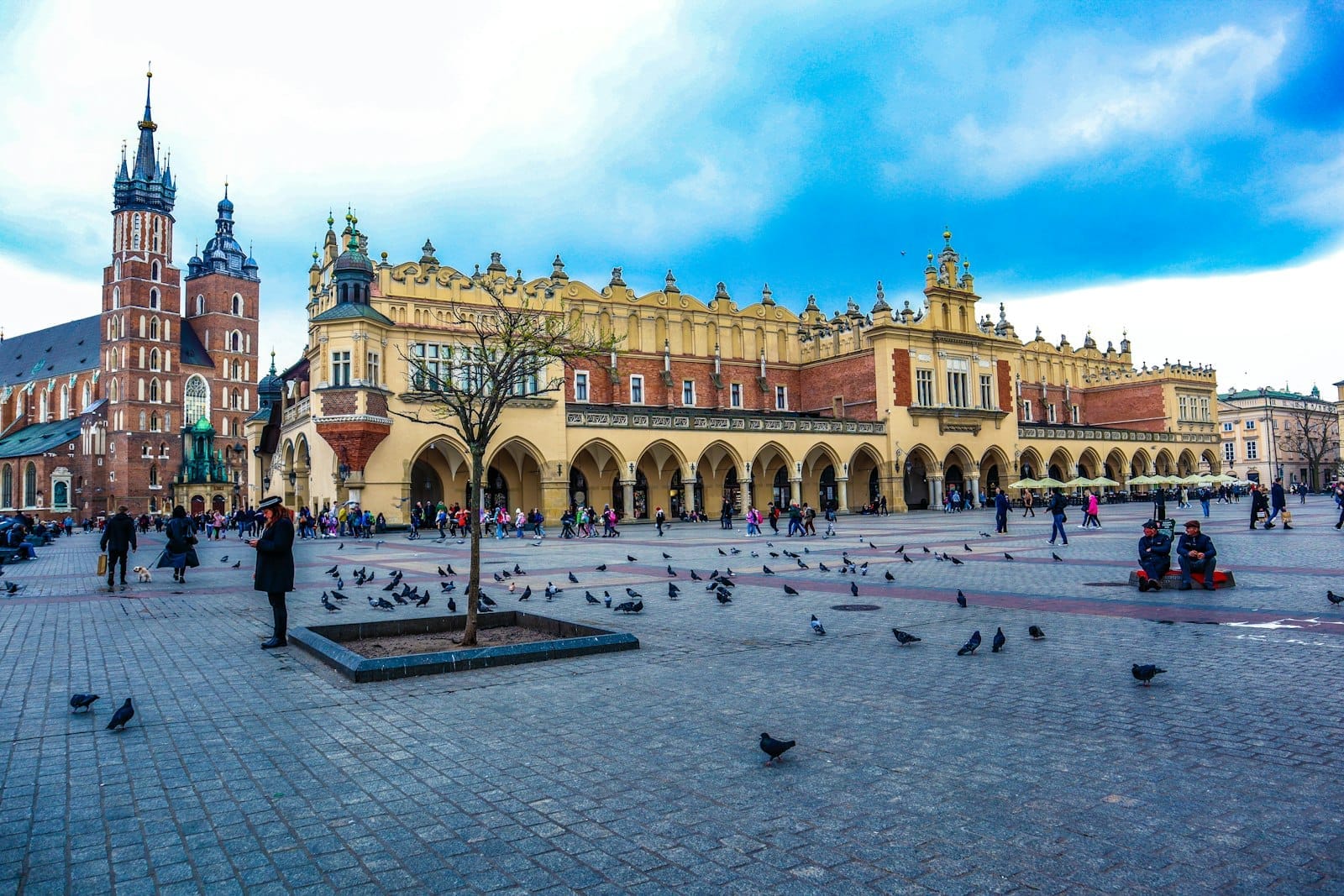
Standing at the centre of Rynek Główny since the Middle Ages, Kraków's Cloth Hall is part market, part museum, and part architectural monument. The ground-floor arcade sells amber, linen, and crafts; upstairs, the National Museum's Gallery of Polish Art fills Renaissance rooms with 19th-century masterpieces.
Quick Facts
- Location
- Rynek Główny 1–3, Kraków Old Town (centre of the Main Market Square)
- Getting There
- On foot from anywhere in the Old Town; nearest tram/bus stops are around Teatr Słowackiego and Plac Wszystkich Świętych, a 5–10-minute walk
- Time Needed
- 30–45 min for the market stalls; add 60–90 min if visiting the upstairs gallery
- Cost
- Ground-floor stalls: free to enter. Upstairs museum: paid admission (Tuesdays free for permanent exhibitions). Verify current prices at mnk.pl/en
- Best for
- Architecture lovers, souvenir shoppers, art enthusiasts, first-time visitors to Kraków
- Official website
- krakow.travel/en/54-krakow-sukiennice
What the Cloth Hall Actually Is
The Sukiennice, known in English as the Cloth Hall, is a long Renaissance arcade running through the geographical centre of Kraków's Main Market Square. It is not a side attraction or a background detail — it is the square's backbone, splitting Rynek Główny down the middle and giving the plaza its distinctive symmetry. At street level, a double row of stalls sells amber jewellery, hand-painted wooden boxes, linen tablecloths, sheepskin slippers, and regional ceramics. One floor above, the National Museum's Gallery of 19th-Century Polish Art occupies rooms that would look equally at home in Vienna or Paris.
The building was first erected in the 13th century as a covered trading post, extended significantly in the 14th century, and then remodelled in the mid-16th century into the Renaissance form visitors see today. The arcaded loggia and the parapet decorated with carved stone masks date from that Renaissance reworking, while the current clock tower is a later 19th-century addition. For nearly seven centuries, commercial life has continued inside these walls without serious interruption — first in cloth and spices, now in souvenirs and handicrafts.
💡 Local tip
The ground-floor stalls are generally open from late morning until evening. The upstairs museum (MNK Sukiennice) is closed on Mondays and typically open 10:00 a.m. to 6:00 p.m. Tuesday to Sunday, with free entry to the permanent gallery on Tuesdays. Always confirm current hours at mnk.pl before visiting, as seasonal exceptions apply.
The Architecture: What You Are Actually Looking At
From the outside, the Cloth Hall is best seen from either end of the square, where you can take in its full length — roughly 100 metres — against the backdrop of St. Mary's Basilica rising to the northeast. The exterior walls are punctuated by a continuous arcade at ground level, originally designed so that merchants could display goods in the covered bays while buyers walked in the dry. Above the arcade runs a decorative attic wall, distinctive in Polish Renaissance architecture, featuring sculpted grotesque masks and floral motifs that locals call the "maszkarony."
The building material is pale stone that takes on different qualities in different light conditions. In morning sun it reads as warm cream; on overcast afternoons it turns cooler, almost grey; and after dark, when the square's floodlights hit it from below, the carved decoration casts deep shadows that reward close inspection. If you are interested in the architecture of Kraków's Old Town more broadly, the Cloth Hall is a logical starting point before exploring the surrounding streets.
Tickets & tours
Live prices and dates from our booking partner. If you book, we may earn a commission at no extra cost to you.
Krakow Rynek Underground Museum guided tour
From 23 €Instant confirmationFree cancellationEscape Tour self-guided, interactive city challenge in Krakow
From 30 €Instant confirmationEscape Tour self-guided, interactive city challenge in Krakow
From 30 €Instant confirmationEntrance ticket for the Legends of Krakow robotic show
From 9 €Instant confirmationFree cancellation
Inside the Market: Ground Floor
Walking through the central corridor of the Cloth Hall is a specific sensory experience. The arcade is cool even in summer, smelling faintly of leather, wool, and the occasional waft of incense from nearby stalls. The ceiling is barrel-vaulted brick, darkened with age. On busy afternoons in peak season, the corridor fills with a low hum of multiple languages, and the stalls press in on both sides.
The goods on sale range from well-made to purely touristic. Amber is Kraków's most reliable souvenir buy here — Poland sits atop one of Europe's largest deposits of Baltic amber, and pieces sold in the Cloth Hall tend to be authentic, though prices vary considerably between stalls. Linen products (tablecloths, napkins, bags) are another reasonable buy. Carved wooden items, felt slippers, and regional food products like oscypek (smoked sheep's milk cheese from the Tatra region) also appear, though the cheese is better sourced from outdoor markets.
Comparison shopping is easy because all the stalls are within metres of each other. Vendors are generally accustomed to visitors who browse without buying, and the atmosphere is rarely pressured. That said, on weekend afternoons in summer the corridor can feel uncomfortably crowded, and the pace of movement slows to a shuffle.
💡 Local tip
For the most comfortable shopping experience, arrive on a weekday morning between 9:00 and 11:00 a.m. The stalls are already open, the corridor is cool, and the crowds are thin enough that you can actually stop and examine pieces without being pressed forward.
Upstairs: The Gallery of 19th-Century Polish Art
The upper floor of the Sukiennice houses a branch of the National Museum in Kraków (MNK), dedicated to Polish painting and sculpture from the 19th century. This is where the Cloth Hall earns a different kind of attention. The collection is substantial and includes some of the most significant works in Polish art history — large-format history paintings, Romantic landscapes, and portraits that document a period when Poland had ceased to exist as an independent state and art carried particular national weight.
Paintings by Jan Matejko, perhaps the most celebrated Polish historical painter, feature prominently. His canvases are vast in scale and dense in iconographic detail, depicting scenes from medieval and Renaissance Polish history with a theatrical intensity that requires time to absorb. Equally worth attention are works by Józef Chełmoński, whose rural landscapes capture 19th-century Polish countryside with an almost photographic calm. The gallery's rooms are well-proportioned and naturally lit, making this one of the more pleasurable museum experiences in the city.
The museum is closed on Mondays. On Tuesdays, entry to permanent exhibitions is free. Paid admission applies on other days — verify the current price structure at mnk.pl/en before your visit, as fees are periodically adjusted.
ℹ️ Good to know
The gallery is rarely overcrowded, even when the square below is packed. If you need a calm hour away from the bustle of the market square, the upstairs museum provides exactly that — combined with genuine artistic substance.
How the Experience Changes Through the Day
Early morning is when the Cloth Hall belongs to its surroundings rather than to tourists. Before 9:00 a.m., the stalls are not yet open and the interior corridor is gated, but the exterior can be walked around freely. This is the best time to photograph the architecture: the square is quiet, the light (especially from the east in summer) falls across the stone facade at a low angle, and the towers of St. Mary's Basilica frame the building from behind. The surrounding cafes are just setting up chairs.
By mid-morning the stalls are open and foot traffic builds steadily. Between roughly 11:00 a.m. and 3:00 p.m. on summer weekends, the corridor is at its most congested. Late afternoon brings a second wave of visitors after 4:00 p.m., but the crowd composition shifts toward people ending their day rather than beginning it, and the pace is slightly more relaxed. By evening the ground-floor stalls remain open until 9:00 p.m. and the square transforms around the hall: street musicians set up, the surrounding restaurant terraces fill, and the building is lit from below. Walking the exterior perimeter at dusk, with the carved stone masks illuminated against the dark sky, is worth doing.
Practical Logistics and Getting There
The Cloth Hall sits at the absolute centre of Rynek Główny, Kraków's Main Market Square. There is no easier landmark in the city to find. From virtually any point in the Old Town, walking toward the square leads you directly to it. Tram and bus stops on the surrounding streets are a five-minute walk at most. There is no dedicated parking near the square; visitors arriving by car should use peripheral car parks and walk or use public transport into the centre.
Kraków's Old Town is compact and best navigated on foot. The getting around Kraków guide covers tram routes and ticketing in detail. If you are coming from further afield, say from Kazimierz, the Jewish quarter to the south, the walk to the Cloth Hall takes about 15 minutes and passes through interesting streets worth exploring along the way.
Wheelchair access to the square is good — the ground is paved and mostly flat. The museum entrance and some areas of the ground floor are accessible, though the historic building has constraints; contact MNK directly if specific accessibility requirements need to be confirmed in advance.
Photography Tips and Honest Limitations
The exterior of the Cloth Hall photographs well from either short end of the building, where you get the full length in frame with the square's architecture on either side. The interior corridor is dark and close; smartphone cameras tend to struggle with the contrast between bright arcade openings and shadowed vaults. A wide-angle lens and some patience with exposure produce the best results. The carved stone grotesques on the upper parapet reward a zoom lens or a telephoto setting if you want to capture the detail.
One practical limitation: on peak summer days, getting a clean exterior shot without a foreground of other tourists is difficult. Early morning and late evening are the practical workarounds. The interior of the stalls is generally too narrow and busy for composed photography; most interesting shots come from stepping back into the square and using the building as a backdrop rather than trying to document the market stalls themselves.
⚠️ What to skip
The Main Market Square can be extremely crowded on summer weekends and during major events. If large crowds limit your enjoyment, consider visiting on a weekday morning or during the shoulder seasons (April–May or September–October). Winter visits are quieter, though the Kraków Christmas Market, which occupies the square in December, creates its own dense crowd.
Insider Tips
- Tuesday is free entry day for the permanent gallery upstairs. If your schedule allows, this is the obvious day to combine the free museum visit with a browse of the market stalls — and weekday Tuesdays tend to be quieter than weekends regardless, even if the gallery itself can be busier.
- The stalls on the northern side of the interior corridor (closer to St. Mary's Basilica) tend to carry slightly different product selections than those on the southern side. If you are looking for a specific item, walk the full length of both sides before buying.
- The roof terrace level of the building is not publicly accessible, but the arcade's upper floor windows offer views down onto the square that most visitors never see — worth a look when you visit the gallery.
- Amber quality varies significantly between stalls. Genuine Baltic amber is slightly warm to the touch (it holds heat), floats in saturated salt water, and has inclusions or imperfections under close inspection. Fully clear, perfect pieces at low prices may be plastic resin. Most stall vendors will not object to a closer look before purchase.
- The square around the Cloth Hall is one of the few completely flat, wide-open spaces in the Old Town. If you are visiting with young children who need to run and decompress after sightseeing, the area directly east and west of the building works well as an informal open space between attractions.
Who Is Cloth Hall (Sukiennice) For?
- First-time visitors to Kraków who want to understand the city's historical and commercial centre in a single stop
- Travellers looking for high-quality Polish souvenirs — amber, linen, and wood crafts — in a concentrated, easy-to-navigate setting
- Art and history enthusiasts willing to spend time with the National Museum's 19th-century Polish collection upstairs
- Photographers interested in Renaissance civic architecture and the interplay of medieval and modern city life
- Families with older children who can absorb some architectural context alongside the market browsing
Nearby Attractions
Other things to see while in Kraków Old Town (Stare Miasto):
- Collegium Maius
Collegium Maius is the oldest surviving building of the Jagiellonian University, founded in 1364. Housing a museum of rare globes, scientific instruments, and royal regalia beneath a serene Gothic arcade, it offers one of Kraków's most quietly impressive indoor experiences.
- Czartoryski Museum
The Czartoryski Museum holds one of Poland's oldest and most important art collections, anchored by Leonardo da Vinci's Lady with an Ermine. Housed in a historic Old Town complex near the Florian Gate, it combines fine art, antiquities, and decorative arts across several interconnected buildings.
- Florian Gate & City Walls
St. Florian's Gate is the sole surviving medieval gate of the eight that once pierced Kraków's city walls. Standing about 33 metres tall at the northern tip of the Old Town, it anchors the Royal Route that once led from the city entrance down to Wawel Castle. Walking through is free; climbing the wall gallery costs a small fee and pairs naturally with the adjacent Barbican.
- Kraków Barbican
The Kraków Barbican is a late-15th-century Gothic fortified outwork standing at the northern entrance to the Old Town, and one of the most complete medieval defensive structures remaining in Central Europe. Built around 1498–1499 to shield St. Florian's Gate from Ottoman-era threats, it now operates as a branch of the Museum of Krakow. Open Tuesday through Sunday, it rewards visitors with thick brick walls, rooftop turrets, and an atmosphere that the surrounding city streets simply cannot replicate.
Planning a trip? Discover personalized activities with the Nomado app.