Czartoryski Museum Kraków: Lady with an Ermine and One of Poland's Greatest Collections
The Czartoryski Museum holds one of Poland's oldest and most important art collections, anchored by Leonardo da Vinci's Lady with an Ermine. Housed in a historic Old Town complex near the Florian Gate, it combines fine art, antiquities, and decorative arts across several interconnected buildings.
Quick Facts
- Location
- ul. Pijarska 15, 31-015 Kraków (near St. Florian's Gate)
- Getting There
- Trams 4, 14, 18, 20, 52 or buses 124, 152, 424 to Stary Kleparz; about a 10-minute walk from Rynek Główny
- Time Needed
- 1.5 to 2.5 hours for the full collection
- Cost
- PLN 65 standard / PLN 50 reduced / PLN 130 family; free on Tuesdays. Closed Mondays.
- Best for
- Art lovers, history enthusiasts, anyone wanting to see a da Vinci in person
- Official website
- mnk.pl/en/branch/mnk-czartoryski-museum
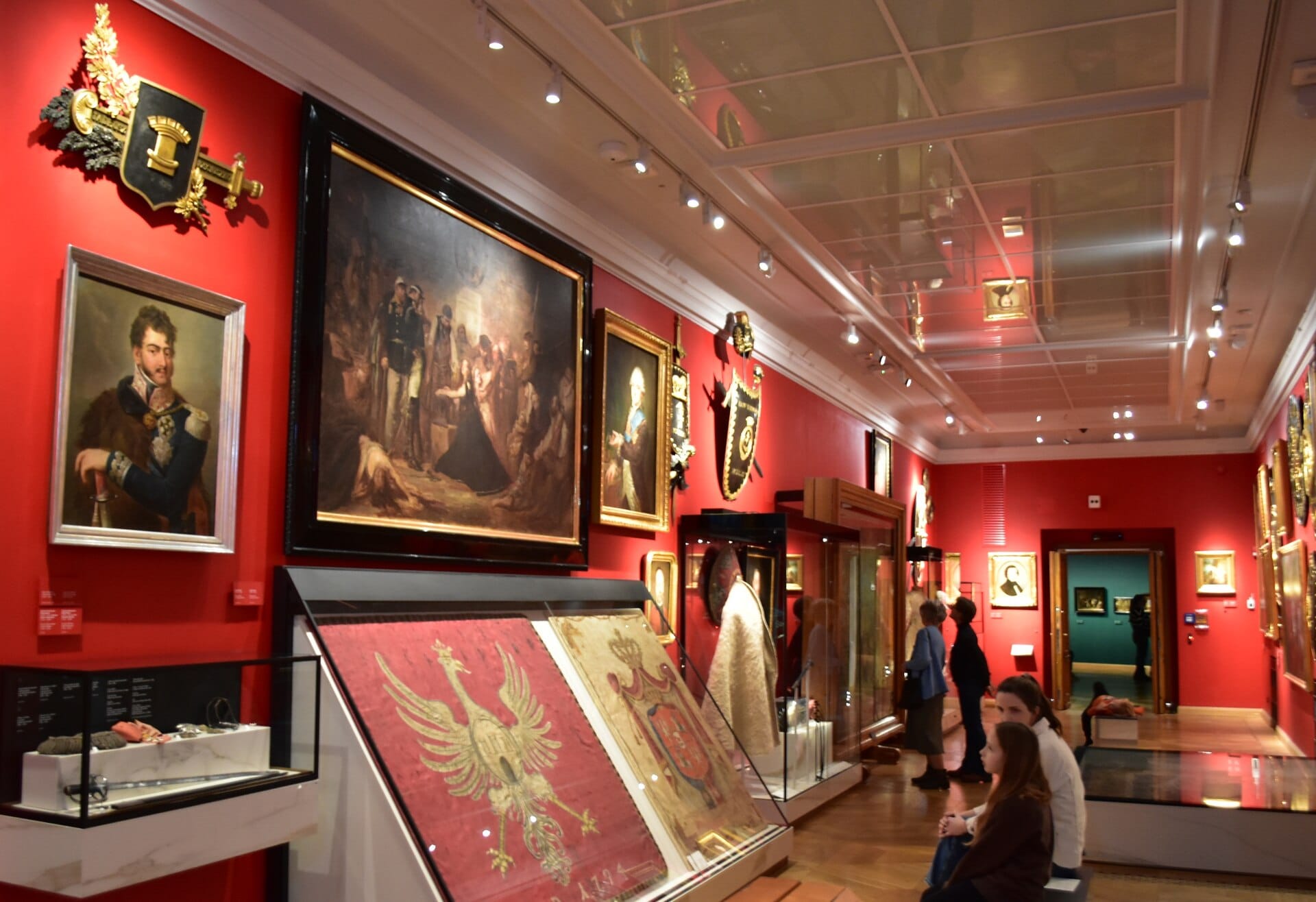
What the Czartoryski Museum Actually Is
The Czartoryski Museum, officially known as the Muzeum Książąt Czartoryskich w Krakowie, is one of the oldest museums in Poland and now operates as a branch of the National Museum in Kraków. Its founding in 1796 predates the museum's public opening in 1878 by nearly a century, which tells you something about the depth of the collection: this was not an institution assembled quickly for public spectacle, but a private treasury gathered across generations by one of Poland's most prominent aristocratic families.
The collection spans ancient Greek and Etruscan artifacts, medieval European armor, applied arts, and an extraordinary gallery of European paintings. But most visitors come for one specific work: Leonardo da Vinci's Lady with an Ermine, painted around 1489–1490 and widely considered one of the finest Renaissance portraits in existence. Seeing it in a relatively modest Kraków gallery rather than inside a vast metropolitan museum gives the encounter an unusual intimacy.
The museum occupies a complex of historic buildings in the Kraków Old Town, with the main entrance at ul. Pijarska 15 and additional spaces at Św. Jana 17–19 and neighboring Pijarska addresses. The buildings themselves carry architectural weight: Gothic, Renaissance, and Baroque elements layer on top of each other in ways that are visible if you pay attention to the vaulted corridors and courtyard proportions.
💡 Local tip
Tuesday is free admission day, but it draws noticeably larger crowds. If you want a quieter encounter with Lady with an Ermine, go on a Wednesday or Thursday morning and arrive when doors open at 10:00.
The Collection: What You Will Actually See
The painting galleries are the emotional core of the museum. Lady with an Ermine hangs in a dedicated space where lighting and positioning are designed to let you observe the work closely. The portrait of Cecilia Gallerani is small by modern expectations, around 54 by 40 centimeters, and the ermine she holds catches most visitors off guard with its almost tactile presence. The modeling of the animal's fur and the subject's hand are among Leonardo's most discussed technical achievements, and seeing them in person resolves something that reproductions never quite communicate.
Also in the collection is Rembrandt's Landscape with the Good Samaritan, a work with its own complicated history tied to Polish national ownership debates. The portrait galleries include Dutch and Flemish masters, and the decorative arts rooms display a compelling range of ceramics, glasswork, textiles, and furniture that trace European craft traditions from antiquity through the early modern period.
The antiquities section, housed separately within the complex, includes Greek vases, Etruscan bronzes, and Egyptian artifacts collected during the 18th and early 19th centuries. These rooms are quieter and receive less foot traffic, which makes them worth seeking out even if ancient objects are not your primary interest.
Tickets & tours
Live prices and dates from our booking partner. If you book, we may earn a commission at no extra cost to you.
Krakow City Pass with Princes Czartoryski Museum and more
From 0 €Instant confirmationEntrance ticket for the Legends of Krakow robotic show
From 9 €Instant confirmationFree cancellationWieliczka Salt Mine guided tour with hotel pickup from Krakow
From 58 €Instant confirmationFree cancellationWieliczka salt mine guided tour from Krakow
From 60 €Instant confirmationFree cancellation
The History Behind the Collection
Princess Izabela Czartoryska founded the collection in 1796 at the Czartoryski family estate in Puławy, with an explicit intention to preserve Polish cultural memory during the Partitions, a period when Poland had been divided and absorbed by neighboring empires and ceased to exist as an independent state. The museum was among the first in Europe founded with a patriotic rather than purely aesthetic mandate.
The collection's history is not linear. It was moved, hidden, and partially dispersed across different political upheavals, including the Nazi seizure of Lady with an Ermine during World War II, when the painting was taken to Germany and later recovered. This context gives the collection a weight that goes beyond art history: these objects survived against considerable odds.
The museum was transferred to state ownership in 1950 and became part of the National Museum in Kraków after the 2016 purchase of the Czartoryski Foundation's holdings. The acquisition, worth several hundred million euros, was one of the largest art purchases in Polish history and ended a long period of uncertainty about the collection's future ownership and location.
How the Visit Feels at Different Times of Day
Early mornings on weekdays are the quietest windows. By 10:00 on a Tuesday, the free-admission crowd is already forming at the entrance, so arriving early matters more on those days. On paid-admission days, the building stays calm until roughly 11:30 when tour groups begin arriving, typically from the large hotels in the Old Town and from coaches doing multi-site Kraków itineraries.
The room housing Lady with an Ermine can become crowded when a tour group enters, and in that space, which is not large, twelve or fifteen people constitute a crowd. The wait for a clear, unhurried view of the painting rarely exceeds five minutes, but patience helps. Afternoon hours from 14:00 to 16:00 see a secondary surge, particularly in summer. The final hour before closing tends to thin out noticeably.
Natural light does not directly illuminate the galleries, which are kept at controlled levels to protect the works. The effect is that the museum feels the same regardless of whether it is sunny or overcast outside, which makes it an excellent destination on grey Kraków winter days when outdoor sightseeing loses its appeal.
ℹ️ Good to know
The museum is closed every Monday. Plan your visit accordingly, especially if you are following a tight itinerary across the Old Town.
Getting There and Practical Navigation
The museum sits a short walk from the Florian Gate, which is itself a landmark visible from ul. Floriańska. From Rynek Główny (the Main Market Square), the walk takes roughly eight to ten minutes along ul. Floriańska heading north, then turning left onto ul. Pijarska. The entrance is not dramatically signposted, so watch for the building numbers.
Multiple tram lines (4, 14, 18, 20, 52) and buses (124, 152, 424) stop within a few minutes' walk of the museum. Kraków's Old Town is pedestrianized in its core, so trams and buses drop you at the perimeter and you walk in. The nearest stop names vary by line; check the MPK Kraków route planner for the current stop serving ul. Pijarska. Kraków's Old Town is pedestrianized in its core, so trams and buses drop you at the perimeter and you walk in. The nearest stop names vary by line; check the MPK Kraków route planner for the current stop serving ul. Pijarska.
The museum occupies historic buildings across multiple levels. The architecture implies some uneven surfaces and stairs between sections, which may pose challenges for visitors with limited mobility. The official museum website does not publish specific accessibility details, so visitors with particular access requirements are advised to contact the museum directly before arrival.
Photography, Practical Tips, and Who Should Skip It
Photography policies in art museums change, and the rules around Lady with an Ermine in particular have been subject to adjustment over the years. Check current policy at the ticket desk when you arrive. Even if photography is permitted, flash is not, and the controlled lighting in the painting galleries means results vary considerably depending on your equipment.
If the visual arts are not your primary interest and you are visiting Kraków primarily for its architecture, public spaces, or Jewish heritage, the Czartoryski Museum may not be the most efficient use of your time. You might find more engagement at the Schindler's Factory Museum in Podgórze, or exploring Kazimierz on foot. The Czartoryski rewards visitors who move slowly through galleries and find meaning in individual objects; those who prefer experiential or immersive formats may feel the traditional display style is dated.
Visitors with young children should set expectations carefully: the collection, while remarkable, involves a lot of looking at paintings and cases of objects in a relatively quiet environment. There are no interactive elements aimed at children. That said, older children who have some context about Leonardo or Renaissance art often respond well to seeing Lady with an Ermine in person.
⚠️ What to skip
Ticket prices and free-admission days are subject to change. Verify current rates at mnk.pl or the official Kraków tourism portal before your visit.
Pairing the Museum with the Surrounding Area
The museum sits steps from the Kraków Barbican, the 15th-century fortified outpost that once guarded the city's northern approach. Combining the two makes for a logical morning: the Barbican takes 30 to 45 minutes and is largely an outdoor experience, a useful contrast to the museum's interior focus.
After the museum, walking south toward Rynek Główny brings you past St. Mary's Basilica and the Cloth Hall. The Old Town's compact layout means most major sights are reachable on foot within fifteen minutes of each other, making a well-paced half-day circuit entirely practical.
Insider Tips
- Wednesday and Thursday mornings offer the quietest conditions for viewing Lady with an Ermine. Tour groups tend to concentrate on Tuesdays (free admission) and weekends, so mid-week visits on paid days are noticeably calmer.
- The antiquities rooms on the lower level attract far less foot traffic than the painting galleries. If you enjoy Greek, Etruscan, or Egyptian objects, you can spend real time there without competing for space.
- Audio guides or printed materials at the ticket desk provide context that significantly improves the experience, particularly for the decorative arts and applied arts sections where labels alone can feel sparse.
- The museum's courtyard areas, visible when moving between buildings, are worth pausing in. The layered architectural periods are most legible from these transitional spaces rather than from inside the galleries.
- If you are visiting Kraków during winter, the museum's stable indoor climate makes it one of the better cold-weather options in the Old Town. Pair it with the nearby Barbican on a clear day, or save the Barbican for warmer conditions and extend your time inside the museum instead.
Who Is Czartoryski Museum For?
- Art history enthusiasts who want to see a major Leonardo da Vinci painting outside a major metropolitan museum
- Travelers on multi-day Kraków itineraries looking to balance outdoor sightseeing with a substantive indoor experience
- History-minded visitors interested in the intersection of Polish national identity and European collecting traditions
- Repeat Kraków visitors who have covered the major sites and want to spend focused time with the fine arts collection
- Visitors arriving on a rainy or cold day who need a high-quality indoor alternative to outdoor exploration
Nearby Attractions
Other things to see while in Kraków Old Town (Stare Miasto):
- Cloth Hall (Sukiennice)
Standing at the centre of Rynek Główny since the Middle Ages, Kraków's Cloth Hall is part market, part museum, and part architectural monument. The ground-floor arcade sells amber, linen, and crafts; upstairs, the National Museum's Gallery of Polish Art fills Renaissance rooms with 19th-century masterpieces.
- Collegium Maius
Collegium Maius is the oldest surviving building of the Jagiellonian University, founded in 1364. Housing a museum of rare globes, scientific instruments, and royal regalia beneath a serene Gothic arcade, it offers one of Kraków's most quietly impressive indoor experiences.
- Florian Gate & City Walls
St. Florian's Gate is the sole surviving medieval gate of the eight that once pierced Kraków's city walls. Standing about 33 metres tall at the northern tip of the Old Town, it anchors the Royal Route that once led from the city entrance down to Wawel Castle. Walking through is free; climbing the wall gallery costs a small fee and pairs naturally with the adjacent Barbican.
- Kraków Barbican
The Kraków Barbican is a late-15th-century Gothic fortified outwork standing at the northern entrance to the Old Town, and one of the most complete medieval defensive structures remaining in Central Europe. Built around 1498–1499 to shield St. Florian's Gate from Ottoman-era threats, it now operates as a branch of the Museum of Krakow. Open Tuesday through Sunday, it rewards visitors with thick brick walls, rooftop turrets, and an atmosphere that the surrounding city streets simply cannot replicate.
Planning a trip? Discover personalized activities with the Nomado app.