Wawel Cathedral: Poland's Sacred Heart on the Hill
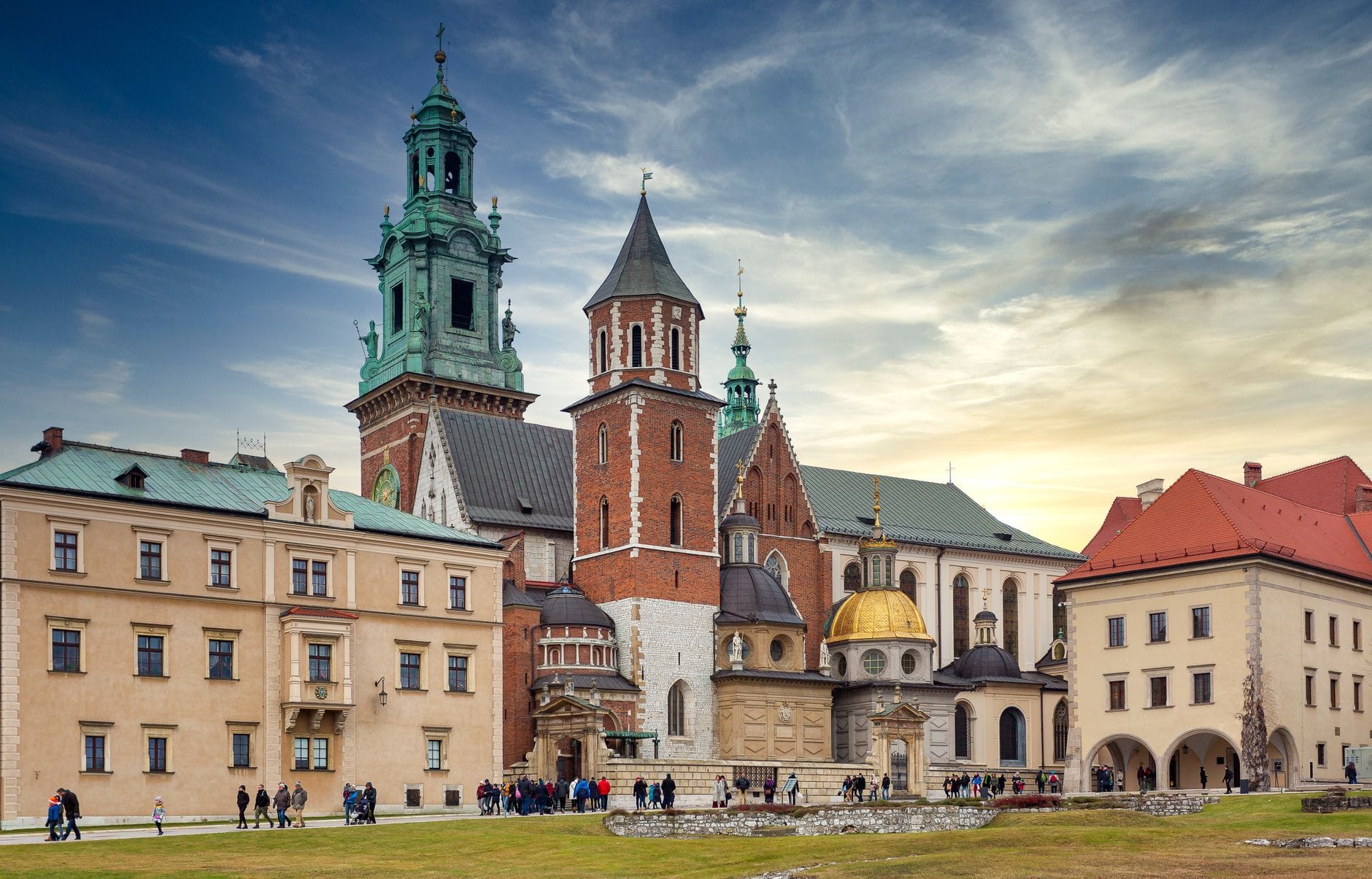
The Archcathedral Basilica of Saint Stanislaus and Saint Wenceslaus, known as Wawel Cathedral, is the coronation and burial church of Polish kings. Standing on Wawel Hill in its present Gothic form since 1364, it combines Gothic architecture, Renaissance chapels, and baroque interiors into one of the most historically charged buildings in Central Europe.
Quick Facts
- Location
- Wawel 3, 31-001 Kraków (Wawel Hill, just south of the Old Town / Main Market Square)
- Getting There
- Tram to 'Wawel' stop, then about a 5-minute walk up the hill; or a 10–15-minute walk from Rynek Główny
- Time Needed
- 1.5 to 2.5 hours for cathedral, bell tower, royal tombs, and museum
- Cost
- Combined ticket: 25 PLN adult, 17 PLN concession (includes Cathedral, Sigismund Bell, Royal Tombs, Cathedral Museum, Archdiocesan Museum)
- Best for
- History enthusiasts, architecture lovers, anyone tracing Poland's royal and Catholic heritage
- Official website
- www.katedra-wawelska.pl/en
What Wawel Cathedral Actually Is
The official name is the Archcathedral Basilica of Saint Stanislaus and Saint Wenceslaus, but Kraków residents and visitors alike simply call it Wawel Cathedral. It sits at the top of Wawel Hill, sharing the fortified plateau with Wawel Royal Castle, overlooking a wide bend in the Vistula River. The cathedral is not a museum, even though tickets are required to access most of it. It is a functioning Catholic church and the seat of the Archdiocese of Kraków, which means services take place regularly and the atmosphere shifts noticeably depending on when you arrive.
For Poles, this building carries a weight that no brief description fully captures. Most Polish kings from Bolesław I Chrobry to Stanisław August Poniatowski were crowned here, and many were buried here too. The cathedral holds the tombs of national heroes, poets, and military commanders alongside the royal sarcophagi, making it equal parts royal mausoleum, pilgrimage destination, and active place of worship.
ℹ️ Good to know
Opening hours (April–October): Cathedral Mon–Sat 9:00–17:00, Sun 12:30–17:00; Cathedral Museum Mon–Sat 9:00–17:00, Sun closed. Opening hours (November–March): Cathedral Mon–Sat 9:00–16:00, Sun 12:30–16:00; Cathedral Museum Mon–Sat 9:00–16:00, Sun closed. Hours may be shortened on Catholic feast days — check katedra-wawelska.pl before visiting.
A Thousand Years of Building on One Hill
A cathedral was established on Wawel Hill around the year 1000, shortly after Poland's Christianisation. The structure visible today is the third to stand on this site, consecrated in 1364 under King Casimir III (Casimir the Great). Its Gothic core has been extended and modified over centuries, which explains the architectural layering you notice the moment you step inside: ribbed vaults from the 14th century, Renaissance chapels commissioned by the Jagiellonian dynasty, baroque altars added in later centuries, and neoclassical interventions introduced in the 1800s.
The most photographed exterior feature is the gilded dome of the Sigismund Chapel, built between 1519 and 1533 by the Florentine architect Bartolomeo Berrecci for King Sigismund I. It is widely regarded as the finest example of Renaissance architecture in Poland, and the contrast between its warm gold dome and the Gothic stone towers around it is visible from the Vistula riverbank below. The exterior also has numerous side chapels built onto the cathedral's perimeter over the centuries, each representing a different patron family or era.
Wawel Cathedral became part of the Wawel Hill complex inscribed as a UNESCO World Heritage Site in 1978 as part of the Historic Centre of Kraków. It forms an inseparable unit with the castle, sharing walls, courtyards, and centuries of history.
Tickets & tours
Live prices and dates from our booking partner. If you book, we may earn a commission at no extra cost to you.
Walking Through the Cathedral: What You Will Actually See
Entering the cathedral from the main portal, the first impression is of compressed grandeur. The nave is not as wide as some Gothic cathedrals elsewhere in Europe, but it is dense with detail: carved stone, gilded altarpieces, hanging banners, votive offerings, and epitaphs on nearly every surface. Incense lingers in the cool air. The stone floor has a worn, uneven quality that comes from centuries of foot traffic rather than decorative intent.
The Sigismund Chapel, accessible from the right nave, is the interior highlight for most visitors. The walls are covered in carved white marble reliefs, and the light that enters through alabaster windows gives the space a pale, luminous quality unlike any other part of the building. The silver altar dates to the early 16th century. Even visitors with little interest in religious history tend to pause here.
The Royal Tombs are accessed by a narrow staircase descending to the crypt. The chambers are cool and dim. Sarcophagi of Polish kings and queens line the vaulted spaces, along with the tombs of figures like Tadeusz Kościuszko and Józef Piłsudski, a leading statesman and military leader of early 20th-century Poland. The juxtaposition of medieval monarchs and modern military heroes in the same underground space reflects the cathedral's evolving role as a site of national memory. Visitor numbers in the crypt can be significant on weekends; the narrow passages feel crowded when tour groups arrive simultaneously.
💡 Local tip
Photography tip: The Sigismund Chapel interior photographs best on overcast days, when the soft light through the alabaster windows is even. Direct sun can cause harsh shadows on the marble reliefs.
The Sigismund Bell and the View From the Tower
Climbing the Sigismund Bell tower is the most physically demanding part of the visit and the most rewarding for the view. The Sigismund Bell itself, cast in 1520, is one of the largest bells in Poland and hangs in the upper chamber. It weighs approximately 12.6 tonnes and is rung only on the most significant Catholic and national occasions, including Christmas, Easter, and major Polish national holidays. The clapper is large enough that visitors are allowed to touch it, and many do for what is considered good luck.
The ascent involves a series of steep wooden stairs and ladders inside the tower, some sections very narrow. The view from the top takes in the Wawel Hill courtyard, the Vistula River, the rooftops of the Old Town to the north, and on clear days the Tatra Mountains to the south. This vantage point is one of the few places in central Kraków where the geographic setting of the city becomes fully legible. Visitors with a fear of heights or limited mobility should note that the staircase offers no alternative route and no lift.
Timing Your Visit: How the Experience Changes
The cathedral opens to visitors at 9:00 Monday through Saturday (with closing times varying seasonally). Arriving within the first half-hour puts you ahead of the coach tours that typically reach Wawel Hill by mid-morning. At this hour the light enters the nave from the east, the incense from the morning service has settled, and the crypt is almost entirely quiet. Sunday is a different experience: the cathedral opens at 12:30 after morning masses, which means most Sunday visitors arrive in the early afternoon when crowds peak.
In summer, Wawel Hill as a whole draws large visitor numbers and queues for the castle can be long. The cathedral's own ticket queue is usually faster, but the shared cobbled plaza between cathedral and castle can feel congested between 11:00 and 14:00. Spring and autumn visits, particularly on weekday mornings in May or September, offer the best combination of reasonable weather and manageable crowd levels.
If you are planning a broader Wawel Hill visit, consider pairing the cathedral with the Dragon's Den and the castle state rooms. The complete Wawel Castle guide covers how to structure a half-day across both attractions efficiently.
⚠️ What to skip
The cathedral is an active place of worship. Visitors may be asked to wait or redirect during services. Dress modestly: shoulders and knees should be covered. Loud groups or disruptive behaviour in the crypt area is genuinely unwelcome.
Practical Details: Getting There, Tickets, and Accessibility
Wawel Cathedral is located at Wawel 3, on the fortified hill just south of the Old Town. The most straightforward approach from the city centre is a 10–15-minute walk south from Rynek Główny, along ul. Grodzka and then up the ramp to the hill. Alternatively, trams stop at the 'Wawel' stop on Dietla Street, from which the climb takes about five minutes on foot. There is no vehicle access for regular visitors.
The combined ticket at 25 PLN for adults (17 PLN concession) covers the cathedral interior, Sigismund Bell tower, Royal Tombs, Cathedral Museum, and Archdiocesan Museum. Concession pricing applies to children, students under 26 with valid ISIC cards, teachers with ITIC cards, senior citizens, and pensioners. Group rates are slightly reduced from individual prices. All prices are in Polish złoty. Cards are widely accepted but it is worth carrying some cash on Wawel Hill.
Accessibility considerations are significant here. Wawel Hill rises roughly 20–25 metres above the surrounding terrain. The approach paths are sloped and cobbled, which can be difficult for wheelchair users or visitors with limited mobility. Inside the cathedral, the bell tower climb is only possible via steep wooden stairs, and the crypt entrance involves steps with no lift alternative. The main nave of the cathedral is accessible at ground level. Visitors who need specific accessibility information should consult the official cathedral website or contact the cathedral directly before visiting.
For context on the surrounding neighbourhood and how Wawel Hill fits into a broader Kraków itinerary, the 3-day Kraków itinerary explains how to combine the cathedral with other key attractions across the city.
Who Will Get the Most From This Visit (And Who Might Not)
Visitors with a genuine interest in Polish history, medieval architecture, or Catholic heritage will find Wawel Cathedral deeply rewarding. The density of historical material, from the Gothic vaulting to the Renaissance chapel to the royal sarcophagi, gives attentive visitors a compressed sense of centuries in a single building. The Sigismund Bell tower adds a physical and visual dimension that purely interior religious buildings rarely offer.
Visitors travelling with young children should factor in the narrow stairs to the bell tower and the hushed atmosphere required in the crypt, though the Kraków with kids guide suggests which parts of Wawel Hill tend to engage younger visitors most.
Those primarily interested in light-filled Gothic cathedrals with soaring nave heights may find Wawel Cathedral surprisingly compact and layered. Its character comes from historical accumulation rather than unified architectural vision. Visitors expecting something in the scale of Notre-Dame de Paris or Cologne Cathedral will need to recalibrate their expectations: Wawel Cathedral's significance is national and symbolic rather than primarily aesthetic in the grand Gothic sense.
Insider Tips
- Arrive at 9:00 on a weekday morning. The crypt is almost empty, the morning light is at its best in the nave, and you will be finished before the first coach groups arrive around 10:30.
- Touch the clapper of the Sigismund Bell when you reach the top of the tower. It is a genuine Polish tradition, not a tourist gimmick, and the texture of the 500-year-old bronze is remarkable up close.
- The Cathedral Museum (separate entrance, same combined ticket) contains vestments, reliquaries, and liturgical objects that most visitors skip. It is quieter than the main cathedral and contains pieces of real historical rarity, including items connected to Pope John Paul II, who served as Archbishop of Kraków before becoming pope.
- If you want photographs of the gilded Sigismund Chapel dome from the exterior, the best angle is from the castle courtyard to the west, in the late afternoon when the sun catches the gold directly. The hill below the eastern wall also offers a clean view of the dome against the sky.
- Sunday visits after 12:30 are the busiest of the week. If Sunday is your only option, go straight to the crypt first rather than following the standard nave-first route, as tour groups tend to start from the main entrance and work their way back.
Who Is Wawel Cathedral For?
- History and heritage travellers who want to understand Poland's royal past in a single building
- Architecture enthusiasts interested in Gothic, Renaissance, and baroque forms layered across centuries
- Visitors tracing Catholic pilgrimage routes or interested in the history of the Polish church
- Travellers who want a high-altitude view of Kraków without the crowds of other city viewpoints
- Anyone combining Wawel Cathedral with a broader Wawel Hill visit including the castle and Dragon's Den
Nearby Attractions
Other things to see while in Wawel Hill:
- Dragon's Den (Smocza Jama)
Carved into the limestone bedrock of Wawel Hill over 25 million years ago, the Dragon's Den (Smocza Jama) is one of Kraków's oldest and most atmospheric stops. A short underground walk through three chambers ends at the Vistula riverbank, where a fire-breathing bronze dragon greets you. It is low-cost, quick, and interesting for what it is.
- Vistula Riverbank (Bulwary Wiślane)
The Vistulan Boulevards stretch along both banks of the Vistula River beneath Wawel Hill, offering Kraków's most popular free outdoor space. Built between 1907 and 1913 as flood-protection embankments, they now serve as a walking, cycling, and socialising hub with views of one of Poland's most iconic skylines.
- Wawel Royal Castle
Wawel Royal Castle is Poland's most significant royal residence, perched on a limestone outcrop above the Vistula River. From its Renaissance arcaded courtyard to its treasury of crown jewels and Leonardo da Vinci's Lady with an Ermine, the castle holds centuries of Polish history within a single hilltop complex. Entry to the hill and courtyard is free; exhibitions require timed tickets.
Planning a trip? Discover personalized activities with the Nomado app.