3 Days in Kraków: The Complete Itinerary
Three days is the sweet spot for Kraków. Long enough to cover the Royal Castle, the Jewish Quarter, and a serious day trip without rushing, short enough that you won't run out of things to do. This itinerary breaks it down day by day, with honest advice on costs, timing, and what to skip.
Tickets & tours
Live prices and dates from our booking partner. If you book, we may earn a commission at no extra cost to you.
TL;DR
- Three days covers Kraków's core: Old Town and Rynek Główny on Day 1, Wawel Castle and Kazimierz on Day 2, and Wieliczka Salt Mine or Auschwitz-Birkenau on Day 3.
- Budget around €70–120 per person per day excluding accommodation; the Kraków City Card (72-hour, around €25) covers many museums and public transport but not every attraction.
- Spring (April–May) and early autumn (September–October) offer the best weather and manageable crowds. Summer is peak season with longer queues at Wawel and Wieliczka.
- Book Auschwitz-Birkenau and Wieliczka Salt Mine tickets well in advance — both sell out weeks ahead in high season. See the Auschwitz tour guide for booking details.
- The Old Town, Wawel, Kazimierz, and Podgórze are all walkable from each other. You rarely need public transport within the historic core.
Before You Arrive: Logistics and Practical Basics
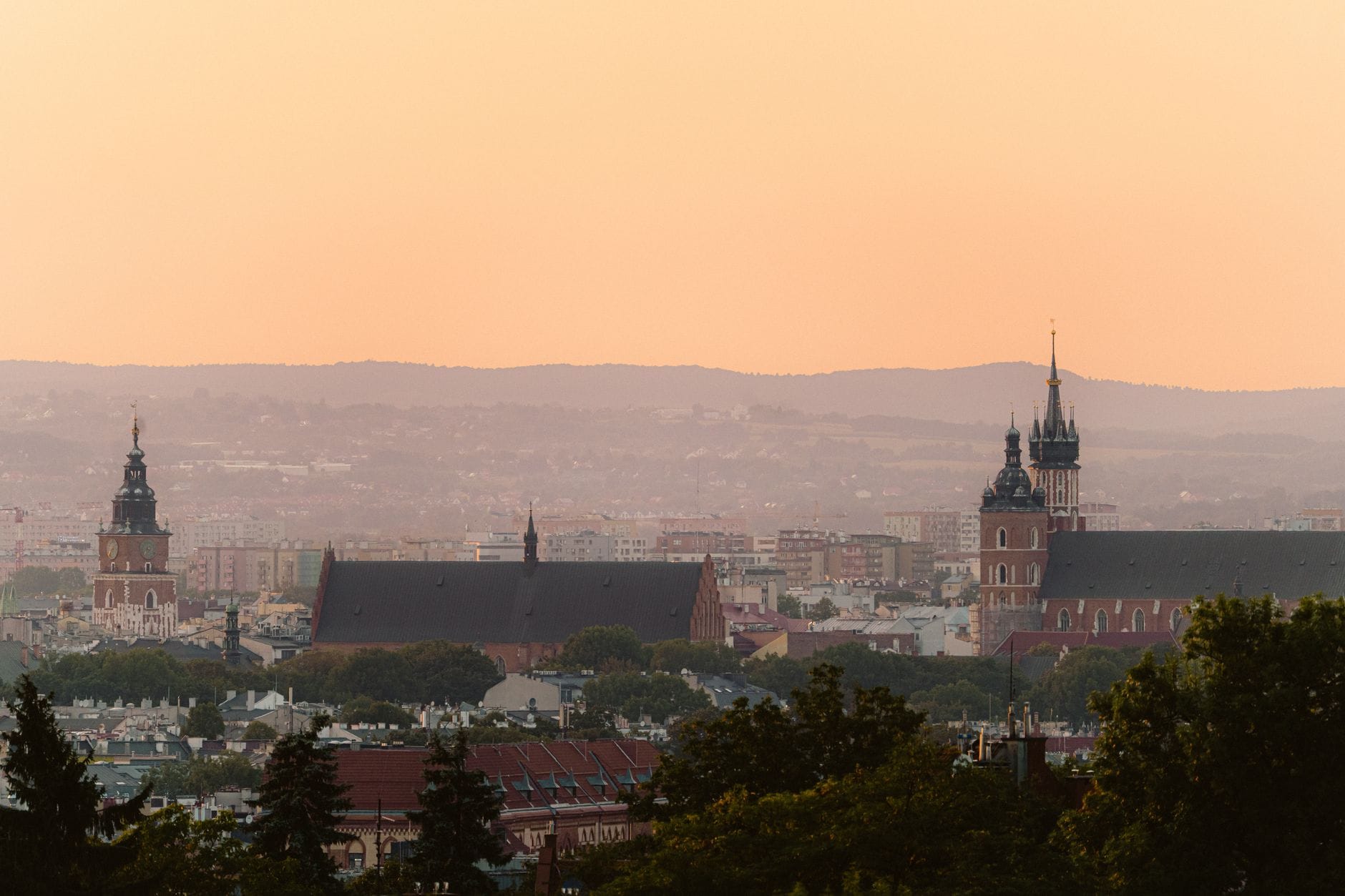
Kraków (officially the Royal Capital City of Kraków) sits in southern Poland, about 300 km south of Warsaw. It's Poland's second-largest city, with around 816,000 residents in the city proper and 1.4 million in the wider metropolitan area. The city is compact, historic, and extremely well set up for visitors — which is both a strength and something to plan around, since the most popular sites get genuinely crowded. For context on when to time your visit, the best time to visit Kraków guide goes into seasonal detail.
The main airport is John Paul II International Airport Kraków-Balice (IATA: KRK), about 11 km west of the city centre. The fastest way in is the train: regular services connect the airport directly to Kraków Główny (the central railway station) in around 20 minutes. Buses are slower but cheaper. Taxis and ride-hailing apps (Uber and Bolt both operate here) typically cost more but make sense with heavy luggage or late arrivals. Verify current fares on the airport's official site before you travel, as prices shift.
- Currency Polish złoty (PLN). Card payments are widely accepted, but carry some cash for markets, smaller cafes, and church entry.
- Language Polish is the official language. English is spoken comfortably in most tourist-facing businesses throughout the Old Town and Kazimierz.
- Emergency number 112 (EU-standard). Poland country code: +48. Kraków city code: 12.
- Electricity 230V, 50Hz, plug types C and E — standard European. Bring an adapter if arriving from the UK or North America.
- Visa EU/EEA citizens: free movement. US, UK, Canadian, Australian, and NZ passport holders: visa-free for up to 90 days in the Schengen Area. Verify current rules with official government sources before travel.
✨ Pro tip
The Kraków City Card (available for 24, 48, or 72 hours) covers entry to many city museums and unlimited public transport. At around €32–35 for 72 hours, it pays off quickly if you're visiting multiple museums. It does NOT cover Wieliczka Salt Mine, Auschwitz-Birkenau, or Wawel Cathedral — budget separately for those.
Day 1: The Royal Capital — Old Town and Rynek Główny
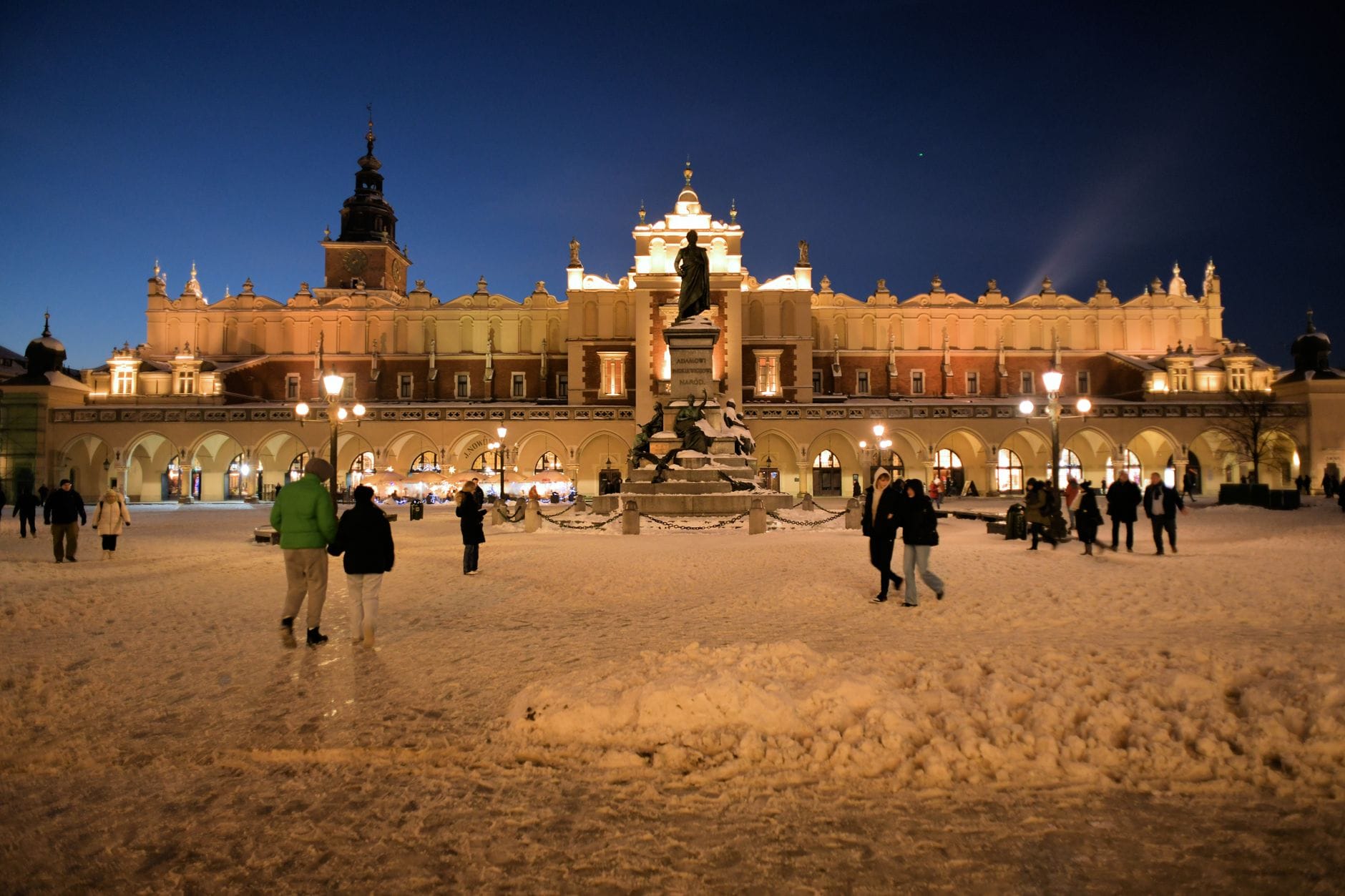
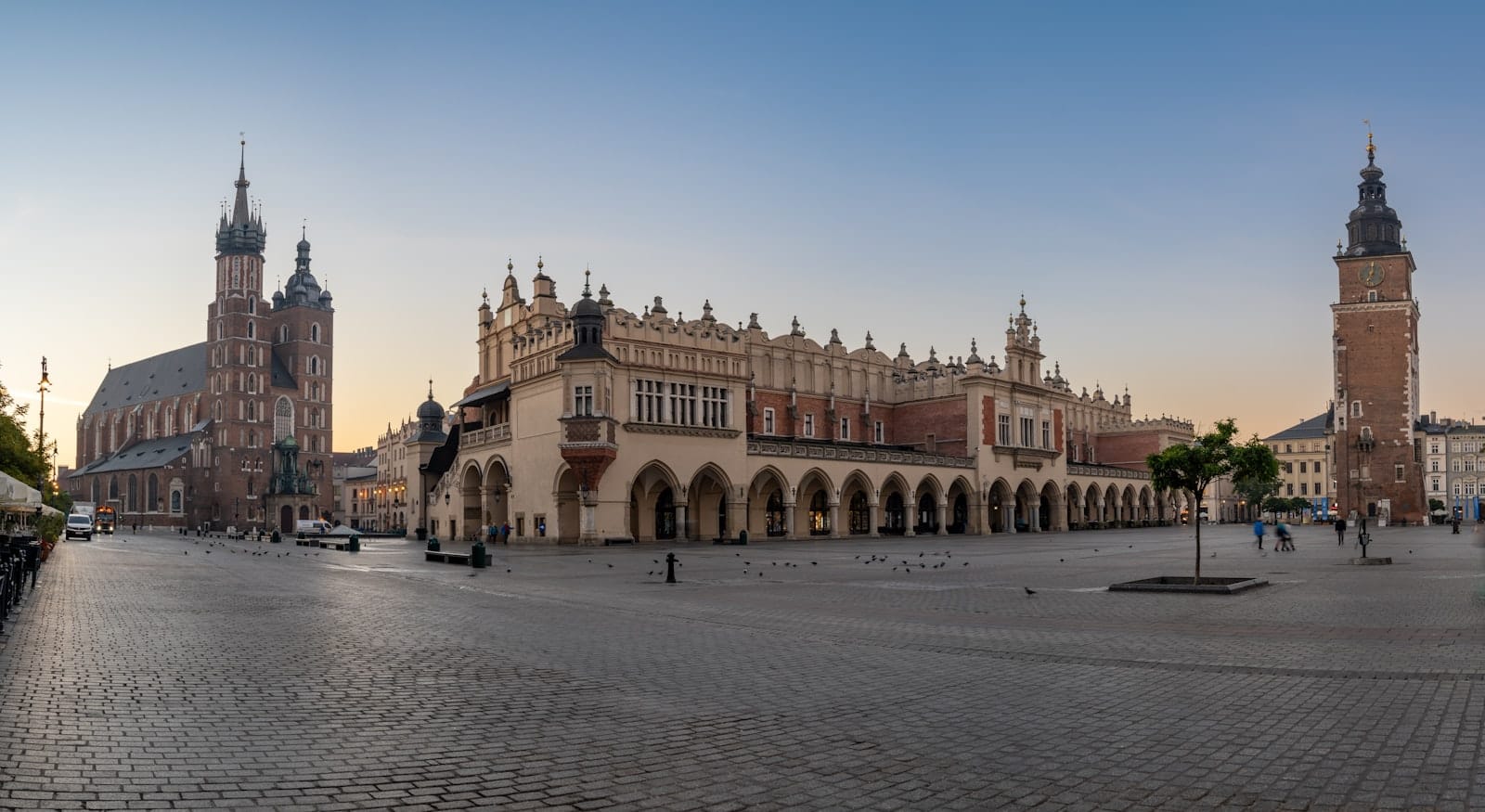
Start where Kraków starts: Rynek Główny, the main market square and one of the largest medieval squares in Europe. It's a genuine public space first and tourist attraction second — locals cut through it on the way to work, pigeons own the north end, and the flower stalls have been in roughly the same spot for decades. Arrive before 9am if you want it quiet. By 11am in summer, tour groups dominate.
The square's anchor is St. Mary's Basilica, a Gothic brick church with an interior covered almost entirely in late-19th-century painted decoration. Entry requires a ticket (separate from the City Card). Every hour, on the hour, a bugler plays the Hejnał Mariacki from the taller tower — a tradition dating back to medieval times. It cuts off mid-phrase, referencing a legend about a trumpeter shot by an arrow. Running through the centre of the square, the Cloth Hall (Sukiennice) houses a souvenir market on the ground floor and a gallery of 19th-century Polish painting upstairs — the gallery is underrated and often skipped.
Spend the afternoon on the Old Town's edges. The Florian Gate and adjoining Kraków Barbican mark the old northern entrance to the city. The ring of green space encircling the Old Town is the Planty Park, built on the site of the demolished medieval city walls. It's a pleasant 30-minute loop walk. For history underground, the Rynek Underground Museum beneath the square uses multimedia displays to walk you through the city's medieval layers — book tickets online to avoid the queue.
⚠️ What to skip
Restaurants directly on Rynek Główny are consistently overpriced relative to the quality. Walk one or two streets back — ul. Szewska, Grodzka, or Sławkowska — for better food at fairer prices. The same rule applies to horse-carriage rides on the square: a novelty, but expensive and not recommended if budget matters.
Day 2: Wawel Hill in the Morning, Kazimierz in the Afternoon
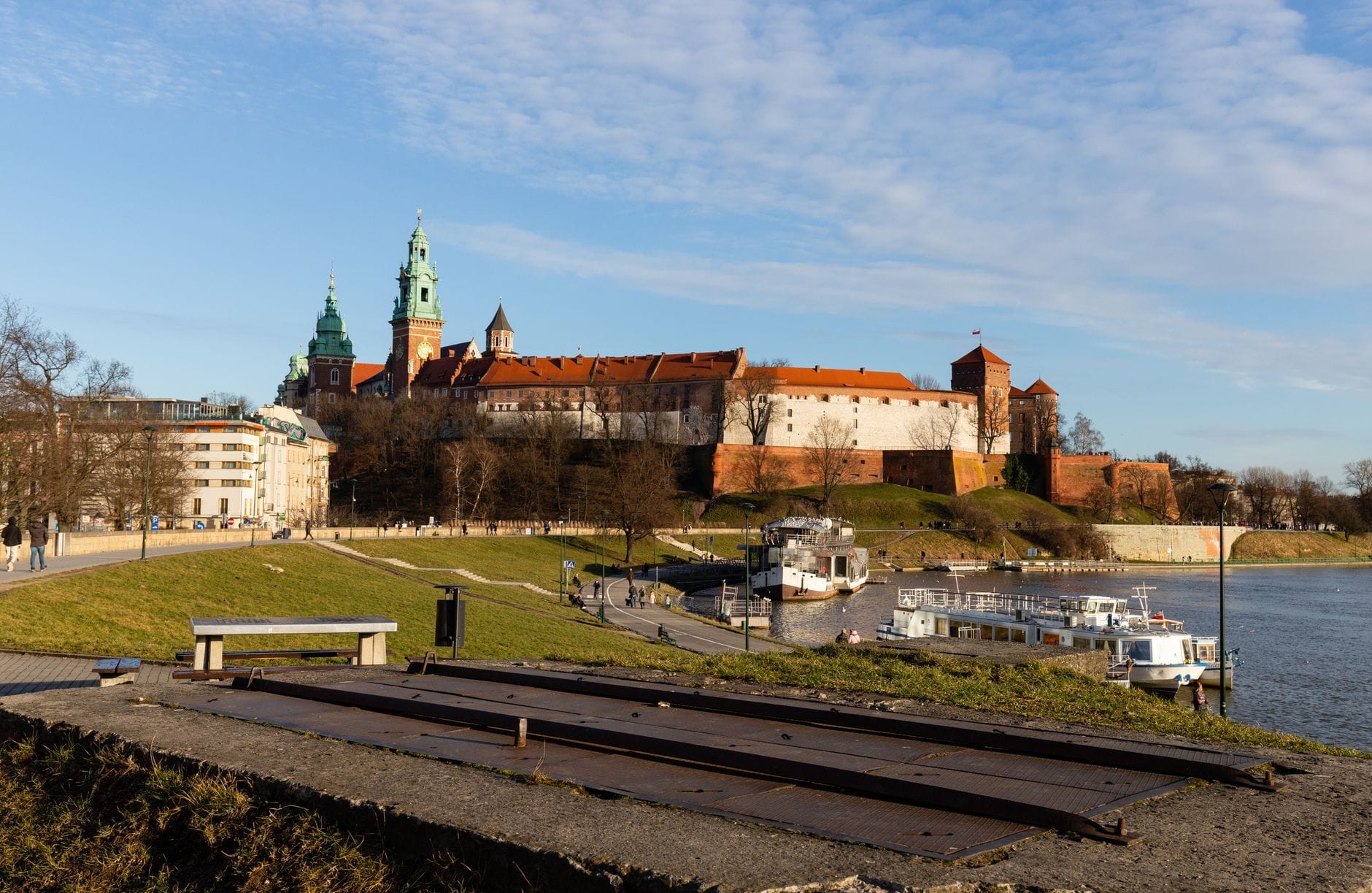
Get to Wawel Hill when it opens. The complex includes the Royal Castle, the Cathedral, the Dragon's Den, and several separate exhibition routes — you buy tickets for each individually, and the most popular (the State Rooms) sell out early in peak season. The hill itself is free to enter; it's the buildings inside that require tickets. For a thorough breakdown of what's worth seeing and what to skip, the Wawel Castle guide covers each route and its ticket requirements.
Wawel Cathedral is where Polish kings were crowned and buried for centuries. It's a heavy, layered space — chapels from different eras stacked against each other, royal crypts below, the Sigismund Bell (1520, one of the largest in Poland) at the top of a tower you can climb. This is not a quick walk-through; give it 45–60 minutes. The Dragon's Den (Smocza Jama) at the base of the hill is a short cave route that exits onto the Vistula riverbank. Genuinely fun with kids, optional for everyone else.
After Wawel, walk south into Kazimierz, the former Jewish quarter roughly 15 minutes on foot. This district has a completely different character from the Old Town: lower buildings, a mix of synagogues and churches, courtyards, independent cafes, and the open-air Plac Nowy market where locals shop for produce and where you'll find zapiekanka (toasted baguette with toppings) for around 15–20 PLN. For the full history and a walking route, the Kazimierz Jewish Quarter guide is the place to start.
- Old Synagogue (Stara Synagoga) The oldest surviving synagogue in Poland, now a museum of Jewish history. On ul. Szeroka, Kazimierz. Plan 45 minutes.
- Remuh Synagogue and Cemetery Still active for services; the adjacent cemetery contains 16th-century graves. One of the best-preserved Renaissance Jewish cemeteries in Europe.
- Galicia Jewish Museum A photographic and thematic exhibition on the traces of Jewish culture in southern Poland. More contemplative than the Old Synagogue; worth 1–1.5 hours.
- Schindler's Factory Museum Located in Podgórze, a 15-minute walk from Kazimierz. Covers the Nazi occupation of Kraków in significant depth. Emotionally demanding; not a quick visit. Book tickets in advance.
If you have energy after Kazimierz, cross the Vistula into Podgórze to see Ghetto Heroes Square — a memorial to the Kraków Ghetto that occupied this district during World War II — and the Schindler's Factory Museum. The museum is large and takes 2–3 hours to do properly. Don't try to squeeze it in as an afterthought.
Day 3: Choose Your Day Trip — Wieliczka or Auschwitz
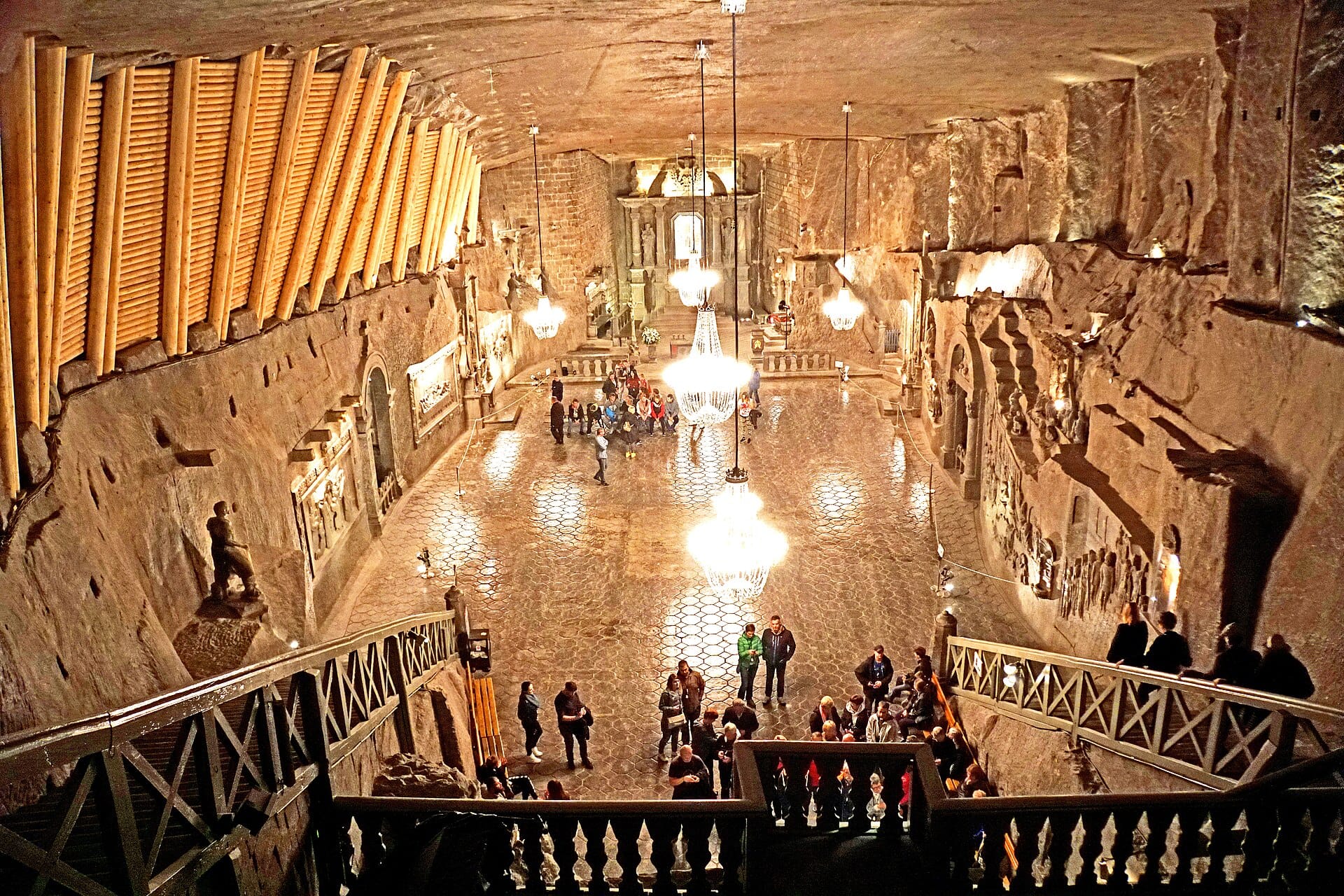
Day 3 is where most 3-day itineraries diverge. The two main options are Wieliczka Salt Mine and Auschwitz-Birkenau, and they are not interchangeable. One is a geological curiosity with remarkable underground art; the other is a Holocaust memorial site that requires preparation and the right mindset. Pick based on what you're looking for, not convenience.
The Wieliczka Salt Mine is 14 km southeast of Kraków, about 30 minutes by train or minibus. The UNESCO-listed mine has been operating since the 13th century; the tourist route takes you through chambers carved entirely from salt, including an underground chapel (St. Kinga's Chapel) large enough to hold a wedding, complete with salt-crystal chandeliers. The standard tourist route is about 3.5 km and takes 2–3 hours. Tickets sell out in peak season — book directly on the official Wieliczka website days or weeks in advance. The full guide to planning a Wieliczka visit covers booking, transport, and what to expect below ground.
The Auschwitz-Birkenau Memorial and Museum is about 70 km west of Kraków, roughly 1.5 hours by train or bus. It is the largest Nazi German concentration and extermination camp complex, where over 1.1 million people — the vast majority of them Jewish — were murdered. A guided tour is strongly recommended; individual visits without a guide are permitted at certain times but provide significantly less context. Tickets for guided tours must be booked in advance through the official museum website (auschwitz.org), often weeks ahead in summer. Allow at least 4–5 hours on site. For logistics, transport options, and what to expect, read the dedicated Auschwitz tour from Kraków guide.
ℹ️ Good to know
If you're traveling with children, Wieliczka is the appropriate Day 3 choice. The Auschwitz-Birkenau Memorial is not suitable for young children, and the museum itself asks visitors to consider this before arriving. There is no minimum age requirement, but the content is graphic and deeply serious.
Costs, Budgeting, and Where to Stay
Kraków is affordable by Western European standards, but the gap has narrowed over the past decade. Budget travelers spending carefully — hostels, supermarkets, cheap lunch spots — can manage around €40–50 per person per day. Mid-range visitors staying in 3-star hotels, eating at sit-down restaurants, and paying standard attraction entry fees should plan for €70–120 per person per day excluding accommodation. The 3-day total for a mid-range trip runs roughly €210–360 per person in daily costs, plus accommodation.
For accommodation, the clearest breakdown by neighborhood is in the where to stay in Kraków guide. In brief: staying in the Old Town (Stare Miasto) puts you closest to Day 1 sights but costs more. Kazimierz is the best base for atmosphere and value — central, well-connected, with good restaurants and cafes within walking distance. Avoid hotels on the outskirts unless you have a specific reason; the city's walkability is one of its main advantages.
- Old Town: highest prices, maximum convenience for Day 1 sightseeing, fewer local-feeling restaurants
- Kazimierz: best overall base for a 3-day visit — central, walkable to Wawel and Podgórze, genuine neighbourhood feel
- Podgórze: quieter, fewer tourists, good for visitors prioritising the WWII history sites
- Nowa Huta: interesting architecturally but requires trams to reach the Old Town — only if that socialist-era district is your specific focus
Getting Around, Seasonal Timing, and What People Get Wrong
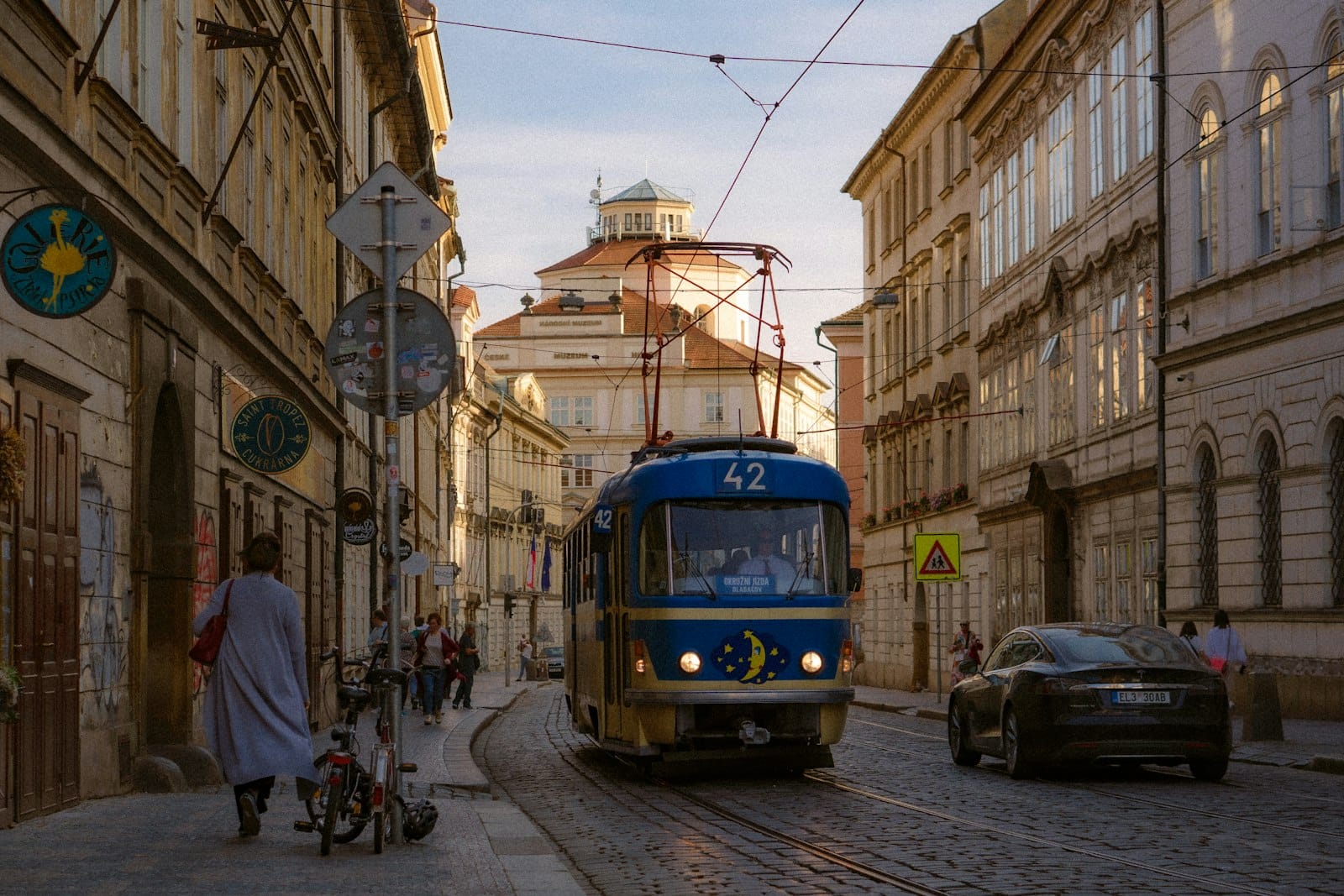
Within the historic core — Old Town, Wawel, Kazimierz, Podgórze — you won't need public transport. Everything is within 30–45 minutes on foot, and the walking is pleasant through historic streets. Trams and buses (operated by MPK Kraków) connect the centre with outer districts like Nowa Huta. The city has no metro system. Ticket prices for public transport are time-sensitive — check the MPK Kraków website for current fares before arriving.
Seasonal timing matters more than people expect. April–May and September–October are the clearest recommendations: temperatures are comfortable (roughly 12–20°C), queues at Wawel and Wieliczka are shorter than in summer, and the city's outdoor spaces — the Planty, the Vistula riverbank, the Kazimierz courtyards — are pleasant without the July heat. Winter has its appeal, particularly around the Kraków Christmas Market (typically late November through December), but shorter days and cold temperatures (regularly below 0°C in January and February) affect how much ground you cover comfortably.
The most common misconception about a 3-day Kraków trip: that it's a 1–2 day city padded out. It isn't. The historic core alone — just Rynek Główny, Wawel, and Kazimierz with their museums — takes the better part of two full days done properly. Add a serious day trip and you'll leave with the sense that there's still more. For a tighter schedule, the 2-day Kraków itinerary covers the absolute essentials. For deeper exploration of specific topics, the full things to do in Kraków guide goes well beyond what three days can hold.
💡 Local tip
Don't try to do both Wieliczka and Auschwitz on the same day. Either one fills a day properly; combining them means rushing both and arriving exhausted. If you have a 4th day available, that's the moment to add the second day trip — or to explore Nowa Huta's planned Soviet-era architecture, which is genuinely unlike anything else in Poland.
FAQ
Is 3 days enough time to see Kraków?
Yes, 3 days is enough to cover Kraków's main highlights without rushing. You can comfortably see the Old Town and Rynek Główny, Wawel Castle and Cathedral, and Kazimierz across two days, with a full day trip to either Wieliczka Salt Mine or Auschwitz-Birkenau on Day 3. You won't see everything — Nowa Huta, smaller museums, and deeper neighborhood exploration require more time — but the essential Kraków is achievable in three days.
Should I visit Wieliczka Salt Mine or Auschwitz-Birkenau?
They serve completely different purposes. Wieliczka is a spectacular underground experience: chambers carved from salt, a 13th-century mine, and remarkable underground art including a full-sized chapel. Auschwitz-Birkenau is a Holocaust memorial and museum requiring emotional preparedness and at least 4–5 hours on site. If you have children or are looking for a lighter day trip, choose Wieliczka. If you want to engage seriously with 20th-century history, Auschwitz is the more significant site. Both require advance booking.
How much does a 3-day trip to Kraków cost?
Mid-range travelers should budget around €70–120 per person per day excluding accommodation, or roughly €210–360 for 3 days. Budget travelers staying in hostels and eating cheaply can manage around €40–50 per day. The Kraków City Card (around €25 for 72 hours) can offset museum entry costs if you're visiting several attractions. Note that Wieliczka Salt Mine, Auschwitz-Birkenau, and Wawel Cathedral are not covered by the City Card and require separate tickets.
What is the best time of year to visit Kraków for a 3-day trip?
April–May and September–October are the strongest choices. Temperatures are moderate (roughly 12–20°C), outdoor sightseeing is comfortable, and queues at major attractions are shorter than in July and August. Summer (June–August) is peak season: warmer, but more crowded and with longer waits at Wawel and Wieliczka. Winter visits are possible and the Christmas Market (late November–December) is worth seeing, but cold temperatures and short daylight hours reduce how much ground you cover in a day.
Do I need to book Kraków attractions in advance?
Yes, for the busiest sites. Auschwitz-Birkenau guided tours sell out weeks ahead in summer — book directly at auschwitz.org as early as possible. Wieliczka Salt Mine also books out; reserve on the official kopalnia.pl site. Wawel Castle's State Rooms have a daily visitor limit and sell out on busy days — book online. The Rynek Underground Museum is best booked online too. For smaller museums and Kazimierz synagogues, advance booking is generally not required but queues can form in peak season.
Tickets & tours
Live prices and dates from our booking partner. If you book, we may earn a commission at no extra cost to you.
Planning a trip? Discover personalized activities with the Nomado app.