Rynek Underground Museum: Medieval Kraków Beneath Your Feet
Buried 4 metres below Kraków's Main Market Square, the Rynek Underground Museum exposes the excavated remains of a medieval trading city, complete with immersive multimedia displays. It's one of the most substantive historical experiences in Poland's Old Town, and the entry price is easy to justify.
Quick Facts
- Location
- Rynek Główny 1, Kraków Old Town — entrance on the north-eastern side of the Cloth Hall (Sukiennice)
- Getting There
- About a 10-minute walk from Kraków Główny railway station; nearby tram stops include Teatr Słowackiego and Poczta Główna
- Time Needed
- 60 to 90 minutes for a thorough visit
- Cost
- Approximate current prices: Regular 45 PLN, Reduced around 35 PLN, Family 90 PLN. Free every Tuesday.
- Best for
- History lovers, rainy day visits, families with older children, first-time visitors to Kraków
- Official website
- muzeumkrakowa.pl/en/branches/rynek-underground
What Is the Rynek Underground Museum?
The Rynek Underground Museum, officially the Museum of Krakow – Rynek Underground (Polish: Muzeum Krakowa – Oddział Rynek Podziemny), sits roughly 4 metres beneath the surface of Rynek Główny, the vast medieval square at the heart of the Royal Capital City of Kraków. The entrance is discreetly tucked into the north-eastern side of the Cloth Hall (Sukiennice), the Renaissance trading hall that still stands at the square's centre. Once you descend, you are walking through the physical strata of one of Central Europe's great trading cities.
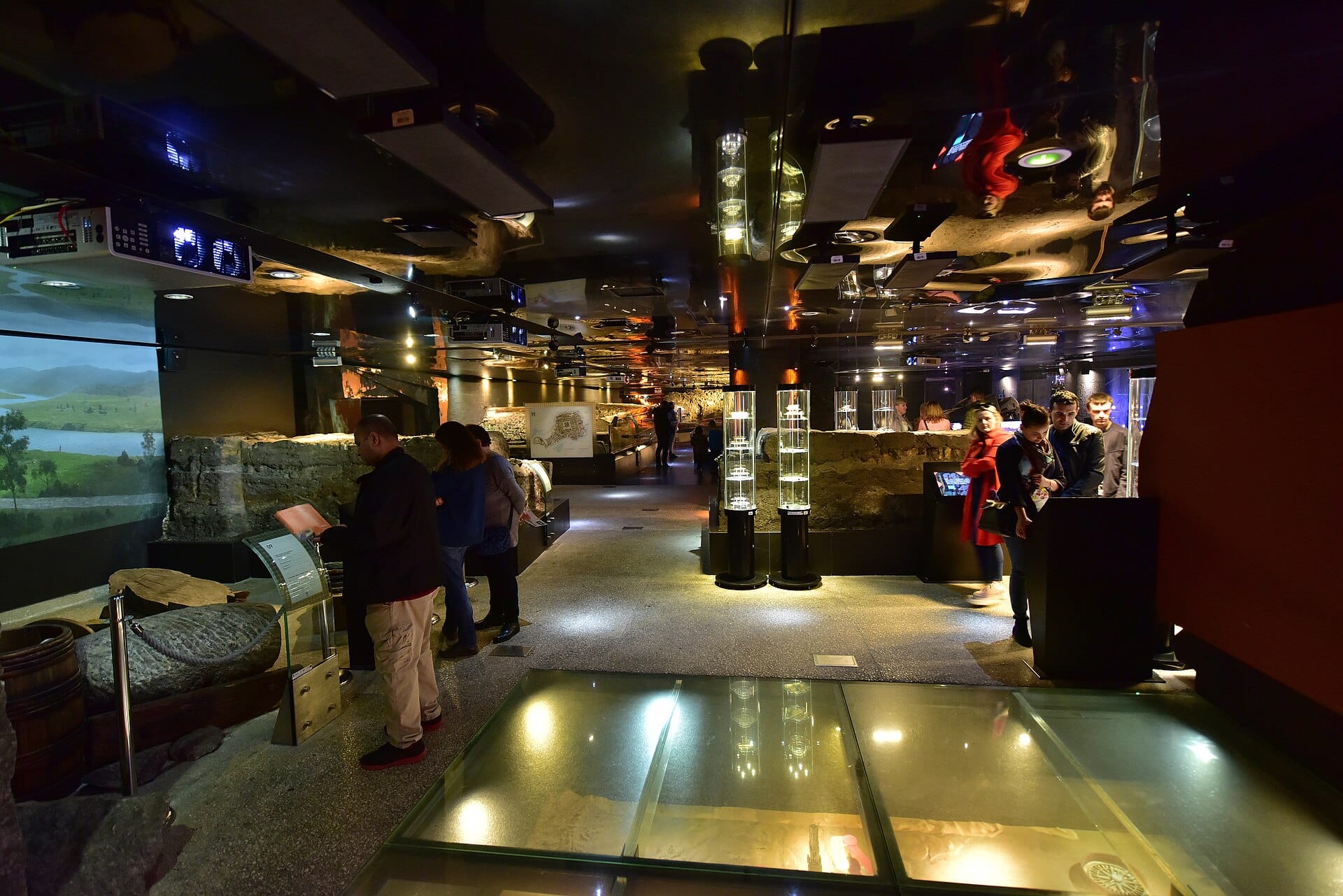
The permanent exhibition is titled 'Following the Traces of European Identity of Kraków' and it presents excavated merchant stalls, fortifications, and civic infrastructure from the medieval market. These are not reconstructions — the stonework, cobblestones, and foundation walls you walk past were uncovered during archaeological digs conducted as part of a major Square renovation project in the early 2000s. The scale of what was found surprised even the archaeologists.
💡 Local tip
Free admission every Tuesday makes this the smartest free cultural stop in the Old Town. Note that Tuesday hours are shorter: 10:00 to 15:00, with last entry 75 minutes before closing. Arrive by 13:45 at the latest.
The Experience: Descending Into Medieval Kraków
The shift from the square above is immediate and striking. Outside, you are surrounded by open sky, café terraces, and the constant movement of pigeons and tourists. Below, the temperature drops, the light dims to a warm amber, and the ambient noise of the surface city disappears almost entirely. The exhibition designers leaned into this contrast deliberately, using low lighting, projected historical maps, and atmospheric sound design to shift your sense of where and when you are.
The route winds through the excavated terrain in a logical progression, moving broadly from the earliest evidence of settlement through the medieval commercial peak and into the post-medieval period. Underfoot, in sections, you can see original stone surfaces preserved behind glass floors. Holographic displays and interactive panels are embedded throughout, which makes the experience more engaging than a typical cabinet-and-label museum format. The technology feels purposeful rather than gimmicky.
That said, the experience is not entirely self-directed. The underground corridors are designed as a one-way loop, so you cannot backtrack if you missed something. Take your time at the interpretive panels early on — they establish context that makes the later sections more meaningful. Audio guides are available and add significant depth to what the wall labels provide.
Tickets & tours
Live prices and dates from our booking partner. If you book, we may earn a commission at no extra cost to you.
Historical Context: The Market Beneath the Market
Kraków's Rynek Główny was laid out in 1257, following the Mongol raids that devastated the earlier settlement, and it remains one of the largest medieval market squares in Europe. The Cloth Hall above you was the commercial engine of the city for centuries — cloth merchants, spice traders, and money changers operated here continuously from the 13th century onward. The Rynek Underground Museum makes this layered commercial history tangible in a way that standing on the surface simply cannot. For broader context on how this fits into Kraków's medieval core, the Wawel Castle guide covers the parallel story of the city's royal and ecclesiastical development.
What the excavations revealed was not just the foundations of old buildings, but evidence of how the square itself evolved: earlier, smaller wooden structures that predate the current stone layout; drainage channels; the remnants of a Romanesque church; and market stalls arranged in rows that mirror the commercial logic of the space above. The density of finds in a relatively confined area speaks to how intensively this location has been used over nearly a millennium.
Opening Hours and Ticket Prices
The museum is open most days of the week with slightly varied hours. Monday, Wednesday, and Thursday run from 10:00 to 19:00. Friday and Saturday stay open until 20:00, while Sunday generally follows 10:00 to 20:00 as well. Tuesday is open from 10:00 to 15:00 only, and admission is free on that day. The museum closes on the second Monday of each month. Last entry is always 75 minutes before closing time.
- Regular ticket: 45 PLN
- Reduced ticket: 35 PLN
- Family ticket (up to 4 people, children under 16): 90 PLN
- Group ticket: 35 PLN per person
- School group: 26 PLN per person
- Free admission every Tuesday (shorter opening hours apply)
⚠️ What to skip
The museum closes on the second Monday of every month. If your visit falls on a Monday, check in advance. The official Museum of Krakow website is the most reliable source for current schedules and any temporary closures.
Best Time to Visit and Crowd Patterns
This museum draws a high volume of visitors year-round, partly because it is perfectly positioned for rainy or cold days when outdoor sightseeing loses its appeal. Summer weekends and free Tuesdays see the heaviest crowds. The underground corridor layout means that congestion can build up at the more detailed interactive displays, particularly the holographic timeline sections near the entrance. If you visit during peak times, expect to pause and wait at certain points.
Weekday mornings between 10:00 and noon, particularly Wednesday through Friday, tend to be noticeably quieter. Arriving at opening time gives you the first 20 to 30 minutes with minimal crowds, which makes a real difference in a space where the atmosphere depends partly on being able to pause and absorb without being jostled.
If you are planning your visit as part of a wider Old Town itinerary, consider pairing it with the St. Mary's Basilica or the Collegium Maius, both within comfortable walking distance. A self-guided walking tour of Kraków's Old Town slots the Underground Museum in naturally as a mid-morning stop.
Practical Notes: Access, Photography, and What to Bring
The museum sits approximately 4 metres below the square surface. Visitors descend via stairs inside the Cloth Hall, and a lift provides step‑free access from the entrance level to the exhibition. The official museum and visitor information note standard accessibility provisions, but visitors with specific mobility requirements should contact the Museum of Krakow directly before visiting to confirm current access arrangements.
Photography is generally permitted in the exhibition spaces, though flash photography can interfere with the projected displays and is best avoided. The lighting is low and warm throughout, which makes for atmospheric shots but requires a steady hand or a phone that handles low light reasonably well. The glass floor sections over original stone surfaces are popular photography spots.
The underground temperature is noticeably cooler than the summer street level, so a light layer is worth having even if you arrive in warm weather. The visit is entirely indoors and flat-ish underfoot once you have descended, making it suitable for most ages. Children with an interest in history or technology tend to engage well with the multimedia format, though very young children may find the long dark corridors less interesting.
ℹ️ Good to know
Audio guides are available and significantly enhance the experience. The exhibition text panels are detailed but the audio commentary connects the archaeological finds to the broader story of Kraków's medieval trade networks in a way that the labels alone do not fully convey.
Is It Worth Your Time?
For most visitors with an interest in history, yes. The Rynek Underground Museum delivers a rare experience: an excavated medieval cityscape beneath a living square, presented with production values that make the material accessible without dumbing it down. It is one of the more substantive cultural stops in Kraków's Old Town and earns its place on a 2-day Kraków itinerary.
Visitors seeking dramatic visuals or a fast-paced experience may find it slower than expected. The exhibition rewards attention and patience rather than a quick walk-through. If you are short on time and have to choose, the museum is better suited to a morning slot than a hurried late-afternoon visit when energy levels are low and crowds may be heavier.
Travelers who are primarily interested in outdoor sightseeing, or who are visiting Kraków only for one day with a packed schedule, might find the 60 to 90 minutes harder to justify. For them, standing on the square itself and visiting the exterior of the Cloth Hall takes a fraction of the time. But for anyone who wants to understand what this city was before it became a tourist destination, the underground version of Kraków's main square is a compelling argument for going below the surface.
Insider Tips
- Buy tickets online in advance during summer and on weekends. The entry queue on busy days can be long, and the timed-entry system means you may wait for the next available slot even if you have paid.
- The second Monday of the month is a closure day, not just a free day. Double-check the date before planning your visit around a Monday.
- If you visit on a free Tuesday, arrive close to opening at 10:00. By midday the space fills up considerably and the one-way layout means you cannot exit mid-route if it gets uncomfortable.
- The glass floor panels over original medieval stonework are easy to walk past quickly. Slow down at these sections — they are some of the most striking moments in the exhibition and easy to underappreciate in a crowd.
- Combine the Underground Museum with a timed visit to the Cloth Hall galleries upstairs for a layered understanding of how the same building has functioned across very different eras of Kraków's history.
Who Is Rynek Underground Museum For?
- First-time visitors to Kraków who want historical depth beyond surface sightseeing
- Travelers visiting on rainy or cold days when outdoor options are limited
- History and archaeology enthusiasts interested in medieval Central European trade
- Families with children aged 8 and above who respond well to interactive and multimedia formats
- Budget travelers visiting on a free Tuesday
Nearby Attractions
Other things to see while in Kraków Old Town (Stare Miasto):
- Cloth Hall (Sukiennice)
Standing at the centre of Rynek Główny since the Middle Ages, Kraków's Cloth Hall is part market, part museum, and part architectural monument. The ground-floor arcade sells amber, linen, and crafts; upstairs, the National Museum's Gallery of Polish Art fills Renaissance rooms with 19th-century masterpieces.
- Collegium Maius
Collegium Maius is the oldest surviving building of the Jagiellonian University, founded in 1364. Housing a museum of rare globes, scientific instruments, and royal regalia beneath a serene Gothic arcade, it offers one of Kraków's most quietly impressive indoor experiences.
- Czartoryski Museum
The Czartoryski Museum holds one of Poland's oldest and most important art collections, anchored by Leonardo da Vinci's Lady with an Ermine. Housed in a historic Old Town complex near the Florian Gate, it combines fine art, antiquities, and decorative arts across several interconnected buildings.
- Florian Gate & City Walls
St. Florian's Gate is the sole surviving medieval gate of the eight that once pierced Kraków's city walls. Standing about 33 metres tall at the northern tip of the Old Town, it anchors the Royal Route that once led from the city entrance down to Wawel Castle. Walking through is free; climbing the wall gallery costs a small fee and pairs naturally with the adjacent Barbican.
Planning a trip? Discover personalized activities with the Nomado app.