San Pedro Tlaquepaque is a Pueblo Mágico municipality southeast of Guadalajara known for its pedestrian-friendly historic center, centuries-old craft traditions, and colonial architecture. The area draws visitors for hand-blown glass, Talavera-style ceramics, textiles, and some of the most atmospheric plaza dining in the metropolitan area.
San Pedro Tlaquepaque is the kind of place where the streets are paved with stone, the workshops open onto sidewalks, and artisans have been refining the same ceramic techniques for generations. Recognized as a Pueblo Mágico by the Mexican federal government, it sits about 11 kilometers southeast of Guadalajara's historic center, functioning both as a living craft community and one of the most visited cultural destinations in Jalisco.
Orientation
San Pedro Tlaquepaque is a fully independent municipality within the Guadalajara Metropolitan Area (Zona Metropolitana de Guadalajara), not a neighborhood of the city of Guadalajara proper. That distinction matters for navigation: it has its own municipal government, its own street grid, and a historic center that feels deliberately separate from the sprawling urban fabric around it. The municipality covers roughly 119 square kilometers, but the area travelers visit is compact, organized around two main axes.
The heart of the tourist zone is Calle Independencia, a pedestrian street that runs east to west through the historic center. To the north it connects to Jardín Hidalgo, the main plaza, and to the east it opens onto El Parián, the large covered courtyard that functions as the neighborhood's social anchor. Most of the galleries, craft shops, and restaurants visitors come for are within a 10-minute walk of this corridor.
To the north, Tlaquepaque shares a de facto border with the city of Guadalajara along Avenida Niños Héroes and the surrounding urban stretch. To the east, the municipality transitions toward Tonalá, another craft-focused community about 8 kilometers further along Boulevard Tlaquepaque. The two towns are sometimes visited together as a day circuit, though they have distinct characters: Tlaquepaque is more refined and pedestrian-oriented; Tonalá is larger, rawer, and better for wholesale buying.
ℹ️ Good to know
The full official name is San Pedro Tlaquepaque. Locals and most visitors just say 'Tlaquepaque' (pronounced roughly tla-keh-PAH-keh). The name comes from Nahuatl and is sometimes translated as 'place above the clay lands,' a fitting origin for a city built on ceramics.
Character and Atmosphere
The historic center operates on a rhythm that most Mexican cities have lost to traffic and malls. Mornings are quiet. Between about 9 and 11 a.m., shopkeepers roll up metal shutters, deliveries arrive on handcarts, and the cobblestones are cool in the early light. The air carries the faint smell of fired clay from workshops still operating in side streets off the main pedestrian corridor. This is the best time to walk slowly, look into open doorways, and see the craft district as a working community rather than a tourist stage set.
By midday, tour buses arrive from central Guadalajara and the pace shifts. Calle Independencia fills with visitors moving between galleries. Restaurants around El Parián start filling for long lunches. On weekends especially, a live mariachi group will almost certainly be playing somewhere in the covered courtyard, often with accompaniment from a group at a neighboring table doing exactly the same thing. The sound layers in a way that is either charming or overwhelming depending on your tolerance for spontaneous trumpet solos.
Late afternoon brings a second quiet period, particularly on weekdays. The golden light falls at an angle across the facades of the 18th and 19th-century buildings along Independencia, and the ceramics displayed in windows take on warm tones. By evening, the restaurants around Jardín Hidalgo and El Parián are the main draw, lit by string lights and lanterns. The vibe is unhurried rather than electric. Tlaquepaque after dark is not a nightlife destination in the way that Colonia Americana is; it is more about dinner and a slow walk home.
The character of the place rests on a real craft tradition that predates tourism. Indigenous potters were working this area before the Spanish arrived, and colonial-era Tlaquepaque became the source of ceramics and decorative objects that were traded across New Spain. The Pueblo Mágico designation, awarded by Mexico's Secretaría de Turismo, recognized that the community had retained something authentic enough to protect. That authenticity is genuine but not unlimited: the main pedestrian strip is unambiguously commercial, and some of the 'artisan' shops are selling mass-produced goods. The skill is knowing which doors to walk through.
What to See and Do
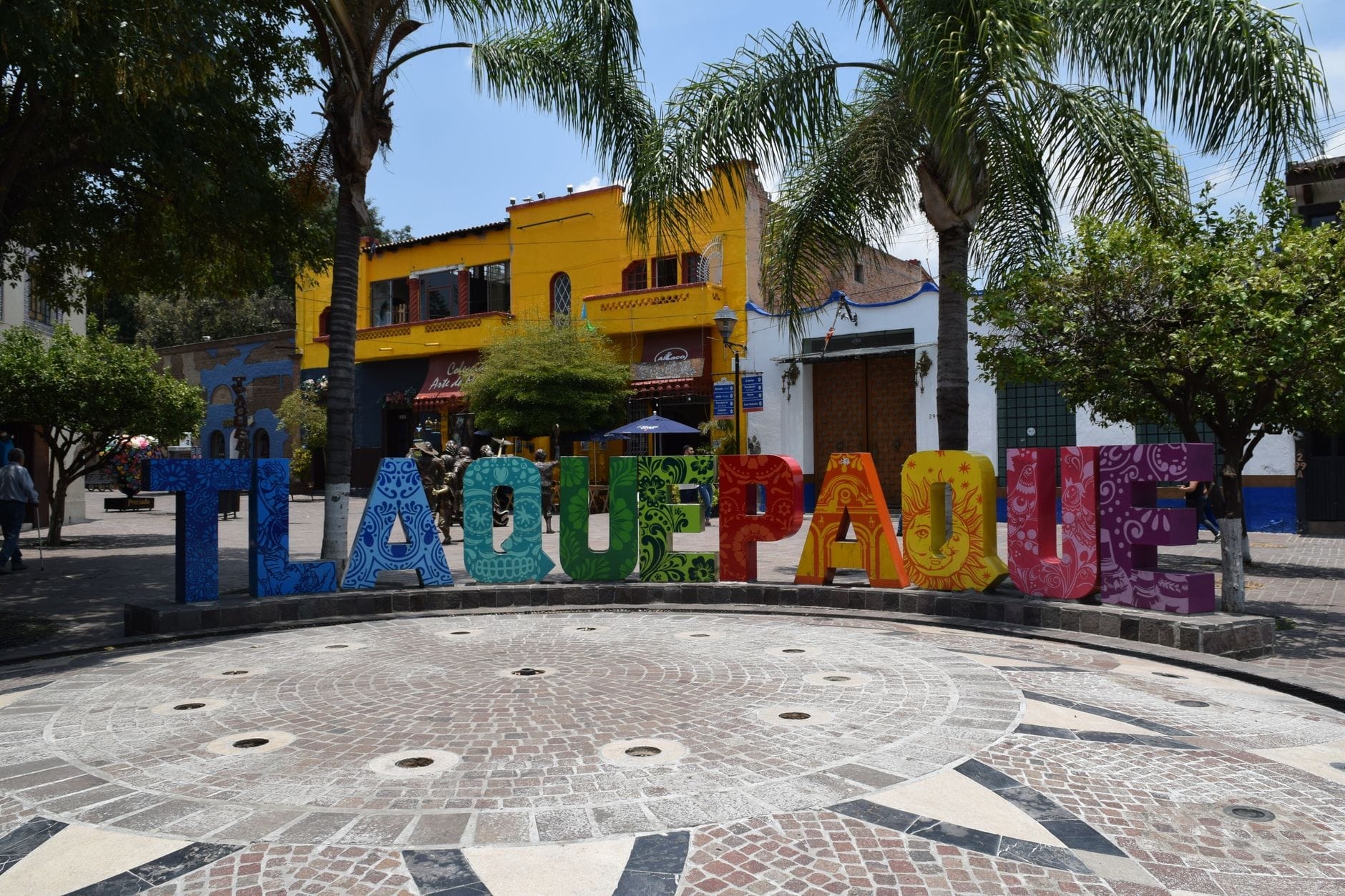
The pedestrian corridor along Andador Independencia is the natural starting point for any visit. The street itself is the experience: wide enough for several people to walk abreast, lined with flowering jacaranda or bougainvillea depending on the season, and fronted by buildings with carved stone portals and tiled facades. Some of the galleries here have been family-owned for decades and display genuinely significant work in ceramics, blown glass, and decorative ironwork alongside pieces priced for the export market.
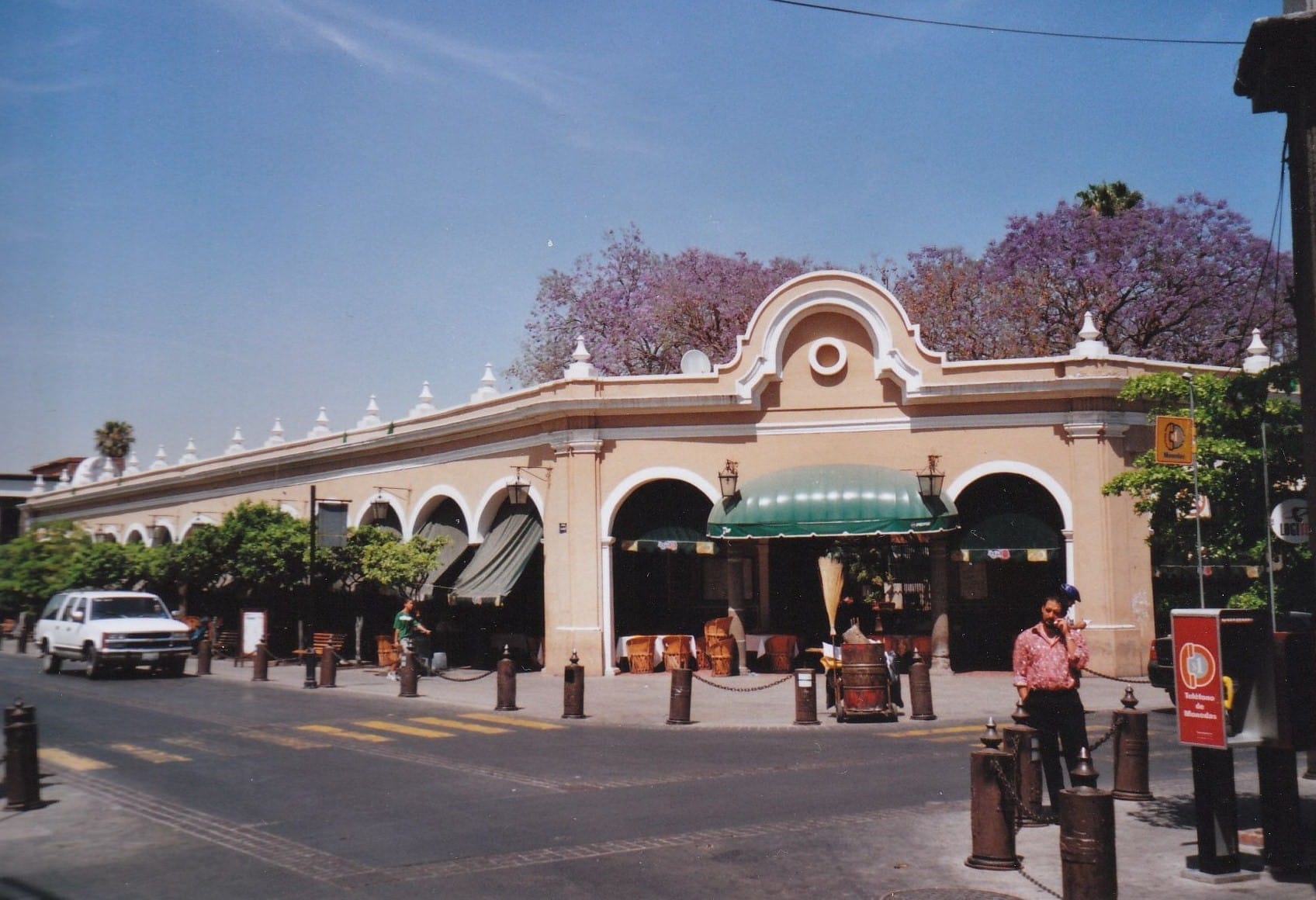
El Parián is the large open courtyard at the eastern end of the pedestrian zone. Originally built in the 19th century as a market building, it now houses a ring of restaurants and bars under a colonial arcade. Mariachi groups circulate and can be hired for a song or a full set. It is one of the more theatrical spaces in the Guadalajara metro area and worth visiting even if you are not eating, particularly in the late afternoon when the light inside turns amber.
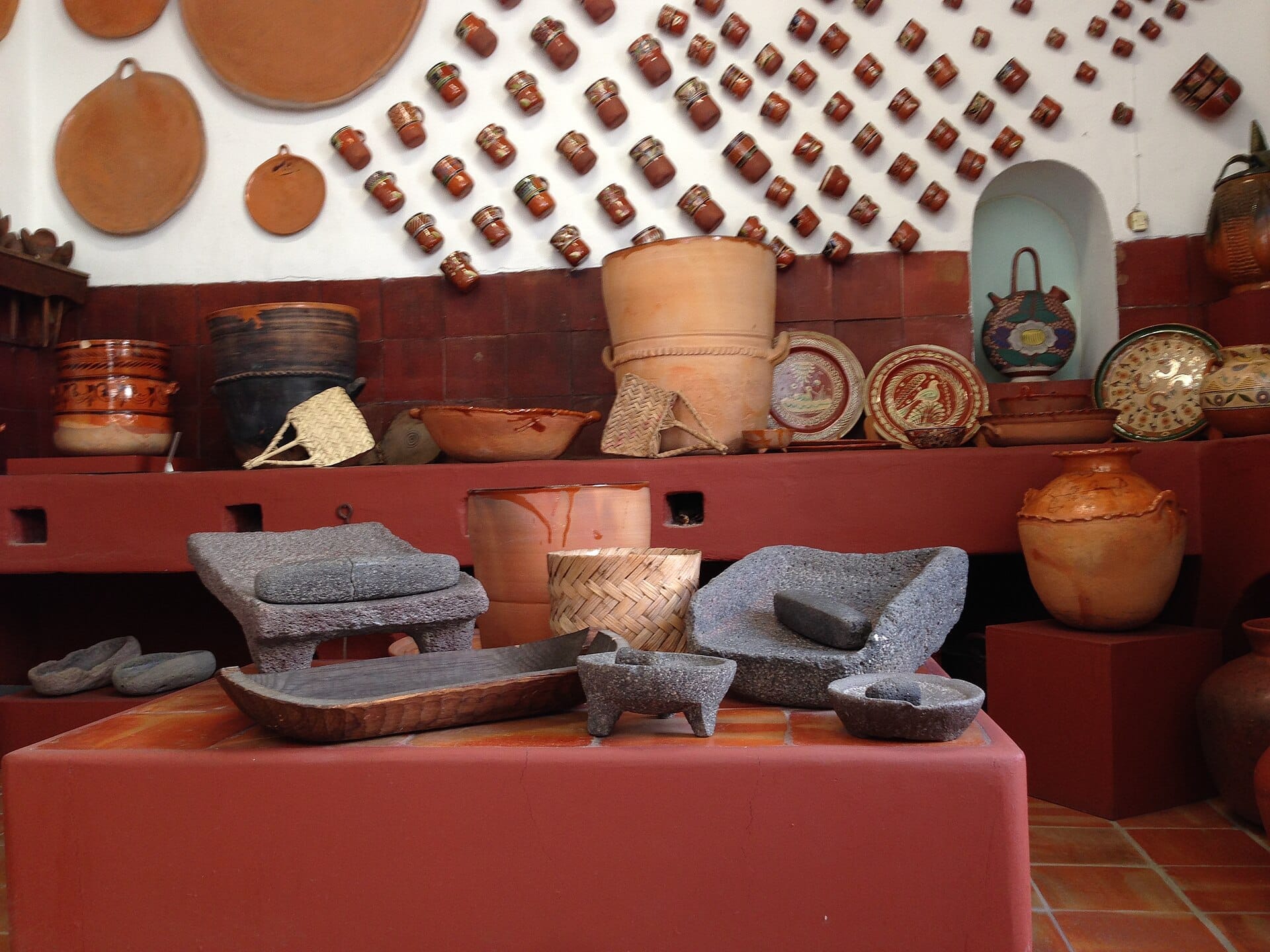
The Museo Regional de la Cerámica on Calle Independencia provides the historical and technical context for everything you see in the surrounding shops. The collection covers pre-Hispanic through contemporary ceramics from across Jalisco and is displayed in a beautifully preserved colonial mansion. Entry is free or very low-cost. For visitors who want to understand why Tlaquepaque's pottery looks the way it does, this is the most informative hour you can spend in the neighborhood.
Beyond the main pedestrian strip, the streets off Independencia toward the south reward exploration. Smaller workshops operate in converted houses, and you are more likely to encounter a kiln, a glassblower's workshop, or a weaving studio than a souvenir stand. The further you get from the main corridor, the more the neighborhood feels like a town rather than a market.
Walk the full length of Andador Independencia, then branch south onto side streets to find working studios
Visit the Museo Regional de la Cerámica for context before shopping
Sit in El Parián for at least one drink to experience the mariachi atmosphere
Check Jardín Hidalgo in the evening when locals come out for the fresher air
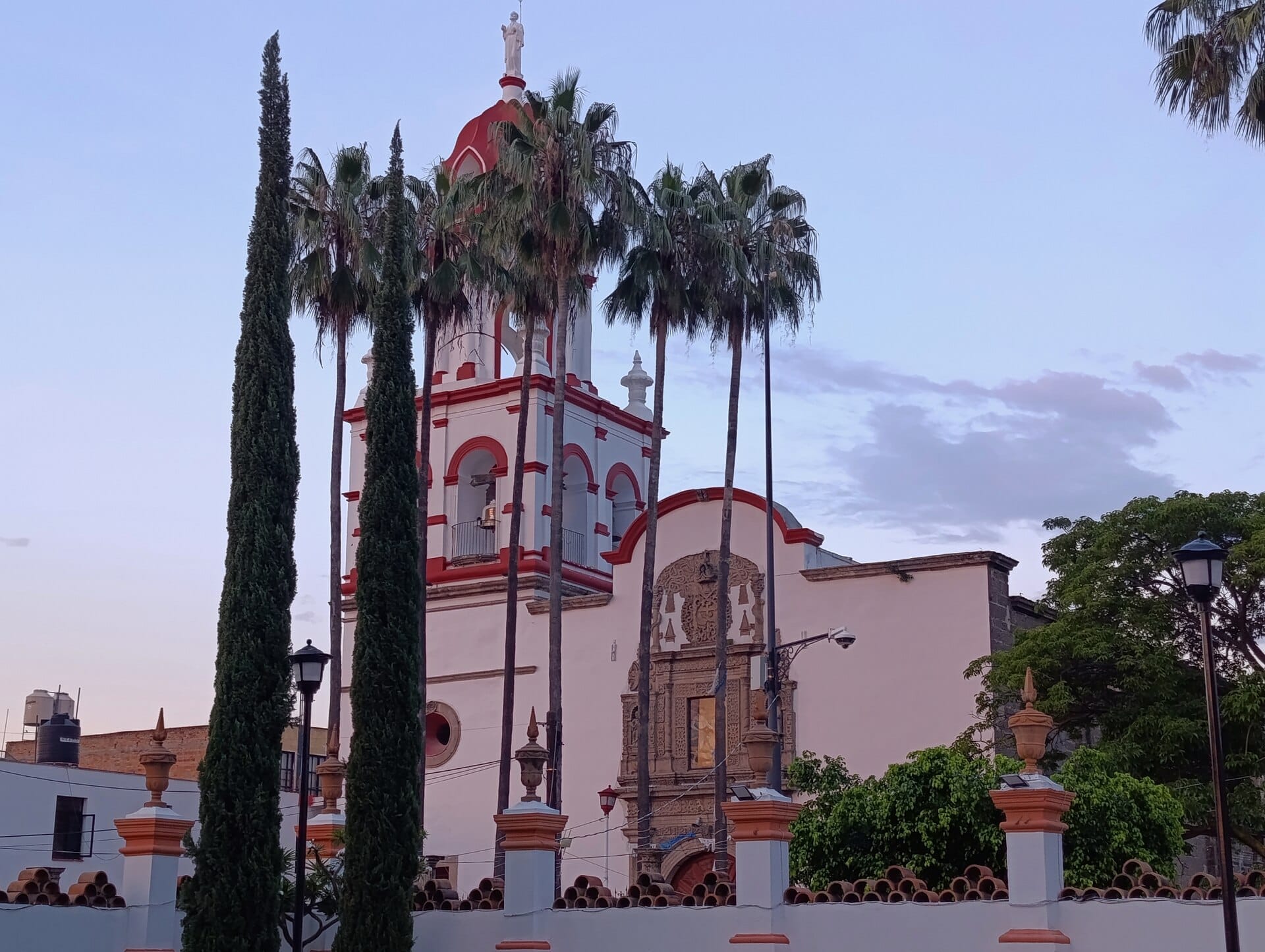
Look for the parish church of San Pedro, which anchors the plaza and dates to the colonial period
💡 Local tip
If you are serious about buying ceramics or blown glass, arrive on a weekday morning when shop owners have more time to explain their pieces and are sometimes more open to negotiation. Weekends are busier and prices reflect it.
Eating and Drinking
The food scene in Tlaquepaque's historic center is heavily oriented toward sit-down restaurants serving traditional Jalisco cuisine. Birria (slow-cooked goat or beef stew), pozole, and tortas ahogadas (bread rolls drowned in a chile sauce) are the local anchors. Several of the larger restaurants around El Parián and Jardín Hidalgo have been operating for decades, with high-ceilinged colonial dining rooms, courtyard seating, and menus that cover Mexican classics at mid-range prices.
For street food and lighter eating, the streets around the market area (away from the main tourist corridor) offer tacos, tlayudas, and aguas frescas at much lower prices. A breakfast of chilaquiles or enfrijoladas from a small comedor on a side street will cost a fraction of what the courtyard restaurants charge. The quality is often just as good.
Mezcal and tequila are the obvious drinks here, given Tlaquepaque's location in Jalisco. Several bars and dedicated mezcalerías have opened in the historic center in recent years, offering regional labels that do not always make it to the export market. If you want something more elaborate, cocktail bars in converted colonial spaces have become more common and offer quality at reasonable prices by the standards of the metropolitan area.
For broader context on what to eat and drink across the metropolitan area, the Guadalajara food guide covers the regional specialties and which neighborhoods do them best. Tlaquepaque's dining strengths are traditional Jaliscan cuisine and long, convivial lunches rather than avant-garde cooking or late-night dining.
⚠️ What to skip
Restaurants directly around El Parián and on the main pedestrian strip tend to charge a premium for atmosphere. The food is generally good but the prices are noticeably higher than comparable restaurants two or three blocks away. Factor this in if you are traveling on a budget.
Getting There and Around
From central Guadalajara, Tlaquepaque is approximately 11 kilometers southeast. By car or ride-hailing app (Uber, DiDi, and Cabify all operate in the metro area), the journey typically takes 20 to 30 minutes depending on traffic, with congestion on Avenida Revolución and the connecting roads being the main variable. Ride-hailing fares from the Centro Histórico or Colonia Americana are generally affordable and the most convenient option for most visitors.
Public transport options exist but require more planning. City buses (operating under the Mi Transporte network coordinated by the state of Jalisco) run routes connecting Guadalajara's urban core to Tlaquepaque, though routing and stop locations should be verified using current apps or local guidance before travel. For a full overview of how to move around the metropolitan area, the getting around Guadalajara guide covers metro lines, BRT routes, and ride-hailing logistics in detail.
Once inside the historic center, everything is walkable. The entire tourist zone is compact enough that you can cover the main sights, do a thorough browse of the shops, have lunch, and visit the ceramics museum within a single half-day on foot. Comfortable shoes matter: the cobblestones are uneven and can be slippery after rain.
Tlaquepaque is frequently combined with a visit to Tonalá, the artisan-focused municipality about 10 to 12 kilometers further east. The two can be covered in a single day if you start early, though each deserves several hours. Tonalá's market days (Thursday and Sunday) bring additional vendors and energy if you want to time your visit.
Where to Stay
Tlaquepaque's historic center has a small but well-regarded selection of boutique hotels and guesthouses, mostly housed in converted colonial mansions. These properties offer a quieter, more atmospheric alternative to the large hotels around Minerva or the airport corridor, and they put you within walking distance of everything in the craft district. They tend to book up on weekends and during festivals, so advance reservations matter.
The tradeoff for staying in Tlaquepaque rather than central Guadalajara is distance from the city's main cultural institutions, nightlife, and business districts. If your trip is primarily about exploring the wider metro area, including the Centro Histórico or Colonia Americana, you will spend more time and money on transport. Tlaquepaque works best as a base for travelers whose primary interest is craft, colonial architecture, and a slower pace, rather than those who want to cover the full city.
For a broader comparison of where to base yourself across the metropolitan area, the where to stay in Guadalajara guide breaks down each neighborhood by traveler type and budget.
Practical Notes
Most of the shops and galleries along Calle Independencia and the surrounding streets are closed on Mondays, and some close by early evening even on busy days. If you are visiting specifically to shop, Tuesday through Sunday between 10 a.m. and 6 p.m. is the reliable window. The best time to visit Guadalajara guide covers seasonal considerations across the metro area, but for Tlaquepaque specifically, the weeks around Día de los Muertos in late October and early November bring exceptional decorations and additional cultural programming.
Safety in the historic center is generally consistent with other tourist-oriented areas of the metropolitan area. The pedestrian zone is well-lit, staffed with tourism police during peak hours, and receives large volumes of both domestic and international visitors. As with any urban area in Mexico, standard awareness is appropriate: keep valuables secure, be aware of your surroundings after dark, and check current travel advisories from your government before visiting. The Guadalajara safety guide covers the broader security context for the metropolitan area.
ℹ️ Good to know
Tlaquepaque holds Pueblo Mágico status, a federal designation in Mexico awarded to communities that preserve significant cultural, historical, or natural heritage. The designation brings federal funding for preservation and tourism infrastructure, which partly explains why the historic center is better maintained than surrounding areas.
TL;DR
San Pedro Tlaquepaque is a Pueblo Mágico municipality 11 km southeast of central Guadalajara, best known for ceramics, blown glass, textiles, and colonial architecture.
The tourist zone is compact and walkable, centered on pedestrian Calle Independencia, Jardín Hidalgo, and El Parián, where mariachi and long lunches are the main attractions.
Best suited to travelers interested in Mexican craft traditions, colonial atmosphere, and traditional Jalisco cuisine rather than nightlife or fast-paced city exploration.
Weekday mornings offer the most authentic experience; weekends bring larger crowds and higher restaurant prices around the main tourist corridor.
Can be combined with nearby Tonalá in a single day for serious craft shoppers, or treated as a half-day excursion from wherever you are based in the metropolitan area.
Three days is enough to cover Guadalajara's colonial core, its craft-focused suburbs, and a day trip to the town that gave tequila its name. This itinerary is structured around walking distance, public transport, and realistic timing — not nierealnych oczekiwań.
Guadalajara is a stronger museum city than many visitors expect. From the UNESCO-listed Hospicio Cabañas to free contemporary art at MUSA, here are the best museums in Guadalajara, organized by theme so you can plan your time well.
Guadalajara's climate divides cleanly into a dry season and a rainy season, but the best time to visit depends on what you're after. This guide breaks down weather, festivals, crowds, and pricing by season so you can plan with confidence.
Guadalajara sits at the center of one of Mexico's richest regions for day tripping. Within about two hours in any direction you'll find UNESCO World Heritage sites, mountain Pueblos Mágicos, Mexico's largest freshwater lake, and ancient circular pyramids unlike anything else in the country.
Guadalajara rewards budget travelers more generously than almost any city in Mexico. Its historic plazas, colonial churches, world-class murals, urban forests, and street markets are largely free to enter, making it possible to spend days here without opening your wallet.
Guadalajara has one of the most practical urban transport networks in Mexico. This guide breaks down every option — from the MiTren metro to MiBici bike-share — with real prices, route logic, and clear guidance on what to skip.
Miguel Hidalgo y Costilla International Airport (GDL) is Mexico's third-busiest airport, handling over 17 million passengers a year. This guide covers every transfer option from the airport to Guadalajara city center, terminal layouts, facilities, and practical arrival tips so you know exactly what to expect before you land.
Guadalajara's architectural story spans five centuries, from the towering twin spires of its Metropolitan Cathedral to the clean geometric lines of Luis Barragán's early modernist houses. This guide covers the landmark buildings worth your time, how to visit them, and the historical context that makes each one matter.
Day of the Dead in Guadalajara is a multi-week affair that blends pre-Hispanic tradition, Catholic observance, and the city's own Fiestas de Octubre into something far bigger than a single night. This guide covers the best altar displays, cultural events, practical logistics, and common misconceptions so you can experience it properly.
Guadalajara, Jalisco is quietly becoming one of Latin America's most practical bases for remote workers. This guide covers monthly costs, coworking spaces, the best neighborhoods, visa options, internet reliability, and everything else you need to decide if Mexico's second-largest city is right for your nomad setup.
Guadalajara, Jalisco, Mexico hosts some of Latin America's most significant cultural events — a world-class film festival, the largest Spanish-language book fair, October-long celebrations, and a mariachi gathering with deep roots in Jalisco identity. This guide breaks down the full annual calendar with practical detail on timing, crowds, and what actually deserves your attention.
Guadalajara, Jalisco is one of Mexico's most important food cities, home to torta ahogada, birria, carne en su jugo, and jericalla. This guide covers every essential dish, where to find the best versions, what to pay, and how to eat like a local from breakfast through late-night cantina.
Guadalajara, Jalisco's capital, rewards couples with colonial plazas, candlelit Tlaquepaque galleries, agave-field train rides, and one of Mexico's most walkable lake shores. This guide covers the most genuinely romantic experiences in the city, with honest timing advice, neighborhood breakdowns, and booking details.
October is one of Guadalajara's most eventful months, with the citywide Fiestas de Octubre, the lead-up to Día de los Muertos, and weather that finally starts to ease off the rainy season. This guide covers what to expect, what to pack, how to book smart, and which events are worth your time.
Guadalajara, Jalisco, is the cultural capital of mariachi music. This guide covers the best places to hear live performances, how to hire a band, what the International Mariachi Festival involves, and what to expect as a first-time visitor — including honest notes on pricing, crowds, and common misconceptions.
Guadalajara has one of Mexico's most dynamic nightlife scenes, built around world-class tequila bars, craft cocktail lounges, and clubs that run until dawn. This guide covers the best neighborhoods, top venues by category, what things actually cost, and how to navigate the scene like a local.
Guadalajara, Jalisco, Mexico is one of the most affordable major cities in North America for travelers. This guide breaks down real costs for transport, accommodation, food, and attractions, plus timing tips to stretch your pesos further.
Guadalajara and Mexico City are both world-class destinations, but they offer very different experiences. This guide breaks down the key differences in size, cost, climate, culture, and logistics so you can make an informed choice — or plan both.
Guadalajara's Centro Histórico is one of Mexico's most walkable downtown cores, with a chain of linked plazas connecting colonial churches, world-class murals, and a UNESCO World Heritage site within roughly 5 kilometres. This guide gives you a practical route, landmark-by-landmark breakdown, opening hours, and the practical tips you need to do it right.
Guadalajara, Jalisco, Mexico packs a remarkable range of kid-friendly attractions into a compact, navigable city. This guide covers the top family activities, practical logistics, seasonal advice, and honest rankings to help you plan a trip your kids will actually enjoy.
Guadalajara is one of Mexico's largest metropolitan areas and one of the country's most culturally significant cities. But is it worth your trip? This guide cuts through the hype with a clear-eyed look at what the city actually offers, who it suits best, and what to watch out for.
Guadalajara, Mexico is moderately safe for tourists who travel smart. This guide breaks down the real risks by neighborhood, time of day, and transport type, so you can plan your trip with accurate expectations rather than fear or false confidence.
Mexico's largest freshwater lake sits just one hour from Guadalajara, making it one of the most rewarding day trips in Jalisco. This guide covers how to get there independently or on a guided tour, what to do in Chapala and the Pueblo Mágico of Ajijic, honest seasonal advice, and what the tourism brochures tend to leave out.
Guadalajara holds the greatest concentration of José Clemente Orozco murals in the world, anchored by the UNESCO-listed Hospicio Cabañas and the Palacio de Gobierno. This guide covers every major site, what to look for in each fresco cycle, practical visiting logistics, and clear guidance on what to skip.
Guadalajara, Jalisco, Mexico offers one of Mexico's most diverse shopping landscapes — from one of the country's largest indoor markets to artisan towns, high-end malls, and a major shoe district. This guide breaks down where to go, what to buy, and how to avoid overpaying.
The town of Tequila is 60–70 km northwest of Guadalajara and one of the most rewarding day trips in all of Mexico. This guide covers every transport option, the best distillery tours, what the Jose Cuervo Express train actually delivers, and how to avoid the most common tourist mistakes.
Guadalajara, the capital of Jalisco, is one of Mexico's most rewarding cities for travelers who look beyond the obvious. This guide covers the best things to do in Guadalajara, from the UNESCO-listed Hospicio Cabañas to craft markets in Tlaquepaque, with practical details on timing, pricing, and what to skip.
Choosing where to stay in Guadalajara, Jalisco shapes your entire trip. This guide breaks down the city's top neighbourhoods by travel style, with straightforward assessments of what each area delivers, what it lacks, and who it suits best.