Tequila Day Trip from Guadalajara: The Complete Guide
The town of Tequila is 60–70 km northwest of Guadalajara and one of the most rewarding day trips in all of Mexico. This guide covers every transport option, the best distillery tours, what the Jose Cuervo Express train actually delivers, and how to avoid the most common tourist mistakes.
Plan and book this trip
Tools from our partner Travelpayouts help you compare flights and hotels. If you book through them, we may earn a commission at no extra cost to you.
Flights
Hotels map
TL;DR
- Tequila town is about 60 km (around 1 hour) from Guadalajara via Highway 15, making it a genuine half-day or full-day trip.
- The cheapest way to get there is the public bus from Antigua Central Camionera, costing around 220–280 MXN round-trip per person (verify at the terminal).
- The Jose Cuervo Express train only runs on weekends and only one direction — check the Jose Cuervo Express details before booking.
- Tequila is a Pueblo Mágico surrounded by a UNESCO-listed agave landscape — not just a drinking excursion.
- For more day trip options beyond Tequila, see the full guide to day trips from Guadalajara.
Why Tequila Deserves a Full Day, Not Just a Few Hours
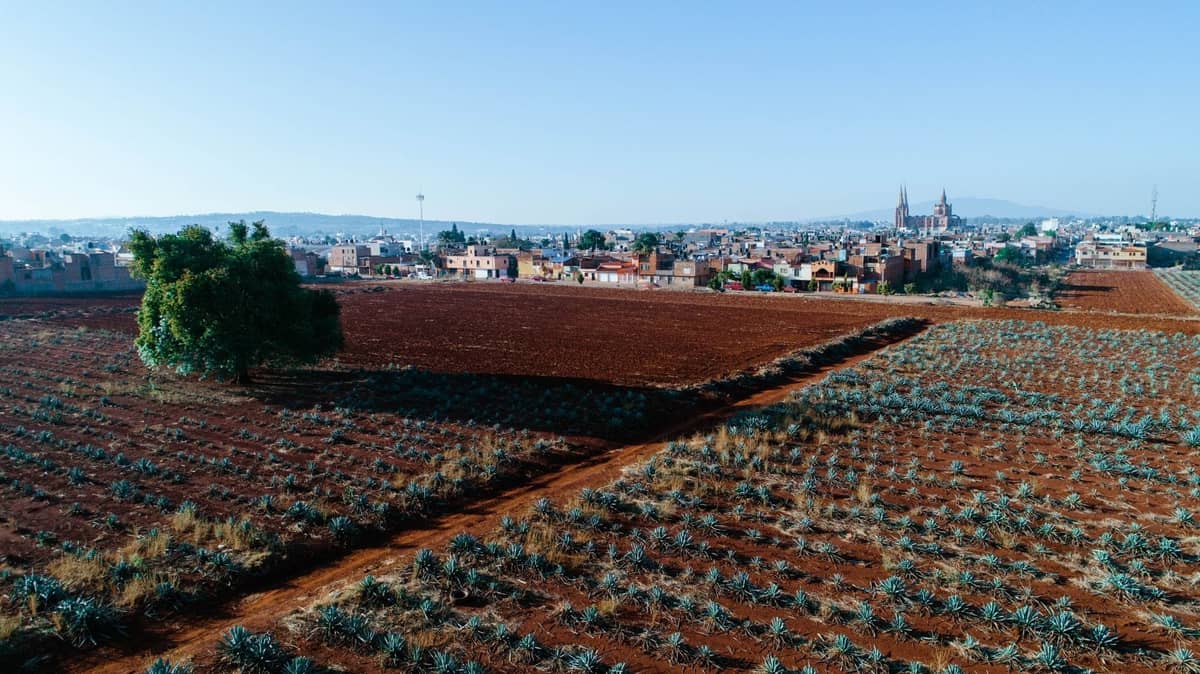
Most visitors to Guadalajara squeeze Tequila into a rushed half-day and leave thinking they've seen it. They haven't. The town of Tequila, northwest of the city in the Tequila Valley, sits inside a landscape that UNESCO added to its World Heritage List in 2006 — the Agave Landscape and Ancient Industrial Facilities of Tequila. That designation covers the blue agave fields blanketing the valley, the dormant Tequila volcano rising behind the town, and the distilleries (known locally as fábricas) that have operated here for centuries.
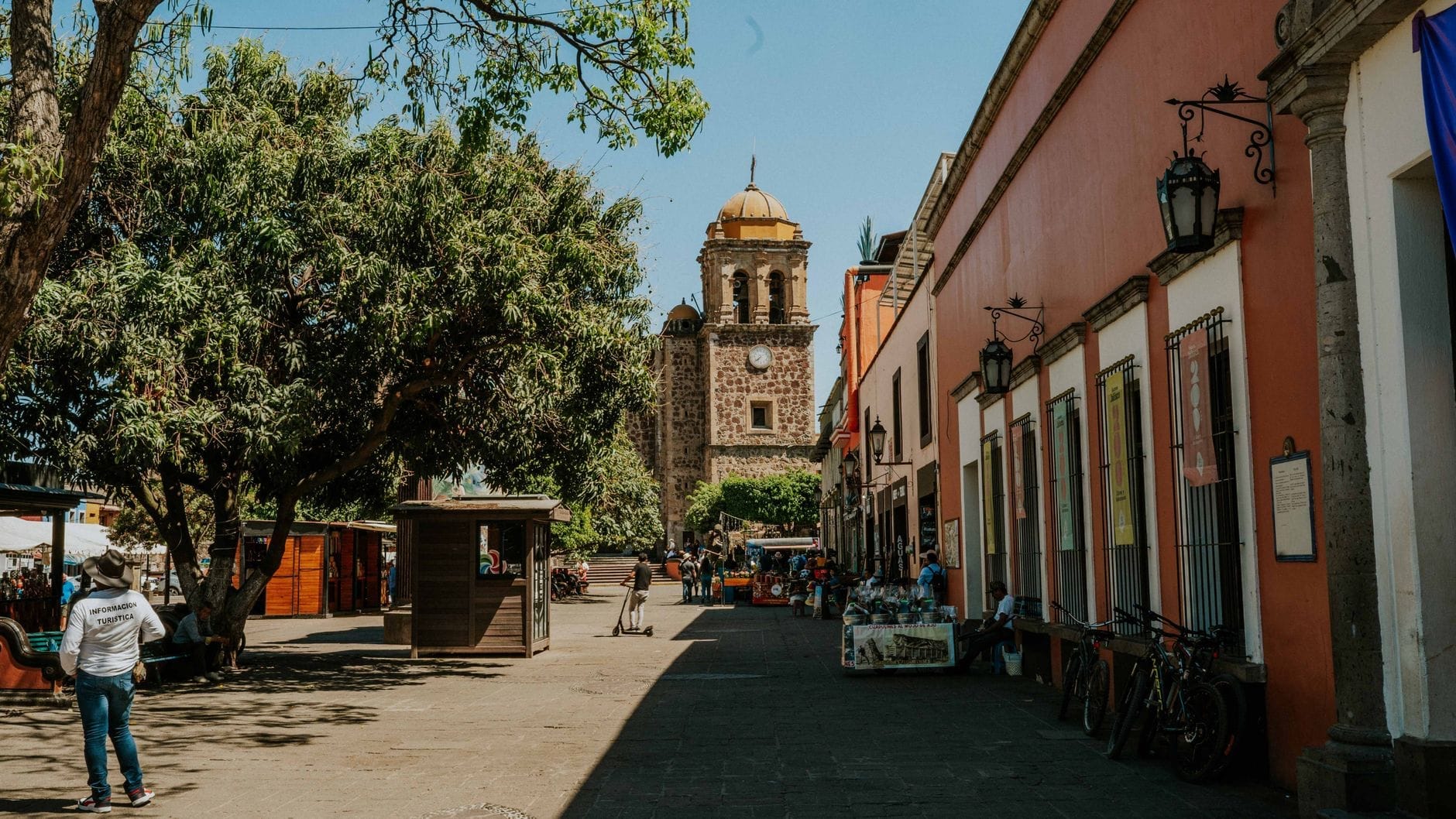
The town itself is a Pueblo Mágico, one of Mexico's officially designated heritage towns. That means a colonial-era plaza, a 16th-century church (Parroquia de Santiago Apóstol), cobblestone streets, and a genuinely intact historical center that predates Mexico's independence. You can easily fill six to eight hours without setting foot in a single distillery — though most people do, and that's fine too.
ℹ️ Good to know
Tequila the spirit can only be legally produced in Jalisco and a handful of municipalities in four other Mexican states. The town of Tequila is the spiritual and commercial heart of that production, which is why the major distilleries are concentrated here.
Getting from Guadalajara to Tequila: All Transport Options Compared
There are four realistic ways to get from Guadalajara to Tequila: public bus, driving yourself, private taxi or driver, and the Jose Cuervo Express train. Each has a different cost profile, flexibility level, and experience — here is what each one actually involves.
- Public Bus (Tequila Plus) Buses depart from Guadalajara's Antigua Central Camionera (Central Vieja) roughly every 30 minutes. Travel time is 1–2 hours depending on traffic. Round-trip fare is reported around 220 MXN per person. This is the most budget-friendly option and gives you full flexibility to stay as long as you want. The bus drops you near the town center.
- Driving via Highway 15 The drive takes roughly 1–1.25 hours in normal traffic. Highway 15 is a well-maintained toll road through agave country — the views of the blue agave fields are a highlight in themselves. Car rental in Guadalajara starts around 600–900 MXN per day for a compact vehicle. Driving gives you maximum flexibility, including stopping at roadside agave viewpoints.
- Private Taxi or Driver A full-day return trip (drop-off, wait, and pick-up) is typically negotiated at around 1,000–1,200 MXN per car from central Guadalajara. This is a practical option for groups of 3–4 splitting the cost, or for travelers who don't want to deal with schedules. Negotiate and confirm the price before departing.
- Jose Cuervo Express Train Runs mainly on weekends as part of a packaged experience. The train operates in one direction only — either you take the train to Tequila and bus back (sunrise package), or bus to Tequila and train back (sunset package). Includes tastings, agave-field demonstration, entertainment, and free time in town. Best for those who want a curated experience rather than independent exploration.
⚠️ What to skip
The Jose Cuervo Express does not run both directions by train on the same day. Many travelers book it expecting a round-trip train journey and are surprised to discover one leg is by bus. Confirm which package you are booking before purchasing tickets at josecuervoexpress.com.
If you are traveling independently on a weekday, the public bus is the obvious choice for value and convenience. If you want a more structured experience on a weekend and don't mind paying more, the Jose Cuervo Express packages deliver good production value. For flexibility without driving, a private driver negotiated for the day is a reasonable middle ground, especially if you plan to visit multiple distilleries.
Distillery Tours: What to Book and What to Skip
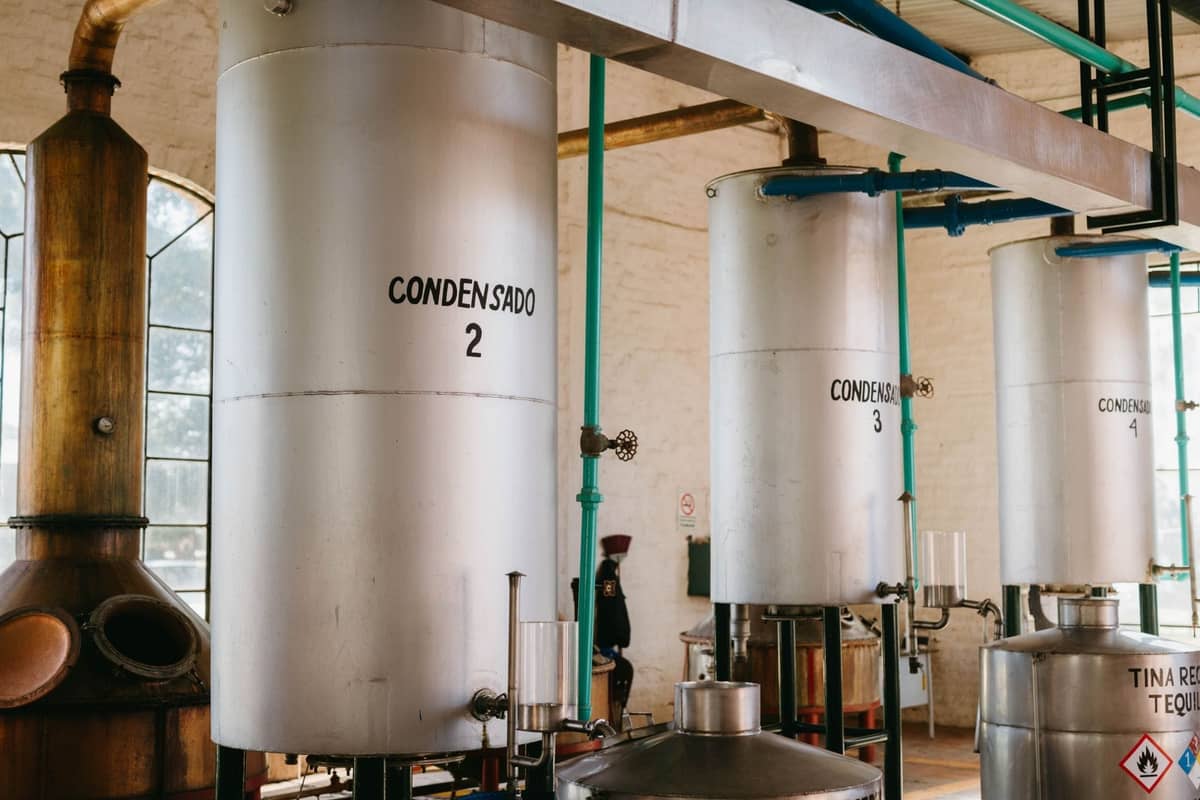
Tequila town has more distilleries than most people expect, ranging from mass-market operations with theme-park energy to small-batch producers where you can watch the entire production process up close. Here is a practical breakdown of the most visited options.
- La Rojeña (José Cuervo) The world's oldest active tequila distillery, dating to 1758. Tours run regularly throughout the day and are the most accessible for walk-ins. Expect a polished, high-volume experience with good historical context. Book ahead for weekend visits.
- La Fortaleza (Los Abuelos) One of the most respected small-batch distilleries in Jalisco, using traditional stone-wheel (tahona) crushing. Advance booking is essentially required — this one fills up fast, especially on weekends. The tour is genuinely educational and the tequilas are exceptional.
- Casa Herradura Located slightly outside the main town, Herradura offers thorough tours of a large, historically significant estate. The grounds are well-maintained and the tasting selection is broad. Good for those who want context on how industrial-scale premium production works.
- La Perseverancia (Sauza) Entry-level tours reportedly start around 170 MXN, making this the most accessible paid option for budget travelers. Same-day availability is common. The tour covers basic production stages and includes a tasting. Not the most artisanal experience, but honest about what it is.
- La Cofradía / Casa Noble Mid-tier options with comfortable facilities and bilingual guides. Suitable for travelers who want a relaxed tasting experience without the intensity of the craft-focused tours. Same-day tours are usually available throughout the day.
✨ Pro tip
Visit La Fortaleza first if you have a booking — it is the most time-sensitive and fills earliest. Leave La Rojeña for the afternoon when you are less pressed for time. Trying to visit more than two distilleries in one day tends to blur the experience, so prioritize quality over quantity.
Most distilleries operate tours roughly between 10:00 and 17:00. Arriving before 11:00 on weekdays nearly guarantees smaller group sizes. Weekend afternoons after 13:00 are peak tourist hours across all major sites — expect longer waits and louder environments. Distillery tour prices range widely, from around 200 MXN for basic tours to 400–600 MXN or more for premium experiences with curated tastings. Verify current prices directly with each distillery, as rates change seasonally.
Beyond the Distilleries: What Else Tequila Town Offers
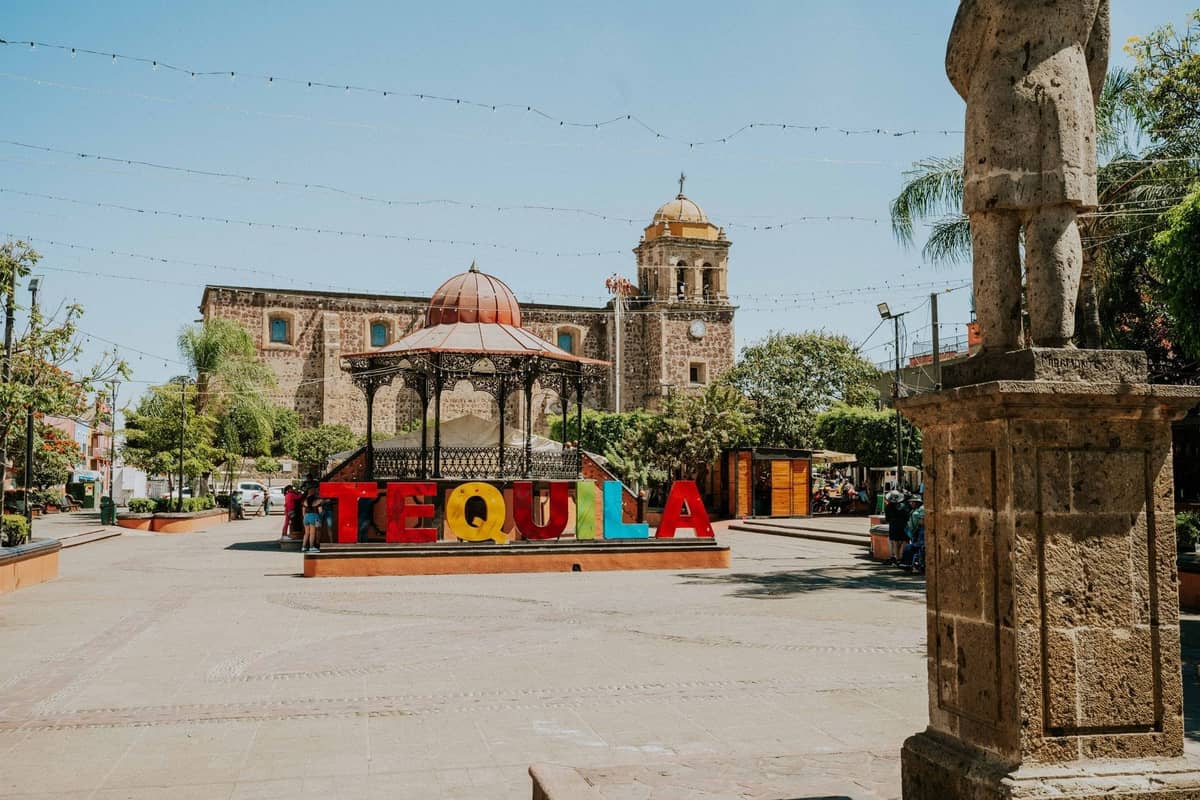
The Museo Nacional del Tequila, located on the main plaza, is open Tuesday through Sunday from approximately 9:00 to 18:00. It covers the cultural and industrial history of the spirit with a surprisingly good collection of vintage bottles, production equipment, and documentation on the Denomination of Origin. Entry is affordable and worth the hour it takes to walk through.
The Parroquia de Santiago Apóstol dominates the main square and dates to the 16th century, making it one of the oldest standing structures in the region. The plaza itself is a good orientation point and, on weekends, fills with vendors selling artisan crafts, snacks, and locally produced spirits. Street food around the market area includes birria (the Jalisco specialty of slow-braised meat), local tamales, and aguas frescas.
For travelers interested in the wider Jalisco agave and heritage landscape, the town of Tequila also serves as a gateway to additional experiences. The Pueblo Mágico designation brings federal investment in signage, infrastructure, and cultural programming, which means the town is genuinely well-maintained by Mexican standards. Day-trippers who also want to explore the Guachimontones archaeological site — pre-Columbian circular pyramids about 50 km from Tequila — can combine both into a longer circuit, though that makes for a very full day.
Guided Tours vs. Going Independently: Which Is Right for You
Organized group tours from Guadalajara typically include bus transport, a distillery visit, tastings, and sometimes lunch — all bundled for a fixed price that usually lands between 1,000 and 1,800 MXN per person, depending on what is included. The upside is zero logistical planning. The downside is that you are locked to a schedule, a specific distillery (usually one of the large commercial ones), and a group that may not share your pace.
Independent travel by public bus is better for anyone who wants to spend more than three hours in town, visit multiple distilleries, or simply wander without a countdown. The bus schedule gives enough flexibility to leave Guadalajara by 09:00 and return by 19:00 comfortably. The only real disadvantage of going solo is that distillery guides at smaller operations tend to give richer commentary when they know you have sought them out specifically — book direct, mention your interest in production, and the experience usually upgrades itself.
Best Time to Go and Practical Logistics
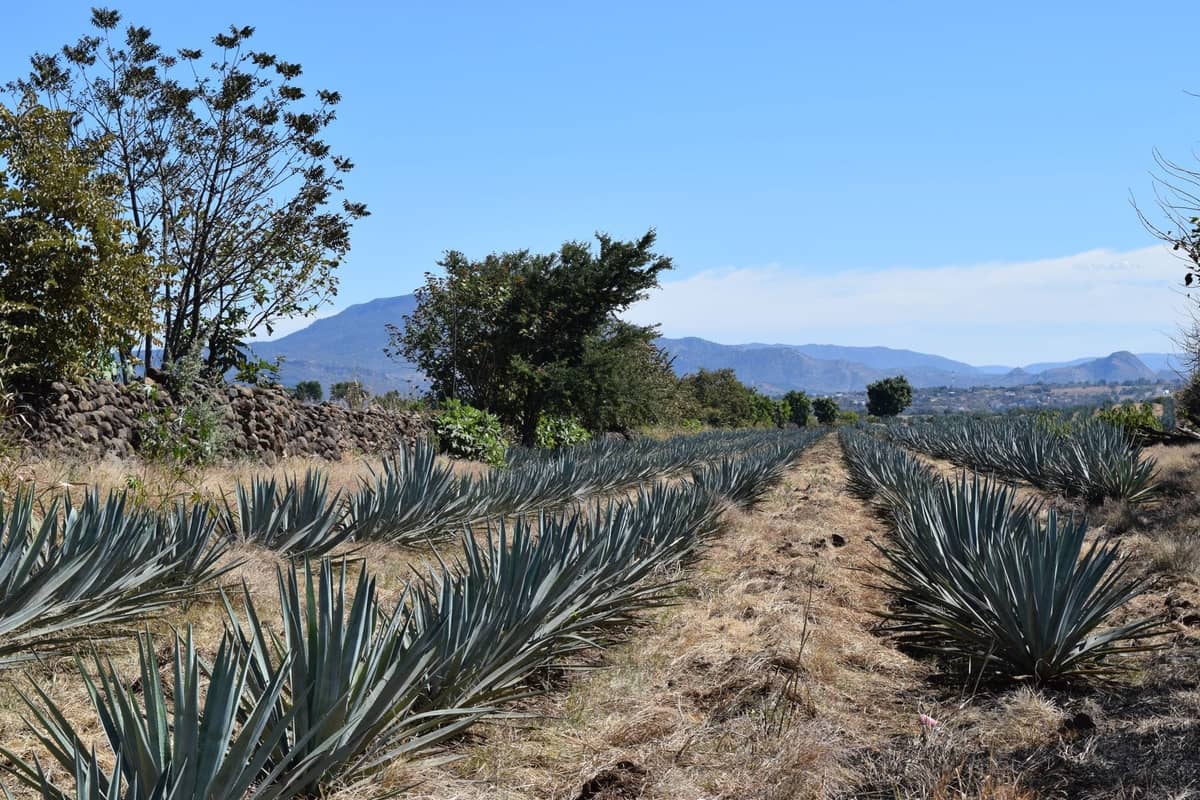
January through March is generally considered the best window for this day trip. Mornings are cool (around 8–12°C), afternoons warm up to roughly 26–28°C, and the agave fields have a dry-season clarity that makes the landscapes particularly photogenic. This period also falls outside the main Mexican holiday travel calendar, so distilleries and the town center are less crowded than during Semana Santa, summer, or December.
Weekdays are noticeably quieter than weekends at every major distillery. If your schedule allows a Tuesday or Wednesday visit, take it. The rainy season (June to September) is not a reason to avoid the trip — afternoon showers are common but brief — but road visibility can occasionally be limited on Highway 15 during heavy downpours. For more on timing a Guadalajara visit overall, the best time to visit Guadalajara guide covers seasonal patterns in detail.
- Leave Guadalajara no later than 09:30 to reach Tequila by mid-morning and secure your preferred distillery tour slot.
- Carry cash (MXN) for bus fares, market purchases, and smaller distillery entry fees — card acceptance is inconsistent outside major distilleries.
- Drink water consistently throughout the day, especially during tastings in warm weather. Dehydration accelerates the effects of multiple tequila samples.
- Wear comfortable walking shoes. The cobblestone streets look charming in photos and are brutal on flat soles after a few hours.
- Check whether your chosen distillery requires advance reservations — La Fortaleza books out days in advance on weekends. Others like La Casa Orendain generally operates same-day tours during typical daytime hours (late morning to late afternoon).
- The town's main market area offers a good selection of bottles to take home, often at prices comparable to or lower than airport duty-free shops.
💡 Local tip
If you are traveling with someone who does not drink alcohol, the day still works well. The UNESCO landscape, the Pueblo Mágico architecture, the Museo Nacional del Tequila, and the street food scene offer a full itinerary without a single tasting. Tequila is not a one-dimensional destination.
Travelers planning a longer stay in Guadalajara should note that this trip pairs naturally with a visit to Zapopan in the morning before heading northwest, or with the broader Guadalajara food scene on the same day if you return early enough for dinner. If you are on a tight timeline, check the 3-day Guadalajara itinerary for a practical framework that includes this excursion.
FAQ
How far is Tequila from Guadalajara?
Tequila is approximately 60 km northwest of Guadalajara city center via Highway 15. The drive takes about 1 to 1.25 hours in normal traffic. The public bus journey is 1 to 2 hours depending on stops and traffic.
Is the Jose Cuervo Express worth it?
It depends on what you want. The Jose Cuervo Express runs mainly on weekends and operates in one direction only by train — you take either the bus or train for the other leg. It includes tastings, an agave-field demonstration, and entertainment. If you want a curated, festive experience without any logistical planning, it delivers. If you want flexibility to explore multiple distilleries or wander independently, the public bus is a better fit.
Do I need to book distillery tours in advance?
It depends on which distillery. La Fortaleza and Casa Herradura fill up quickly, especially on weekends, and advance booking is strongly recommended. Others like La Casa Orendain and the basic Sauza tour at La Perseverancia typically offer same-day access throughout the day. Check directly with each distillery for current booking requirements and hours.
Can I do a tequila day trip without drinking alcohol?
Yes, completely. The town of Tequila has UNESCO-recognized agave landscapes, a 16th-century church, the Museo Nacional del Tequila, a lively main plaza, and good street food. Non-drinkers can do a full-day trip and find plenty of interest beyond the distillery tastings.
What is the cheapest way to get from Guadalajara to Tequila?
The public bus from Antigua Central Camionera (Central Vieja) in Guadalajara is the most affordable option, with round-trip fares reported around 260–280 MXN per person. Buses run approximately every 30 minutes. Verify current fares and schedules at the terminal before your trip, as prices change periodically.