3 Days in Guadalajara: The Perfect Itinerary
Three days is enough to cover Guadalajara's colonial core, its craft-focused suburbs, and a day trip to the town that gave tequila its name. This itinerary is structured around walking distance, public transport, and realistic timing — not nierealnych oczekiwań.
Plan and book this trip
Tools from our partner Travelpayouts help you compare flights and hotels. If you book through them, we may earn a commission at no extra cost to you.
Flights
Hotels map
TL;DR
- Day 1 focuses on the Centro Histórico: the Cathedral, Hospicio Cabañas, and the Mercado San Juan de Dios.
- Day 2 splits between Tlaquepaque in the morning and Colonia Americana or Chapultepec in the afternoon.
- Day 3 is best used for a day trip to Tequila — either by bus (around 260 MXN return) or the Jose Cuervo Express train (from US$100).
- Guadalajara sits at about 1,560 m elevation, so temperatures are mild — typically 20–25°C during the day — with summer highs often reaching around 28–30°C.
- Uber and DiDi are reliable for cross-city trips; the SITEUR metro is best for downtown corridors, not airport transfers.
Before You Arrive: Logistics Worth Knowing
Guadalajara Jalisco, Mexico, is a metro area of over 5 million people spread across several municipalities. Most of what matters to a first-time visitor sits within a manageable corridor: the Centro Histórico, Tlaquepaque to the southeast, and Zapopan to the northwest. The town of Tequila is about 60 km west along the highway — roughly an hour to 1.5 hours each way by road.
Miguel Hidalgo y Costilla Guadalajara International Airport (IATA: GDL) sits roughly 18–20 km from the city center in Tlajomulco de Zúñiga. An Uber or DiDi to downtown typically runs 180–300 MXN off-peak. Official airport taxis, booked at the arrivals counter, cost around 300–400 MXN depending on the zone. The airport bus is significantly cheaper but slower and less frequent — verify routes before relying on it.
💡 Local tip
For getting around the city itself, Uber and DiDi are the most practical options for cross-neighborhood trips. The SITEUR metro (Lines 1, 2, and 3) is cheap and useful for north-south and east-west corridors but doesn't serve Tlaquepaque or Tequila directly. Verify fares on the SITEUR website before your trip, as they change periodically.
One note on expectations: Guadalajara's elevation keeps it noticeably cooler than Cancún or Puerto Vallarta. Average daytime highs hover around 24–25°C in winter, and summer afternoons often reach around 28–30°C before the rains arrive. The rainy season runs June through September, with most precipitation falling in the late afternoon. If you're visiting during this window, mornings are generally clear. For a fuller breakdown, see the best time to visit Guadalajara guide.
Day 1: The Historic Center in Full
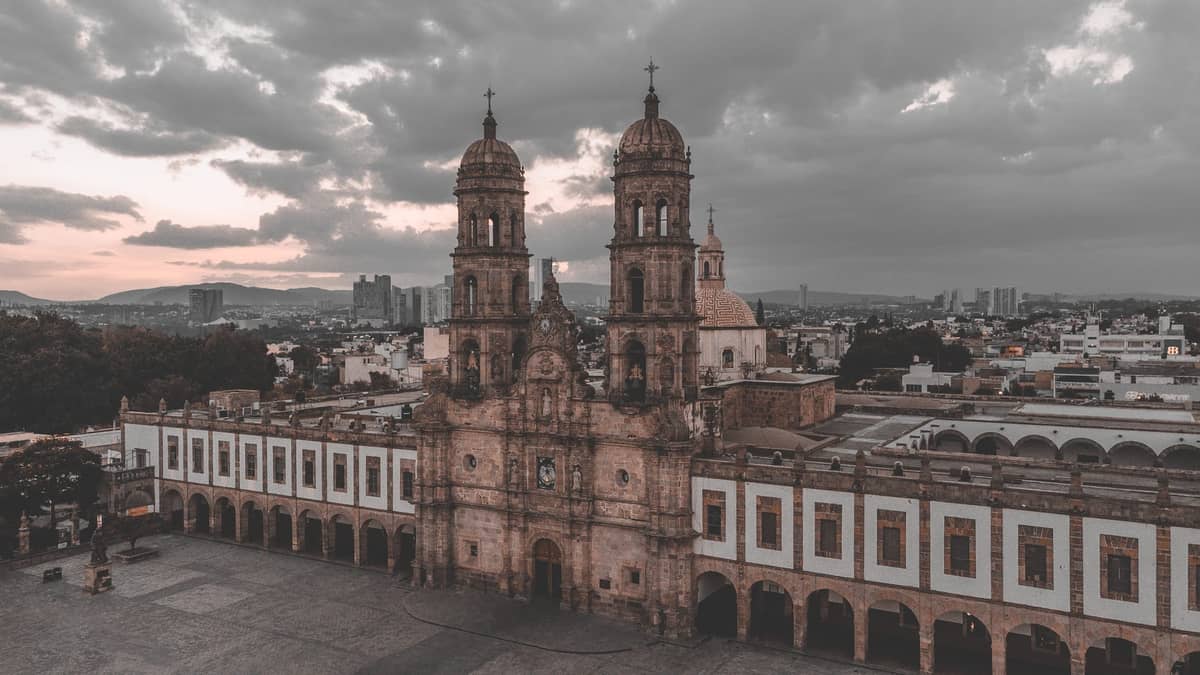
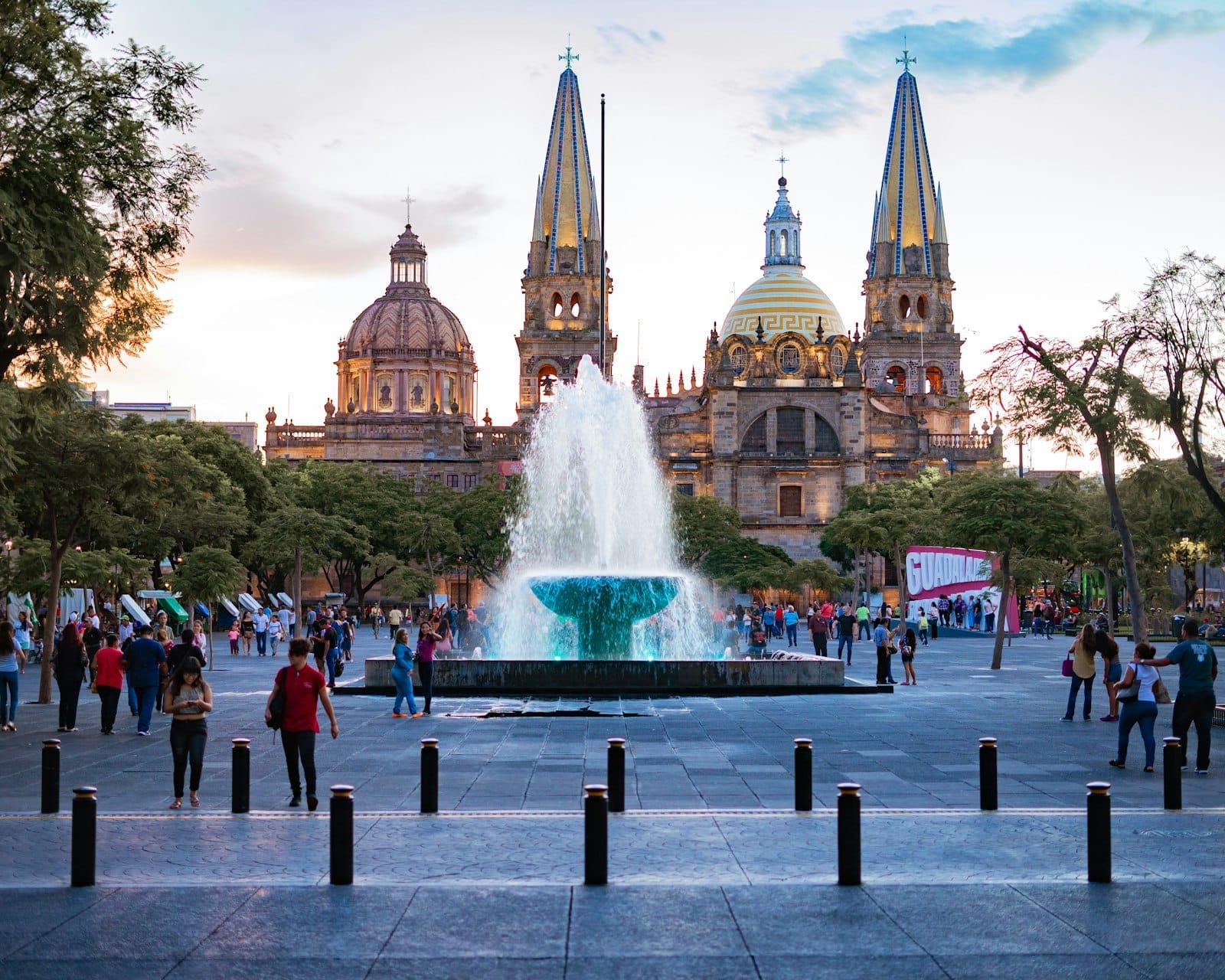
Start at the Guadalajara Cathedral, which anchors the city's ceremonial core. The building went up in the 16th century but has been modified repeatedly — earthquakes, fires, and changing architectural fashions left it a blend of Gothic, Baroque, and neoclassical elements. The twin yellow towers are the most recognized symbol of the city. Entry is free; go early (before 10am) to avoid tour groups.
From the cathedral, the surrounding plazas extend in each direction. The Plaza de la Liberación and Plaza Tapatía stretch east toward the Hospicio Cabañas — the walk takes about 10 minutes and passes the Teatro Degollado, a 19th-century neoclassical theatre that still runs opera and ballet performances.
The Hospicio Cabañas is the most important cultural site in the city and genuinely earns its UNESCO World Heritage status. The building is a former orphanage and hospital, and the chapel ceiling contains José Clemente Orozco's monumental murals, painted in the late 1930s. Adult entry is typically around 70–80 MXN; it's open Tuesday through Sunday (verify current hours before your visit). Budget at least 90 minutes here, and read about the murals beforehand — context makes a significant difference.
For lunch, head northeast to the Mercado San Juan de Dios, one of the largest covered markets in Latin America. The upper level has sit-down food stalls serving birria (Jalisco's slow-cooked meat stew), tortas ahogadas (rolls drowned in a spicy tomato sauce), and pozole. Prices at the stalls are low — a full meal typically runs 80–150 MXN. The lower floors sell everything from electronics to piñatas; it's chaotic and worth a look, but keep a hand on your bag.
⚠️ What to skip
The areas immediately surrounding Mercado San Juan de Dios can feel overwhelming, and petty theft does occur in crowded market environments. Keep valuables in a front pocket or a closed bag, and avoid displaying expensive cameras on lanyards around your neck.
Spend the afternoon exploring the blocks surrounding the cathedral at a slower pace. The Palacio de Gobierno de Jalisco is free to enter and houses two more Orozco murals, including a dramatic depiction of Miguel Hidalgo on the main staircase. The Rotonda de los Jaliscienses Ilustres next to the cathedral is a pleasant shaded plaza with busts of notable Jalisco figures — a good place to sit and absorb the surroundings before dinner.
Day 2: Tlaquepaque and Colonia Americana
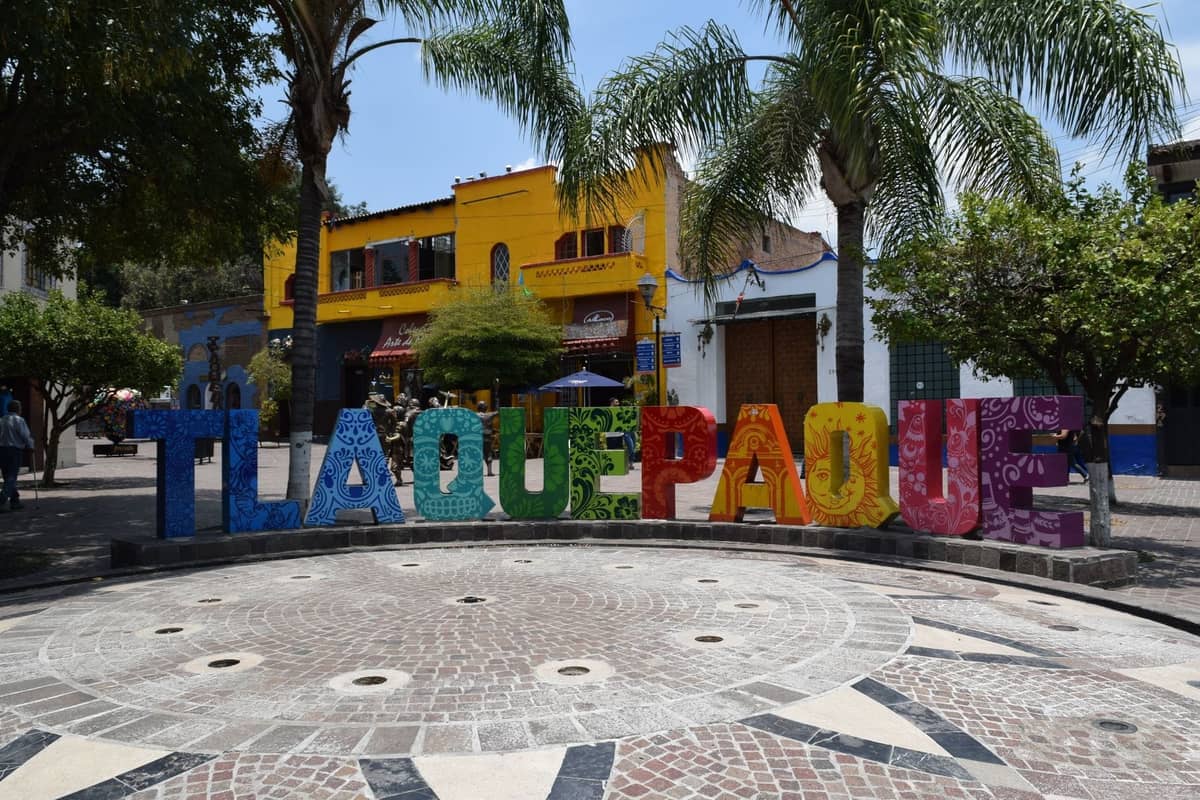
Tlaquepaque is a former independent town absorbed into the Guadalajara metro area, about 8 km southeast of the historic center. It operates as a distinct place: pedestrian streets, colonial architecture, ceramics workshops, and galleries. Arrive before noon on a weekday to get the streets relatively to yourself — weekends draw large local crowds, especially around lunchtime.
- El Parián A large covered courtyard with food and drink stalls, mariachi performances, and a lively atmosphere from around midday onward. Order a cantarito (a fruit and tequila drink served in a clay cup) and sit for a while.
- Andador Independencia The main pedestrian street lined with galleries, craft shops, and ceramic studios. Quality varies — some shops sell mass-produced souvenirs, others stock genuinely skilled work. Take your time comparing.
- Museo Regional de la Cerámica A small museum documenting Jalisco's ceramics traditions. Worth 30–40 minutes, especially if you're planning to buy crafts and want to understand what you're looking at.
After returning from Tlaquepaque in the early afternoon, the western side of the city offers a different register. Colonia Americana is a walkable neighborhood with early 20th-century architecture, independent cafés, bookshops, and a concentration of restaurants. Avenida Chapultepec is the main artery — on weekends it turns into a pedestrian market with food vendors and street stalls. It's worth an evening stroll even on a weeknight.
✨ Pro tip
If you want to combine Tlaquepaque and Tonalá in one day, it's logistically feasible — Tonalá is about 5 km further east and is known for its wholesale craft markets. But trying to cover both thoroughly in a single day leads to market fatigue. If crafts are your primary interest, dedicate a full day to both rather than splitting a half-day between them.
Day 3: The Town of Tequila
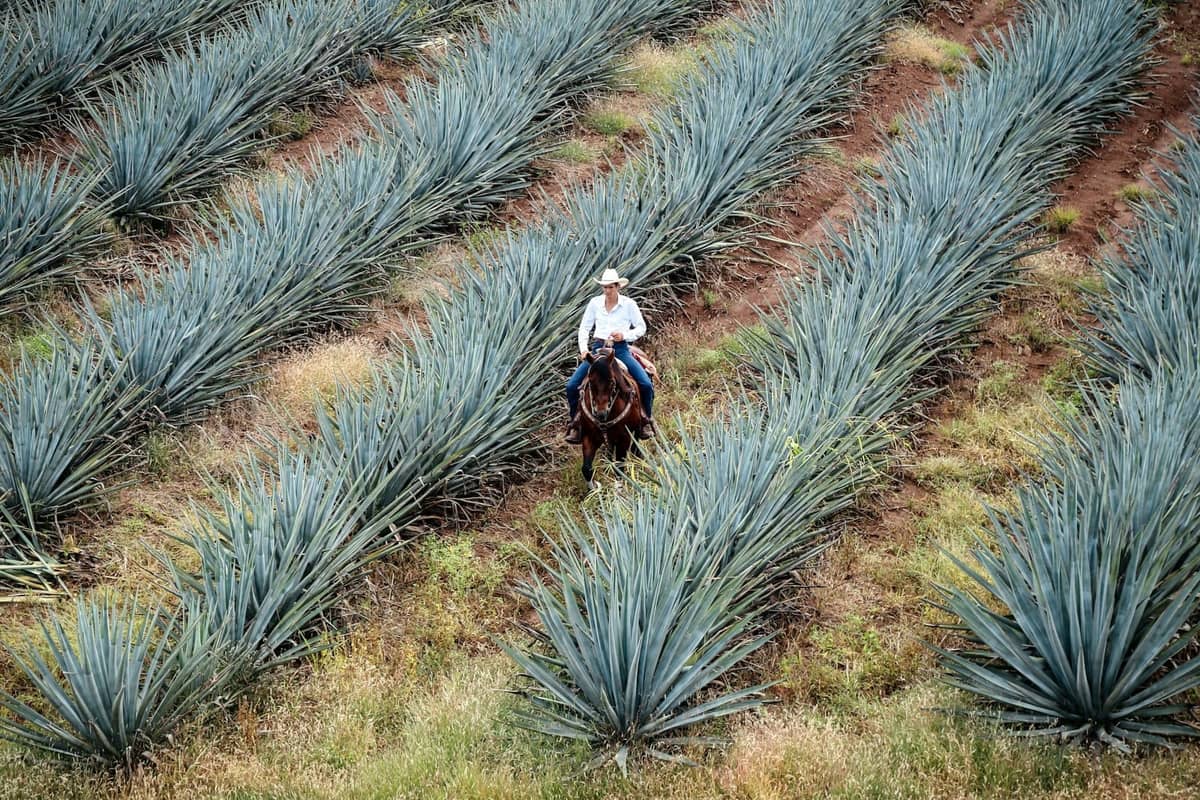
The town of Tequila, designated a Pueblo Mágico, sits about 60 km northwest of Guadalajara along Federal Highway 15. The surrounding valley is planted with blue agave as far as you can see, and the town itself has distilleries at the end of every other street. Jalisco state is the heartland of the tequila Denomination of Origin — production is legally restricted to this region and a few neighboring states. See the Pueblo Mágico Tequila attraction page for full details on what to do there.
- By public bus Buses depart from the Antigua Central Camionera (old bus station) roughly every hour. Return fare is around 260 MXN. Journey time is about 1.5 hours each way. This is the budget option and gives you flexibility to explore at your own pace.
- Jose Cuervo Express train A tourist train departing from Guadalajara on weekends, with fares starting around US$100 and including tastings and entertainment. The experience is more curated — and more expensive — than the bus. Book directly through the official Jose Cuervo Express website.
- Organized tour from Guadalajara Several operators run half-day and full-day tours that include transport, a distillery visit, and sometimes a guided agave field walk. Prices vary significantly; compare options before booking.
In town, the agave fields and distilleries are the main draw. Casa Sauza and Jose Cuervo are among the largest operations and offer the most polished visitor experiences; smaller distilleries (some operating under the NOM artisanal classification) give a less commercial perspective. If you want to go deeper into Mexico's agave spirits culture, consider adding the Guachimontones archaeological site nearby — it's a different experience entirely but makes the day feel more substantial.
ℹ️ Good to know
The Jose Cuervo Express departs from Guadalajara on Saturdays and Sundays (schedules and availability change seasonally — verify at josecuervoexpress.com before planning). If you're visiting during the week, the public bus to Tequila is your most reliable option.
What to Skip and What's Overrated
Three days is not enough to cover everything, and trying to do so produces a trip that's more exhausting than enjoyable. A few honest notes: Tonalá is genuinely interesting for wholesale ceramics and crafts, but it's a significant detour from the tourist circuit and better suited to a fourth or fifth day. The Zoológico de Guadalajara and Selva Mágica theme park are primarily designed for families with young children — if that's not your situation, skip them.
Bosque Los Colomos is a pleasant urban park — good for a morning run or a picnic — but it's not a cultural destination. If you have time to spare on Day 2, it's a reasonable addition. The Guadalajara walking tour is a better use of that time if you haven't fully covered the historic center. Some tour operators package Tlaquepaque and the Barranca de Huentitán in the same day; the barranca (a dramatic canyon on the city's northern edge) is worth seeing, but the combination is tiring and the barranca alone justifies a separate half-day.
Practical Details for Your 3-Day Stay
For accommodation, the Centro Histórico puts you within walking distance of Day 1 sights, but the neighborhood quiets down significantly after 9pm. Colonia Americana and the Zona Minerva area offer more evening activity and are still close to downtown by Uber. For a full breakdown of neighborhoods and price ranges, see the where to stay in Guadalajara guide.
- Drink only bottled or purified water. Hotels and restaurants provide it, but carry a small bottle when out walking.
- Mexico uses Type A and B plugs at 110–127V, 60Hz — North American devices work without an adapter; European devices need both an adapter and converter.
- Emergency number is 911 (nationwide). To call Guadalajara from abroad: +52 33 + local number.
- Tipping in restaurants is customary at 10–15% for table service. Verify your bill — some places add a service charge automatically.
- Citizens of the US, Canada, EU, UK, and many other countries enter Mexico visa-free for tourism. Verify current requirements with the Secretaría de Relaciones Exteriores (SRE) before travel.
If you're extending beyond 3 days, the two most logical additions are a Lake Chapala day trip (Mexico's largest lake, about 50–60 minutes south) or a visit to the Guachimontones circular pyramids near Teuchitlán. Both are covered in the day trips from Guadalajara guide with transport details.
FAQ
Is 3 days enough for Guadalajara?
Three days covers the essential highlights comfortably: the historic center, Tlaquepaque, and a day trip to Tequila. You won't exhaust the city — Tonalá, Lake Chapala, the Barranca de Huentitán, and Zapopan all justify extra time — but 3 days gives you a solid and satisfying introduction.
What is the best way to get around Guadalajara?
Uber and DiDi are the most practical options for most trips, including airport transfers. The SITEUR metro (3 lines) is useful for the downtown corridor and is the cheapest option. Taxis from the street are available but agree on a price before getting in, or use metered taxis. For day trips to Tequila, public buses depart from the Antigua Central Camionera.
How far in advance should I book the Jose Cuervo Express?
The train runs on weekends and is popular — book at least a week ahead during high season (late October through December, around major holidays). Check josecuervoexpress.com for current schedules and pricing, as these change seasonally.
Is Guadalajara safe for tourists?
The main tourist areas — Centro Histórico, Colonia Americana, Tlaquepaque, and Zapopan — are generally considered safe during the day. Like any large city, situational awareness matters, especially around crowded markets and at night. Avoid displaying valuables openly and use app-based rides rather than hailing taxis from the street after dark. For a thorough safety overview, see the dedicated guide on whether Guadalajara is safe.
What is the best time of year to visit Guadalajara for a 3-day trip?
November through April offers the driest weather and comfortable temperatures (highs of 24–28°C). December brings the Feria Internacional del Libro (FIL), one of the largest book fairs in the Spanish-speaking world. The rainy season (June–September) means afternoon showers but lush green surroundings — mornings are typically clear, so outdoor activities earlier in the day work well.