Pueblo Mágico de Tequila: The Complete Guide to Mexico's Most Famous Small Town
Tequila, Jalisco is more than the drink that made it famous. This UNESCO World Heritage–adjacent town sits amid volcanic highlands about 60 km from Guadalajara, offering distillery tours, agave landscapes, a colonial main square, and a culture rooted in centuries of production. Here is everything you need to plan a day trip or overnight stay.
Quick Facts
- Location
- Tequila, Jalisco, Mexico — approx. 60 km northwest of Guadalajara via Federal Highway 15D/15
- Getting There
- By car: ~1 hour from Guadalajara. By bus: direct services from Guadalajara's Central de Autobuses. By tourist train: the José Cuervo Express (and similar themed trains) depart Guadalajara on select days.
- Time Needed
- 4–6 hours for a day trip; 1–2 days if staying overnight
- Cost
- No entry fee to the town. Distillery tours vary by operator; confirm prices directly with each site.
- Best for
- Agave culture, distillery tours, colonial architecture, day trips from Guadalajara
- Official website
- http://www.tequilajalisco.gob.mx
What Tequila Actually Is: Town, Heritage Site, and Living Industry
Santiago de Tequila is a small city of roughly 40,000–45,000 people in the volcanic highlands of Jalisco, about 60 km northwest of Guadalajara. It was designated a Pueblo Mágico by the Mexican federal government in 2003, as part of the first generation of Jalisco towns admitted to the program, a program that recognizes towns with exceptional cultural and historical significance. In 2006, UNESCO inscribed the surrounding "Agave Landscape and Ancient Industrial Facilities of Tequila" as a World Heritage Site, recognizing it as one of the most distinctive cultural-industrial landscapes in the Americas. Compared with many day trips from Guadalajara, Tequila is unusually substantive: it is a working town built around a living industry, not a museum piece.
The town received city status in 1874, but human settlement and agave cultivation in this region stretch back far longer. The volcanic soils of the Tequila Valley, enriched by the nearby Volcán de Tequila, create growing conditions that are specific enough to have earned blue agave (Agave tequilana Weber) a protected designation of origin. Only tequila produced in defined regions of Jalisco and small parts of four other Mexican states can legally carry the name.
ℹ️ Good to know
The town itself has no admission fee. You pay only for what you choose to enter: distillery tours, museums, and tastings each have separate charges that vary by operator. Confirm prices directly before visiting, as they change regularly.
Arriving in Tequila: First Impressions and Orientation
Approaching Tequila by road on Federal Highway 15, the landscape announces itself before the town does. The hillsides are planted with rows of blue-green agave, their spiky silhouettes catching the morning light against the dark profile of the volcano. At a certain point the smell of roasting agave, a sweet, earthy note somewhere between caramel and smoke, drifts through the car window. That sensory moment is one of the more memorable arrivals in the state of Jalisco.
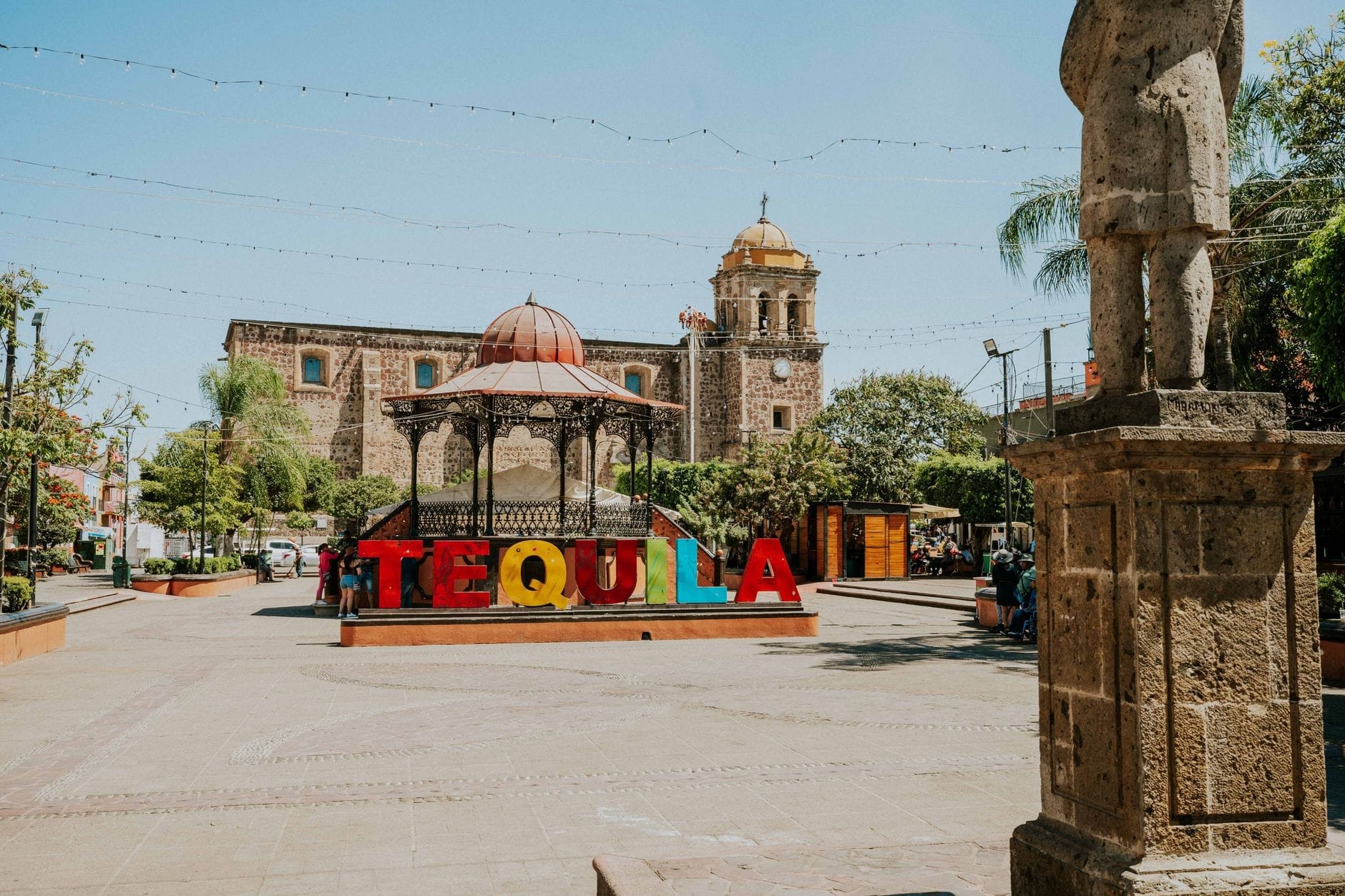
The historic center is compact and walkable. From wherever you park or disembark, you will likely orient yourself quickly around the Plaza Principal, the main square that anchors the centro. The parish church of Santiago Apóstol dominates one side of the square, its yellow stone facade dating to the colonial period. Benches under the shade trees fill with locals and tourists from mid-morning onward. Street vendors sell agave-based snacks, elote, and fresh fruit. On weekends and during festivals, the square is loud and energetic; on a Tuesday morning in February, it is calm enough to sit and watch workers sweeping the stone pavement.
💡 Local tip
The cobblestone streets of Tequila's centro are steep in places and uneven throughout. Wear closed, flat-soled shoes. If you have mobility limitations, contact individual distilleries in advance to ask about accessible routes, as conditions vary significantly from one facility to the next.
Tickets & tours
Hand-picked options from our booking partner. Prices are indicative; availability and final rates are confirmed when you complete your booking.
Lake Chapala and Ajijic guided tour from Guadalajara
From 68 €Instant confirmationFree cancellationGuadalajara and Tlaquepaque guided tour
From 73 €Instant confirmationFree cancellation
The Distilleries: Where to Focus Your Time
Several major distilleries operate within or immediately adjacent to the town, and touring one is the central reason most visitors make the trip. The brands based here include some of the most recognized names in tequila globally, among them Sauza (Casa Sauza) and Cuervo (La Rojeña, which claims to be one of the oldest operating distilleries in the Americas). Each operates its own tour program with different emphases: some focus on the industrial process, others on history and brand storytelling, and some include more hands-on tasting components.
A standard distillery tour moves through several stages: the agave fields or a demonstration planting, the cooking ovens (hornos or autoclave, depending on the producer), the milling process where juice is extracted, fermentation tanks, distillation columns, and finally the aging cellars where barrels are stacked in long rows. The smell in the aging cellar is particular — oak, vanilla, and concentrated spirit in a cool, dim space. It is worth slowing down there. Guides at most facilities speak both Spanish and English, though depth of commentary varies.
If you are traveling by tourist train, the José Cuervo Express departs Guadalajara on select days of the week and delivers passengers directly to the Cuervo estate. The experience is package-based, combining the train journey, a tour, and meals. It suits travelers who prefer a structured day out over independent exploration, though it does limit flexibility for visiting other distilleries or spending time in the town on your own schedule.
Beyond the Distilleries: What Else the Town Offers
Many visitors arrive expecting only distilleries and leave surprised by how much else there is to see. The Museo Nacional del Tequila, located near the main square, presents the history of the drink and its cultural context with a more objective lens than you get on a branded distillery tour. It is worth an hour if you want historical depth without a sales pitch at the end.
The Parish of Santiago Apóstol is architecturally significant, a 17th-century colonial church with a carved stone portal and a prominent position above the plaza. The interior is cooler and quieter than the streets outside, and the scale of the vaulted ceiling tends to register more powerfully in person than in photographs. Even visitors with no particular interest in religious architecture tend to spend a few minutes inside.
For those drawn to the wider Jalisco region, it helps to understand that Tequila is just one point in a broader agave-producing culture. The Guachimontones pyramids are located roughly 50 km south of Tequila, making them a possible addition to a longer day out — though combining both sites in a single day requires early starts and efficient movement.
Time of Day: How the Town Changes from Morning to Evening
Tequila is at its most photogenic in the early morning, before the tour buses arrive. The light on the church facade and the quiet of the main square give the town a different character than it has by noon. Most distillery tours begin at 10:00 or 11:00, so arriving before that window allows time to walk the streets, have breakfast at a local spot, and take in the town before the crowds build.
By early afternoon, the main square and the streets leading to the major distilleries are at peak traffic, particularly on weekends and during school holiday periods. Tour groups from Guadalajara typically arrive between 10:30 and 12:00, filling the tasting rooms and restaurant terraces. If you are visiting independently, booking a mid-afternoon distillery tour can mean significantly smaller groups and more attentive guides.
Late afternoon, as day-trippers depart, the town settles. The vendors on the square begin packing up, the light turns golden over the agave fields visible from the higher streets, and the few visitors who remain tend to be those who have booked overnight stays. Tequila at dusk, particularly from a rooftop or high point on the edge of town, offers a view of the volcano silhouette and the patchwork of fields below that daytime visitors rarely see.
⚠️ What to skip
Weekend visits, especially during festivals and long holiday weekends in Mexico, see significantly higher crowds and fully booked tours. Midweek visits in the dry season (November through April) generally offer the most comfortable experience.
Practical Information: Getting There, Getting Around, and What to Expect
The most flexible way to reach Tequila from Guadalajara is by car or rental vehicle via Federal Highway 15, a drive of roughly one hour depending on traffic leaving the city. If you prefer not to drive, direct bus services depart from Guadalajara's Central de Autobuses (the main long-distance bus terminal) to Tequila; journey times are comparable to driving. Check current schedules and fares at the terminal or with the operator, as these details change. For a broader look at getting around the Guadalajara region, the getting around Guadalajara guide covers regional transit options in detail.
Within the town, everything in the centro historico is reachable on foot, though the cobblestones and gradients mean you will feel the terrain. Taxis operate within the town for those who prefer not to walk between distilleries on the outskirts. There is no formal public transit network within Tequila itself.
Photography works well throughout the day, but the quality of light in the agave fields peaks in the early morning and in the hour before sunset. Most distilleries permit photography in common areas; some restrict it inside aging cellars or production zones for safety reasons. Ask before pointing a camera in production areas.
Tequila fits naturally into a broader Jalisco itinerary. If you are building a multi-day plan, the 3-day Guadalajara itinerary includes Tequila as a recommended half-day extension, with suggestions for how to combine it with other regional highlights.
Who Should Reconsider This Trip
Tequila is often described as an easy, rewarding day trip, which is accurate — but with qualifications. Visitors who have no interest in the production process or cultural history of tequila may find the town's limited range of attractions insufficient for a full day. The main square and church are genuinely worth seeing, but if you are not engaging with at least one distillery tour, the visit can feel thin after two hours.
Travelers with significant mobility challenges should plan carefully. The cobblestone streets are difficult for wheelchairs and uncomfortable for those with joint problems, particularly on the steeper blocks away from the main square. The volcanic summer heat (May and June see highs around 30–32°C) combined with the exposed terrain makes midday visits in those months genuinely tiring. The rainy season from June through September brings afternoon downpours that can make cobblestone streets slippery. The dry winter months, particularly November through February, offer the most comfortable conditions.
Insider Tips
- Book your distillery tour in advance for weekend visits, especially during Mexican national holidays — walk-up capacity at the major houses fills quickly by mid-morning.
- The view of the blue agave fields from the road descending into town from the Guadalajara direction is one of the best in the region. If you are driving, there is a pull-off area where you can stop safely for photographs before reaching the centro.
- Smaller, less commercially prominent distilleries on the outskirts of town sometimes offer more detailed and less scripted tours than the big-name brands. Ask at the Museo Nacional del Tequila for current recommendations, as these change over time.
- If you are eating lunch in Tequila, move one block back from the main square to find locally oriented restaurants rather than tourist-priced menus. Birria and pozole are the regional staples worth seeking out.
- The José Cuervo Express train sells out weeks in advance during high season. If it is on your list, book before you arrive in Guadalajara rather than trying to arrange it on the day.
Who Is Pueblo Mágico de Tequila For?
- Travelers interested in agave culture, distillation, and the history of tequila as a protected designation product
- Day-trippers from Guadalajara looking for a destination with cultural depth beyond a single attraction
- Food and drink focused travelers who want to taste products in the context where they are made
- Architecture and history travelers interested in Jalisco's colonial-era towns and UNESCO-recognized landscapes
- Couples and small groups who can move at their own pace and combine distillery visits with exploration of the town
Nearby Attractions
Combine your visit with:
- Ajijic (Lake Chapala Village)
Ajijic sits on the north shore of Lake Chapala, about an hour south of Guadalajara. With pre-conquest roots, cobblestone streets lined with art galleries, and one of Mexico's largest expat communities, it offers a completely different pace from the city. There is no admission fee to visit, and the town is accessible year-round.
- Bosque de La Primavera
Just 12 km west of Guadalajara, Bosque de La Primavera is a 30,500-hectare protected forest area offering hiking, birdwatching, hot springs, and rare ecological zones. It is one of the few places near a major Mexican city where you can genuinely disconnect from urban noise within 30 minutes.
- Bosque Los Colomos
Spanning roughly 92 hectares in northwestern Guadalajara, Bosque Los Colomos is a protected urban forest with ponds, pine-scented trails, and a Japanese garden donated by the city of Kyoto. Admission is free, and the park draws everyone from pre-dawn joggers to Sunday families.
- Japanese Garden — Bosque Los Colomos
Tucked inside the 93-hectare urban forest of Bosque Los Colomos, the Jardín Japonés is a formal Japanese-style garden donated by the people of Kyoto in 1994. It offers koi ponds, stone lanterns, arched bridges, and the kind of deliberate stillness that is genuinely hard to find in a city of over 1.5 million people.