Self-Guided Walking Tour of Guadalajara's Historic Centre
Guadalajara's Centro Histórico is one of Mexico's most walkable downtown cores, with a chain of linked plazas connecting colonial churches, world-class murals, and a UNESCO World Heritage site within roughly 5 kilometres. This guide gives you a practical route, landmark-by-landmark breakdown, opening hours, and the practical tips you need to do it right.
Plan and book this trip
Tools from our partner Travelpayouts help you compare flights and hotels. If you book through them, we may earn a commission at no extra cost to you.
Flights
Hotels map
TL;DR
- The full route covers approximately 5 km and takes 3 to 5 hours depending on how long you linger inside each site.
- The walk starts near Juárez metro station and ends at Hospicio Cabañas, a UNESCO World Heritage site since 1997.
- Most museums are closed on Mondays — plan a Tuesday-to-Sunday walk if you want interior access.
- Start before 10:00 to beat both the heat and tour groups at the cathedral and Palacio de Gobierno.
- Prefer a guided experience? See the top things to do in Guadalajara for context on how the historic centre fits into the broader city.
Why the Historic Centre Works So Well on Foot
Guadalajara, Jalisco, Mexico, sits at around 1,560 metres above sea level in the Atemajac Valley, which keeps temperatures more moderate than coastal Mexican cities. The Centro Histórico was planned around a sequence of interconnected plazas rather than a single central square, which means a walking tour here has a natural momentum: you move from one open space to the next, with a landmark anchoring each transition.
The core area is compact. From Nueve Esquinas in the southwest to Hospicio Cabañas in the northeast, the distance is under 2 kilometres in a straight line. The full loop, including detours to churches and the Templo Expiatorio, comes to around 5 kilometres of walking on largely flat, pedestrian-friendly streets. Several blocks along Paseo Hospicio and parts of Avenida Cristóbal Colón are fully pedestrianized, and the plazas themselves are traffic-free. Even during weekday mornings, the streets feel accessible rather than chaotic.
💡 Local tip
Start your walk between 8:30 and 9:30. The cathedral opens early, the light is flattering for photos, and you will reach the Palacio de Gobierno before organized tour groups arrive. By 11:00, the plaza area around the cathedral is noticeably busier.
The Route: Landmark by Landmark
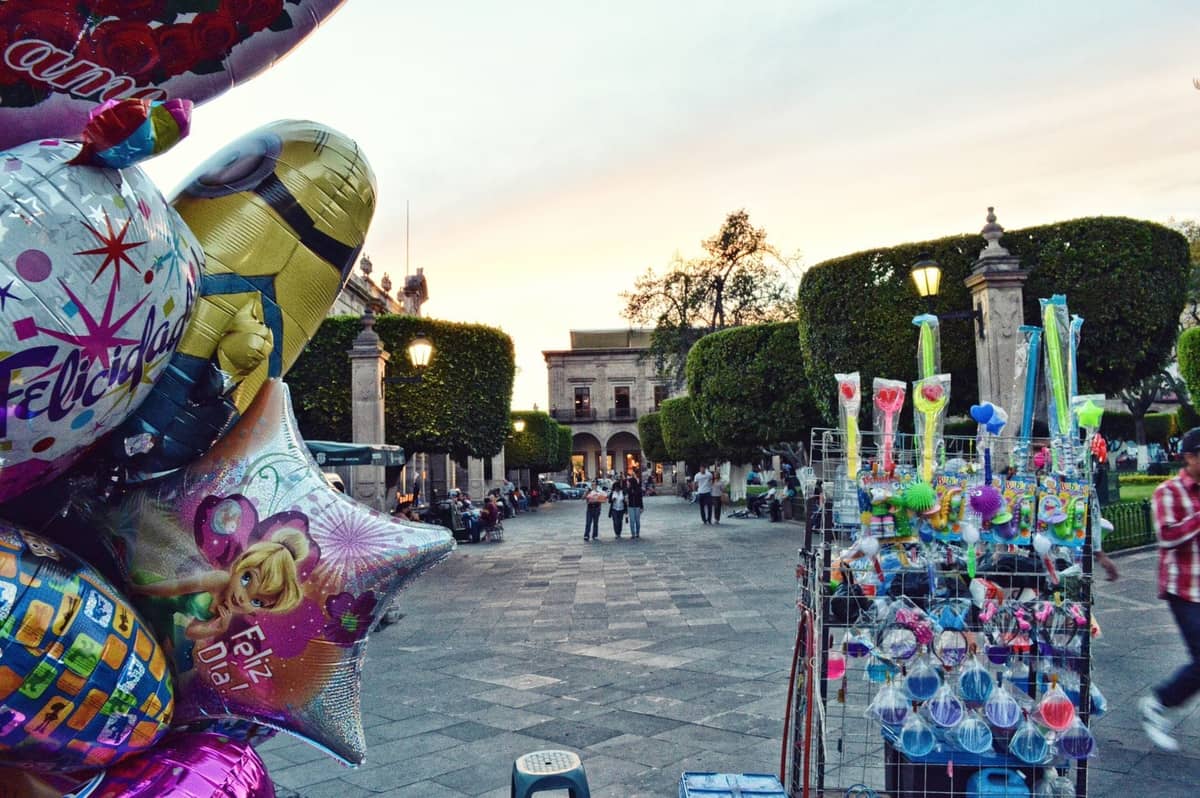
A logical starting point is the Nueve Esquinas neighbourhood, a small square formed by the convergence of several narrow colonial-era streets in the southwest of the centre. It is a genuine local gathering point rather than a tourist construction, with birria restaurants that have been operating for decades around the square. From here, the route heads northeast through the Jardín Aranzazú toward the Templo de San Francisco de Asís.
The Templo de San Francisco de Asís is one of the oldest surviving churches in Guadalajara, with a Baroque facade that rewards a few minutes of close attention before you move on. Continue northeast and you reach the Plaza de Armas, the formal civic square directly adjacent to the cathedral. The plaza's 19th-century French-style bandstand is frequently used for free Sunday concerts — worth noting if your walk coincides with a weekend.
The Guadalajara Cathedral anchors the entire historic centre. Construction began in 1558 and the building has been modified repeatedly since, which explains the mix of Gothic, Baroque, and Neoclassical elements. Entry is free. The twin yellow-tiled towers are the most recognisable landmark on the city skyline and worth photographing from the plaza level before going inside. Directly east of the cathedral, the Rotonda de los Jaliscienses Ilustres is a circular monument with underground tombs honouring prominent Jaliscans — free to walk through, and the colonnade makes good shade on a hot morning.
The Palacio de Gobierno de Jalisco is on the south side of Plaza de Armas and is one of the most important stops on the walk. The entrance is free and no reservation is required. Inside the main stairwell, José Clemente Orozco painted his monumental mural of Miguel Hidalgo in 1937 — a work of genuine power that most visitors underestimate before seeing it in person. The scale and intensity are difficult to convey in photographs. Allow 20 to 30 minutes here.
ℹ️ Good to know
The Palacio de Gobierno is a working government building. Entry is generally permitted during business hours (roughly 09:00–18:00 on weekdays), but access can be restricted during official events or ceremonies. There is no charge to view the Orozco murals inside.
Continuing east, the Plaza de la Liberación stretches behind the cathedral and opens onto the Teatro Degollado, Guadalajara's main opera house. The neoclassical facade features a frieze depicting scenes from Dante's Divine Comedy — an unusual decorative choice for a 19th-century provincial Mexican theatre. The interior can be visited on a guided tour when performances are not scheduled; the theatre is home to the Jalisco Philharmonic Orchestra.
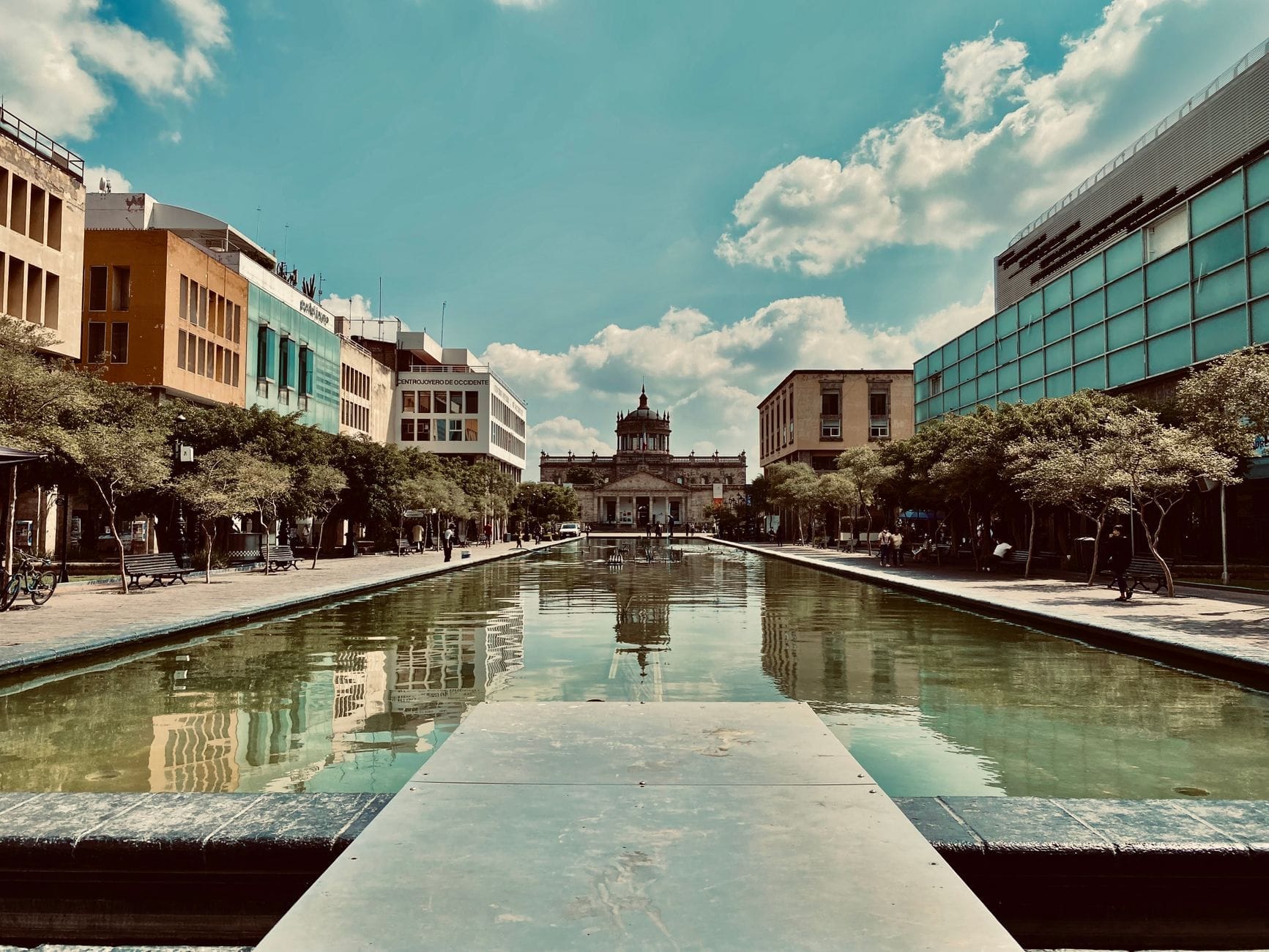
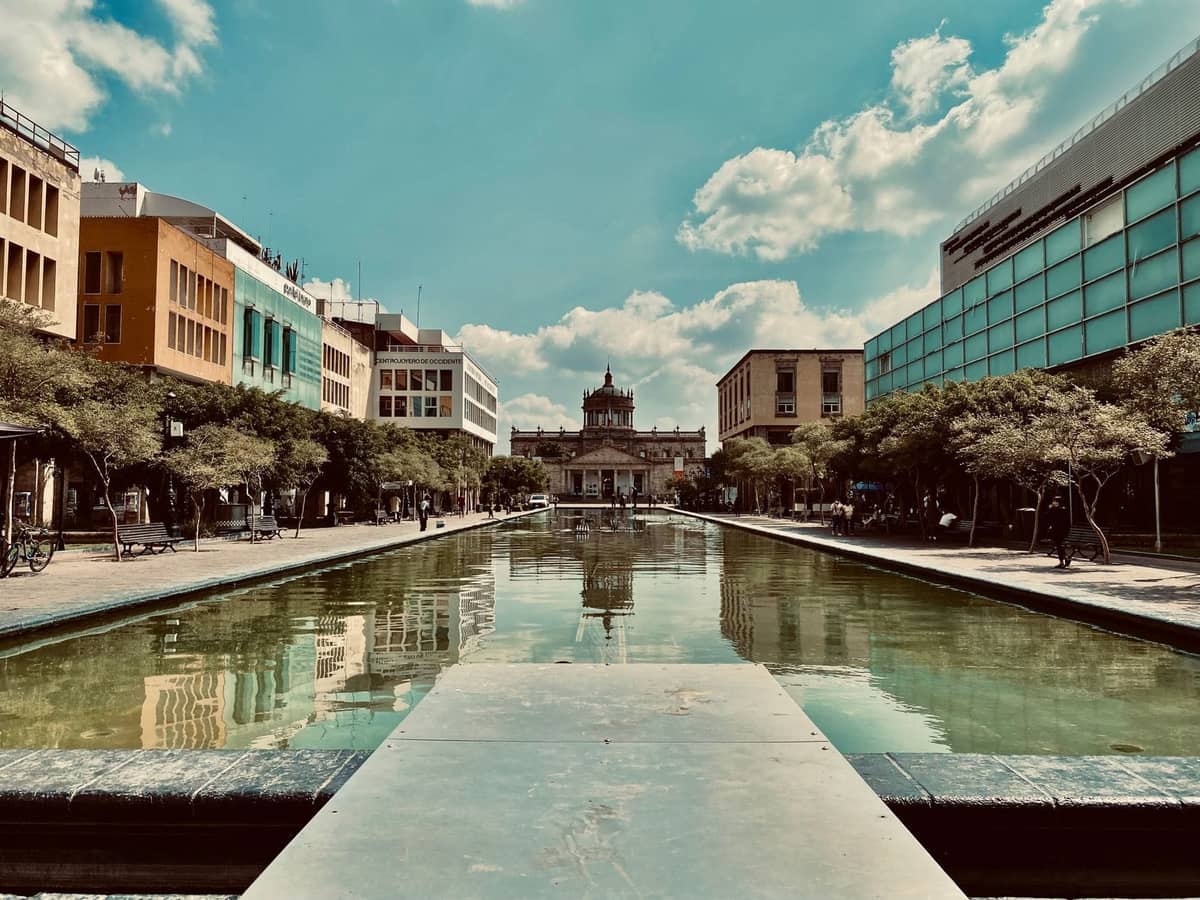
From the Teatro, Plaza Tapatía extends eastward for several hundred metres, a long pedestrian esplanade that connects the theatre district to Hospicio Cabañas. The plaza itself is serviceable rather than spectacular, but it functions as a useful corridor. Street vendors are concentrated here, and the stretch offers clear sightlines toward Cabañas at the far end.
The route ends at Hospicio Cabañas, now operating as the Instituto Cultural Cabañas. This neoclassical complex was designed by Manuel Tolsá and completed in 1845, originally as an orphanage and hospital. UNESCO inscribed it as a World Heritage Site in 1997 under the name "Hospicio Cabañas." The reason most visitors come is the chapel ceiling: Orozco painted the entire vault with a fresco cycle between 1938 and 1939, and the central panel, 'El hombre de fuego' (Man of Fire), is considered among the greatest mural works in the Americas. Admission is charged and the site closes on Mondays.
Detour: Templo Expiatorio and the Western Arc
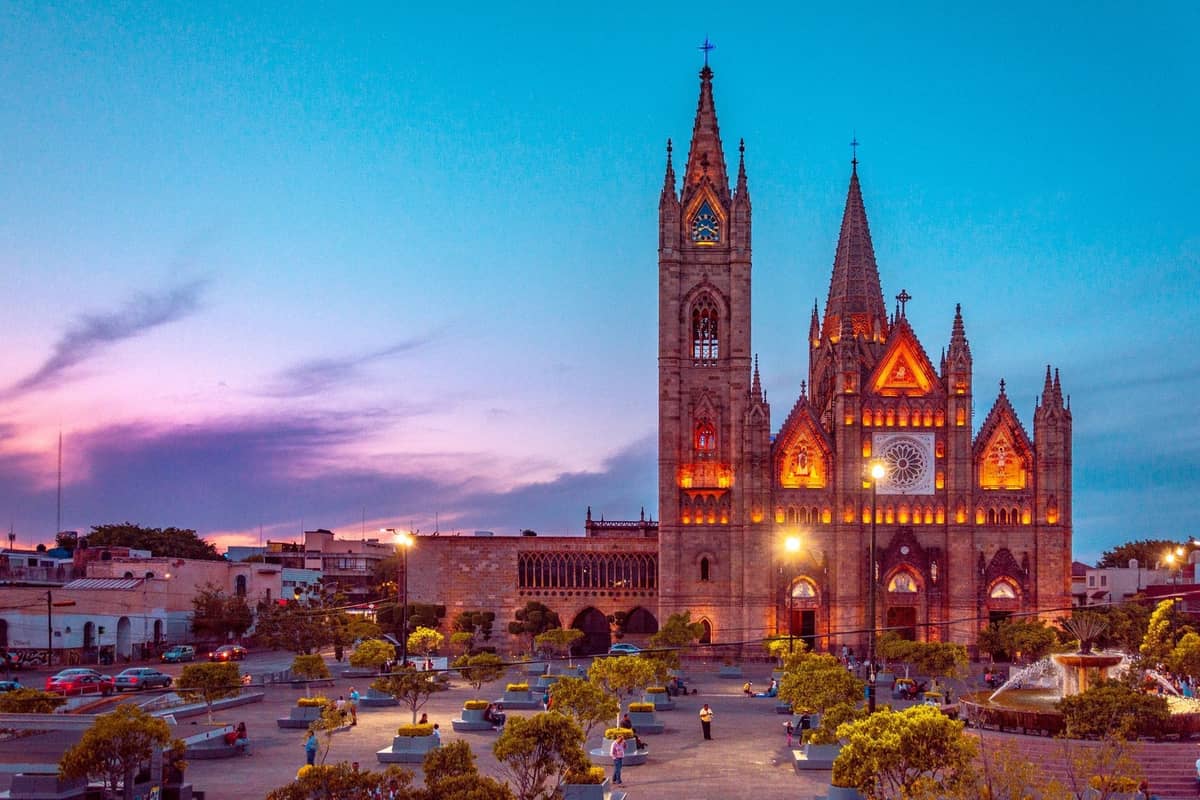
If you have an additional hour, a worthwhile detour from the main route is the Templo Expiatorio del Santísimo Sacramento, located several blocks west of the cathedral near the University of Guadalajara campus. Construction began in 1897 and continued until it was consecrated in 1931; the Gothic Revival architecture is a deliberate contrast to the colonial Baroque of the cathedral district. Entry is free and the church is open daily from roughly 07:00 to 23:00, making it accessible early morning or in the evening. Modest dress is required, and flash photography is not permitted inside.
This detour adds roughly 1.5 to 2 km to the total walk, depending on your starting point, and passes through the western edge of the historic zone where foot traffic is lighter and the street life is more residential than tourist-oriented. It is a useful way to see the neighbourhood at a different pace.
Practical Logistics: Timing, Access, and Costs
- Best time of day Morning starts (before 10:00) are significantly more comfortable. Guadalajara's warmest months are May and June with highs around 30–32°C; in summer the rainy season (June–September) brings afternoon downpours that can make outdoor walking unpleasant after 14:00.
- Best time of year November through March offers mild temperatures (highs around 24–25°C), low rainfall, and the lowest tourist density. Avoid the full heat of May and the afternoon storms of July–August unless you plan to walk early.
- Monday warning Nearly all museums along or near the route are closed on Mondays. A Monday walk gives you excellent exterior views of every building but no interior access to Hospicio Cabañas, the Museo Regional, or smaller museums.
- Admission fees Most churches (cathedral, San Francisco, Santa Mónica, Templo Expiatorio) are free. Hospicio Cabañas charges an entry fee; verify the current price at the official Instituto Cultural Cabañas website before your visit. The Palacio de Gobierno is free.
- Getting there The nearest metro station is Juárez on Line 1 (SITEUR), which deposits you near the western edge of the route. A ride-hailing app (Uber, DiDi) from anywhere in central Guadalajara to the cathedral area typically costs MXN 60–120 depending on time of day.
⚠️ What to skip
Pickpocketing occurs in crowded plaza areas, particularly around Plaza Tapatía and near Mercado San Juan de Dios at the east end of the route. Keep phones in front pockets, avoid displaying expensive cameras on straps, and use a cross-body bag rather than a backpack in the busiest sections.
Guided Tours vs. Going Solo
The self-guided route described above is entirely manageable without a guide. The buildings are well-signed, the plazas are clearly connected, and most churches and public buildings are free to enter without any advance booking. For first-time visitors to Mexico who want historical context delivered in real time, a guided tour adds genuine value at the Palacio de Gobierno and Hospicio Cabañas specifically, where the mural content is dense and benefits from explanation.
Commercial guided walking tours of the historic centre run approximately 3 hours and typically cover around 10 major landmarks. Most meet near the Rotonda de los Jaliscienses Ilustres, behind the cathedral. Free walking tours (tip-based) are offered daily by local operators listed on platforms like GuruWalk — these are a reasonable option if you want local insight without committing to a fixed price. Paid options are available through GetYourGuide and similar aggregators. Full-day options that extend beyond the historic centre into Tlaquepaque or include the Orozco murals in detail are also available.
- Self-guided: best for independent travellers, budget-conscious visitors, and those who prefer their own pace. Takes 3–5 hours.
- Free walking tour (tip-based): good for solo travellers who want company and local commentary without a fixed fee. Check GuruWalk for current operators.
- Paid guided tour (3 hours): useful if you want structured historical context, particularly for the Orozco murals at the Palacio and Cabañas.
- Full-day guided tour: covers the historic centre plus additional areas; best for visitors who have only one day and want maximum coverage with minimal logistics.
What to Eat and Drink Along the Route
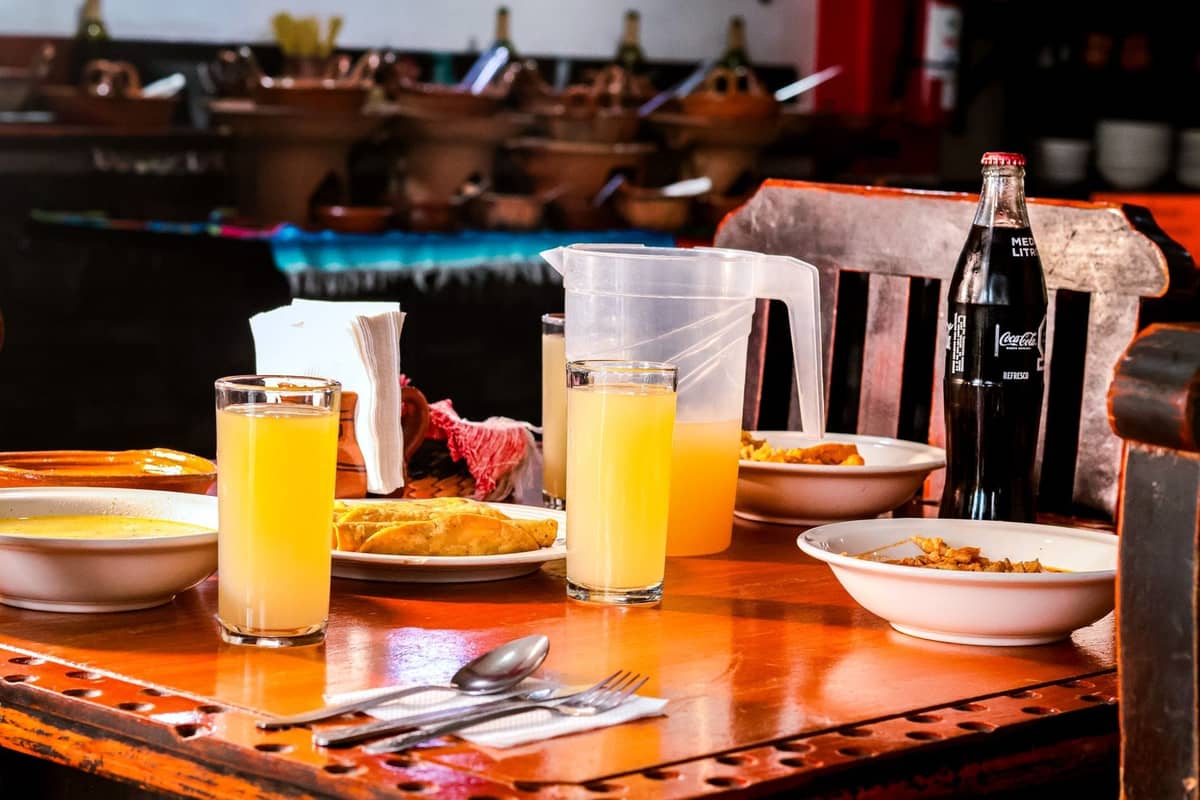
Nueve Esquinas, at the start of the route, is the most logical place to eat before walking. The square and its surrounding streets are known for birria (a slow-cooked meat stew, typically goat or beef in Jalisco) served with tortillas and consommé. This is legitimate local food culture, not a tourist construction. Several restaurants around the square have been operating for decades. For context on the broader Guadalajara food scene, the centro is a good starting point but not the only option.
Midway through the walk, the area around Plaza de Armas has cafes suitable for a break. The Mercado Corona, a few blocks northwest of the cathedral, is a covered market with food stalls serving tortas ahogadas (Guadalajara's signature sandwich, drowned in a spicy tomato-chili sauce) and fresh juice. It is a more local experience than the tourist-facing restaurants on the plaza itself. Budget around MXN 80–150 per person for a light meal at market stalls.
FAQ
How long does the self-guided walking tour of Guadalajara's historic centre take?
The core route is approximately 5 kilometres and takes 3 to 5 hours at a comfortable pace, including time inside the Palacio de Gobierno, the cathedral, and Hospicio Cabañas. Add an hour if you include the Templo Expiatorio detour or stop for a meal.
Is the historic centre of Guadalajara safe to walk around?
The main plaza areas and pedestrianized streets of the Centro Histórico are generally considered safe during daytime hours. Normal urban precautions apply: avoid displaying expensive items openly, be alert in crowded areas near markets, and stick to well-lit, populated streets if walking after dark. Check current travel advisories from your government before visiting.
Do I need to pay to enter the main attractions on the walking tour?
Most churches along the route, including the cathedral, Templo Expiatorio, and Templo de San Francisco, are free. The Palacio de Gobierno is free to enter. Hospicio Cabañas (Instituto Cultural Cabañas) charges an admission fee — verify the current price on the official website before your visit, as fees change periodically.
What day of the week is best for the walking tour?
Tuesday through Sunday, with Tuesday, Wednesday, or Thursday being the least crowded days. Monday is the worst day for this walk if you want interior access to museums and cultural sites, as most are closed. Weekends bring more street life but also more crowds around the cathedral and Plaza Tapatía.
Can I combine the historic centre walk with a day trip or other neighbourhoods?
Yes. The historic centre walk pairs well with an afternoon visit to Tlaquepaque (accessible by metro Line 1 to Periférico and then a short taxi or bus ride) or Tonalá for crafts markets. For a full itinerary, see the 3-day Guadalajara guide. Day trips to Tequila or Lake Chapala are better reserved for separate days given travel time.