Las Nueve Esquinas: Guadalajara's Nine Corners Neighborhood
Las Nueve Esquinas is one of Guadalajara's most atmospheric corners in the Centro Histórico, where nine streets converge to create an irregular colonial plaza lined with birria restaurants, old stonework, and a pace of life that feels distinctly apart from the busier historic center nearby. Entry is free, and the real reason to visit is the food and the feeling of the place.
Quick Facts
- Location
- Around Calle Colón between Leandro Valle and Nueva Galicia, Centro Histórico, Guadalajara, Jalisco
- Getting There
- Walk from Guadalajara Centro; also accessible via SITEUR light rail (Lines 1 or 2) and Mi Macro Calzada BRT
- Time Needed
- 30 to 90 minutes, longer if you stop for a meal
- Cost
- Free to enter; restaurant meals priced separately
- Best for
- Street photography, birria lovers, colonial architecture enthusiasts, slow walkers
What Is Las Nueve Esquinas?
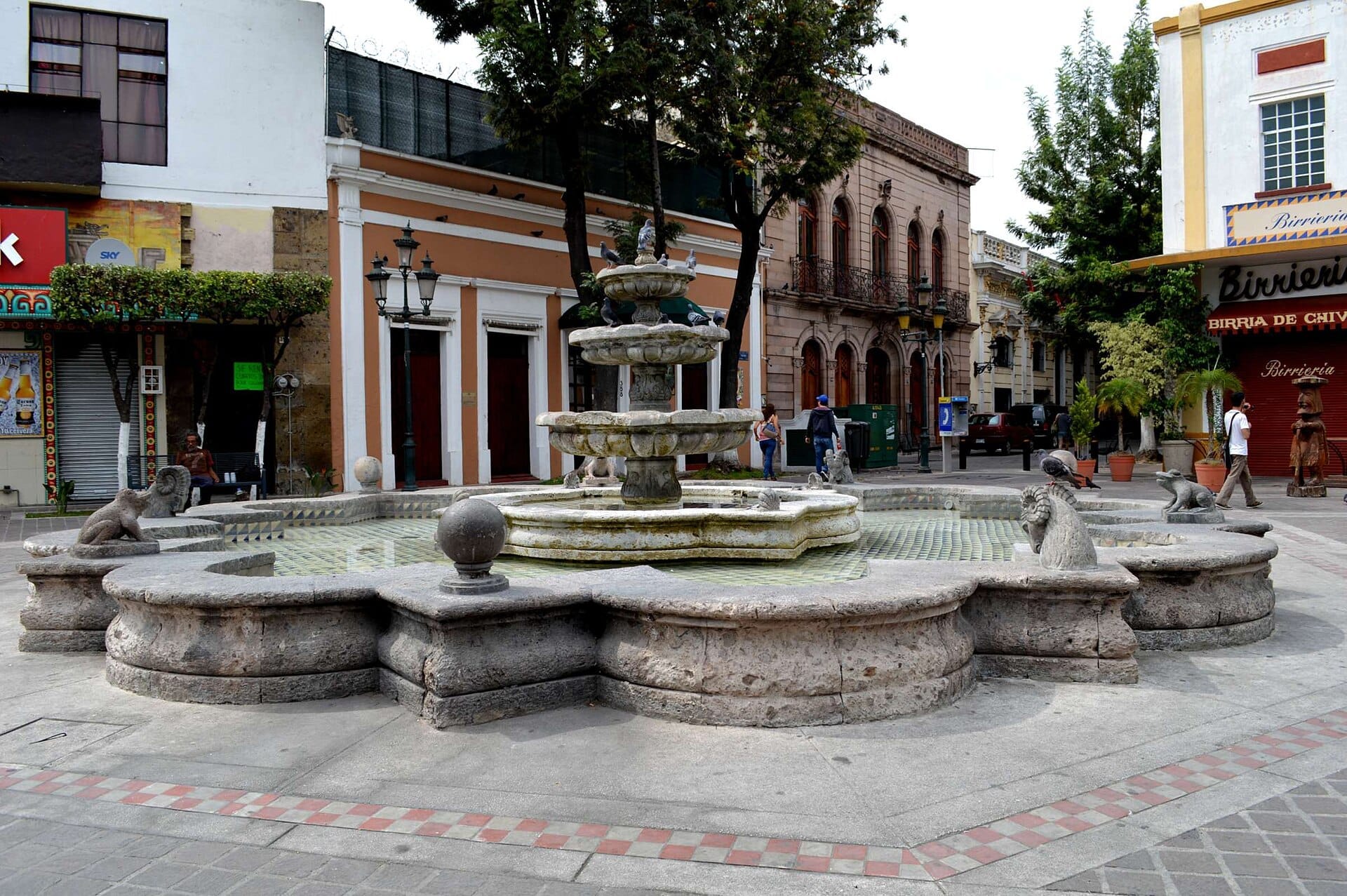
Las Nueve Esquinas, which translates literally as "The Nine Corners," is a small urban node in the Centro Histórico of Guadalajara where several streets meet at irregular angles, producing not the standard four-corner intersection you would expect but a sprawling series of converging corners that gives the neighborhood its name. The result is a widened, oddly shaped public space that functions partly as a street, partly as a plaza, and mostly as a gathering point.
The area's origins are often linked to Franciscan presence in the 16th century colonial period, but as a plaza it emerged in the late 19th century as a center for cardboard and paper commerce before later becoming a cultural and culinary enclave, and the presence of birria — the slow-braised goat or beef stew that is one of Jalisco's most recognized dishes — became the defining feature of the intersection. Today that culinary identity remains its clearest calling card.
ℹ️ Good to know
Las Nueve Esquinas is a public street space with no entry fee and no official opening hours. The surrounding restaurants and businesses set their own schedules. Birriería Las 9 Esquinas, the most prominent eatery at the site, is listed in the MICHELIN Guide and draws steady crowds, particularly at weekend lunches.
The Architecture and Spatial Character
What makes Las Nueve Esquinas interesting from an urban design standpoint is how the irregular street geometry breaks the otherwise disciplined colonial grid of Guadalajara's historic center. Narrow calles approach from several directions, and the colonial stone facades that line them create a tightly compressed streetscape. The stonework is generally worn in a way that reads as age rather than neglect. Overhead, you often get a relatively unobstructed view of the sky, which makes the space feel open despite the surrounding buildings pressing in from multiple angles.
The neighborhood sits within a broader architectural context worth exploring. If you are already visiting the Templo del Carmen or the nearby Avenida La Paz corridor, Las Nueve Esquinas fits naturally into a walking route without requiring a detour. The streets between these points are lined with late 19th and early 20th century buildings that show the influence of both colonial Spanish design and later European styles that arrived during the Porfiriato period.
Tickets & tours
Hand-picked options from our booking partner. Prices are indicative; availability and final rates are confirmed when you complete your booking.
Lake Chapala and Ajijic guided tour from Guadalajara
From 68 €Instant confirmationFree cancellationGuadalajara and Tlaquepaque guided tour
From 73 €Instant confirmationFree cancellation
How the Space Changes Through the Day
Early morning, before 9am, Las Nueve Esquinas is quiet in a way that lets you notice details that disappear later. The light hits the stone facades at a low angle, making textures pop in a way that is genuinely useful for photography. The street is mostly clear of tables and foot traffic, and you can walk the corners without threading through groups of diners.
By late morning, the restaurants begin setting up outdoor tables and the smell of birria broth starts drifting from kitchen doors. This is when the space starts functioning as a destination rather than a through-route. Weekday lunches are more relaxed; weekend lunches from roughly noon to 3pm tend to be the most crowded, with families occupying most of the outdoor seating and locals mixing with visitors from other parts of the city.
By late afternoon, the tables thin out and the space returns to something closer to a residential street. Evenings are quieter at this particular intersection compared to other parts of the historic center. If you are looking for nightlife, this is not the right part of town for that.
💡 Local tip
For the best combination of atmosphere and food availability, aim to arrive between 11am and 1pm on a weekday. You get the culinary experience without fighting for a table, and the light at midday is reasonable for photos of the facades.
The Food: Birria at Las Nueve Esquinas
Any honest account of Las Nueve Esquinas has to lead with the food, because for most visitors that is the primary reason to make the trip. Birria is a dish with deep Jalisco roots: slow-cooked meat, traditionally goat but increasingly beef, seasoned with dried chiles and spices, served either as a broth-based stew or as filling in tacos dunked in consommé. The versions served at the restaurants around the nine corners are considered reference-quality examples of the dish by many Guadalajara residents.
Birriería Las 9 Esquinas is the most prominently known establishment at the site, with recognition in the MICHELIN Guide. It draws a mix of local families, office workers, and travelers. Pricing is that of a casual Mexican restaurant, not a tourist trap, and portions tend toward the generous. That said, there are other smaller eateries at the intersection worth considering, particularly if the main spot has a wait.
If you want to understand birria and Jalisco food culture more broadly before or after your visit, the Guadalajara food guide covers the dish in context alongside other regional specialties and where to find them across the city.
Getting There and Navigating the Area
Las Nueve Esquinas is located around Calle Colón between Leandro Valle and Nueva Galicia in central Guadalajara. It is reachable on foot from the main historic center plaza cluster in roughly 10 to 15 minutes of walking, depending on your starting point. The walk takes you through streets that are generally active during the day and well-trafficked.
By light rail, the closest stations are on Line 1 and Line 2 of the SITEUR network. The Mi Macro Calzada BRT, which runs along Calzada Independencia, also provides access from the north and south. Ride-hailing apps including Uber and DiDi operate in Guadalajara and will get you directly to the intersection without navigating the street grid. For a broader sense of how to move around the city, the getting around Guadalajara guide covers all transport modes in detail.
The streets around Las Nueve Esquinas are paved with uneven colonial stone in places. Comfortable, flat-soled shoes are practical. There is no official accessibility infrastructure noted at the plaza, and the uneven surfaces may present challenges for wheelchair users or anyone with limited mobility.
Photography and What to Look For
The compositional appeal of Las Nueve Esquinas is the geometry: you can position yourself at the center point and look down multiple converging streets simultaneously, which creates interesting layered perspectives with no single vanishing point. The irregular rooflines and the patina on the stone buildings give street-level shots a sense of texture that cleaner, more restored parts of the historic center sometimes lack.
Early morning light from the east hits the western facades directly, which is useful if you are shooting the more decoratively detailed walls. At midday the light is overhead and less directional, but the human activity around the restaurants adds documentary interest. For a broader walk through Guadalajara's architectural layers, the Guadalajara architecture guide puts Las Nueve Esquinas in context alongside the city's major colonial and modern buildings.
Honest Assessment: Who Will Enjoy This and Who Might Not
Las Nueve Esquinas works well as part of a longer walk through the historic center. As a standalone destination requiring a dedicated trip from across the city, it is best suited to people who plan to eat at the birriería, have a specific interest in colonial street geography, or are doing a serious photographic documentation of the area.
Travelers expecting a polished, manicured attraction will find it underwhelming. There is no signage, no official visitor infrastructure, no museum component, and no programmed entertainment. The interest is environmental and culinary, not institutional. If your time in Guadalajara is limited to one or two days and you are prioritizing major sites, there are higher-impact stops in the historic center.
If you are already planning a walk that includes the Templo Expiatorio or the Palacio de Gobierno, building Las Nueve Esquinas into that route makes straightforward geographic sense and adds a genuine culinary dimension to an otherwise monument-focused itinerary.
⚠️ What to skip
During Guadalajara's rainy season (roughly June through September), afternoon downpours can arrive quickly. The open street layout at Las Nueve Esquinas offers limited shelter. If you are visiting during this period, plan to arrive in the morning and carry a compact rain cover.
Insider Tips
- The intersection is best photographed from the center of the street, looking outward in any of the several directions the corners open up. Pick a weekday morning before the restaurant tables appear for the cleanest architectural shots.
- If Birriería Las 9 Esquinas has a wait, look for the smaller stands and fondas at adjacent corners. They serve the same dish from the same culinary tradition, often with shorter waits and lower prices.
- Locals order birria with a side of consommé and fresh tortillas for dipping. If you are unsure how to approach the dish, watching how the table next to you assembles it is more instructive than any printed guide.
- The neighborhood is quieter and more navigable on weekday mornings. Weekend lunch crowds, particularly on Sundays, are significantly heavier and parking in the surrounding streets becomes a challenge if arriving by car.
- Las Nueve Esquinas sits close enough to Avenida La Paz that combining it with a walk further west toward the Colonia Americana makes for a half-day itinerary that moves through distinct layers of Guadalajara's urban history.
Who Is Nueve Esquinas (Las 9 Esquinas) For?
- Food travelers seeking reference-quality birria in a local, non-touristy setting
- Street photographers interested in irregular colonial geometry and worn stone facades
- Walkers building a multi-stop historic center route who want a culinary anchor point
- Visitors with a genuine interest in Jalisco food culture and how it roots itself in specific urban spaces
- Slow travelers who prefer absorbing a neighborhood at ground level over checking monuments off a list
Nearby Attractions
Other things to see while in Centro Histórico:
- Calandrias (Horse-Drawn Carriage Rides)
Calandrias are Guadalajara's traditional horse-drawn carriages, operating through the colonial streets of the Centro Histórico since the early 20th century. A slow, unhurried circuit past cathedral facades, plazas, and pedestrian corridors, they offer a different pace from the city's foot traffic. This guide covers what to expect, when to go, and whether it's worth your time.
- Guadalajara Cathedral (Catedral de Guadalajara)
The Catedral Basílica de la Asunción de María Santísima anchors Guadalajara's historic center, surrounded by four plazas and centuries of layered history. Its twin neo-Gothic spires are the city's most recognized silhouette, and entry is free. Here is everything you need to know before you go.
- Instituto Cultural Cabañas (Hospicio Cabañas)
A UNESCO World Heritage Site at the heart of Guadalajara's Centro Histórico, Hospicio Cabañas houses José Clemente Orozco's most celebrated murals inside a neoclassical complex of staggering scale. This is the single most significant cultural site in western Mexico, and one of the most important in all of Latin America.
- Lienzo Charro de Jalisco
The Lienzo Charro Charros de Jalisco, on Av. R. Michel near Parque Agua Azul, is one of Mexico's most storied charro arenas. Home to one of Mexico's oldest charro associations, this is where Jalisco's equestrian traditions are kept alive through competitive charreadas, pageantry, and music.