Lienzo Charro Charros de Jalisco: Where Mexico's National Sport Comes Alive
The Lienzo Charro Charros de Jalisco, on Av. R. Michel near Parque Agua Azul, is one of Mexico's most storied charro arenas. Home to one of Mexico's oldest charro associations, this is where Jalisco's equestrian traditions are kept alive through competitive charreadas, pageantry, and music.
Quick Facts
- Location
- Av. Dr. Roberto Michel 577, La Aurora, Guadalajara, Jalisco 44790
- Getting There
- Close to Parque Agua Azul; accessible by city bus (Mi Transporte) or ride-hailing apps such as Uber and DiDi
- Time Needed
- 2–3 hours for a full charreada event; 30–45 minutes for a general visit
- Cost
- Approx. MXN 600 per adult and MXN 300 per child (6–12) based on third-party tour listings that include transport and guiding; verify current prices before visiting
- Best for
- Cultural enthusiasts, families, first-time visitors to Mexico seeking authentic Jaliscan traditions
What Is the Lienzo Charro Charros de Jalisco?
The Lienzo Charro Charros de Jalisco is a dedicated charro arena where Mexico's national equestrian sport, charreada, is practiced and performed. The term 'lienzo charro' refers to the purpose-built arena used for charreada competitions: a circular ring approximately 40 meters in diameter connected to a rectangular track around 60 meters long and 12 meters wide, as defined in standard charreada regulations, where different events take place in sequence. This is not a rodeo in the North American sense. Charreada is a formally structured competition rooted in the working traditions of Mexican cattle ranchers, governed by precise rules and deeply tied to regional identity.
The association behind this venue, Charros de Jalisco, is one of the oldest and most respected charro organizations in Mexico, with roots dating back to the early 20th century. Guadalajara, as the capital of Jalisco, holds a symbolic position in charreada culture: the state is widely considered the heartland of the tradition, and the association here has helped shape national standards for the sport. For visitors exploring Guadalajara's Centro Histórico, this arena offers a window into a living tradition that extends far beyond tourist performance.
💡 Local tip
Charreadas are typically held on Sundays and sometimes Saturdays, but schedules vary by season and competition calendar. Confirm event dates in advance by checking local listings or contacting the venue directly before making the trip.
The Charreada Experience: What Happens Inside the Arena
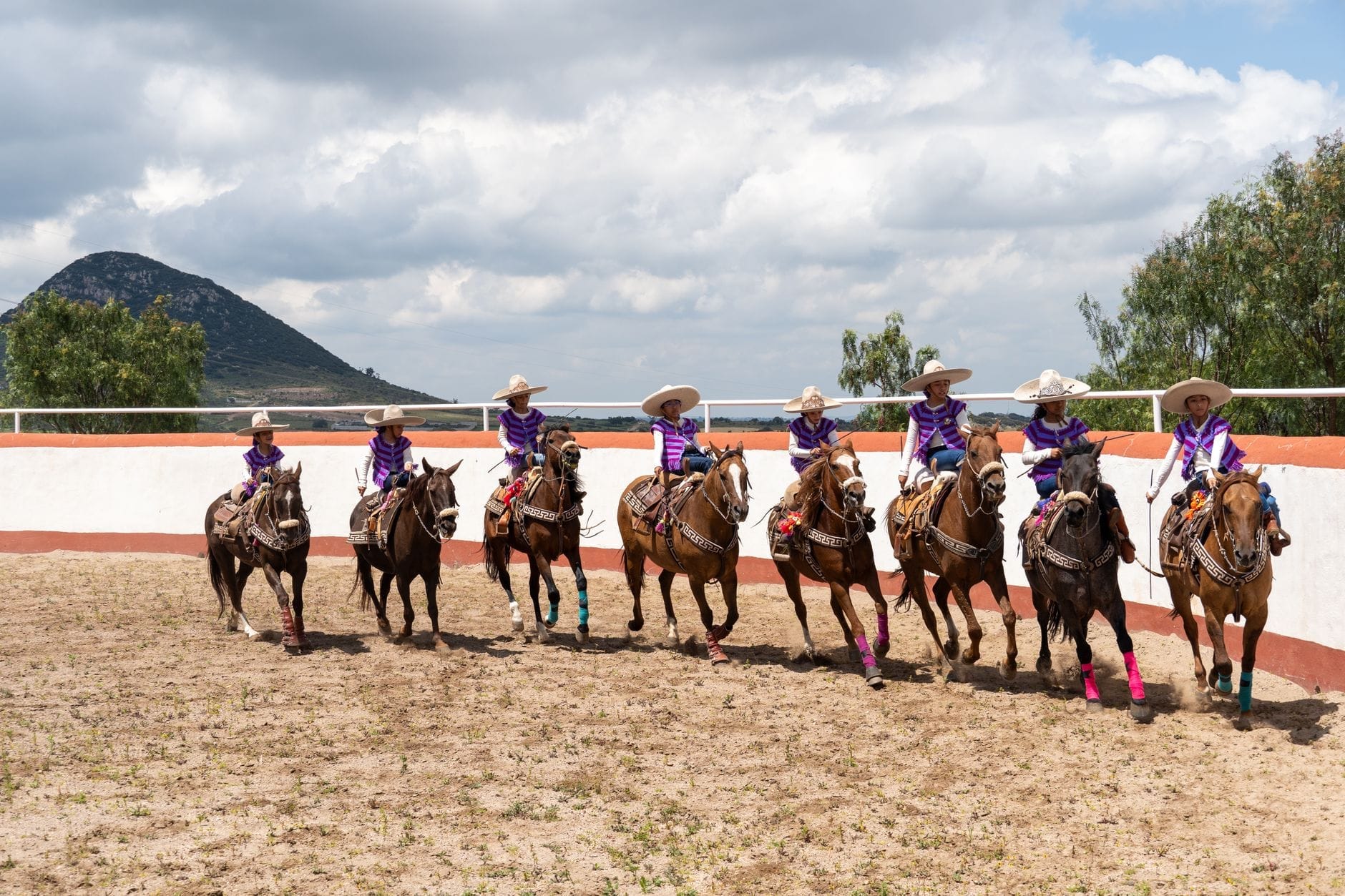
A charreada is divided into ten competitive events, called suertes, each testing different riding and roping skills. Among the most visually striking are the cala de caballo, a precision horse-stopping test that looks almost like ballet; the piales en el lienzo, where a rider ropes a galloping horse by the hind legs from horseback; and the escaramuza charra, an all-female equestrian drill performed in elaborate traditional skirts and performed in tight formation at full gallop. The escaramuza alone is worth attending for: the geometry of the formations, the synchronized footwork of the horses, and the riders' composed posture create an effect that is genuinely theatrical.
Sound fills the arena throughout. Mariachi or banda music often accompanies events, and the crowd responds to each pass with shouts and applause. The smell of horses, leather, and dust is constant, and the sandy surface of the lienzo catches the afternoon light when the sun sits at the right angle through open sections of the stands. On event days, the scent of food vendors operating near the entrance mingles with all of this: grilled corn, carnitas, and cold beer are typical offerings.
The competitors themselves are worth observing as closely as the events. Male charros wear the traje de charro: a fitted suit with silver embroidery, a wide-brimmed sombrero, and tooled boots. The detail in the embroidery on competition-level suits represents months of craft work, and close inspection from ringside seats reveals the scale of the investment each participant makes. This is not costume. It is working attire elevated into art.
Tickets & tours
Hand-picked options from our booking partner. Prices are indicative; availability and final rates are confirmed when you complete your booking.
Lake Chapala and Ajijic guided tour from Guadalajara
From 68 €Instant confirmationFree cancellationGuadalajara and Tlaquepaque guided tour
From 73 €Instant confirmationFree cancellation
History and Cultural Weight
Charreada was officially recognized as Mexico's national sport in the 1930s, but its roots go back centuries, to the mounted cattle workers of colonial-era haciendas in Jalisco and neighboring states. The skills tested in competition, roping, riding, controlling livestock, were all practical necessities on working ranches. As those ranches modernized through the 20th century, charros organized formally to preserve the traditions as sport and cultural expression.
The Charros de Jalisco association, established in the early 20th century according to available records, was part of that formalization process. The venue on Av. R. Michel sits in an area with more than a century of charro history, adjacent to Parque Agua Azul, one of the city's oldest public parks. The pairing is not coincidental: this part of southern Centro Histórico has long served as a gathering point for civic and cultural life in Guadalajara.
Jalisco's connection to mariachi and charreada is intertwined: both traditions developed in the same rural Jaliscan communities and are often presented together. If you want to understand why Guadalajara holds the cultural weight it does within Mexico, attending a charreada here is more instructive than most museum visits. For a broader picture of these interlinked traditions, the Guadalajara mariachi guide provides useful context on where these cultural threads overlap.
When to Go and What to Expect at Different Times
The lienzo charro is not an everyday tourist attraction with set opening hours like a museum. Its energy and purpose are tied entirely to scheduled events. On a non-event weekday, the arena may be closed to the public or used only for practice sessions. The most rewarding visit is during a formal charreada competition or exhibition, which typically takes place on Sunday mornings and afternoons. Arriving around mid-morning gives you time to settle into your seat, watch warm-ups in the practice area, and absorb the atmosphere before the formal competition begins.
Sunday morning light in the arena is softer than afternoon sun, which can be harsh in the open ring during Guadalajara's dry-season months from November through April. If you visit during the rainy season, roughly June through September, afternoon events may be interrupted by rain, though most charreadas proceed regardless of weather. Bring a light layer in any season: Guadalajara sits at approximately 1,560 meters elevation, and evenings cool quickly even after warm afternoons.
ℹ️ Good to know
The Instagram location for this venue lists hours opening from 9:00 AM, but no official public weekly schedule has been confirmed. Event-based venues like this one operate on competition calendars, not standard tourist hours. Always verify before visiting.
Getting There and Practical Logistics
The arena is located at Av. Dr. Roberto Michel 577, in the southern part of Guadalajara near the Centro Histórico. Ride-hailing apps Uber and DiDi both operate reliably in this area and represent the most straightforward option for visitors unfamiliar with the city's bus routes. A ride from the cathedral area or Colonia Americana typically takes under 15 minutes depending on traffic. The Mi Transporte city bus network also serves this corridor, though routes and stops require local knowledge to navigate efficiently.
Parking is available in the vicinity for those arriving by car, but on event days the surrounding streets fill up quickly. Combining the visit with nearby Parque Agua Azul makes logistical sense: the park is a short walk away and provides a pleasant hour of green space before or after a charreada. On Sundays the park itself sees significant family foot traffic, which creates a festive atmosphere in the surrounding blocks.
Ticket prices, based on available third-party tour listings, are approximately MXN 600 plus 16% tax for adults and MXN 300 plus 16% tax for children aged 6 to 12. These figures are unverified against current official pricing and should be confirmed directly before visiting, as prices for cultural events in Mexico are subject to change. No official venue website was identified for this location during research.
Photography and Accessibility
The charreada is highly photogenic, but the action is fast. A lens with reach of at least 150mm is useful for capturing rope work from the stands. The afternoon sun entering from the open end of the arena creates strong contrast, which can be managed with exposure compensation but tends to produce more even results in the morning. Compact cameras and smartphones work adequately from closer ringside seats, which are typically available on general admission.
No accessibility information was found in available sources for this venue. Traditional lienzo charro arenas typically feature stepped wooden or concrete stands with limited accommodation for visitors with mobility needs. If accessibility is a concern, contact the venue or a local tour operator in advance. The sandy floor of the lienzo itself is uneven and not navigable by wheelchair.
⚠️ What to skip
This is a working competition venue, not a polished tourist attraction. Facilities are functional rather than comfortable. Bring cash for food vendors, wear sun protection for outdoor seating, and expect dusty conditions around the arena floor.
Who Will Not Enjoy This
Visitors with concerns about animal welfare may find charreada difficult to watch. Some events involve physically intense handling of horses and cattle, including the manganas a pie and a caballo, where horses are tripped by the legs. These events are legal and regulated within charreada rules, but they are confronting for those not accustomed to the tradition. This is worth knowing before you commit to attending.
Travelers seeking an easily packaged, air-conditioned cultural experience will also find this venue challenging. There are no multilingual interpretive panels, no guided audio tours, and no gift shop. The experience rewards curiosity and patience. Those who prefer curated museum environments might find the Hospicio Cabañas or other formal cultural institutions a better fit for their time in the city.
Insider Tips
- Attend during a formal competition rather than a general practice session: the full pageantry of competition charreada, including the escaramuza charra, only appears in the competitive format. Practice sessions are low-key and lack the music, costumes, and crowd energy.
- Arrive at least 30 minutes early on event days to find a seat with clear sightlines across the full lienzo. The rectangular track section is where many of the most dramatic rope events take place, and seats aligned with it fill fastest.
- Food vendors outside the arena on event days offer some of the most unpretentious regional eating in the city. Carnitas in a soft tortilla with salsa verde, bought from a street cart while waiting for the gates to open, is a strong pre-show ritual.
- The Charros de Jalisco association occasionally hosts private events, corporate visits, and cultural tours through partner operators. If you cannot attend a Sunday charreada, booking a structured tour through a licensed operator is the most reliable way to guarantee access and an informed Spanish or English-speaking guide.
- Cross-reference the charreada schedule with local cultural calendars around the Guadalajara Festivals calendar, especially in September during the Fiestas de Octubre season, when charreada events increase significantly in frequency and scale.
Who Is Lienzo Charro de Jalisco For?
- First-time visitors to Mexico wanting to understand Jaliscan cultural identity beyond food and tequila
- Families with children aged 7 and above who will engage with the horses and spectacle
- Photography enthusiasts looking for dynamic action in a culturally rich setting
- Travelers interested in Mexican equestrian tradition and craftsmanship, including the textile artistry of the traje de charro
- Visitors combining a Sunday outing with time at nearby Parque Agua Azul
Nearby Attractions
Other things to see while in Centro Histórico:
- Calandrias (Horse-Drawn Carriage Rides)
Calandrias are Guadalajara's traditional horse-drawn carriages, operating through the colonial streets of the Centro Histórico since the early 20th century. A slow, unhurried circuit past cathedral facades, plazas, and pedestrian corridors, they offer a different pace from the city's foot traffic. This guide covers what to expect, when to go, and whether it's worth your time.
- Guadalajara Cathedral (Catedral de Guadalajara)
The Catedral Basílica de la Asunción de María Santísima anchors Guadalajara's historic center, surrounded by four plazas and centuries of layered history. Its twin neo-Gothic spires are the city's most recognized silhouette, and entry is free. Here is everything you need to know before you go.
- Instituto Cultural Cabañas (Hospicio Cabañas)
A UNESCO World Heritage Site at the heart of Guadalajara's Centro Histórico, Hospicio Cabañas houses José Clemente Orozco's most celebrated murals inside a neoclassical complex of staggering scale. This is the single most significant cultural site in western Mexico, and one of the most important in all of Latin America.
- Mercado Corona
Mercado Corona is a three-floor public market in the heart of Guadalajara's historic center, about one block from the Municipal Palace and a short walk from the Cathedral. Free to enter, open from early morning, and packed with fresh produce, street food, and everyday goods, it offers a ground-level look at how the city actually feeds and sustains itself.