Calandrias: Guadalajara's Horse-Drawn Carriage Rides Through the Historic Center
Calandrias are Guadalajara's traditional horse-drawn carriages, operating through the colonial streets of the Centro Histórico since the early 20th century. A slow, unhurried circuit past cathedral facades, plazas, and pedestrian corridors, they offer a different pace from the city's foot traffic. This guide covers what to expect, when to go, and whether it's worth your time.
Quick Facts
- Location
- Centro Histórico, Guadalajara, Jalisco, Mexico
- Getting There
- Metro Line 1 or 2 (Centro/Alcalde area)
- Time Needed
- 30–60 minutes depending on route
- Cost
- Prices not officially published; negotiate fare directly with operator before boarding
- Best for
- Couples, families with young children, first-time visitors to Guadalajara's downtown
What Are Calandrias?
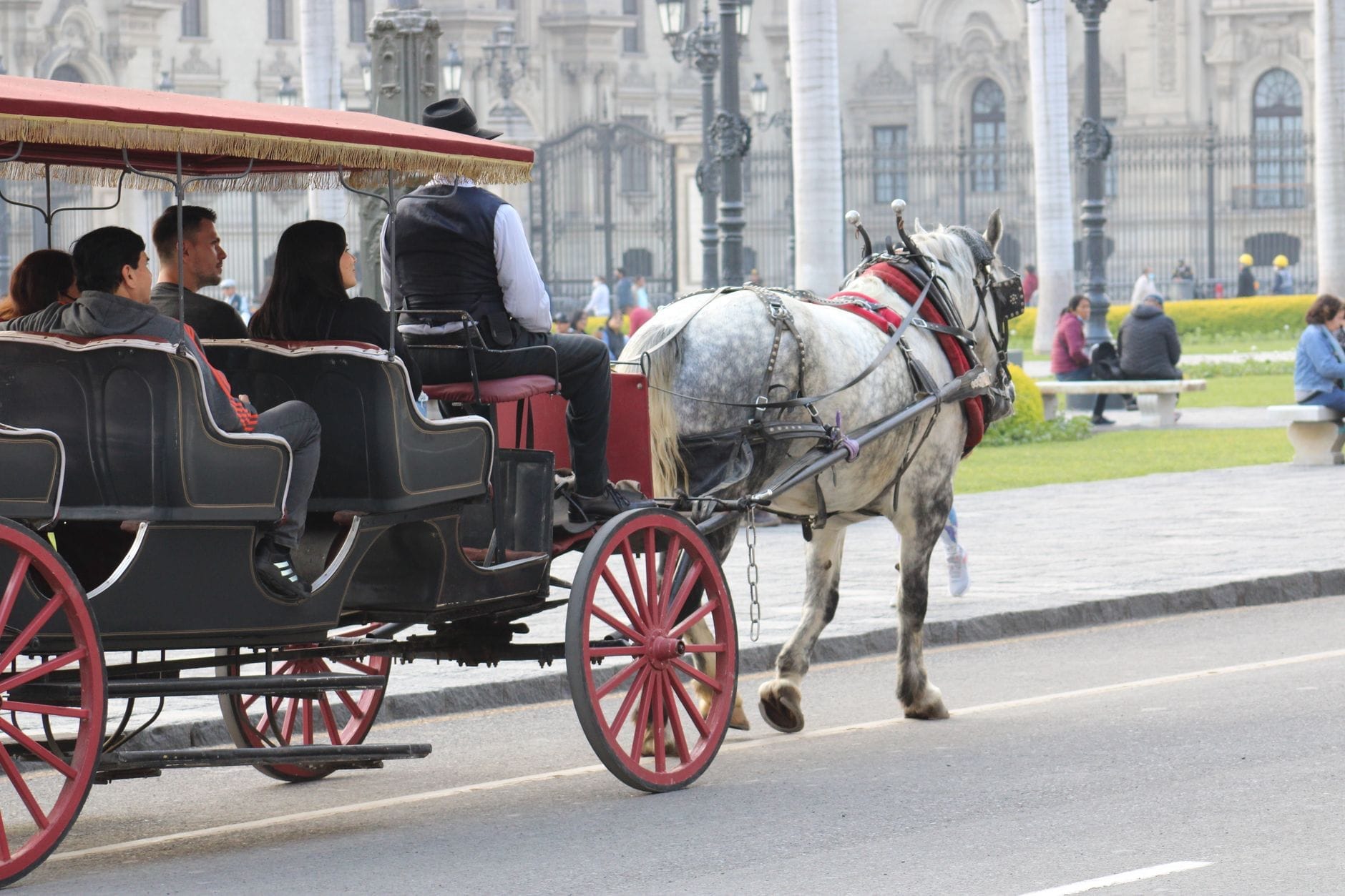
Calandrias are open, canopied horse-drawn carriages that have been part of Guadalajara's street culture since at least the early 20th century. The word comes from the Spanish term for a type of lark, though locals use it simply to mean these specific carriages. They are not vintage props brought out for festivals. They operate through the heart of the city, carrying passengers along routes that pass some of the most architecturally significant streets in western Mexico.
The carriages typically seat four to six passengers on cushioned benches beneath a fringed canopy. The driver, seated up front, steers through the streets of the Centro HistóricoCentro Histórico, narrating landmarks or simply letting the surroundings do the work. The clip of hooves on stone, the creak of wooden wheels, the smell of the horses mixing with street food vendors nearby: it is a deliberately slower way to see a city built around walking plazas and colonial courtyards.
💡 Local tip
Agree on the fare and the route before the carriage moves. Prices are not posted publicly, so asking upfront avoids awkward negotiation at the end of the ride.
The Route: What You Actually See
Routes vary by operator and time of day, but most calandria circuits pass through the core plazas of the historic center. Expect to roll past or near the Guadalajara Cathedral, whose twin yellow-tiled towers rise above Avenida Alcalde, and the long, open pedestrian stretch of the Plaza de la Liberación, which connects the cathedral to the Teatro Degollado. The theatre's neoclassical portico, modeled loosely on La Scala in Milan and completed in 1866, is one of the better facades to observe from the slow height of a carriage seat rather than at street level.
Some routes extend toward the Plaza Tapatía, Guadalajara's largest pedestrian square, where the Hospicio Cabañas sits at the eastern end. Others loop through quieter streets off the main plazas, where 19th-century residential facades and ironwork balconies are still largely intact. The carriage's elevated vantage point lets you look up at cornices and rooflines that most pedestrians miss entirely.
Tickets & tours
Hand-picked options from our booking partner. Prices are indicative; availability and final rates are confirmed when you complete your booking.
Lake Chapala and Ajijic guided tour from Guadalajara
From 68 €Instant confirmationFree cancellationGuadalajara and Tlaquepaque guided tour
From 73 €Instant confirmationFree cancellation
How It Changes by Time of Day
Morning rides, roughly from opening at 10:00, move through streets that are still uncrowded. Street vendors are setting up, the air carries the smell of fresh bread from nearby panaderías, and the light from the east falls clean across the cathedral's stone face. The pace feels genuinely calm.
Afternoon rides, from around 15:00 onward, come with more foot traffic, more noise from buses and motorbikes, and considerably more atmosphere. The plazas fill with families, school groups, and street performers. The contrast between the carriage's leisurely tempo and the surrounding activity is part of the appeal.
Evening rides, once the sun drops and the plaza lights come on, tend to draw couples. The illuminated cathedral and the warm glow of the Teatro Degollado at night make for a noticeably different visual experience than daytime. If you are visiting for a romantic atmosphere specifically, the post-sunset window, roughly 19:00 to 21:00, is the one to target. Operators confirm daily service, though availability later in the evening should be confirmed directly with the company.
⚠️ What to skip
During Guadalajara's rainy season (June through September), afternoon downpours arrive quickly and without much warning. The carriage canopy offers partial shelter, but a morning or late-evening ride in those months avoids the worst of it.
Historical and Cultural Context
Calandrias became part of Guadalajara's civic identity in the early 20th century, when they served as a practical form of urban transport before automobiles dominated the Centro's streets. As cars took over, the carriages shifted from utility to tradition, eventually becoming a recognized icon of the historic core. Their survival into the 21st century is not accidental. The Centro Histórico's pedestrian corridors and plaza network create natural conditions for slow, non-motorized movement, which is exactly what calandrias require.
It is worth noting that calandrias have also been the subject of ongoing public debate in Guadalajara around animal welfare. Critics argue that horses working on paved urban streets in varying weather conditions face hardship. The conversation is active, and travelers who are concerned about the ethics of animal-based tourism should research the current regulatory status before booking. For context on Guadalajara's broader cultural calendar and traditions, the Guadalajara festivals and events guide covers the city's major civic celebrations, several of which feature calandrias in ceremonial contexts.
Practical Information for Visitors
Calandrias operate daily from 10:00 according to the operator's own information; confirmed closing times are not published. The most reliable way to find a carriage is to head to the main plazas of the Centro Histórico, particularly the area around Plaza de Armas or the perimeter of Plaza Tapatía. Operators affiliated with calandriasgdl.com also advertise the ability to pick up guests at hotels within the Centro zone, which can be useful if you prefer a scheduled departure.
Fares are not listed publicly. Treat the price as negotiable and confirm the route and total cost before the ride begins. Paying in Mexican pesos (MXN) is standard. Tipping the driver is customary if the ride was narrated or if the driver was attentive. Credit cards are unlikely to be accepted; bring cash.
Getting to the Centro Histórico is straightforward. The SITEUR metro system's Line 1 and Line 2 both serve stations near the historic core. Ride-hailing apps including Uber and DiDi operate in Guadalajara and are a practical option from other neighborhoods. For a broader orientation to moving around the city, see the getting around Guadalajara guide.
Photography Tips
- Shoot backward from the carriage to capture the street receding behind you, with the horses out of frame, for a cleaner architectural shot.
- The golden hour before sunset lights the cathedral's stone facade warmly; request a slow pass along the north side of the Rotonda de los Jaliscienses Ilustres for the best angle.
- If you want a photo that includes the carriage itself, have a companion wait at Plaza de Armas and shoot as you pass. From inside, the fringe of the canopy creates natural framing.
- Avoid shooting directly into the low western sun during late afternoon rides; position yourself on the east-facing bench when possible.
Who This Experience Is and Isn't For
Calandrias suit travelers who want a low-effort, visually rich way to absorb the scale of the Centro Histórico without covering it entirely on foot. Young children tend to find the horses and the elevated viewpoint genuinely exciting. Couples looking for something unhurried in the evening often rate the experience well. First-time visitors to Guadalajara who want an orientation before walking the plazas in detail will find it useful.
Travelers who are primarily interested in history, architecture, or art at depth will likely find the carriage format too passive. The Guadalajara walking tour guide and a self-guided visit to the Hospicio Cabañas will serve those visitors considerably better. Anyone with mobility concerns should note that boarding and alighting from a horse-drawn carriage typically requires stepping up without a ramp; no accessibility accommodations are described by the operator.
Visitors who are sensitive to animal welfare questions may find the experience uncomfortable regardless of the quality of the ride itself. That is a legitimate reason to skip it.
Insider Tips
- Ask the driver to take a slower pass along Calle Morelos between the Plaza de Armas and the Teatro Degollado at dusk. The streetlights and building illumination on that stretch are noticeably better than on the broader plazas.
- If you are traveling with a group, compare whether hiring a single carriage for the full group is cheaper per person than paying individually. Operators are generally open to rate discussions for full-carriage bookings.
- Weekend afternoons bring considerably more pedestrian traffic through the plazas, which makes the carriage feel more ceremonial but also slower. If you prefer an uninterrupted route, weekday mornings move more freely.
- The calandriasgdl.com operator advertises hotel pickup within the Centro zone. Calling ahead rather than simply showing up at a plaza gives you more control over timing, particularly during busy holiday periods.
- Guadalajara's elevation is around 1,550 meters. Even in the dry season, evenings cool quickly. If you are booking an evening ride between November and February, bring a light jacket.
Who Is Calandrias (Horse-Drawn Carriage Rides) For?
- Couples looking for a relaxed evening in the historic center
- Families with young children who respond well to horses and open carriages
- First-time visitors wanting a low-effort visual orientation to the Centro Histórico
- Travelers who have limited mobility for extended walking tours
- Anyone who wants to photograph the colonial streetscape from a slightly elevated, moving perspective
Nearby Attractions
Other things to see while in Centro Histórico:
- Guadalajara Cathedral (Catedral de Guadalajara)
The Catedral Basílica de la Asunción de María Santísima anchors Guadalajara's historic center, surrounded by four plazas and centuries of layered history. Its twin neo-Gothic spires are the city's most recognized silhouette, and entry is free. Here is everything you need to know before you go.
- Instituto Cultural Cabañas (Hospicio Cabañas)
A UNESCO World Heritage Site at the heart of Guadalajara's Centro Histórico, Hospicio Cabañas houses José Clemente Orozco's most celebrated murals inside a neoclassical complex of staggering scale. This is the single most significant cultural site in western Mexico, and one of the most important in all of Latin America.
- Lienzo Charro de Jalisco
The Lienzo Charro Charros de Jalisco, on Av. R. Michel near Parque Agua Azul, is one of Mexico's most storied charro arenas. Home to one of Mexico's oldest charro associations, this is where Jalisco's equestrian traditions are kept alive through competitive charreadas, pageantry, and music.
- Mercado Corona
Mercado Corona is a three-floor public market in the heart of Guadalajara's historic center, about one block from the Municipal Palace and a short walk from the Cathedral. Free to enter, open from early morning, and packed with fresh produce, street food, and everyday goods, it offers a ground-level look at how the city actually feeds and sustains itself.