Guadalajara Architecture: A Guide to the City's Finest Buildings
Guadalajara's architectural story spans five centuries, from the towering twin spires of its Metropolitan Cathedral to the clean geometric lines of Luis Barragán's early modernist houses. This guide covers the landmark buildings worth your time, how to visit them, and the historical context that makes each one matter.
Plan and book this trip
Tools from our partner Travelpayouts help you compare flights and hotels. If you book through them, we may earn a commission at no extra cost to you.
Flights
Hotels map
TL;DR
- Guadalajara's architecture is not just colonial. Its most celebrated landmarks, including the Hospicio Cabañas and Teatro Degollado, are neoclassical, and the city also preserves important early modernist works.
- The Hospicio Cabañas is a UNESCO World Heritage Site and the single most architecturally significant building in the city. It deserves at least two hours.
- Luis Barragán launched his career in Guadalajara, not Mexico City. Several early works survive in the city, but most are private and require advance arrangements to visit.
- The Centro Histórico concentrates the colonial, neoclassical, and baroque landmarks within easy walking distance. Morning visits are better for photography and beat the afternoon rains in summer.
- For a structured overview of what to see, the Guadalajara walking tour guide pairs well with this architecture overview.
Understanding Guadalajara's Architectural Timeline
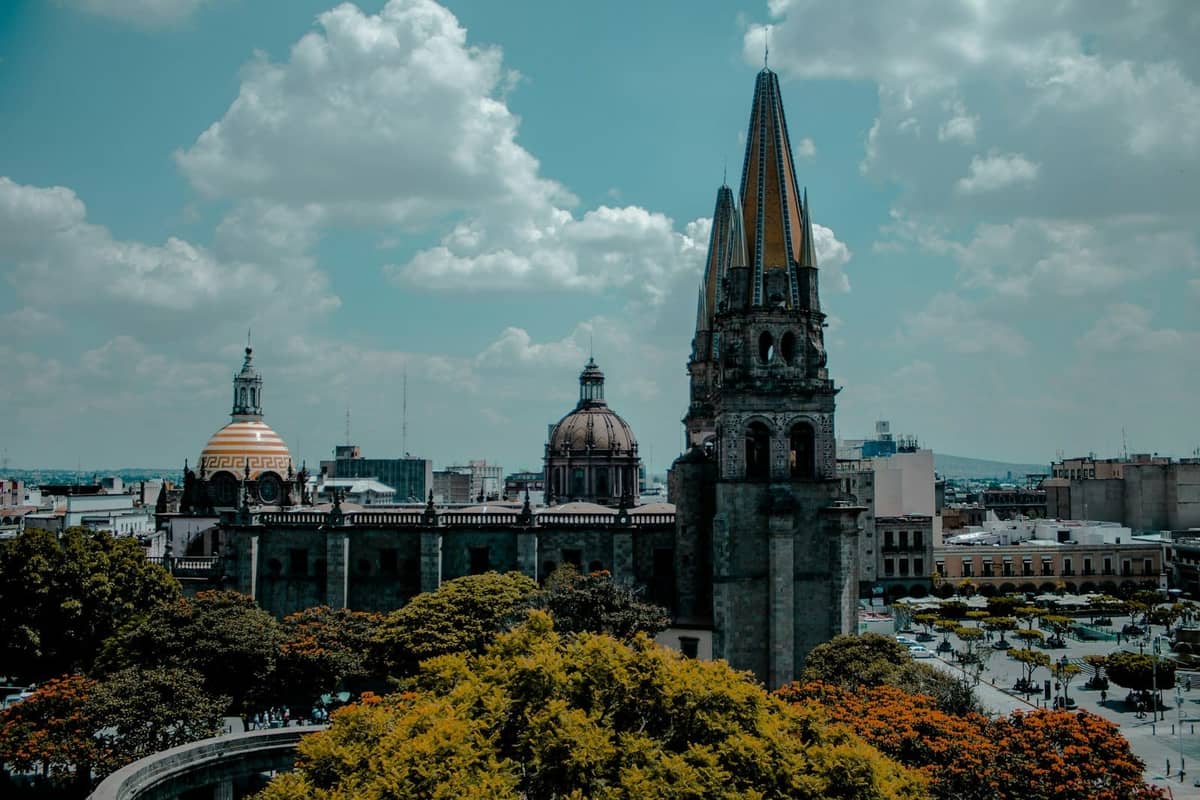
Guadalajara was formally founded in 1542, making it one of the oldest Spanish colonial cities in western Mexico. Its architectural development tracks closely with Mexican history: the colonial era produced churches and civic buildings in a blend of Baroque and Plateresque styles, the 19th century brought neoclassical renovation and new public institutions, and the 20th century saw Guadalajara become an unlikely incubator for Mexican modernism. Understanding this sequence helps you read the buildings rather than just look at them.
One widespread misconception worth correcting early: Guadalajara's architecture is not uniformly colonial. Visitors expecting rows of terracotta-roofed Spanish buildings will find something more complicated and more interesting. The Teatro Degollado and the Hospicio Cabañas, two of the most photographed structures in the city, are neoclassical buildings with roots in 18th and 19th-century European design. Meanwhile, the northwest of the city and the municipality of Zapopan contain contemporary glass-and-steel towers that have nothing to do with the colonial past. The city holds all of these layers simultaneously.
ℹ️ Good to know
Guadalajara sits at approximately 1,560 meters above sea level in the Atemajac Valley. The high elevation moderates the climate and keeps temperatures comfortable for extended outdoor walking tours, with average highs around 24-25°C in winter and 30-32°C in the warm season before the rains arrive.
The Colonial and Baroque Core: Centro Histórico
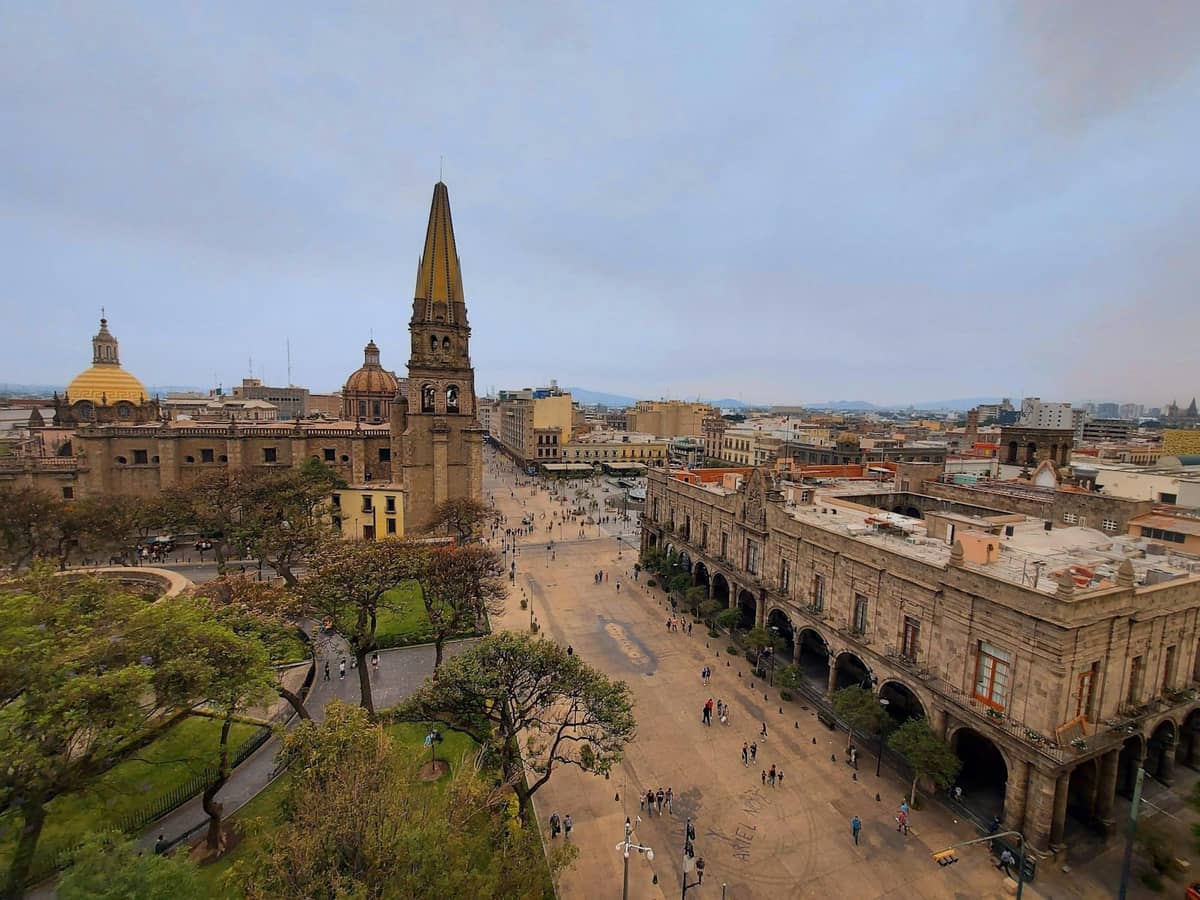
The Centro Histórico is the most logical starting point for any architecture-focused visit. The buildings here are dense with history and walkable from one another, with several major landmarks clustered around a sequence of interconnected plazas that form one of the most coherent civic spaces in Mexico.
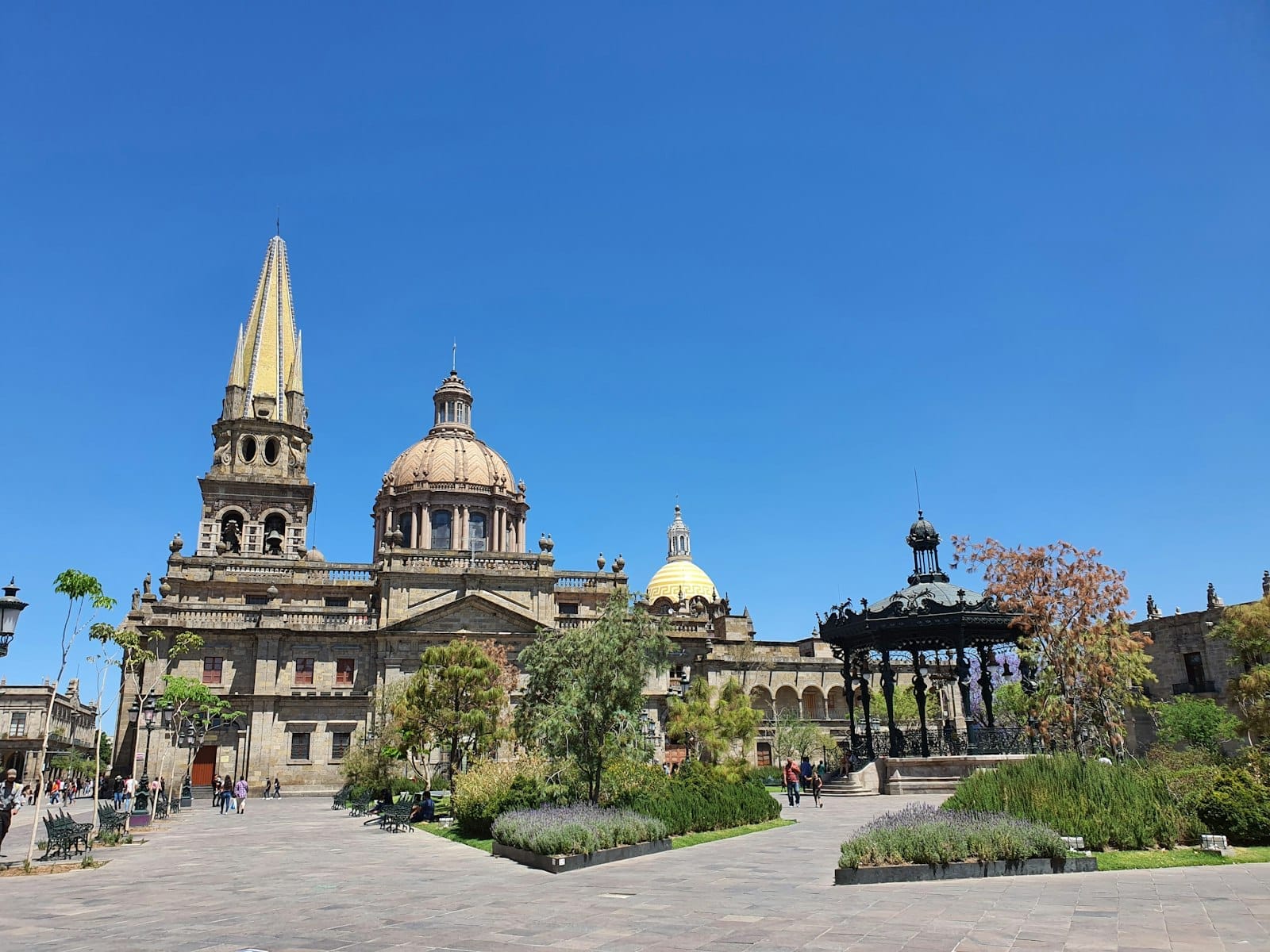
The Metropolitan Cathedral of Guadalajara (Catedral Metropolitana) anchors the historic core at Av. Fray Antonio Alcalde 10. Construction began in 1561 and the building was not declared complete until 1618, meaning it absorbed influences from multiple periods and styles. What you see today is a layered mix of Gothic structural elements, Baroque decoration, and Neoclassical additions applied after earthquake damage in 1818 required the towers to be rebuilt. The distinctive yellow-tiled spires were added in the 19th century and have become the city's most recognizable silhouette. Typical visiting hours are daily from around 9:00 to 18:00, though the cathedral is an active place of worship, so large services will affect access. Entry is free.
Immediately east of the cathedral, the Palacio de Gobierno de Jalisco is worth entering even if you have no interest in government buildings. The staircase inside contains one of José Clemente Orozco's most powerful murals, painted in 1937, depicting Miguel Hidalgo as a flame-wielding liberator above a sea of conflict. The building itself is 18th-century Baroque, but the mural transforms the interior into something harder to categorize. Entry is free and the building is typically open on weekdays during business hours.
- Metropolitan Cathedral Gothic, Baroque, and Neoclassical blend. Free entry. Daily roughly 9:00-18:00. Central landmark used for orientation.
- Palacio de Gobierno de Jalisco 18th-century Baroque exterior with Orozco murals inside. Free entry on weekdays. Do not skip the staircase.
- Templo de Santa Mónica 17th-century church with some of the most elaborate Churrigueresque stone carving in the city. Relatively overlooked compared to the cathedral.
- Templo del Carmen 17th-century Baroque church with an ornate altarpiece. The adjacent plaza hosts regular cultural events.
- Templo Expiatorio del Santísimo Sacramento Neo-Gothic church begun in 1897 and not completed until 1972. Unusual for Guadalajara and striking in its vertical ambition.
💡 Local tip
Morning light (before 10:00) hits the west facade of the Cathedral and the Palacio de Gobierno from the best angle for photography. By midday the plazas fill with vendors and tourists, and in summer, afternoon rains typically begin around 14:00-16:00. Plan exterior photography for the first two hours after opening.
The Hospicio Cabañas: Guadalajara's UNESCO Masterpiece
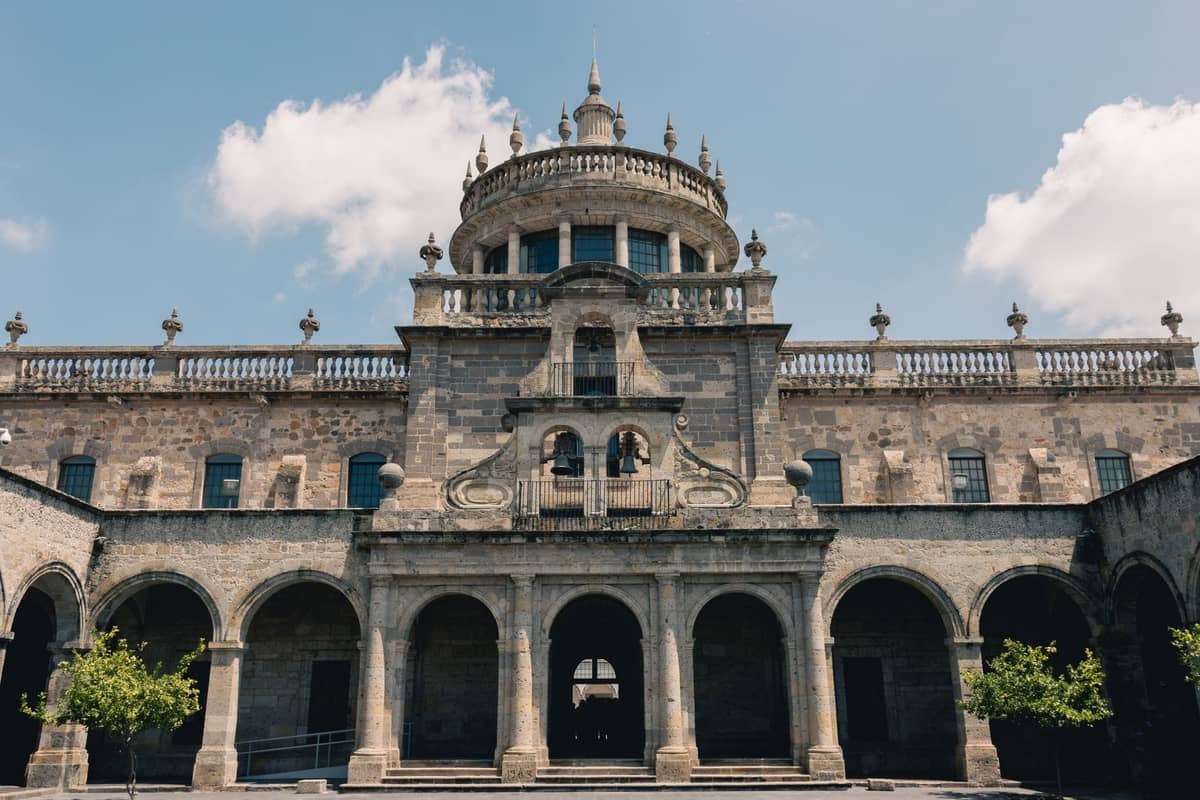
No building in Guadalajara carries more architectural weight than the Hospicio Cabañas (officially the Instituto Cultural Cabañas), located at Calle Cabañas 8 in the Centro Histórico. It was declared a UNESCO World Heritage Site in 1997 as part of the UNESCO listing "Hospicio Cabañas, Guadalajara", and it deserves that status for two distinct reasons: the building itself and what it contains.
The structure was designed by Spanish architect Manuel Tolsá and inaugurated in 1810 and not fully completed until 1845. It is an enormous neoclassical complex built as a hospice for orphans, the poor, and the elderly, and its scale is genuinely surprising when you enter through the main gate. The complex contains 23 courtyards and around 100 rooms arranged around a central chapel, demonstrating a rational, humanist approach to institutional architecture that was revolutionary for its time in Mexico. The proportions are rigorous and the stonework is precise, making it one of the best examples of Spanish Neoclassicism in Latin America.
The interior of the central chapel contains the murals that make Hospicio Cabañas internationally famous. José Clemente Orozco painted them between 1938 and 1939, and they are considered among the greatest works of Mexican muralism. The Orozco murals in Guadalajara cover the walls, arches, and ceiling of the chapel with scenes of conquest, fire, and human struggle. Looking up at the central dome, where a human figure consumed by flame represents the transformative force of the 'Man of Fire', is a legitimately affecting experience. The building is typically open Tuesday through Sunday from 11:00 to 17:00, closed Mondays. Tickets are sold at the on-site office and through Jalisco cultural authority channels. Budget at least two hours.
⚠️ What to skip
The Hospicio Cabañas may operate reduced hours or close entirely during major Catholic holidays and special institutional events. Check the Instituto Cultural Cabañas official channels or the Jalisco culture portal before visiting, particularly around Holy Week (Semana Santa) in March or April.
Neoclassical Civic Buildings: Teatro Degollado and the Plaza Sequence
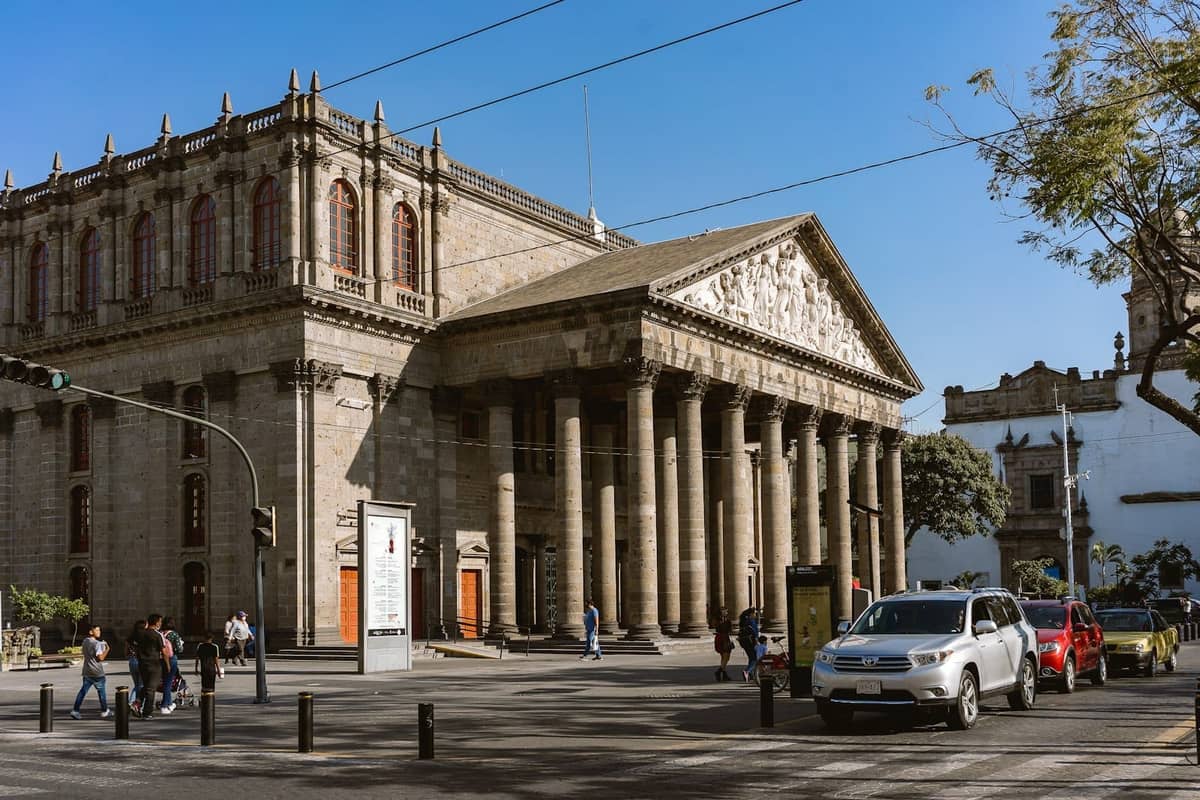
The Teatro Degollado faces the Plaza de la Liberación and is one of the most elegant neoclassical theaters in Mexico. Construction began in 1856 and it was inaugurated in 1866, though the building has undergone restorations since. The facade features a Corinthian portico with relief sculptures depicting Apollo and the nine Muses, and the interior is richly decorated with a ceiling mural painted by Jacobo Gálvez and Gerardo Suárez depicting scenes from Dante's Divine Comedy. The theater is an active performance venue hosting the Jalisco Philharmonic Orchestra, ballet, and opera, so visiting the interior generally means attending a performance. Tickets and schedules are available through the state culture portal and local ticketing platforms.
The civic plazas surrounding the cathedral and Teatro Degollado form a unified public space worth examining as architecture in itself. The Plaza Tapatía is a large pedestrian esplanade completed in 1982, connecting the historic center eastward toward the Hospicio Cabañas. It is not universally beloved, and critics have noted that its construction displaced older urban fabric, but it functions as a coherent piece of urban design that gives the eastern historic core a sense of openness. The Rotonda de los Jaliscienses Ilustres, a circular monument north of the cathedral, is worth a few minutes for its neoclassical colonnade and the tombs of notable Jaliscan figures below ground.
Luis Barragán and the Modernist Legacy
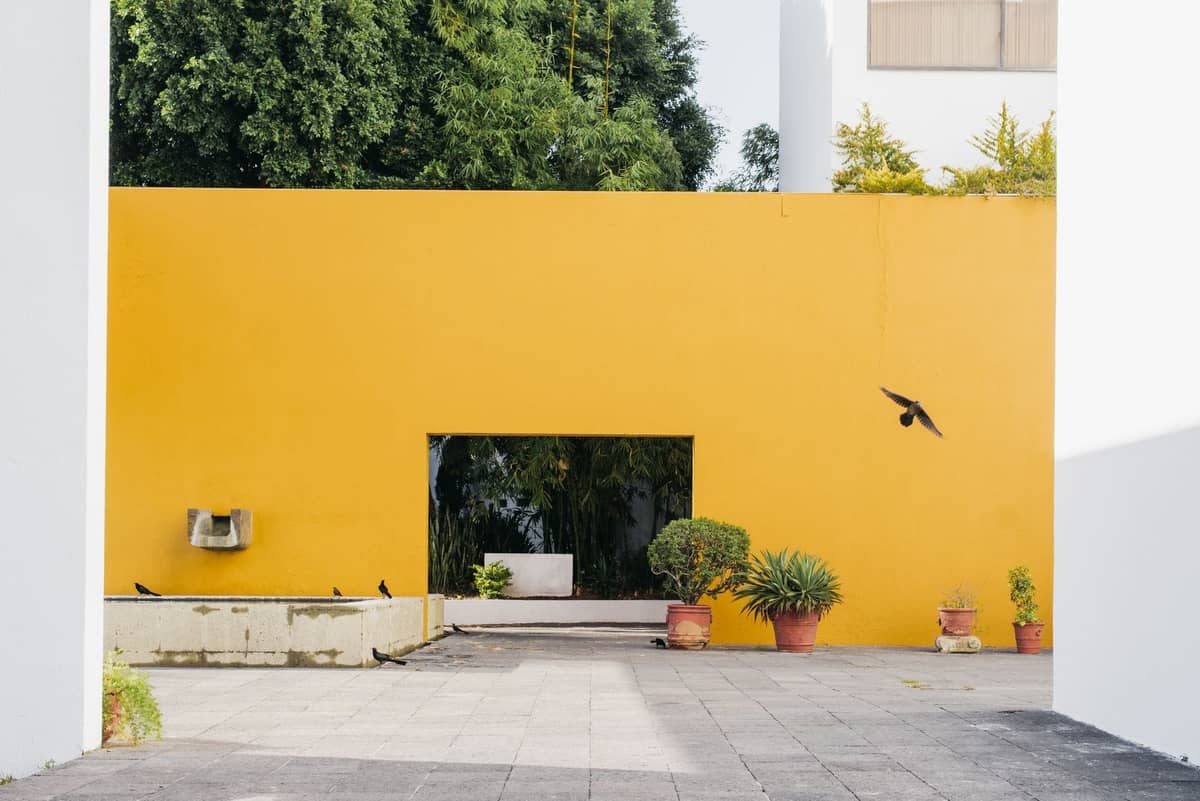
Luis Barragán, who won the Pritzker Prize in 1980 and is widely regarded as one of the most influential architects of the 20th century, began his career in Guadalajara, not in Mexico City where his most famous works are located. His early Guadalajara houses from the late 1920s and 1930s drew on Moorish and Mediterranean influences, with thick white walls, inner courtyards, and a restrained approach to ornamentation that distinguished them from the colonial baroque tradition. Understanding this Guadalajara period helps explain how he arrived at the austere, spiritually charged minimalism of his mature work.
Casa Quiñones, designed by Pedro Castellanos in 1930, is often cited as Guadalajara's first genuinely modern house in the European rationalist sense. Castellanos and Barragán were part of the same generation of tapatío architects responding to both international modernism and local Islamic-influenced aesthetics. The result was a Guadalajara-specific architectural moment that deserves more attention than it receives in mainstream architectural history.
Here is the practical reality for visitors: most Barragán-related buildings in Guadalajara are privately owned and not open for casual tourism. Several have been converted to boutique hotels, private residences, or short-term rentals. If visiting a Barragán house in Guadalajara is a priority, research in advance through platforms like Airbnb or by contacting property owners directly. Do not expect to walk up and knock. The situation is fundamentally different from his Casa Barragán museum in Mexico City, which operates as a formal public institution.
Contemporary Architecture: Zapopan, Andares, and the Modern Skyline
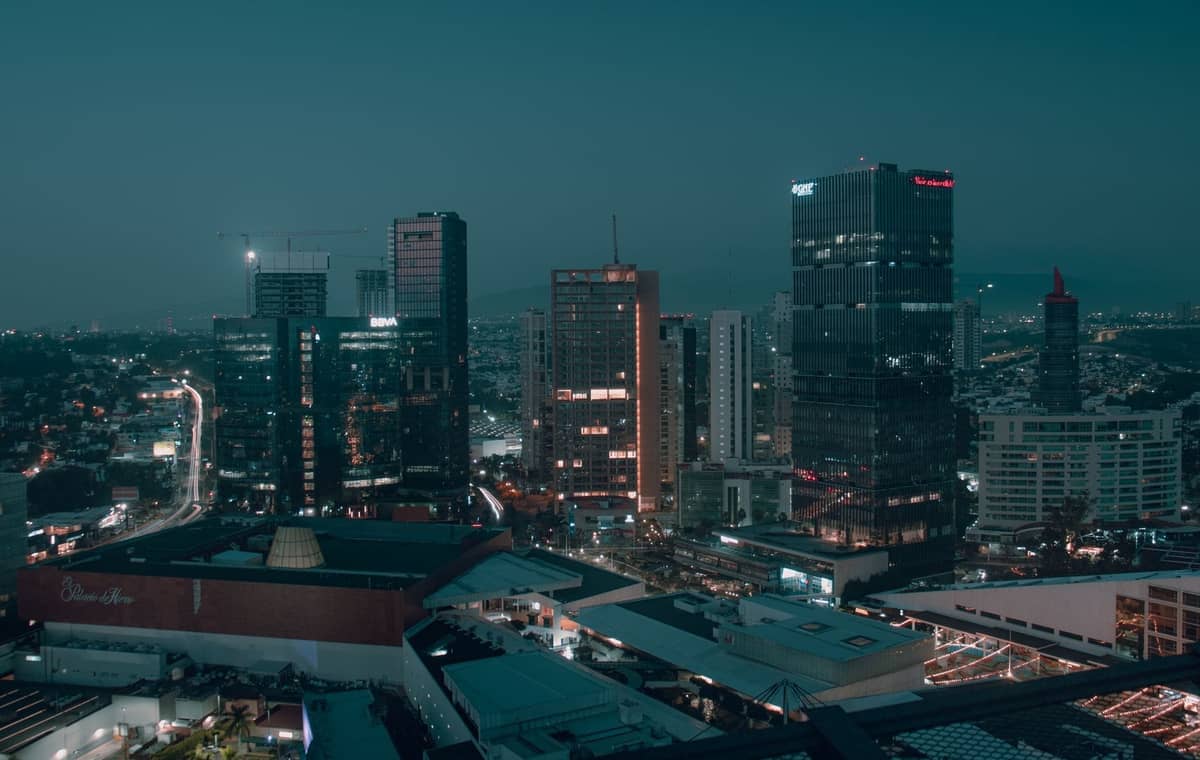
Guadalajara's contemporary skyline is concentrated in the western and northwestern parts of the metropolitan area, particularly along the Avenida Vallarta corridor and in Zapopan. The Hotel Riu Plaza Guadalajara, completed in 2011 at about 204 meters and 44 floors, remains the tallest building in the metro area. Additional high-rises in the 150-meter-plus range populate the skyline, and further projects including the planned roughly 190-meter Legend Tower indicate continued vertical development. For visitors primarily interested in colonial or neoclassical architecture, this part of the city offers relatively little. For those curious about how a Latin American city modernizes while maintaining a historic core, the contrast is instructive. The Andares shopping mall in Zapopan is an interesting example of high-end contemporary commercial architecture if you find yourself in that part of the city.
The Museo de Arte de Zapopan (MAZ) is worth mentioning in an architecture context as well. Its building is a contemporary structure that holds a serious collection of modern and contemporary Mexican art. It sits near the Basílica de Zapopan, an 18th-century Baroque church of considerable importance to Jalisco's Catholic identity, which creates an interesting juxtaposition of centuries within a short walk. The Basílica is one of the best examples of colonial-era church architecture in the metro area outside the centro histórico proper.
- Visit the Centro Histórico landmarks in the morning before 10:00 for the best light and before afternoon crowds peak.
- Carry an umbrella from June through September. Afternoon storms are brief but heavy and can interrupt outdoor architecture walks without warning.
- The Hospicio Cabañas and the Palacio de Gobierno murals are both free or low-cost entry. Prioritize both on the same day since they are a short walk apart.
- Barragán buildings in Guadalajara require advance arrangements. Do not plan a walk-up visit without confirming access first.
- Religious buildings throughout the city are active places of worship. Dress modestly (covered shoulders and knees), keep noise low, and do not photograph services in progress.
Practical Logistics for Architecture Visits
All of the major historic buildings are concentrated in or near the Centro Histórico, which is served by light rail Lines 2 and 3 (SITEUR). The San Juan de Dios and Guadalajara Centro stations put you within easy walking distance of the main landmarks. Ride-hailing services including Uber and DiDi operate throughout the city and are generally the most convenient option for getting between the historic core and sites in Zapopan. For a broader look at getting around the city, the getting around Guadalajara guide covers transport options in detail.
Churches and civic buildings generally do not charge entry fees, though the Hospicio Cabañas has a ticket price for the cultural institution and murals. Ticket prices are set by the Jalisco state culture authorities and should be verified on-site or through official channels before your visit, as they are subject to change. The Teatro Degollado interior is accessible only during performances or occasional guided visits. Check the state culture portal for scheduled events and book in advance for popular performances with the Jalisco Philharmonic.
Architecture in Guadalajara rewards a slow approach. If you have three days in the city, the 3 days in Guadalajara itinerary structures the major sites into a logical sequence that avoids backtracking. If you are specifically interested in the muralism dimension of the city's buildings, the dedicated guide to Orozco murals in Guadalajara gives deeper context for what you will see in the Hospicio Cabañas and the Palacio de Gobierno.
FAQ
What architectural style is Guadalajara Cathedral?
The Metropolitan Cathedral of Guadalajara is a layered mix rather than a single style. Construction began in 1558 in a Gothic framework, Baroque elements were added during the colonial period, and significant Neoclassical modifications followed after earthquake damage in 1818 required the towers to be rebuilt. The distinctive yellow-tiled spires are a 19th-century addition. It is best described as an eclectic colonial cathedral reflecting several centuries of intervention.
Can you visit Luis Barragán buildings in Guadalajara?
Most Barragán-related properties in Guadalajara are privately owned and not open for casual visits. Some have been converted into boutique hotels or vacation rentals that can be booked through standard platforms. Unlike his Casa Barragán in Mexico City, which operates as a formal museum with scheduled tours, the Guadalajara properties generally require advance arrangements directly with owners or through accommodation bookings. Do not expect walk-up access.
Is the Hospicio Cabañas free to enter?
The Hospicio Cabañas (Instituto Cultural Cabañas) charges an entry fee for the cultural institution and José Clemente Orozco murals. Ticket prices are set by the Jalisco state culture authorities and should be confirmed on-site or through official channels before your visit since they change periodically. The typical opening hours are Tuesday through Sunday, 11:00 to 17:00, closed Mondays, though this can vary during holidays and special events.
How long does it take to see the main architectural landmarks in the Centro Histórico?
A focused architecture walk covering the Cathedral, Palacio de Gobierno, Teatro Degollado, and Hospicio Cabañas takes a minimum of three to four hours if you spend meaningful time in each building. The Hospicio Cabañas alone warrants two hours. Starting at 9:00 lets you complete the walk before afternoon rains during the rainy season (June-September) and before midday crowds at the plazas peak.
What is the most architecturally significant building in Guadalajara?
By most measures, the Hospicio Cabañas holds that distinction. It is the only building in Guadalajara with UNESCO World Heritage status (designated 1997), it represents one of the finest examples of Spanish Neoclassical institutional architecture in Latin America, and it contains the José Clemente Orozco murals that are considered a landmark of 20th-century art. The Metropolitan Cathedral is more historically layered, but the Hospicio Cabañas is the building that draws serious architectural interest.