Basílica de Nuestra Señora de Zapopan: History, Beauty, and Practical Advice
The Basílica de Zapopan is one of the most significant religious and architectural landmarks in the Guadalajara metropolitan area. Built by Franciscans in the late 17th century, it shelters a small but deeply venerated 16th-century corn-paste image of the Virgin and draws pilgrims and visitors year-round to its Plateresque façade and wide ceremonial plaza.
Quick Facts
- Location
- Calle Eva Briseño 152, Centro, Zapopan, Jalisco — northwest of Guadalajara city center
- Getting There
- SITEUR Line 3 to Zapopan Centro station, then a short walk to the basilica; ride-hailing apps (Uber, DiDi) reach the plaza door-to-door
- Time Needed
- 45 minutes to 2 hours depending on Mass schedule and museum interest
- Cost
- Free general entry; donations welcome; fees may apply for associated museum services
- Best for
- Religious heritage, colonial architecture, photography, cultural immersion
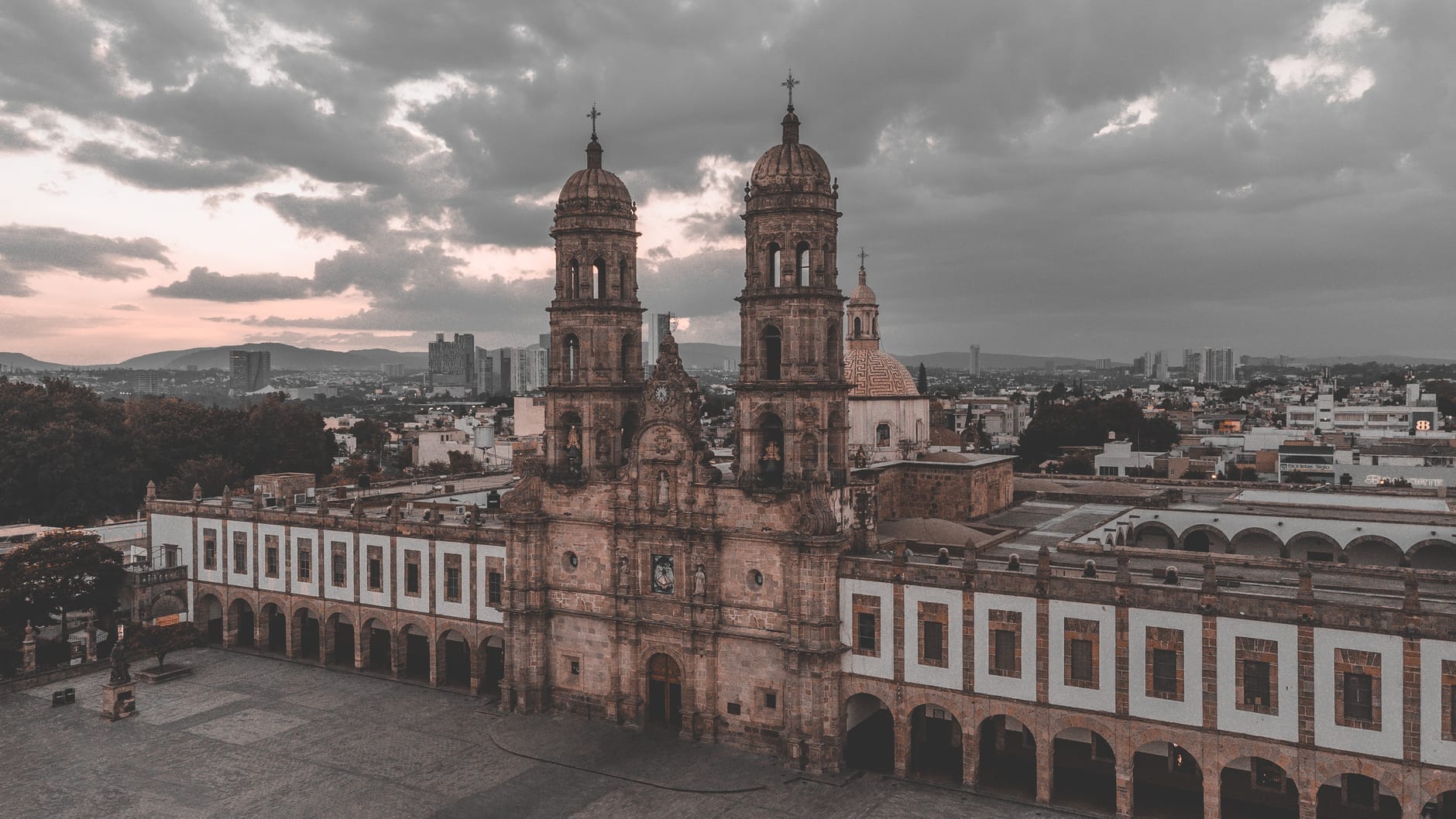
What the Basílica de Zapopan Actually Is
The Basílica de Nuestra Señora de Zapopan sits at the very heart of Zapopan's historic center, occupying the broad ceremonial space known as Plaza de las Américas Juan Pablo II. From the outside it reads as a single commanding presence: a pale stone façade carved in the Plateresque style, flanked by twin towers completed in 1892 to replace originals demolished three years earlier. The church itself dates from construction begun around 1690 under Franciscan direction, with the main body completed by approximately 1730. That makes it a genuine product of colonial Baroque building, not a reconstruction.
What draws people here, beyond the architecture, is a single small object inside: a figure of the Virgin roughly 34 centimeters tall, made in the 16th century using a traditional Michoacán technique that forms the image from corn-paste and orchid-bulb glue. The result is extraordinarily lightweight, which is part of why it has been carried across the region in procession for centuries. For practicing Catholics, this image is among the most sacred in western Mexico. For non-religious visitors, the craft technique alone is worth knowing about before you walk in.
ℹ️ Good to know
Opening hours are generally from early morning to evening (around 07:00–21:00), though these can shift during major feast days and Holy Week. If your visit coincides with a religious event, arrive early or expect the nave to be densely occupied.
The Architecture: What to Look For on the Façade
The façade deserves unhurried attention. Plateresque ornament, named for its resemblance to silversmith work, covers the entrance portal in dense carved relief. Floral motifs, pilasters, and religious figures layer over one another in a way that rewards standing back at a distance of 20 or 30 meters and then moving in close. The warm afternoon light hits the stone in a way that makes the relief carving pop, which is worth keeping in mind if photography is a priority.
The twin towers are the result of late 19th-century reconstruction rather than original colonial work, so they read slightly differently from the main body in proportion and finish. This is not a flaw but a honest record of the building's evolution. Inside, the nave follows a relatively sober colonial plan with lateral chapels. The interior is darker and cooler than the bright plaza outside, and your eyes take a moment to adjust.
For visitors who want architectural context across the city, this basilica pairs logically with other colonial religious buildings. The Guadalajara Cathedral in the Centro Histórico and the Templo Expiatorio show how religious architecture in the metro area spans from colonial Baroque through neo-Gothic revival, which gives you a useful comparative frame.
Tickets & tours
Hand-picked options from our booking partner. Prices are indicative; availability and final rates are confirmed when you complete your booking.
Lake Chapala and Ajijic guided tour from Guadalajara
From 68 €Instant confirmationFree cancellationGuadalajara and Tlaquepaque guided tour
From 73 €Instant confirmationFree cancellation
How the Experience Changes by Time of Day
Early morning, from around 07:30 to 09:00, is when the basilica belongs mostly to locals: elderly parishioners attending the first Mass, vendors setting up around the plaza perimeter, and a relative calm before tour groups arrive. The light is soft and low from the east, which means the façade is largely in shade at that hour but the plaza itself is pleasant.
Mid-morning through early afternoon is the busiest period for casual visitors. The plaza fills with families, school groups on field trips, and people buying flowers and candles from the stalls around the atrium. The nave during this window can be crowded near the main altar if a Mass is in progress. If you want relative quiet inside, time your entrance to the gaps between services.
Late afternoon, roughly 17:00 to 19:00, offers a different quality entirely. The stone of the façade catches directional golden light from the west, and the plaza fills with a more relaxed late-day crowd, including vendors and families who use the open space as a neighborhood gathering point. Evening visits before 21:00 show the basilica under artificial illumination, which brings out the carved detail in a completely different way and makes for striking photographs.
💡 Local tip
Photography tip: For the best exterior shot of the façade with even light and minimal harsh shadow, the hour before sunset works well on clear days. The wide plaza gives you enough distance to fit the full width of the building in frame without distortion.
The October Romería: The Event That Defines This Place
If you visit Zapopan knowing only one fact about this basilica, it should be this: on October 12 each year, the Virgin's image returns to the basilica in the Romería, one of the largest religious processions in Mexico. The image spends the months from June to October visiting churches across the Guadalajara metropolitan area, and its return draws enormous crowds to the streets between the cathedral in the city center and the basilica in Zapopan. Estimates put attendance in the hundreds of thousands.
The Romería transforms both the basilica and the surrounding streets into a sensory experience of a different order: incense, music, flower petals thrown from balconies, the sound of church bells, and a procession that takes hours to complete. If you are planning a trip around this date, see the Guadalajara festivals and events guide for context on what else happens in October across the city.
Outside of October, the basilica still marks the Catholic liturgical calendar with notable celebrations for the Virgin's feast days and Semana Santa (Holy Week). On any of these occasions, the character of the visit shifts substantially toward participatory religious ceremony rather than architectural tourism, and non-practicing visitors should approach with corresponding awareness.
Getting There and Getting Around the Area
Zapopan Centro is part of the Guadalajara metropolitan area, and the basilica sits at its historic core. Ride-hailing services (Uber and DiDi both operate in the metro area) are the most straightforward option from central Guadalajara: the ride from the Centro Histórico typically takes 15 to 25 minutes depending on traffic, and the apps will drop you directly at the plaza. Public buses also connect the city, though routing can require a transfer. Fares for public transit are low; confirm current rates before travel as these change periodically.
The basilica is one anchor of a broader half-day in Zapopan. The Museo de Arte de Zapopan (MAZ) is a short walk away and shows contemporary Mexican and international work in a modern building that contrasts sharply with the colonial surroundings. The combination of the two is a reasonable way to spend a morning.
⚠️ What to skip
Traffic around the Zapopan plaza is notably congested during weekday lunch hours and on Sundays. If you are driving, parking near the basilica requires patience. Ride-hailing is meaningfully easier for this destination.
Practical Notes: Dress, Behavior, and What to Expect Inside
This is an active place of worship, not a museum. Mass is celebrated multiple times daily and the faithful come throughout opening hours to pray, light candles, and leave offerings near the Virgin's image. Modest clothing is expected: shoulders covered and no shorts for men are the practical standard, though this is not always rigidly enforced for casual visitors at the back of the nave. Bringing a light layer or scarf to cover up at the door takes the uncertainty out of the question.
Photography inside is generally tolerated for non-intrusive shots during quiet periods, but should be avoided during active Mass and near people in evident prayer. The Virgin's image is housed in an ornate camarín (a decorated chamber behind the main altar), and access to view it closely may be limited depending on the day and liturgical schedule. It is worth simply approaching the altar area respectfully and observing what is accessible.
The plaza outside the basilica has vendors selling flowers, candles, religious objects, and snacks. The smell of copal incense and cut flowers is a constant in the atrium area. The stone paving of the plaza is wide, level, and generally accessible for visitors with limited mobility, though the interior of the church has some steps and uneven stone flooring.
If you are building a fuller itinerary around Zapopan, the Guadalajara walking tour guide includes context on how to connect the basilica with other stops in the city.
Is the Basílica de Zapopan Worth Your Time?
For visitors who care about religious history, colonial architecture, or the cultural fabric of western Mexico, the answer is straightforwardly yes. The building is genuinely significant, the history of the Virgin's image is well documented and unusual, and the plaza setting gives you a real sense of how Zapopan functions as a living civic and religious center rather than a preserved relic.
For visitors with no interest in religious sites who are primarily drawn to food, nightlife, or contemporary culture, the basilica is an easy skip. It rewards curiosity and context. Without either, a 10-minute stop to photograph the façade is the realistic visit, and there are more pressing claims on limited time in the metro area. That said, if you are already making the trip to Zapopan for the MAZ or for the surrounding commercial area, adding 30 minutes at the basilica costs almost nothing and adds genuine depth to the day.
Insider Tips
- The camarín where the Virgin's image is displayed can be difficult to access during busy periods. Visit on a weekday morning between Masses for the clearest view of the main altar and the best chance to approach closely.
- The vendors in the atrium sell flowers by the stem and small votive candles; buying one and placing it at the designated offering area is the appropriate way to interact with the space as visitors have done for centuries, even if you are not Catholic.
- For the October 12 Romería, position yourself along Avenida Avila Camacho in the late morning to see the procession moving toward Zapopan; the streets directly around the basilica become extremely crowded in the final hours and are difficult to navigate.
- The plaza is notably quieter on weekday afternoons outside of school terms. This is the window when the architecture is most accessible for unhurried observation and photography without constant foot traffic in the frame.
- The Museo de Arte Huichol Wixárika attached to the basilica complex documents the Wixarika (Huichol) people's relationship with the Virgin of Zapopan; it is small but contains genuine yarn paintings and beadwork that are worth 20 minutes of any visitor's time.
Who Is Basílica de Zapopan For?
- Travelers interested in colonial religious architecture and Baroque craftsmanship
- Visitors who want to understand the Catholic cultural identity of Jalisco beyond surface level
- Photographers looking for a landmark with strong morning and late afternoon light
- Anyone in Guadalajara during October who wants to witness the Romería pilgrimage
- Families with children curious about Mexican folk art and the corn-paste image-making tradition
Nearby Attractions
Other things to see while in Zapopan:
- Andares Shopping Mall
Plaza Andares in Zapopan is far more than a shopping center. Opened in 2008, this sprawling mixed-use complex combines over 200 stores, open-air plazas, manicured gardens, residential towers, and office buildings as part of one of the largest mixed-use retail developments in Latin America. For visitors to Guadalajara, it offers a window into how the city's affluent northwest lives, shops, and spends an afternoon.
- Estadio Akron
Estadio Akron in Zapopan is one of Mexico's most architecturally striking football stadiums and the passionate home of Club Deportivo Guadalajara, better known as Chivas. Whether you're catching a Liga MX match, taking a behind-the-scenes stadium tour, or planning your visit for the 2026 FIFA World Cup, this guide covers everything you need to make the most of the experience.
- Museo de Arte de Zapopan (MAZ)
The Museo de Arte de Zapopan, known as MAZ, is a free public contemporary art museum which opened in 2002 in Zapopan's historic center, steps from the Basilica of Our Lady of Zapopan. Three rotating exhibition halls named after major Mexican cultural figures anchor a clean, modernist building designed for serious engagement with current art.
- Parque Metropolitano de Guadalajara
Spanning 113 hectares in the municipality of Zapopan, Parque Metropolitano de Guadalajara is the metropolitan area's most significant urban park. Open daily from 6am to 9pm with free admission, it draws joggers at dawn, families on weekends, and anyone needing distance from the city's traffic and noise.