Estadio Akron: Guadalajara's Football Cathedral and 2026 World Cup Venue
Estadio Akron in Zapopan is one of Mexico's most architecturally striking football stadiums and the passionate home of Club Deportivo Guadalajara, better known as Chivas. Whether you're catching a Liga MX match, taking a behind-the-scenes stadium tour, or planning your visit for the 2026 FIFA World Cup, this guide covers everything you need to make the most of the experience.
Quick Facts
- Location
- Av. Circuito JVC 2800, Zapopan, Jalisco, Mexico
- Getting There
- SITEUR Line 3 toward Zapopan, then bus or taxi; C-138 feeder bus runs on matchdays
- Time Needed
- 1.5–2 hrs for a tour; 4–5 hrs for a matchday experience
- Cost
- Tour & museum tickets vary; check current MXN prices at estadioakron.mx. Match tickets priced by event and seat category.
- Best for
- Football fans, architecture enthusiasts, families, FIFA World Cup 2026 visitors
- Official website
- estadioakron.mx
What Is Estadio Akron?
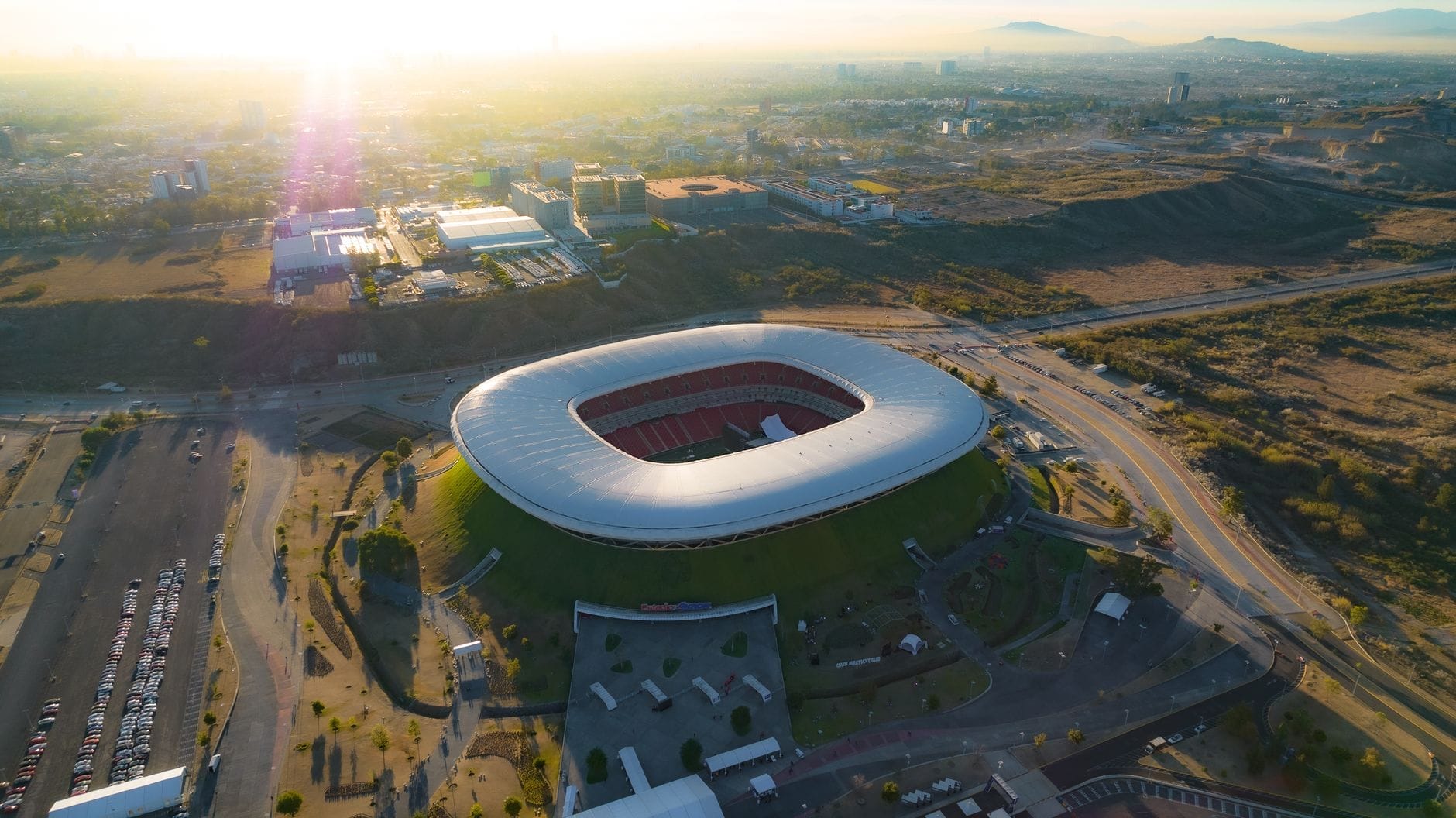
Estadio Akron is the home ground of Club Deportivo Guadalajara, the Liga MX club universally known as Chivas. Sitting in the municipality of Zapopan on the western edge of the Guadalajara metropolitan area, it opened on 30 July 2010 after construction that began in May 2007. The stadium has passed through two previous commercial names, first Estadio Omnilife (2010 to 2016), then Estadio Chivas (2016 to 2017), before adopting its current identity. For the 2026 FIFA World Cup it will temporarily carry the name Estadio Guadalajara.
The stadium holds an official capacity of 46,355 spectators, with some configurations reportedly reaching close to 49,000. The playing surface is a natural grass pitch. Beyond its size, what distinguishes Estadio Akron architecturally is its fluid, wave-like roof canopy that wraps almost entirely around the bowl, creating a sense of enclosure that amplifies crowd noise in a way that open-ended grounds simply cannot match. On a full matchday, the roar of the Chivas faithful is physically felt as much as heard.
ℹ️ Good to know
The stadium does not maintain fixed daily public opening hours. Access outside of events is through the official guided Tour y Museo program, which is available through estadioakron.mx. Always verify dates and prices before visiting, as these change regularly.
The Architecture: A Stadium Built to Intimidate
From the outside, Estadio Akron does not look like most football grounds in Latin America. Its exterior shell, clad in a pale geometric skin that catches light differently at morning and dusk, sits low against the surrounding commercial landscape in Zapopan, Jalisco. The approach from the parking areas is deliberately orchestrated: wide plazas funnel supporters toward entry gates, with the full height of the stadium only becoming apparent once you are inside the bowl.
The interior design prioritizes sight lines. Every seat in the stadium faces the pitch at a steep rake, and the continuous roof keeps ambient noise from escaping upward. Unlike some Mexican stadiums where sections feel disconnected, the Akron bowl creates a genuine sense of shared space between all four stands. The lower tiers feel particularly close to the action, and even seats in the upper sections offer unobstructed views.
For visitors with a broader interest in Guadalajara's built environment, the stadium pairs well with a wider exploration of the city's architectural range. The Guadalajara architecture guide covers everything from colonial-era palaces to contemporary structures across the metro area.
Tickets & tours
Hand-picked options from our booking partner. Prices are indicative; availability and final rates are confirmed when you complete your booking.
Lake Chapala and Ajijic guided tour from Guadalajara
From 68 €Instant confirmationFree cancellationGuadalajara and Tlaquepaque guided tour
From 73 €Instant confirmationFree cancellation
The Matchday Experience: What to Expect
A Liga MX match at Estadio Akron is a genuinely different experience from a regular sightseeing visit. Chivas carries a cultural weight that extends well beyond football. The club has a historic policy of fielding only Mexican-born players, which reinforces a strong sense of national identity among its fanbase. This translates into a crowd that is notably loud, organized in its chanting, and consistently present from kick-off.
The atmosphere builds in the two hours before kick-off. Vendors selling Chivas merchandise, scarves, and street food set up along the approach roads. The smell of grilled corn and carnitas drifts across the parking plazas. Inside, the concourse fills quickly and the decibel level climbs noticeably once the teams warm up. Expect queues at entry gates 45 to 60 minutes before the whistle on high-profile matchdays.
Match tickets are sold through the official website under the Venta de Boletos section. Prices vary significantly depending on the opponent, competition stage, and seat category. Purchasing in advance is strongly advisable for derbies and postseason rounds. On the concourse, food and beverage options are plentiful and include both standard stadium fare and some items specific to Jalisco's food culture.
💡 Local tip
For high-demand fixtures, particularly the Clásico Nacional against Club América or the Clásico Tapatío against Atlas, tickets sell out days in advance. Set up an account on the official site before your trip so you can purchase the moment sales open.
If you are planning a trip around football alongside other Guadalajara experiences, the things to do in Guadalajara guide offers a broader itinerary framework across the city and surrounding area.
The Stadium Tour and Museum
On non-matchdays, the Tour y Museo Estadio Akron offers structured access to areas normally off-limits to the public. A typical tour circuit includes the players' tunnel, the home dressing room, the pitchside technical area, and the press facilities. For anyone with even a passing interest in football or sports architecture, the tunnel walk is a highlight: the contrast between the confined, functional space of the tunnel and the sudden openness of the pitch captures something essential about the stadium experience.
The museum component covers Chivas history with particular depth. The club was founded in 1906 and has won the Liga MX title multiple times, making its trophy room genuinely impressive. Display materials include historic kits, boots, photographs, and match memorabilia spanning more than a century of Mexican football. Captions are primarily in Spanish, so visitors who do not read Spanish will benefit from a little prior research or the help of a bilingual guide.
Tours must be booked directly through estadioakron.mx. The museum section can typically be visited independently during tour operating hours, though current schedules and pricing should be confirmed before arrival, as these are subject to change around major events.
Getting There: Transit and Parking
The stadium sits in Zapopan, roughly 30 minutes from Guadalajara's Centro Histórico. The most practical transit approach involves SITEUR's Line 3 light rail, which runs through central Guadalajara and into Zapopan. From the end of the line, a bus connection or short taxi ride brings you to the stadium. On matchdays, shuttle services operate from nearby transit points.
By car, the stadium provides over 4,800 general parking spaces. On large matchdays, parking fills quickly, and the access roads around Circuito JVC can back up significantly in the 60 to 90 minutes before kick-off. Arriving at least 90 minutes early or using public transit is the more predictable option.
Ride-hailing via Uber or DiDi is a practical alternative for non-matchday visits. On matchdays, the volume of passengers means surge pricing is common and drop-off points can be chaotic. Setting a pickup point away from the main stadium entrance helps considerably when leaving.
⚠️ What to skip
After evening matches, ride-hailing wait times can be long due to the volume of simultaneous requests.
Estadio Akron and the 2026 FIFA World Cup
Estadio Akron is one of the three Mexican venues selected for the 2026 FIFA World Cup, hosted jointly by Mexico, the United States, and Canada. During the tournament, the stadium will operate under the name Estadio Guadalajara, as FIFA's commercial agreements require neutralized venue branding. Several group-stage matches are scheduled to be played here, making it a focal point for international visitors arriving in the Guadalajara metro area during the tournament.
Infrastructure upgrades related to World Cup hosting are ongoing. Visitors planning to attend World Cup fixtures should monitor official FIFA ticketing channels and plan accommodation well in advance, as demand across the entire Guadalajara metropolitan area will be substantial.
The municipality of Zapopan, where the stadium sits, also contains other worthwhile sites. The Basílica de Zapopan is a short drive away and provides a cultural counterpoint to the stadium's contemporary design, while the Museo de Arte de Zapopan is one of the region's stronger contemporary art institutions.
Practical Details: What to Bring and When to Go
Guadalajara sits at approximately 1,550 meters above sea level, giving it a climate that is generally mild year-round. Evening matches in the dry season (November to April) can turn cool after sunset, so a light jacket is worth bringing regardless of how warm the afternoon feels. The rainy season (June to September) occasionally brings brief but intense downpours; the stadium's roof provides good coverage for seated spectators, but the approach plazas are fully exposed.
Photography is generally permitted in public areas and from your seat during matches. Tripods and professional equipment with detachable lenses are typically prohibited without press accreditation. For the tour, photography inside the dressing rooms and certain restricted areas may be limited; check current policy when booking.
The stadium has accessible parking and seating provisions. Visitors with mobility needs should contact the stadium directly or note accessibility details during the online booking process. Large bags and backpacks are subject to security checks on matchdays, and prohibited items lists are posted at the official site.
If the stadium visit is part of a longer stay, the 3 days in Guadalajara itinerary suggests how to fit it alongside the city's historic core and other neighborhoods.
Insider Tips
- For the best atmosphere on a budget, mid-table Liga MX matches offer lower ticket prices with crowds that are still substantial. Reserve derby tickets weeks in advance through the official site; secondary market prices escalate sharply once official channels sell out.
- The west-facing sections of the upper tier catch the last of the afternoon sun during early-evening kick-offs. If you are sensitive to glare or heat, request tickets on the east side of the ground for more comfortable conditions during the first half.
- The tour experience is most atmospheric on a weekday morning when the stadium is quiet and staff have time to explain details. Weekend tours can be rushed if group sizes are large.
- On matchdays, the food options outside the stadium in the surrounding streets of Zapopan are cheaper and often better quality than concourse vendors inside. Arrive early enough to eat before entering.
- Nearby Ciudad Granja is a large commercial and entertainment complex within walking distance. It is useful for a pre-match meal or a post-match drink without the immediate congestion around the stadium exits.
Who Is Estadio Akron For?
- Football fans wanting to experience Liga MX culture and the unique intensity of a Chivas home fixture
- Travelers interested in contemporary sports architecture and large-scale venue design
- Families with children who follow football, as the stadium tour is well-suited to younger visitors
- FIFA World Cup 2026 attendees planning their Guadalajara match-day logistics in advance
- Visitors combining a Zapopan excursion with stops at the Basílica de Zapopan and local dining
Nearby Attractions
Other things to see while in Zapopan:
- Andares Shopping Mall
Plaza Andares in Zapopan is far more than a shopping center. Opened in 2008, this sprawling mixed-use complex combines over 200 stores, open-air plazas, manicured gardens, residential towers, and office buildings as part of one of the largest mixed-use retail developments in Latin America. For visitors to Guadalajara, it offers a window into how the city's affluent northwest lives, shops, and spends an afternoon.
- Basílica de Zapopan
The Basílica de Zapopan is one of the most significant religious and architectural landmarks in the Guadalajara metropolitan area. Built by Franciscans in the late 17th century, it shelters a small but deeply venerated 16th-century corn-paste image of the Virgin and draws pilgrims and visitors year-round to its Plateresque façade and wide ceremonial plaza.
- Museo de Arte de Zapopan (MAZ)
The Museo de Arte de Zapopan, known as MAZ, is a free public contemporary art museum which opened in 2002 in Zapopan's historic center, steps from the Basilica of Our Lady of Zapopan. Three rotating exhibition halls named after major Mexican cultural figures anchor a clean, modernist building designed for serious engagement with current art.
- Parque Metropolitano de Guadalajara
Spanning 113 hectares in the municipality of Zapopan, Parque Metropolitano de Guadalajara is the metropolitan area's most significant urban park. Open daily from 6am to 9pm with free admission, it draws joggers at dawn, families on weekends, and anyone needing distance from the city's traffic and noise.