Museo de Arte de Zapopan (MAZ): Zapopan's Free Contemporary Art Museum
The Museo de Arte de Zapopan, known as MAZ, is a free public contemporary art museum which opened in 2002 in Zapopan's historic center, steps from the Basilica of Our Lady of Zapopan. Three rotating exhibition halls named after major Mexican cultural figures anchor a clean, modernist building designed for serious engagement with current art.
Quick Facts
- Location
- Andador 20 de Noviembre 166, Centro, Zapopan, Jalisco
- Getting There
- City bus Route 634, which serves Zapopan Centro; ride-hailing apps also serve the area
- Time Needed
- 45 minutes to 1.5 hours depending on current exhibitions
- Cost
- Free (entrada libre) — verify before visiting as conditions may change
- Best for
- Contemporary art, architecture enthusiasts, budget travelers, Thursday evening visitors
- Official website
- maz.zapopan.gob.mx
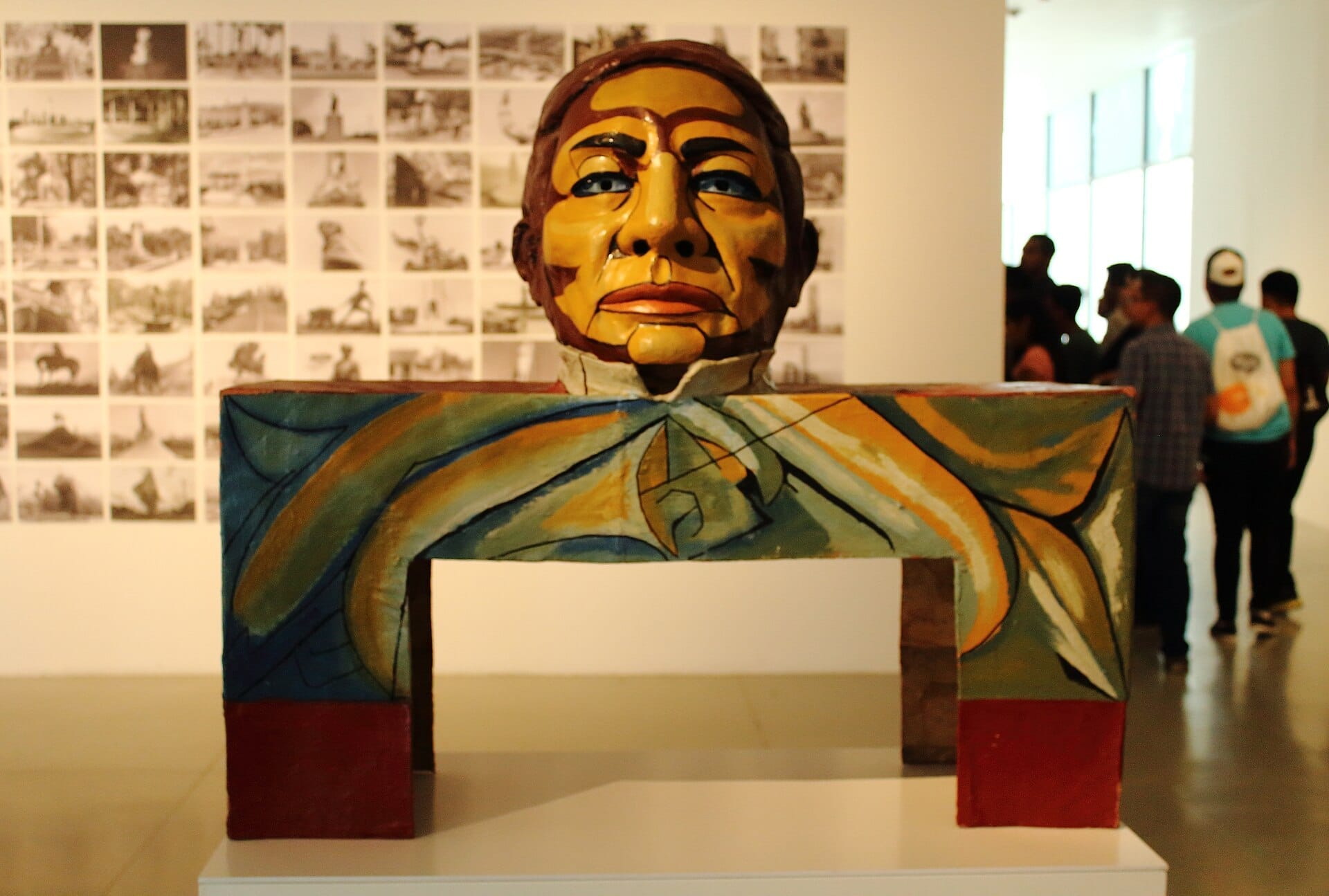
What MAZ Actually Is
The Museo de Arte de Zapopan, universally known as MAZ, is a municipally funded contemporary art museum inaugurated in 2002 in the heart of Zapopan's historic center. It sits almost literally in the shadow of the Basilica of Our Lady of Zapopan, one of the most visited religious sites in western Mexico, yet the two buildings inhabit entirely different registers: the basilica is colonial and ornate, while MAZ is spare, geometric, and intentionally understated.
Designed by architects María Emilia Orendáin and Enrique Toussaint, the building reads as a quiet provocation against its surroundings. The facade doesn't compete for attention. Inside, the space opens up into three dedicated exhibition halls. The naming choices signal intent: this isn't a general-purpose civic gallery, it's a museum with a clear sense of its own lineage.
ℹ️ Good to know
Admission is currently free for all visitors. Opening hours: Tuesday to Sunday 10:00–18:00, with extended hours at MAZ and EstaciónMAZ on Thursdays until 22:00. Closed Mondays. Verify hours before visiting, as public holidays may affect the schedule.
The Collections and Exhibition Spaces
MAZ operates primarily on a rotating temporary exhibition model rather than displaying a fixed permanent collection in the traditional sense. This means the experience changes substantially depending on when you visit. Exhibitions tend to focus on contemporary Mexican and Latin American art, with occasional international shows, and the programming has historically engaged with social, political, and cultural themes relevant to the region.
The three halls vary in scale and character. The spaces are kept deliberately neutral: white walls, controlled lighting, clean floors that let the work breathe. There's no clutter, no attempt to fill every surface. This restraint is either a strength or a limitation depending on your expectations. If you're looking for a densely packed encyclopedic collection covering centuries of art history, this is the wrong museum. If you want to spend serious time with a focused set of contemporary works in a quiet, well-maintained space, MAZ delivers consistently.
Beyond the galleries, the building houses the Auditorio Juan José Arreola, a multidisciplinary space used for talks, performances, screenings, and cultural events. There's also a bookstore and museum shop on site, stocked with art publications, catalogues, and design items that tend toward good taste rather than tourist merchandise.
MAZ sits within a broader network of serious cultural venues in Guadalajara and its metro area. For comparison, the Hospicio Cabañas in the historic center offers the monumental Orozco murals and a UNESCO World Heritage site context, while MUSA (Museo de las Artes de la Universidad de Guadalajara) covers a different slice of the city's visual art landscape. MAZ occupies its own lane: free, contemporary, and rooted in Zapopan's civic identity.
Tickets & tours
Hand-picked options from our booking partner. Prices are indicative; availability and final rates are confirmed when you complete your booking.
Lake Chapala and Ajijic guided tour from Guadalajara
From 68 €Instant confirmationFree cancellationGuadalajara and Tlaquepaque guided tour
From 73 €Instant confirmationFree cancellation
How the Visit Changes by Time of Day
Mornings on weekdays are the quietest window. By 10:30 on a Tuesday or Wednesday, the galleries often have only a handful of visitors, and the ambient sound drops almost entirely — just the soft hum of climate control and the occasional footstep on the floor. The light entering the building in the morning has a cooler quality that suits the kind of minimal, considered installations the museum tends to show.
Weekend afternoons bring school groups, families from the surrounding Zapopan neighborhoods, and visitors who've combined the trip with a walk past the Basilica. The energy shifts without becoming loud or disruptive, but the galleries feel noticeably more occupied between 13:00 and 16:00 on Saturdays.
Thursday evenings deserve special mention. The extended hours until 22:00 give MAZ a different character entirely. The Zapopan historic center is still active in the early evening, and the museum draws a younger crowd after dark: students, professionals, people who've come directly from nearby bars or restaurants in the area. The combination of free entry and late hours makes it one of the more socially relaxed art experiences in the metropolitan area. If you're in Guadalajara mid-week and want an evening that doesn't require a reservation or a significant budget, Thursday at MAZ is a practical and genuinely good option.
💡 Local tip
Check MAZ's official social media or website before visiting to confirm what's currently showing. Because the museum runs temporary exhibitions, there can be brief changeover periods between shows where one or more galleries are closed for installation.
Getting There from Central Guadalajara
MAZ is located in Zapopan, a separate municipality within the metropolitan area, northwest of Guadalajara's historic center. The distance isn't prohibitive — roughly 7 to 10 kilometers depending on your starting point — but you do need to plan for it.
City bus Route 634 connects to the Zapopan historic center and serves stops within walking distance of Andador 20 de Noviembre 166. Uber and DiDi both operate actively in this part of the metro area and are often the simplest option, particularly in the evening. The museum's address is easy to share through any ride-hailing app. If you're already visiting the Basilica de Zapopan, MAZ is essentially adjacent — the two combine naturally into a single outing without any additional transport.
For a broader orientation to Zapopan and its position within the metropolitan area, the Zapopan neighborhood guide covers the key reference points, shopping corridors, and how the municipality connects to the rest of the city.
Architecture and Setting
The building itself is part of the experience. Orendáin and Toussaint's design from 2002 prioritizes clarity over statement. The exterior uses a restrained palette of materials, the volumes are clean, and the relationship between interior and exterior is handled without drama. Standing outside, you can appreciate how unusual the choice was to plant something this modernist directly next to one of the most decorated colonial-religious spaces in Jalisco.
The contrast isn't hostile — it reads more like a conversation between two different centuries of Jalisco's identity. This architectural duality reflects something real about Zapopan itself, a municipality that contains both deep religious tradition and genuine contemporary infrastructure. Visitors with a particular interest in how Guadalajara's built environment has evolved can pair this stop with the Guadalajara architecture guide for wider context on the region's modernist legacy.
Practical Details and What to Bring
Admission is free, which removes the most common barrier to contemporary art museums. The space is indoors and climate-controlled, so weather has minimal effect on the visit itself. That said, if you're combining MAZ with time in the Zapopan historic center or the plaza around the Basilica, the outdoor portions are exposed, and the Guadalajara rainy season (roughly June through September) can bring brief but heavy afternoon downpours. A light layer and an awareness of afternoon weather is useful from June onward.
Photography policies in temporary exhibition spaces vary by show, as some works are displayed under agreement with artists who restrict reproduction. Check the posted signage in each gallery rather than assuming a blanket rule. The auditorium and common spaces are generally photogenic, and the architectural exterior photographs well in the morning when light hits the facade directly.
For accessibility questions, the museum can be reached at mazinfo@zapopan.gob.mx or by phone at +52 (33) 3818-2575 ext. 1612. Specific features such as elevator access, ramp configuration, and accessible restroom availability are not comprehensively documented in public sources, so direct contact before visiting is advisable if this is a deciding factor.
⚠️ What to skip
MAZ is not the right destination if you want a large permanent collection or a survey of art history. The museum runs temporary shows, and if you visit between exhibitions or during a changeover week, the experience will be significantly thinner. Confirm current programming on the official site before making it a centerpiece of your day.
Who This Museum Is For, and Who It Isn't
MAZ works well for travelers who already have some engagement with contemporary art and want to see what's happening in Mexican and Latin American cultural production beyond the canonical muralist names. It also suits people who appreciate good architecture and want an hour of genuine quiet in the middle of a full day of sightseeing.
It's a particularly useful stop for budget-conscious travelers — the free admission means it costs nothing beyond getting there. For visitors building a broader picture of Guadalajara's museum landscape, the guide to the best museums in Guadalajara places MAZ alongside the city's other major cultural institutions and helps set expectations for each.
Travelers who want crowd-pleasing spectacle, interactive exhibits for children, or a definitive masterwork to photograph will likely find the museum underwhelming. The same applies to visitors arriving mid-exhibition-changeover with no advance research. MAZ rewards a small amount of preparation and a genuine interest in the form — it doesn't make a big case for itself through marketing or spectacle.
Insider Tips
- Thursday evenings until 22:00 are significantly calmer than weekend afternoons, and the nearby Zapopan plaza has a different, quieter energy after dark — combine both for an unhurried outing.
- Check the MAZ Facebook page (maz.museo) before visiting: it's updated more frequently than the main website and will show whether a new exhibition has just opened or if a gallery is temporarily closed for installation.
- The bookstore carries catalogues and publications from past MAZ exhibitions, including some that are difficult to find elsewhere. If you're interested in contemporary Mexican art, it's worth browsing even if you don't buy.
- The Basilica of Our Lady of Zapopan is immediately adjacent. Visiting both on the same trip takes under two hours total and gives a genuinely unusual juxtaposition of colonial religious architecture and 21st-century public art infrastructure.
- Ride-hailing from the Guadalajara historic center to MAZ typically takes 15 to 25 minutes depending on traffic. Morning trips on weekdays run faster; late weekend afternoons can add significant time due to congestion on Avenida Ávila Camacho.
Who Is Museo de Arte de Zapopan (MAZ) For?
- Contemporary art enthusiasts looking beyond the muralist canon
- Architecture-focused visitors interested in Jalisco's modernist built environment
- Budget travelers who want a quality cultural experience at zero cost
- Thursday evening visitors combining the museum with the Zapopan plaza atmosphere
- Travelers pairing a visit to the Basilica de Zapopan with a cultural counterpoint next door
Nearby Attractions
Other things to see while in Zapopan:
- Andares Shopping Mall
Plaza Andares in Zapopan is far more than a shopping center. Opened in 2008, this sprawling mixed-use complex combines over 200 stores, open-air plazas, manicured gardens, residential towers, and office buildings as part of one of the largest mixed-use retail developments in Latin America. For visitors to Guadalajara, it offers a window into how the city's affluent northwest lives, shops, and spends an afternoon.
- Basílica de Zapopan
The Basílica de Zapopan is one of the most significant religious and architectural landmarks in the Guadalajara metropolitan area. Built by Franciscans in the late 17th century, it shelters a small but deeply venerated 16th-century corn-paste image of the Virgin and draws pilgrims and visitors year-round to its Plateresque façade and wide ceremonial plaza.
- Estadio Akron
Estadio Akron in Zapopan is one of Mexico's most architecturally striking football stadiums and the passionate home of Club Deportivo Guadalajara, better known as Chivas. Whether you're catching a Liga MX match, taking a behind-the-scenes stadium tour, or planning your visit for the 2026 FIFA World Cup, this guide covers everything you need to make the most of the experience.
- Parque Metropolitano de Guadalajara
Spanning 113 hectares in the municipality of Zapopan, Parque Metropolitano de Guadalajara is the metropolitan area's most significant urban park. Open daily from 6am to 9pm with free admission, it draws joggers at dawn, families on weekends, and anyone needing distance from the city's traffic and noise.