MUSA – Museo de las Artes de la Universidad de Guadalajara
Operated by the University of Guadalajara since 1994, MUSA is one of the city's most significant fine arts institutions, housing murals by José Clemente Orozco alongside rotating contemporary exhibitions. Located on Avenida Juárez in Colonia Americana, it charges no admission and draws a crowd that skews local and academic rather than touristic.
Quick Facts
- Location
- Av. Juárez 975 esq. Enrique Díaz de León, Colonia Americana, Guadalajara
- Getting There
- Accessible by city buses along Av. Juárez and by light rail at Juárez station; confirm current routes with Mi Transporte
- Time Needed
- 1–2 hours
- Cost
- Free (verify current policy before visiting)
- Best for
- Art lovers, students of Mexican muralism, budget travelers
- Official website
- www.musaudg.mx
What MUSA Actually Is
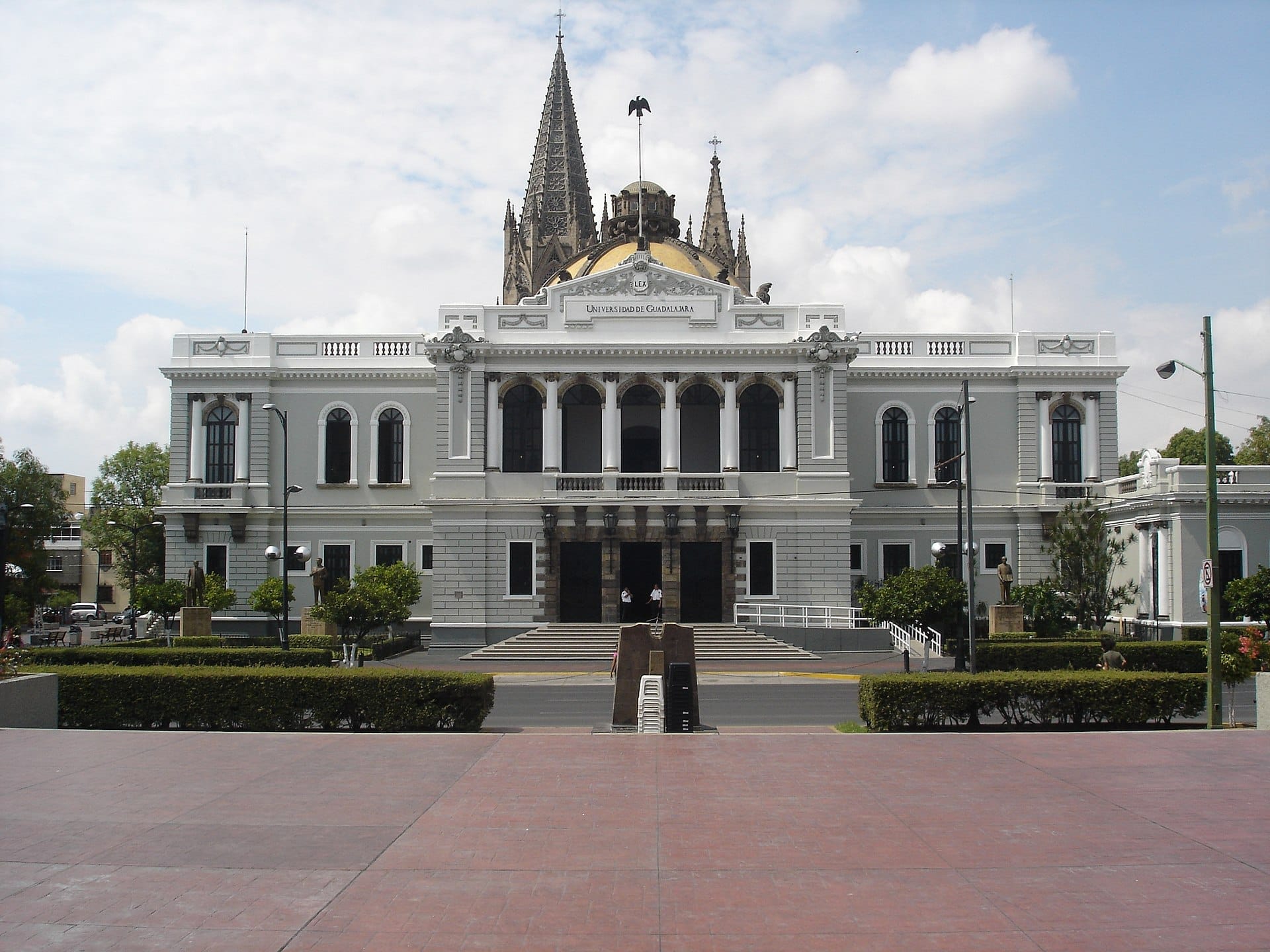
The Museo de las Artes de la Universidad de Guadalajara — known simply as MUSA — opened on October 10, 1994, in a historic patrimonial building on the corner of Avenida Juárez and Avenida Enrique Díaz de León. It was inaugurated with roughly 950 square meters of exhibition space and expanded significantly in 2013. Today it functions as the primary fine arts venue of the Universidad de Guadalajara (UdeG), one of Mexico's oldest and largest public universities.
What sets MUSA apart from Guadalajara's other cultural institutions is its dual identity: it preserves major permanent works, including murals by José Clemente Orozco, while simultaneously running a serious program of contemporary and rotating exhibitions. That makes it a different experience from the more history-focused Museo Regional de Guadalajara or the thematic Hospicio Cabañas. MUSA leans toward fine arts as a living discipline rather than as a relic.
ℹ️ Good to know
Admission is free at time of writing, but this is an institutional policy subject to change. Confirm on the official website (musaudg.mx) or by calling ahead before making it the centerpiece of your day.
The Orozco Murals: The Main Reason to Come
José Clemente Orozco is arguably Jalisco's most consequential visual artist, and Guadalajara holds several of his major works. The murals at MUSA are among the less-visited of these, which means you can often stand in front of them without competition. Orozco's style here is consistent with his broader body of work: bold, angular, politically charged figures rendered in a compressed, almost violent visual language that demands attention rather than inviting it.
If you plan to build a day around Orozco's work in Guadalajara, MUSA pairs well with the Hospicio Cabañas, which contains his most celebrated ceiling murals, and the Palacio de Gobierno, where his famous depiction of Hidalgo dominates the main staircase. The murals at MUSA offer a counterpoint — more contained, but no less intense.
For deeper context on Orozco's legacy in the city, the guide to Orozco murals in Guadalajara covers all major sites with historical background.
Tickets & tours
Hand-picked options from our booking partner. Prices are indicative; availability and final rates are confirmed when you complete your booking.
Lake Chapala and Ajijic guided tour from Guadalajara
From 68 €Instant confirmationFree cancellationGuadalajara and Tlaquepaque guided tour
From 73 €Instant confirmationFree cancellation
The Building and Its Atmosphere
The building itself is worth a moment of attention. As a patrimonial property adapted for museum use, it carries the physical memory of a different era: high ceilings, substantial walls, and proportions that feel deliberate rather than efficient. Museum conversions of historic buildings often result in awkward spatial compromises, but here the rooms hold art comfortably without feeling cramped or incongruous.
The interior tends to be cool even on warm Guadalajara afternoons, which is welcome between May and early October when outdoor temperatures climb into the high 20s Celsius. Natural light enters unevenly depending on the gallery, so the experience of individual works shifts depending on time of day. Morning visits before noon tend to offer quieter conditions and more consistent lighting in the permanent collection spaces.
MUSA sits in Colonia Americana, a neighborhood that rewards unhurried exploration. The surrounding streets have a mix of early 20th-century architecture, independent cafés, and cultural venues that make it easy to extend a museum visit into a longer afternoon.
Rotating Exhibitions and Programming
Beyond the permanent collection, MUSA maintains an active schedule of temporary exhibitions that tend to focus on Mexican and Latin American contemporary art, though international shows appear as well. The quality is generally high — this is a university institution with academic resources — and the selection often takes creative risks that commercial galleries in the city don't. Exhibitions typically run for several weeks to a few months.
The museum also hosts cultural events, talks, and programming tied to the university calendar, which means activity levels peak during the academic year (August through June) and slow during July. If you're visiting in July, confirm the current exhibition schedule on the official website before going.
💡 Local tip
Check the MUSA website or their social media before your visit. The rotating exhibition calendar isn't always prominently listed on third-party travel sites, and showing up during an installation gap — when one show has closed and the next hasn't opened — means a considerably reduced experience.
When to Visit and How to Get There
MUSA is open Tuesday through Saturday from 10:00 to 18:00, and Sunday from 10:00 to 15:00, and is also open on public holidays unless otherwise announced. It is closed on Mondays. Sunday hours are shorter, so plan accordingly if that's your only available day. The museum sees relatively light foot traffic compared to major landmarks in the Centro Histórico, so crowding is rarely a problem. Weekday mornings, particularly Tuesday through Thursday, tend to be the quietest.
The address is Avenida Juárez 975, at the corner with Avenida Enrique Díaz de León. Avenida Juárez is a main east-west artery with good bus coverage. City buses from the Mi Transporte network serve the route, though specific line numbers and stops should be confirmed through the official Mi Movilidad resources as routes and schedules change. Uber and DiDi work reliably in this part of the city and are a practical option if you're combining MUSA with other stops.
⚠️ What to skip
The museum building is a historic patrimonial structure. Official sources do not confirm specific wheelchair accessibility features such as ramps or lifts. If accessibility is a priority, contact the museum directly via musaudg.mx or their official social channels before your visit.
Photography and Practical Details
Photography policies in Mexican museums vary, and some institutions restrict photography of permanent collections or specific works even when general photography is permitted. Tripods are typically not allowed. If photography matters to you, ask at the entrance desk rather than assuming either way. Flash photography near murals is generally discouraged.
There is no café or dedicated rest space inside the museum based on available information, though the surrounding neighborhood has no shortage of options. Colonia Americana is well-served by independent coffee shops and restaurants within walking distance, making it easy to treat MUSA as one stop in a longer afternoon rather than a standalone destination. Wear comfortable shoes: the combination of historic flooring and gallery-hopping is easier with flat soles.
If you're planning a fuller day in the area, Avenida Chapultepec is a short walk west and has good options for food and drink before or after your visit.
Who Might Not Find This Worth the Stop
MUSA is a fine arts institution with a specific curatorial focus. If you're looking for an introduction to Mexican history, folk art, or craft traditions, this isn't the place — the Museo Regional de Guadalajara or a visit to Tlaquepaque will serve you better. Families with young children who aren't engaged by contemporary art exhibitions will likely find the visit short and the experience limited, since there are no interactive installations or dedicated children's programming visible in the regular schedule.
The museum is also less visually spectacular than some of Guadalajara's showpiece cultural sites. If you're working through a compressed itinerary and have to choose, the Hospicio Cabañas delivers a more overwhelming sensory and historical experience. MUSA rewards visitors who move at a slower pace and have a genuine interest in fine arts rather than those checking items off a list.
Insider Tips
- The Orozco murals here attract far fewer visitors than those at the Hospicio Cabañas or the Palacio de Gobierno. Come on a weekday morning and you may have them almost entirely to yourself — a rare chance to spend real time with major works without crowds.
- The museum doesn't have a printed map of temporary exhibition spaces readily available according to most visitor accounts. Ask a staff member at the entrance which galleries are currently active to avoid wandering through empty or closed sections.
- Colonia Americana's best independent cafés are concentrated a few blocks west toward Chapultepec. Walk there after your visit rather than before — the neighborhood is better appreciated after you've slowed your pace inside the museum.
- The university connection means MUSA occasionally hosts free public lectures, film screenings, and artist talks. These rarely make it onto international travel platforms, so following the museum on social media is the most reliable way to catch them.
- Sunday hours cut off at 15:00, which is earlier than it sounds given a typical Mexican lunch schedule. If Sunday is your day, aim to arrive by 11:00 to have comfortable time without rushing.
Who Is MUSA — Museo de las Artes de la Universidad de Guadalajara For?
- Art enthusiasts wanting to see Orozco murals in an uncrowded setting
- Travelers with an interest in Mexican and Latin American contemporary art
- Budget travelers — free admission makes this accessible on any budget
- Students or academics with an interest in university cultural programming
- Visitors combining a longer afternoon walk through Colonia Americana
Nearby Attractions
Other things to see while in Colonia Americana:
- Colonia Americana Street Art & Mural Route
Colonia Americana's streets double as a free, ever-changing gallery of large-scale murals and urban art. Set in a late-19th- and early-20th-century neighborhood west-southwest of the historic center, the route is walkable, photogenic at almost any hour, and best explored at a slow pace with time to stop in the cafés and bars lining Avenida Chapultepec.
- Templo Expiatorio del Santísimo Sacramento
The Templo Expiatorio del Santísimo Sacramento is Guadalajara's most ambitious piece of Gothic-revival architecture, a church that took 75 years to complete and still anchors daily life in Colonia Americana. Free to enter and open most weekdays, it rewards visitors with soaring stone vaults, intricate stained glass, and a quiet that is increasingly rare in this busy city.