Colonia Americana Street Art & Mural Route: Guadalajara's Open-Air Gallery
Colonia Americana's streets double as a free, ever-changing gallery of large-scale murals and urban art. Set in a late-19th- and early-20th-century neighborhood west-southwest of the historic center, the route is walkable, photogenic at almost any hour, and best explored at a slow pace with time to stop in the cafés and bars lining Avenida Chapultepec.
Quick Facts
- Location
- Colonia Americana, Guadalajara, Jalisco, Mexico — just west of the Centro Histórico
- Getting There
- Short walk or rideshare from the historic center; Avenida Chapultepec is the main spine of the area. Uber and DiDi are widely used.
- Time Needed
- 1.5–3 hours for a self-guided walk; half a day if you stop for coffee or lunch
- Cost
- Free to explore independently. Guided tours (e.g., Tour Street Art GDL) are available at a variable cost — confirm pricing directly with the provider.
- Best for
- Photography, urban culture, neighborhood exploration, couples, solo travelers
What Is the Colonia Americana Street Art Route?
The Colonia Americana Street Art & Mural Route is not a formally designated municipal circuit. It is the collective name used for the concentration of outdoor murals, painted facades, and commissioned large-scale artworks spread across the streets of Colonia Americana, one of Guadalajara's most architecturally layered neighborhoods. There is no ticket booth, no official start gate, and no printed map handed out by the city. What exists is a walkable grid of streets where art accumulates on every other block.
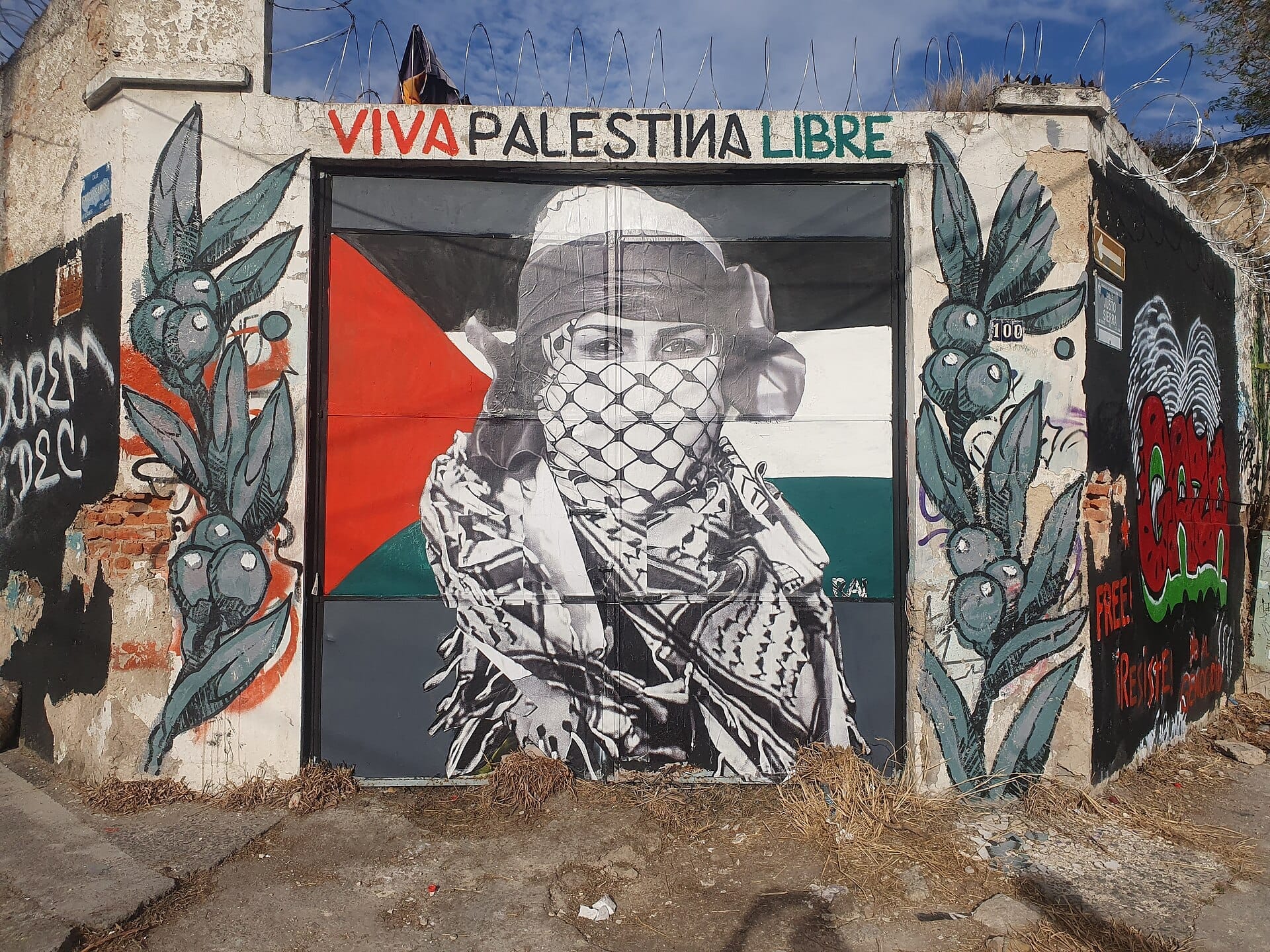
The murals range from abstract geometric compositions to detailed portraits, political commentary, and playful pop-art references. Styles change from wall to wall, sometimes within the same block, reflecting the range of local and visiting artists who have worked here. Because there is no curating authority, the route feels lived-in rather than staged, which is much of its appeal.
One organized experience that has helped map and popularize the route is Tour Street Art GDL, which offers guided walks departing from points in the neighborhood, including a meeting spot at Café Correcto on Calle Prisciliano Sánchez and another around Av. Chapultepec Sur 198. The guided format is worth considering for first-time visitors who want context behind specific pieces. Those who prefer to wander on their own will find Avenida Chapultepec a natural organizing spine — head one block in any direction and walls start appearing.
💡 Local tip
The murals are on public streets and visible 24 hours a day, 7 days a week. No reservation or fee is needed to walk the area independently. If you book a guided tour, confirm pricing directly with the operator, as costs are not fixed publicly.
The Neighborhood Behind the Art
Colonia Americana was developed in the late 19th century as one of Guadalajara's first planned residential expansions beyond the old colonial center. The neighborhood takes its name from the foreign (particularly American and European) professionals and merchants who settled here during the Porfiriato period, a time of rapid modernization that reshaped urban Mexico. The architecture that survives from this era includes multi-story town houses with ornate ironwork balconies, tiled entrance halls, and high ceilings — the kind of buildings that now house small galleries, specialty coffee shops, and mezcal bars.
This architectural backdrop is part of what makes the street art here feel more visually coherent than it might on a plain industrial block. A three-story mural painted on a faded ochre facade from 1910 reads differently than the same image on a concrete wall. The collision of periods is constant. For deeper context on what Guadalajara's built environment looks like across the city, the Guadalajara architecture guide covers the full historical range from colonial baroque to modernist civic buildings.
Tickets & tours
Hand-picked options from our booking partner. Prices are indicative; availability and final rates are confirmed when you complete your booking.
Lake Chapala and Ajijic guided tour from Guadalajara
From 68 €Instant confirmationFree cancellationGuadalajara and Tlaquepaque guided tour
From 73 €Instant confirmationFree cancellation
Walking the Route: What to Expect
The most practical approach is to arrive at Avenida Chapultepec and work outward through the side streets. The avenue itself has some painted walls, but the denser concentrations of murals tend to be on the quieter parallel and perpendicular streets, where building facades get more sun and fewer parked buses. Calle Prisciliano Sánchez, running roughly east-west through the heart of the neighborhood, is particularly worth following. Streets closer to Avenida Vallarta and around the edges of the neighborhood toward the Centro Histórico also have notable pieces.
Plan for a loose circuit of about 1.5 to 2 kilometers on foot, depending on how many detours you take. The terrain is flat. Sidewalks are generally present but vary in width and condition — some older stretches have uneven paving stones, and curb cuts are inconsistent, so wheelchair or stroller access may require flexibility and route adjustments. There is no formally accessible version of this walk documented by city or tour authorities.
The art itself changes over time. Murals get painted over, updated, or replaced when building owners change or new commissions come in. A wall you saw photographed online six months ago may look different now, or may no longer exist. This is not a flaw in the route — it is the nature of urban art, and it gives repeat visitors a reason to return.
Time of Day and How the Experience Changes
Morning light, roughly 8:00 to 10:30, offers the best conditions for photography. The sun is low enough to catch texture in paint without the harsh overhead flattening that happens midday. Streets are quieter, vendors are setting up, and the neighborhood has a domestic feel — residents heading to work, bakeries opening, the smell of fresh coffee drifting from café doorways. If you are here primarily to photograph murals, this is the window to target.
By mid-afternoon the area fills with a younger crowd. Colonia Americana is one of Guadalajara's more active social neighborhoods, and Avenida Chapultepec in particular draws people to its outdoor seating, small stages, and weekend markets. The energy is good but it does mean narrower sidewalks become harder to navigate for photograph composition. Walls on the main avenue get people standing in front of them, which can be either an annoyance or a compositional element depending on what you are looking for.
Evening brings a different character entirely. Many murals are close to bars and restaurants, and the combination of artificial lighting, projected signs, and street lamps creates an uneven but often dramatic light on painted walls. This is not the best time for clean documentation photography, but it can produce interesting images. The neighborhood is active well into the night, and the street art blends into the general visual density of lights, music, and people.
ℹ️ Good to know
Guadalajara's rainy season runs roughly June through October, with the heaviest rainfall in July and August. Afternoon downpours are common during these months. Morning walks remain largely unaffected, but plan to be off the streets or sheltered by early afternoon if visiting in peak rainy season.
Photography Practical Notes
A wide-angle lens or a phone with a wide mode is useful for the largest murals, where standing back far enough to frame the whole piece means being in the middle of the street. Do this carefully — these are active roads with real traffic. Many of the best shots are taken from the opposite sidewalk, which generally gives enough distance for walls two to three stories tall.
Overcast days, which are common during the rainy season, produce soft even light that is actually excellent for mural photography. Colors read more accurately than in direct sun, and the harsh midday shadows that obscure detail on textured walls are eliminated. If you have flexibility in your schedule, a cloudy morning during rainy season is arguably the best photographic conditions available.
Ask permission before photographing people working or sitting near murals. While street photography norms in Mexico are generally permissive, common courtesy goes a long way, and in a neighborhood as community-oriented as Colonia Americana, the approach matters.
Combining the Route with the Rest of the Neighborhood
Colonia Americana works well as a half-day or full-day itinerary when combined with its surrounding offerings. Avenida Chapultepec has a concentration of specialty coffee shops, independent bookstores, and restaurants that reward a slow walk. The neighborhood is also the gateway for exploring adjacent areas: the Templo Expiatorio, one of Guadalajara's most architecturally striking churches, sits just at the edge of the neighborhood and is walkable from almost anywhere on the mural route.
Those interested in Guadalajara's broader creative scene can extend the day toward the MUSA Museo de las Artes at the University of Guadalajara, which houses significant permanent collections including Orozco works, and is accessible by a short rideshare or a longer walk west. For a complete neighborhood-level understanding of what makes Colonia Americana tick as a cultural district, the Guadalajara walking tour guide outlines a broader circuit that incorporates this area.
Who Should Think Twice
Visitors expecting a tidy, signposted art circuit with interpretive panels and a defined start and finish may find the self-guided experience underwhelming without prior research. The route rewards curiosity and a willingness to wander, but it does not hold your hand. Similarly, travelers with limited mobility should be aware that the sidewalk conditions are uneven in places and no fully accessible route is documented.
If you are primarily interested in Guadalajara's formal art institutions and significant historical murals rather than contemporary street art, the city's museums and civic buildings offer a different and more structured experience. The murals in the Palacio de Gobierno and the Hospicio Cabañas are painted by José Clemente Orozco and carry considerably more cultural and historical weight than most of what appears on exterior walls in Colonia Americana. That context does not diminish the street art here — it just frames what kind of experience each offers.
Insider Tips
- Start at Calle Prisciliano Sánchez rather than Avenida Chapultepec. The side streets have a higher density of murals and fewer competing visual distractions. Save the avenue for coffee afterward.
- The murals change. If you are visiting specifically to find a piece you saw online, search for it on Street Art Cities before heading out — the platform tracks Guadalajara works with location pins and shows when pieces were last confirmed active.
- Tour Street Art GDL offers guided walks that depart from around Av. Chapultepec Sur 198 and Café Correcto on Calle Prisciliano Sánchez. Book directly or via TripAdvisor and confirm current pricing before you go, as costs are not listed publicly.
- Bring cash in pesos for coffee, snacks, and any small purchases in the neighborhood. Many of the independent spots on the side streets are cash-only or have unreliable card terminals.
- The Tianguis Cultural del Guadalajara, a weekly alternative market, operates in the area and adds another layer of street culture to the neighborhood on its active days. Check current schedules locally, as the market's format and timing can shift.
Who Is Colonia Americana Street Art & Mural Route For?
- Photography enthusiasts looking for large-scale, varied mural subjects in a photogenic neighborhood setting
- Travelers who enjoy exploring cities on foot without a fixed itinerary
- Couples combining a cultural walk with café stops and evening dining in a lively urban neighborhood
- Creative travelers and design professionals interested in contemporary Mexican urban art
- Return visitors to Guadalajara who have already covered the major historic sites and want to explore the city's contemporary cultural life
Nearby Attractions
Other things to see while in Colonia Americana:
- MUSA — Museo de las Artes de la Universidad de Guadalajara
Operated by the University of Guadalajara since 1994, MUSA is one of the city's most significant fine arts institutions, housing murals by José Clemente Orozco alongside rotating contemporary exhibitions. Located on Avenida Juárez in Colonia Americana, it charges no admission and draws a crowd that skews local and academic rather than touristic.
- Templo Expiatorio del Santísimo Sacramento
The Templo Expiatorio del Santísimo Sacramento is Guadalajara's most ambitious piece of Gothic-revival architecture, a church that took 75 years to complete and still anchors daily life in Colonia Americana. Free to enter and open most weekdays, it rewards visitors with soaring stone vaults, intricate stained glass, and a quiet that is increasingly rare in this busy city.