Templo Expiatorio del Santísimo Sacramento: Guadalajara's Gothic Masterpiece
The Templo Expiatorio del Santísimo Sacramento is Guadalajara's most ambitious piece of Gothic-revival architecture, a church that took 75 years to complete and still anchors daily life in Colonia Americana. Free to enter and open most weekdays, it rewards visitors with soaring stone vaults, intricate stained glass, and a quiet that is increasingly rare in this busy city.
Quick Facts
- Location
- Calle Manuel López Cotilla 935, Colonia Americana, Guadalajara, Jalisco
- Getting There
- Accessible via SITEUR Línea 1 and Línea 3, plus multiple bus routes (C110-B, C33, C54)
- Time Needed
- 30–60 minutes for a thorough visit; longer if you stay for mass
- Cost
- Free entry to the church; private guided tours priced separately
- Best for
- Architecture enthusiasts, photography, quiet reflection, history
- Official website
- arquidiocesisgdl.org
Why This Church Stands Apart
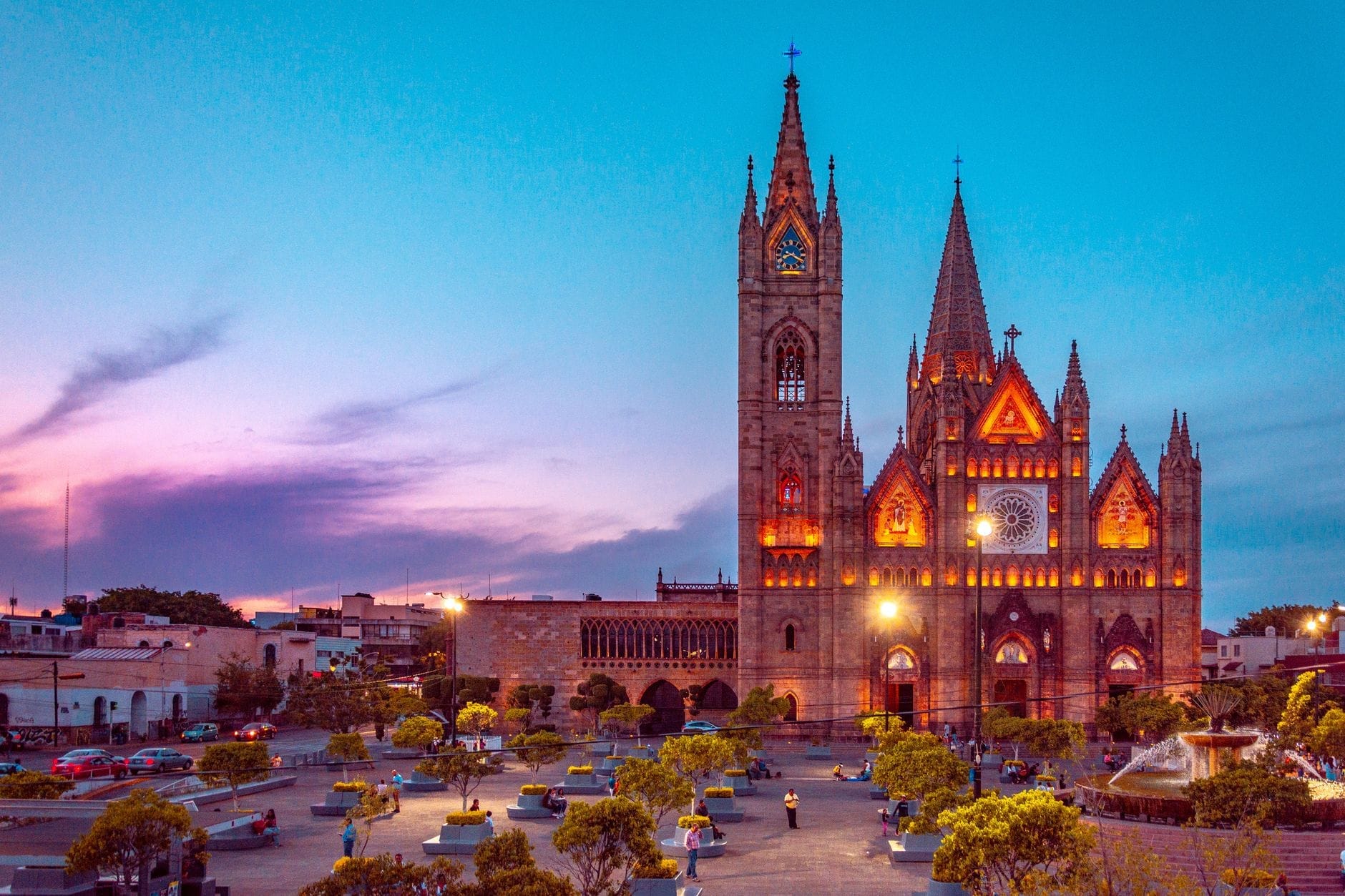
The Templo Expiatorio del Santísimo Sacramento is not the oldest or the most famous church in Guadalajara, but it is arguably the most architecturally singular. While the city's cathedral in the historic center commands attention through sheer civic weight, the Templo Expiatorio earns its standing through ambition: a full neo-Gothic program built from scratch in a Mexican city at the turn of the 20th century, at a time when European Gothicism was already fading from fashion in Europe itself.
The foundation stone was laid on 15 August 1897, a date chosen for its liturgical significance as the Feast of the Assumption. The original architectural project came from Salvador Collado, though the building would outlast many hands before its completion in 1972, roughly 75 years after ground was first broken. That extended timeline is written into the stone: look carefully at the exterior and you can detect slight shifts in finish and proportion that reflect different eras of construction.
💡 Local tip
The temple sits on a plot of approximately 4,500 square meters. Standing across Calle López Cotilla before entering gives you the clearest view of the full facade, including the twin towers and central rose window.
Architecture: What You Are Actually Looking At
Gothic revival in Latin America frequently produced simplified interpretations of the European originals, with pointed arches applied to otherwise conventional masonry churches. The Templo Expiatorio takes a more committed approach. The exterior presents a full-width facade organized around a central portal, flanked by vertical towers that draw the eye upward before the surrounding streetscape interrupts the effect. The stonework is in cream-toned quarried stone typical of the Guadalajara region, which shifts from pale gold in the afternoon to a cooler grey-white in the morning.
Inside, the nave is divided into bays by clustered piers that rise into ribbed vaulting overhead. The spatial effect is narrower and taller than the colonial baroque churches that dominate the city center, and the light enters through a series of stained glass windows that cast colored pools across the stone floor in the hours around midday. The glass panels depicting biblical scenes are among the most detailed in any Guadalajara church, and at close range they reward unhurried attention.
For broader context on how this building fits into Guadalajara's architectural history, the Guadalajara architecture guide covers the full range of styles across the city, from colonial baroque to modernist civic buildings.
Tickets & tours
Hand-picked options from our booking partner. Prices are indicative; availability and final rates are confirmed when you complete your booking.
Lake Chapala and Ajijic guided tour from Guadalajara
From 68 €Instant confirmationFree cancellationGuadalajara and Tlaquepaque guided tour
From 73 €Instant confirmationFree cancellation
Visiting by Time of Day
Morning visits, particularly between 9:00 and 11:00, offer the most peaceful experience. Local parishioners arrive for morning mass or brief private prayer, and the interior hum of the city feels genuinely far away inside the thick stone walls. The stained glass on the south-facing windows catches low-angle light during this period, throwing color across the nave floor in a way that mid-day diffused light does not replicate.
By early afternoon the exterior plaza sees foot traffic from the surrounding Colonia Americana neighborhood, including students, office workers, and visitors from nearby cafes on Avenida Chapultepec. The church itself remains quieter than the street, but the quality of meditative silence thins out. Late afternoon, particularly in the hour before closing, tends to draw small groups of architecture students and photographers working the contrast between the warm stone exterior and the cooler, darker interior.
Published hours indicate the temple is open Monday through Friday, 08:00 to 20:00. Saturday and Sunday hours are listed as closed, though this may vary for liturgical events and masses. These hours are subject to change for feast days, special services, and renovation work. Confirming directly on arrival or by calling ahead is advisable, particularly if you are organizing a specific photography session or group visit.
⚠️ What to skip
Weekend closures to visitors are the most common source of disappointment. If your schedule only allows a Saturday or Sunday visit, check current hours directly. The church remains an active parish, and schedules can shift around liturgical events.
Getting There and the Surrounding Neighborhood
The temple sits on Calle Manuel López Cotilla 935, within Colonia Americana, one of the most walkable and centrally located neighborhoods in Guadalajara. It is accessible via SITEUR Línea 1 and Línea 3, and multiple city bus routes pass close to it, including C110-B, C33, C54, and several others. Ride-hailing apps including Uber and DiDi are straightforward to use for this route; fares from the historic center are typically short and inexpensive.
The neighborhood context matters here. Colonia Americana is characterized by early 20th-century residential architecture, independent restaurants, and a walkable street grid. Colonia Americana rewards exploration beyond the temple itself, particularly along Avenida Chapultepec, where cafes and bars have established a dense, pedestrian-friendly strip.
If you are walking from the historic center, the route passes through some of the city's older residential blocks and gives a ground-level sense of how Guadalajara transitions from its colonial core to the late-19th and early 20th-century expansion. The Guadalajara walking tour guide includes a logical route connecting the cathedral area to Colonia Americana on foot.
Photography: What Works and What Does Not
The exterior facade photographs well in the two hours after sunrise and the hour before sunset, when the stonework takes on the warmest tones. The central rose window becomes a focal point against the sky during these windows. Mid-day direct overhead sun flattens the facade texture and creates harsh shadows in the portal arches, which is worth avoiding if architectural detail is your primary subject.
Inside, a wide-angle lens captures the vault height most effectively from the entrance toward the altar. Flash photography is inappropriate in an active place of worship and does little to render the stone interior well in any case. The stained glass is best captured from directly below during the hours when light passes through it actively, roughly 10:00 to 14:00 on clear days. A tripod or image stabilization is useful given the low ambient light at the nave level.
ℹ️ Good to know
This is an active Catholic church. Photography during masses is disrespectful and generally unwelcome. Arriving between services is both more considerate and practically better for unhurried photography.
Honest Assessment: Strengths and Limitations
The Templo Expiatorio is a genuine architectural achievement that merits a visit on its own terms, not just as a box to tick on a Guadalajara itinerary. However, visitors who have spent time in major Gothic cathedrals in Europe may find the scale modest by comparison. The building's significance is best understood in its Mexican context: a neo-Gothic project sustained across 75 years in a city whose architectural tradition runs to baroque and colonial forms. Seen on those terms, the perseverance embedded in the building is part of the story.
The surrounding plaza is not large and does not offer the grand civic framing that the Guadalajara Cathedral enjoys. Visitors expecting a major public square will find instead a neighborhood street corner, which in practice makes the temple feel more intimate and approachable. Those looking primarily for a major cultural event or interactive experience should note that this is a church, not a museum: there are no permanent interpretive exhibits, no audioguides, and no gift shop.
Travelers interested in Guadalajara's broader religious and civic architecture should combine this with a visit to the Guadalajara Cathedral and the Hospicio Cabañas, which together form a more complete picture of the city's architectural and cultural heritage.
Practical Details
- Address: Calle Manuel López Cotilla 935, Colonia Americana, Guadalajara, Jalisco 44160
- Hours: Monday to Friday 08:00–20:00; Saturday and Sunday generally closed to visitors (confirm locally before visiting)
- Entry: Free; private guided tours through third-party operators carry separate fees in MXN
- Dress code: Modest attire appropriate for a place of worship; covered shoulders recommended
- Accessibility: Active parish church; on-site accessibility features should be confirmed directly, as detailed information is not publicly available
- Language: Spanish; staff or volunteers may not speak English
- Photography: Permitted between services; tripod and wide-angle lens recommended inside
Insider Tips
- The 75-year construction period left subtle seams in the exterior stonework. Looking at the towers versus the lower nave sections reveals differences in stone finish and tool marks, a quiet record of different generations of craftsmen.
- Mass schedules vary by day and season. If you arrive to find a service in progress, wait 20 to 30 minutes at the entrance plaza rather than trying to visit mid-service. The exterior alone justifies the wait.
- The stained glass is dramatically underlit on overcast days. Guadalajara's rainy season runs June through September; clear dry-season mornings from November to April offer the best internal light.
- Colonia Americana's cafe scene on nearby Avenida Chapultepec makes a natural pairing with this visit. Plan the church for mid-morning, then walk toward Chapultepec for coffee or lunch.
- Guided city walking tours that include the Templo Expiatorio often provide architectural interpretation not available inside the church itself. Third-party tour operators listed on platforms like GetYourGuide offer context that significantly deepens the visit.
Who Is Templo Expiatorio del Santísimo Sacramento For?
- Architecture enthusiasts interested in Gothic revival outside Europe
- Photographers seeking dramatic stonework and stained glass interiors
- Visitors who want a quiet, reflective space away from the busier historic center
- Travelers pairing a Colonia Americana neighborhood walk with a cultural anchor
- History-minded visitors interested in the 19th and 20th-century development of Guadalajara
Nearby Attractions
Other things to see while in Colonia Americana:
- Colonia Americana Street Art & Mural Route
Colonia Americana's streets double as a free, ever-changing gallery of large-scale murals and urban art. Set in a late-19th- and early-20th-century neighborhood west-southwest of the historic center, the route is walkable, photogenic at almost any hour, and best explored at a slow pace with time to stop in the cafés and bars lining Avenida Chapultepec.
- MUSA — Museo de las Artes de la Universidad de Guadalajara
Operated by the University of Guadalajara since 1994, MUSA is one of the city's most significant fine arts institutions, housing murals by José Clemente Orozco alongside rotating contemporary exhibitions. Located on Avenida Juárez in Colonia Americana, it charges no admission and draws a crowd that skews local and academic rather than touristic.