José Clemente Orozco Murals in Guadalajara: Complete Guide
Guadalajara holds the greatest concentration of José Clemente Orozco murals in the world, anchored by the UNESCO-listed Hospicio Cabañas and the Palacio de Gobierno. This guide covers every major site, what to look for in each fresco cycle, practical visiting logistics, and clear guidance on what to skip.
Plan and book this trip
Tools from our partner Travelpayouts help you compare flights and hotels. If you book through them, we may earn a commission at no extra cost to you.
Flights
Hotels map
TL;DR
- The Orozco murals at Hospicio Cabañas — a UNESCO World Heritage Site — are the centerpiece: a full fresco cycle culminating in the dome painting 'El Hombre de Fuego' (Man of Fire).
- The Palacio de Gobierno de Jalisco holds a second major mural cycle on the main staircase; access is free but can be restricted on government event days.
- Three key sites cover most of Orozco's Guadalajara legacy: Hospicio Cabañas, the Palacio de Gobierno, and the University of Guadalajara Auditorium.
- All mural interiors are climate-independent — a good choice during Guadalajara's rainy season (June–September) or midday heat.
- Budget a half-day minimum for Hospicio Cabañas alone; rushing it means missing the full program of vaults, lunettes, and corridors.
Who Was José Clemente Orozco — and Why Guadalajara?
José Clemente Orozco (1883–1949) is one of the three founding figures of the Mexican Muralist Movement, alongside Diego Rivera and David Alfaro Siqueiros. While Rivera is better known internationally, Orozco is widely regarded by art historians as the movement's most psychologically complex painter: his work is darker, more expressionist, and less ideologically schematic than Rivera's. Where Rivera painted didactic histories, Orozco painted moral crises.
Guadalajara, Jalisco is where Orozco produced his most monumental work. Born in Ciudad Guzmán (then Zapotlán el Grande) in Jalisco, he had a personal connection to this city and returned here in the 1930s and 1940s to create the fresco cycles that most artists and critics consider his masterpieces. The murals at Hospicio Cabañas, the Palacio de Gobierno, and the University of Guadalajara represent a concentrated legacy that no other Mexican city can match. Visitors sometimes arrive expecting a single famous painting; they find an entire city threaded with his vision.
ℹ️ Good to know
Common mix-up: Diego Rivera painted very few works in Guadalajara. The monumental murals at Hospicio Cabañas, the Government Palace staircase, and the University Auditorium are all by Orozco. If a tour or article attributes these to Rivera, treat it as a red flag for accuracy.
Hospicio Cabañas: The Essential Stop
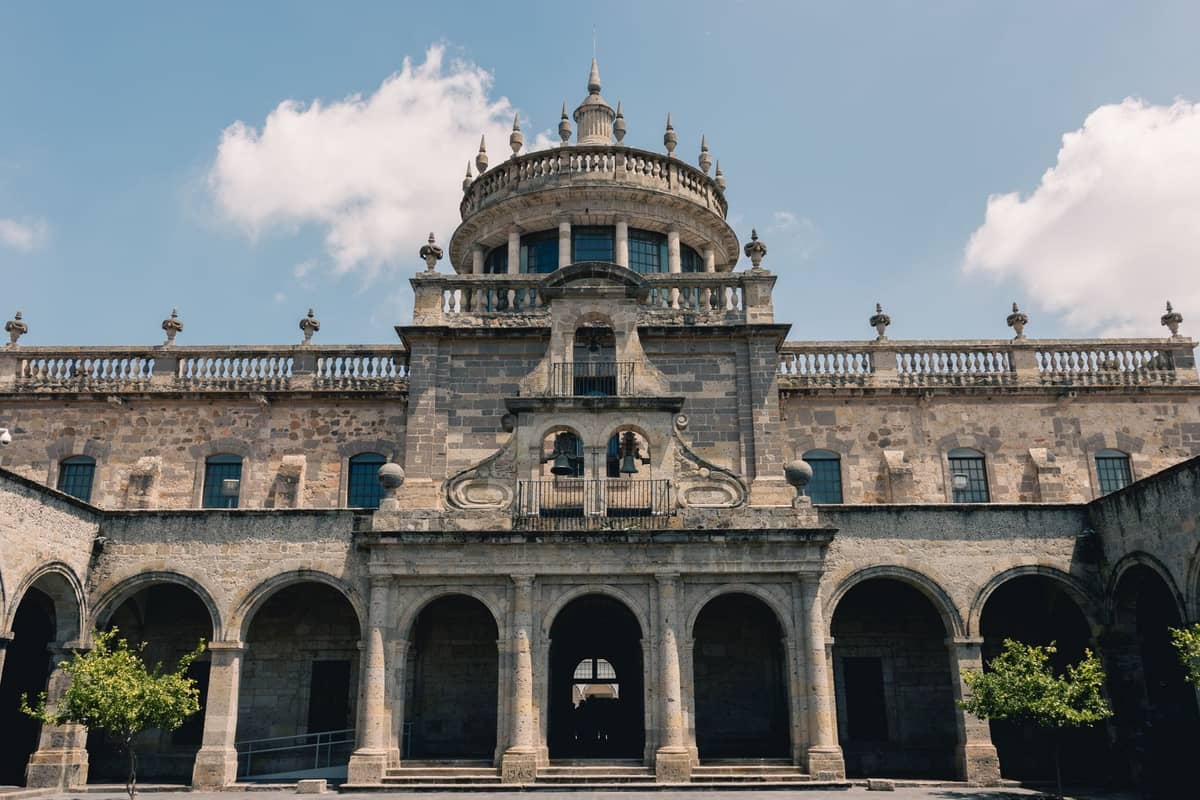
The Instituto Cultural Cabañas (Hospicio Cabañas) is the non-negotiable anchor of any Orozco itinerary. The building itself is a neoclassical masterwork commissioned in the early 19th century by Bishop Juan Cruz Ruiz de Cabañas as an orphanage and care institution. In 1997, UNESCO inscribed it as a World Heritage Site — recognizing both the architecture and Orozco's frescoes as an inseparable artistic unit. It sits at the eastern end of Plaza Tapatía in the Centro Histórico, about a 10-minute walk from the Cathedral.
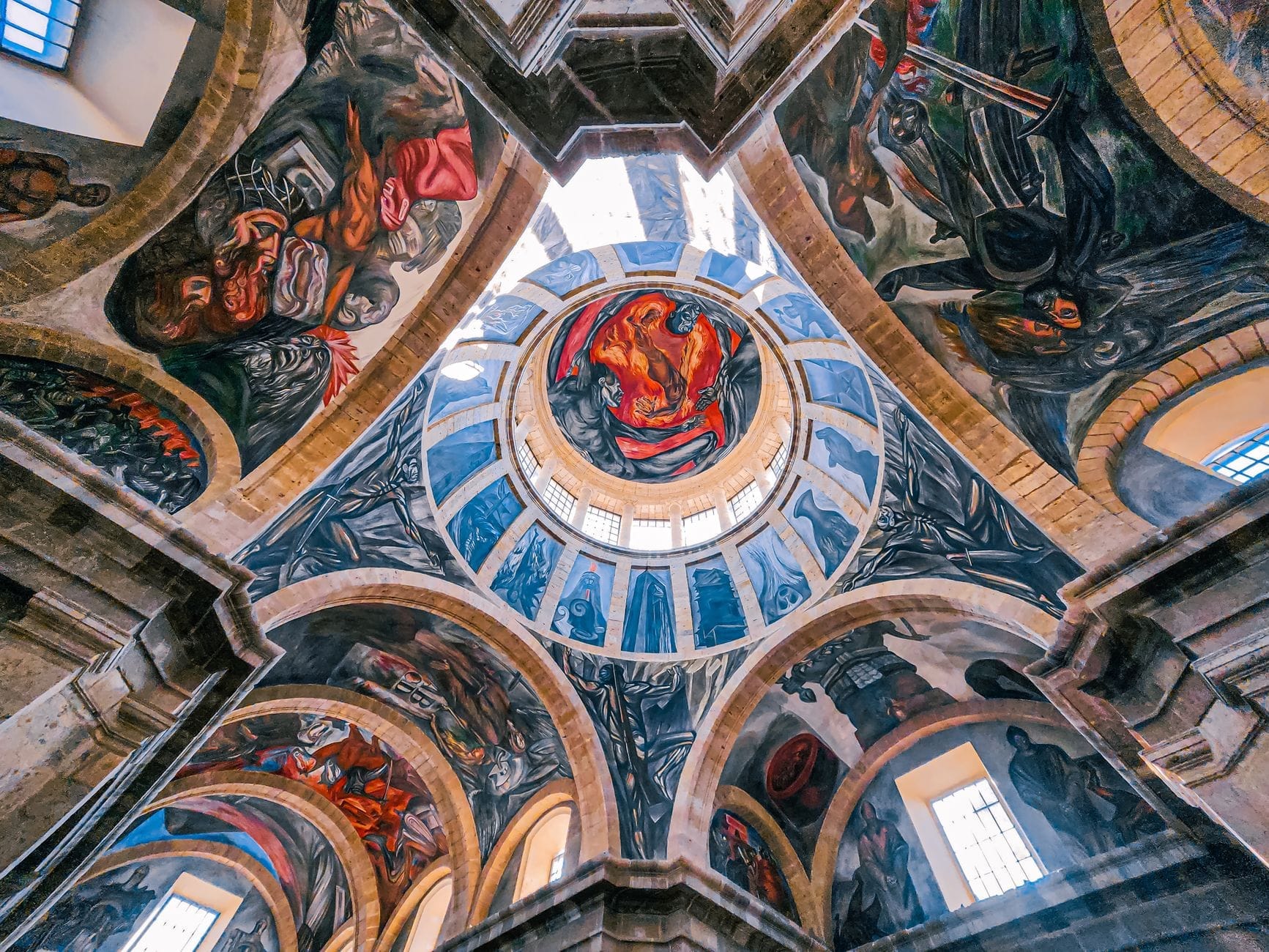
Orozco painted the fresco cycle here between 1938 and 1939, covering the chapel's vaults, lunettes, pendentives, and the famous central dome. The program is enormous — not one painting but dozens of interconnected images spanning themes of conquest, fire, knowledge, suffering, and human transformation. First-time visitors often walk straight to the dome and miss the surrounding narrative entirely. Take time to move through the lateral naves first, reading the sequence that builds toward the central chapel.
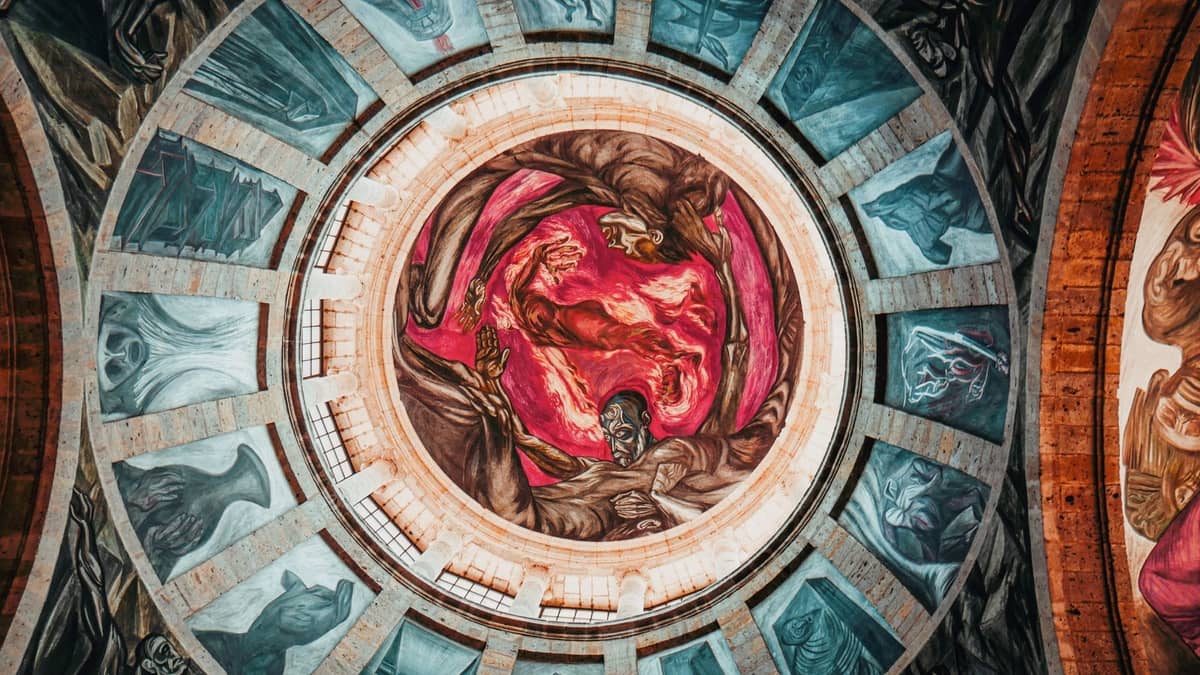
The dome painting, 'El Hombre de Fuego' (Man of Fire), shows a human figure consumed by and ascending through flames — an image of purification or destruction depending on your reading, which is precisely Orozco's intention. Lie on the padded benches placed directly below the dome; they exist for this purpose and allow you to study the image without neck strain. The painting rewards time. Bring binoculars if you have them — the detail in the surrounding pendentives is extraordinary at close range.
- Location Calle Cabañas 8, Barrio Las Fresas, Guadalajara — eastern end of Plaza Tapatía, Centro Histórico.
- Admission Paid entry; check current prices at institutocabanas.jalisco.gob.mx before visiting as rates change periodically.
- Hours Generally Tuesday–Sunday; closed Mondays. Verify specific hours on the official site before planning your visit.
- Time needed Minimum 1.5 hours; 2.5–3 hours if you want to read the full fresco cycle seriously and visit the rotating contemporary exhibitions.
- Best visiting time Weekday mornings (Tuesday–Thursday before noon) see the fewest tour groups. Weekends can get crowded by 11 a.m.
💡 Local tip
The building hosts rotating contemporary art exhibitions alongside the permanent Orozco frescoes. These can be worth seeing in their own right, but if your time is short, go straight to the main chapel and central dome first. The contemporary galleries are near the entrance and easy to revisit at the end.
Palacio de Gobierno de Jalisco: Orozco on the Staircase
The second essential site is the Palacio de Gobierno de Jalisco on Plaza de Armas, about 600 meters west of Hospicio Cabañas and directly adjacent to the Cathedral. Entry to see the murals is free, though as an active government building, access can be restricted when official functions are taking place — usually without advance notice online. Aim for weekday mornings and be prepared to wait briefly at the entrance while guards verify access.
Orozco painted two major works here. The grand staircase mural, completed in 1937, is the one most visitors come for: it depicts the 19th-century independence hero Miguel Hidalgo as a towering figure raising a torch above a writhing scene of subjugation and conflict. The scale and drama are immediate — unlike the Cabañas frescoes, which reward slow reading, this mural hits you the moment you reach the top of the stairs. There is also a smaller but equally intense mural in the Congress Hall (Sala del Congreso) depicting a nightmarish allegory of political power and demagogy, painted in 1948 near the end of Orozco's life. Both are worth seeing.
⚠️ What to skip
Access to the Palacio de Gobierno can be cut off on short notice during state ceremonies, legislative sessions, or security events. Major holidays and days around Mexican Independence (mid-September) are particularly unpredictable. Check the Gobierno de Jalisco portal before walking over, or plan a backup order to your itinerary so you can return later the same day.
University of Guadalajara and Other Orozco Sites
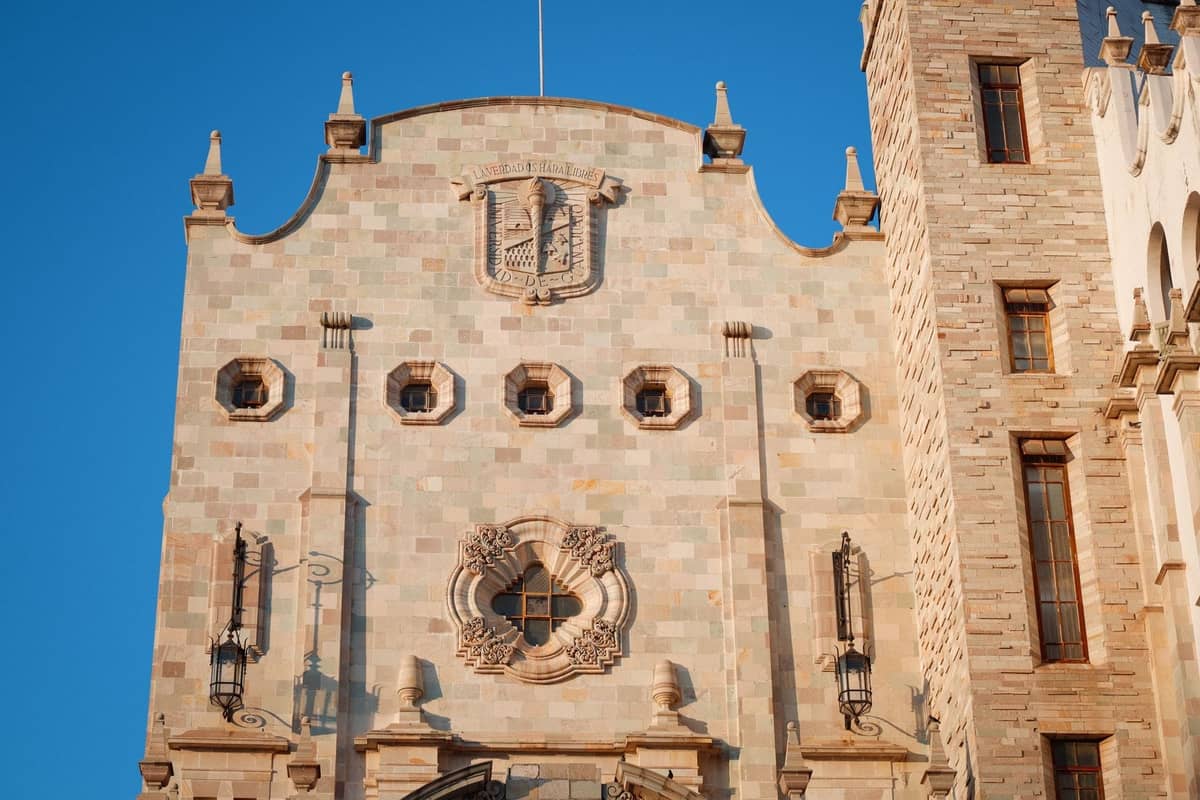
The Paraninfo (Auditorium) of the University of Guadalajara on Avenida Juárez contains another Orozco fresco cycle, painted between 1936 and 1937. The central work covers the dome and stage area, depicting allegories of knowledge, science, and cultural struggle. It is less visited than Cabañas but significant, and the neoclassical building itself is architecturally distinctive. Access is typically free when the auditorium is not in use for university events — again, verify before visiting.
For those wanting deeper context, the Casa Taller José Clemente Orozco (Museo Clemente Orozco) is the artist's former home and studio in Guadalajara. It functions as a small museum with personal artifacts, drawings, and documentation of his life and process. It is not as visually spectacular as the mural sites, but for anyone seriously interested in Orozco as a figure, the studio offers a different register of understanding. The house is located in a residential part of the city; check current hours before visiting as small museums in Guadalajara often have irregular schedules. Combine a visit here with the nearby Colonia Americana neighborhood for a half-day itinerary that mixes art history with the city's best café culture.
- Hospicio Cabañas (UNESCO): The essential site — full fresco cycle, central dome, 1.5–3 hours
- Palacio de Gobierno: Free, dramatic staircase mural and Congress Hall painting, 30–45 minutes
- University of Guadalajara Paraninfo: Dome frescoes, less crowded, typically free, 30–45 minutes
- Casa Taller / Museo Clemente Orozco: Former studio, personal artifacts, context-heavy, 30–60 minutes
Planning Your Orozco Route: Logistics and Timing
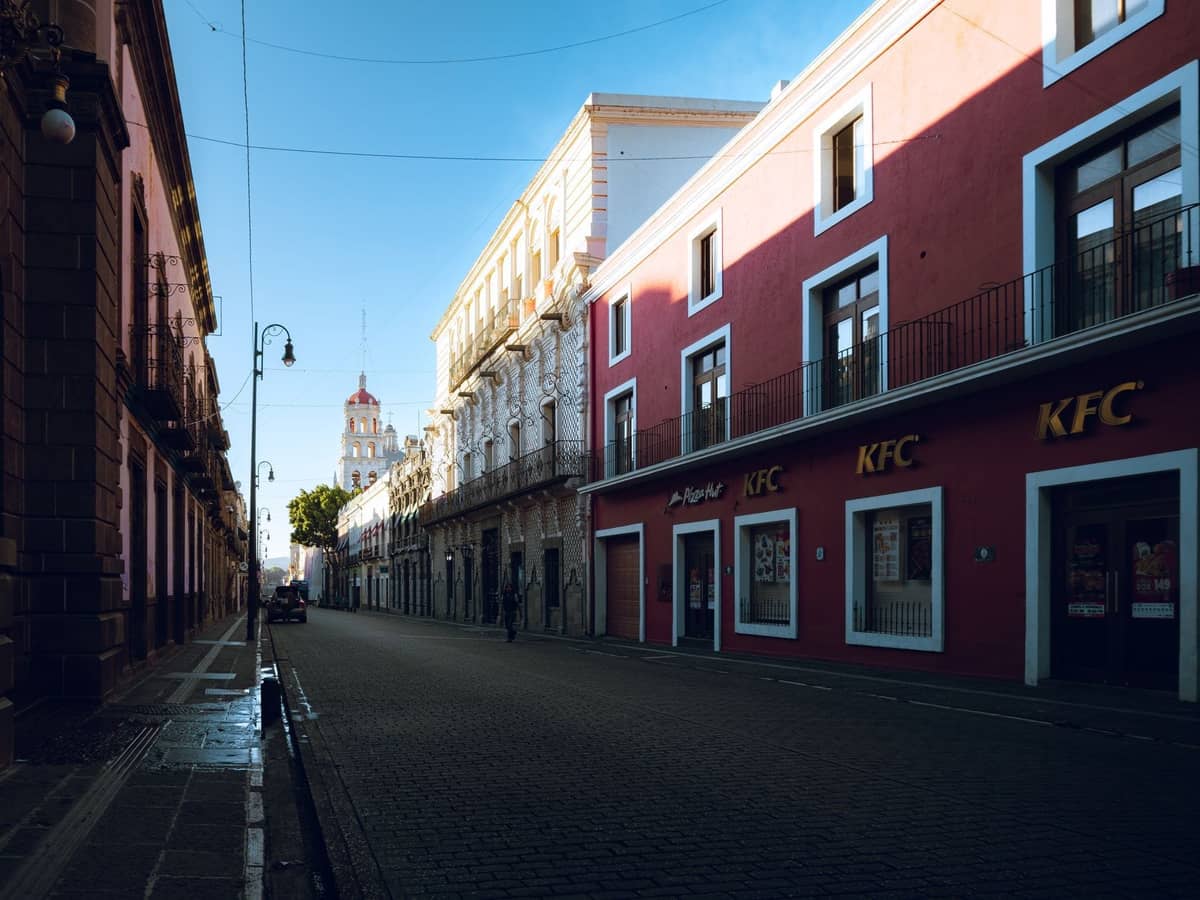
All four main Orozco sites are in central Guadalajara, and three of them — Hospicio Cabañas, the Palacio de Gobierno, and the University Paraninfo — are within roughly 1.5 kilometers of each other in or near the Centro Histórico. If you're planning a full day dedicated to Orozco, start at Hospicio Cabañas when it opens (it sees the fewest visitors before 10 a.m.), then walk to the Palacio de Gobierno, then continue to the University Paraninfo. This covers the three major sites in a half-day without rushing. Pair the afternoon with a walking tour of the historic center to see the broader architectural and cultural context surrounding the murals.
All four sites are indoors, which makes this itinerary workable year-round regardless of Guadalajara's weather. During the rainy season (June–September), afternoon downpours are common but typically short-lived; the mural route is one of the better options for midday and early afternoon in that season. In December and January, mornings can be cool at around 8°C but the sites themselves are comfortable inside.
Getting around the Centro Histórico is straightforward on foot or by ride-hail. Uber and DiDi both operate in Guadalajara; fares within the historic center are typically under 80 MXN. The metro is useful for arriving from other neighborhoods — Line 1 stops at Periférico Sur (southern approach) and Juárez (central) stations near the main sites. For a full overview of getting around the city, see the Guadalajara transport guide.
Guided Tours vs. Self-Guided: What Actually Works
Hospicio Cabañas offers its own audio guides and occasional guided tours in Spanish and English; ask at the ticket desk when you arrive. These are worth taking for a first visit because the fresco program has a deliberate visual logic — knowing what to look for in the lunettes before you reach the dome changes the experience significantly.
Private guided tours focused specifically on Orozco and the muralist tradition are available through local operators including GDL Tours, which has run Orozco-specific itineraries for several years. A dedicated mural tour typically covers Cabañas, the Palacio de Gobierno, and the University in one session with an art-historian guide, running around 3–4 hours. These are particularly good if you have limited time and want interpretive depth without doing your own research in advance. Self-guided visits work fine if you read up beforehand — but walking into Hospicio Cabañas cold, without any background on the fresco program, means you'll likely underestimate what you're looking at.
✨ Pro tip
If you're visiting Guadalajara for more than two days, consider spacing out the mural sites rather than doing them all in one push. Seeing Hospicio Cabañas on day one and returning to the Palacio de Gobierno on day two, after absorbing more context, gives both sites more resonance. The murals reward repeat visits and fresh eyes.
For a broader cultural itinerary that incorporates the Orozco sites alongside Guadalajara's other major museums and historic buildings, the guide to the best museums in Guadalajara provides a useful ranking and practical details. If you're building a three-day itinerary around the city's cultural highlights, the 3-day Guadalajara itinerary slots the Orozco route into a broader program including Tlaquepaque and Zapopan.
FAQ
Where are the Orozco murals in Guadalajara?
The main sites are: Hospicio Cabañas (Instituto Cultural Cabañas) on Calle Cabañas 8 in the Centro Histórico; the Palacio de Gobierno de Jalisco on Plaza de Armas; the University of Guadalajara Paraninfo on Avenida Juárez; and the Casa Taller / Museo Clemente Orozco (his former studio). All are within the central city and walkable from each other except the studio, which is in a different neighborhood.
Is Hospicio Cabañas free to visit?
No. Hospicio Cabañas charges an entry fee. Prices change periodically, so check the current rates at institutocabanas.jalisco.gob.mx before visiting. The Palacio de Gobierno and University Paraninfo are generally free when open to the public.
How long does it take to see the murals at Hospicio Cabañas?
Allow a minimum of 1.5 hours to see the full fresco cycle meaningfully, including the central dome and surrounding vaults. If you want to spend serious time with the paintings or take a guided tour, plan for 2.5–3 hours. Rushing it is the most common mistake visitors make.
What is the 'Man of Fire' mural by Orozco?
'El Hombre de Fuego' (Man of Fire) is the central dome painting at Hospicio Cabañas, painted in 1939. It depicts a human figure consumed by and rising through flames — an ambiguous image that art historians have interpreted as representing both destruction and spiritual transformation. It is considered one of Orozco's greatest works and one of the most significant murals produced in 20th-century Mexico.
Can you visit the Orozco murals at the Palacio de Gobierno without a tour?
Yes. Entry to the Palacio de Gobierno is free and independent; you do not need to book a tour. However, as an active government building, access is sometimes restricted without advance notice during official functions, state ceremonies, or security events. Weekday mornings outside of major holidays are the most reliable time to visit.