Andador Independencia: Tlaquepaque's Living Main Street
Andador Independencia is the pedestrian spine of San Pedro Tlaquepaque, a street where 18th-century summer houses have become galleries, craft shops, and open-air restaurants. Free to walk, endlessly browsable, and most alive on weekend afternoons when mariachi floats between the tables.
Quick Facts
- Location
- Calle Independencia, Centro, San Pedro Tlaquepaque, Jalisco, México
- Getting There
- Taxi or ride-share from central Guadalajara (approx. 20–40 min). Public buses from downtown also serve the area. No metro station in Tlaquepaque.
- Time Needed
- 1.5 to 3 hours for a relaxed walk with browsing; longer if you stop to eat
- Cost
- Free to walk. Spend only on food, drinks, or purchases.
- Best for
- Craft shoppers, architecture fans, couples, families, day-trippers from Guadalajara
- Official website
- www.tlaquepaque.gob.mx/pueblomagico/pueblomagico_post?id=1673
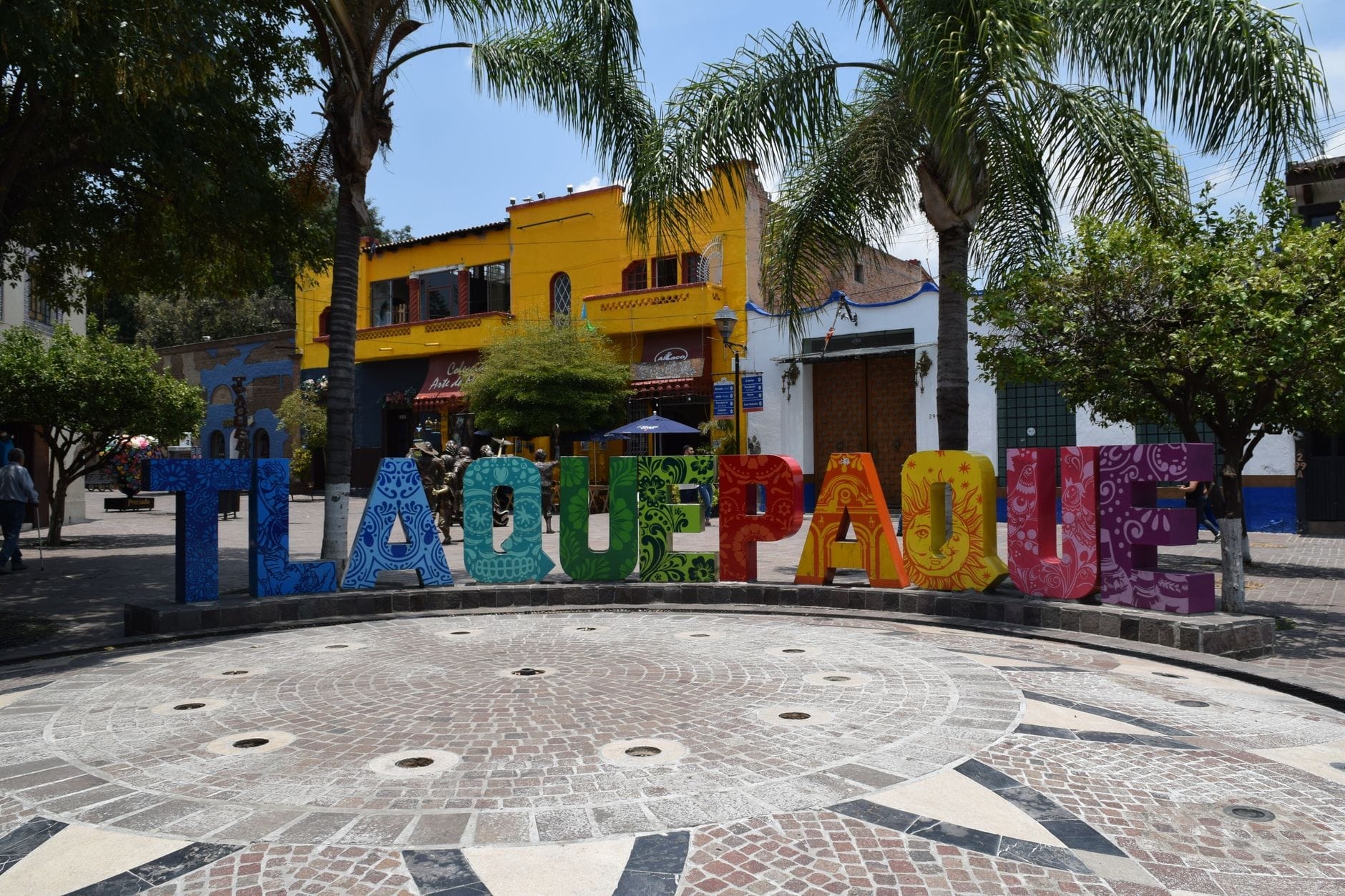
What Is Andador Independencia?
Andador Independencia, also referred to as the Andador Turístico de Tlaquepaque, is the main pedestrian thoroughfare running through the historic core of San Pedro Tlaquepaque. It stretches from Jardín Hidalgo to Avenida Niños Héroes, functioning as both a commercial strip and the cultural axis that divides the old barrios of San Juan and Santa María. The walkway is car-free, flat, and open around the clock as a public street — individual businesses set their own hours.
The street was once called Calle Real and ranks among the oldest in the region. During the 18th century, wealthy Guadalajara families chose this cooler outlying township to build summer residences (casonas de veraneo), and the architectural legacy of that era defines what you see today: wide arched doorways, interior courtyards tiled in Talavera, carved stone facades, and covered portales shading the pavement. Most of those houses now hold restaurants, galleries, and craft shops, which makes the street a rare case of heritage architecture that earns its keep rather than sitting behind a rope.
💡 Local tip
Shops and galleries typically open late morning and close by early evening. Arrive before noon if you want the street to yourself; arrive around 1 p.m. on a weekend if you want atmosphere. Many businesses reduce hours or close on Mondays.
The Street at Different Hours
Early morning, Andador Independencia belongs to locals. Street sweepers clear the cobblestones, café owners stack chairs down from tables, and the light falls low and warm across the stone facades before the sun clears the rooflines. The air carries the faint smell of freshly watered plants from the courtyard gardens inside the old casonas. If you are staying nearby, this hour is the best time to photograph the architecture without crowds or commercial clutter in the frame.
By late morning the shutters go up. Shops selling hand-blown glass, painted ceramics, leather goods, huichol beadwork, and hand-embroidered textiles begin drawing foot traffic. The street shifts into its working rhythm: unhurried but purposeful, with vendors occasionally standing at their doorways to greet passersby. This window, roughly 11 a.m. to 1 p.m., suits people who want space to browse without pressure.
Weekend afternoons are a different proposition. The portales fill with tables, food smells drift from the restaurant kitchens, and mariachi groups move between dining parties. It becomes genuinely lively without tipping into overwhelming, partly because the street is wide enough to absorb the crowd. By around 3 p.m. on a Saturday, nearly every table along the arcade is occupied, and there is a specific sound the place makes when that happens: overlapping conversation, guitar, and the clatter of plates arriving.
After about 6 p.m. on weekdays, the shop doors close and the pace slows. The restaurants stay open later, and the street lights cast a softer glow over the stone surfaces. Evening here is pleasant but quieter; there is none of the nightlife energy you find in Colonia Americana or along Chapultepec.
Tickets & tours
Hand-picked options from our booking partner. Prices are indicative; availability and final rates are confirmed when you complete your booking.
Guadalajara and Tlaquepaque guided tour
From 73 €Instant confirmationFree cancellationLake Chapala and Ajijic guided tour from Guadalajara
From 68 €Instant confirmationFree cancellation
Architectural and Historical Context
San Pedro Tlaquepaque was a separate municipality with its own identity long before Guadalajara's urban sprawl absorbed the surrounding territory. The township was already an established artisan center by the colonial period, and the mansions along Calle Real (later renamed Independencia) reflect the prosperity that came from both craftsmanship and its appeal as a retreat for Guadalajara's elite. The street's full pedestrianization, which occurred in the second half of the 20th century, removed traffic and formalized what it had been drifting toward for decades: a place to walk and spend time, not just pass through.
The built fabric along the andador mixes colonial residential architecture with later 19th-century interventions. Look for the stone surrounds on doorways, the painted plaster in faded terracotta and yellow ochre tones, and the glimpses of interior patios visible through open gates. These courtyards often have a central fountain, potted plants arranged against the walls, and caged birds whose sounds you hear before you see them. For visitors interested in the broader architectural context of the region, the Guadalajara architecture guide provides useful background on colonial and neo-colonial building traditions across Jalisco.
What to Actually Do Along the Street
The honest answer is: browse, eat, and look at things. Andador Independencia does not have a single headline attraction you come to see and leave. Its value is cumulative. You walk its length, which takes under ten minutes if you do not stop, and then you slow down and let the individual shops and courtyards pull you in. The ceramics sold here range from tourist-grade painted mugs to genuinely high-quality hand-thrown pieces. Knowing the difference matters if you are buying to take home.
The Parián, a covered market complex at the heart of the walkway, is the social anchor of the andador. Its large open courtyard is surrounded by food and drink stalls and is the place most visitors end up settling for a while. Mariachi performances happen here with some regularity on weekends. The Parián de Tlaquepaque is worth treating as a destination in itself rather than just a pass-through point.
Beyond shopping and eating, there are several small museums and galleries along the walkway. The Museo Regional de la Cerámica is directly in the area and documents the artisan traditions that gave Tlaquepaque its identity. It is worth an hour for anyone interested in the context behind the crafts being sold on the street outside.
ℹ️ Good to know
Tlaquepaque is designated a Pueblo Mágico — a federal cultural heritage classification applied to Mexican towns of significant historical or cultural value. The designation brings infrastructure investment but also tourist traffic; weekends can be genuinely busy during high season (November through January) and around public holidays.
Getting There and Getting Around
Andador Independencia sits in the center of San Pedro Tlaquepaque, roughly 20 to 40 minutes from central Guadalajara by taxi or ride-share, depending on traffic. Uber and DiDi both operate in the metro area and will get you there without negotiation. Public buses from downtown Guadalajara also serve Tlaquepaque, though navigation is harder for first-time visitors. If you are planning a broader day out in the metro area, consider pairing Tlaquepaque with a stop in nearby Tonalá, which has a different character but equally strong craft markets.
Once in Tlaquepaque, Andador Independencia and the streets immediately surrounding it are all walkable. The terrain is flat, the street itself is car-free, and the relevant shops, restaurants, and museums are all within a few minutes of each other on foot. Wear comfortable shoes; the cobblestones on side streets can be uneven. The main andador surface is generally smooth and accessible at ground level, though individual shop entrances vary.
If this is your first time visiting Tlaquepaque as part of a wider Guadalajara trip, the 3-day Guadalajara itinerary gives a practical framework for fitting it in alongside the city's other major areas.
Photography and Practical Notes
The andador photographs well in the morning, when shadows are long and the facades show their texture before direct overhead light flattens everything. The interior courtyards visible through open gates are worth framing: they offer a depth and color contrast that the street-facing shots lack. On overcast days, the diffused light suits the painted plaster tones particularly well.
Tlaquepaque's climate mirrors Guadalajara's: warm and dry from November through May, with afternoon rains possible from June through September. A light rain jacket is worth carrying from June onward. The dry season, roughly November through April, brings the most reliably comfortable walking weather and coincides with the busiest tourist period, so expect more foot traffic during those months.
⚠️ What to skip
Parking around the andador is limited. If you are arriving by private vehicle, allow extra time. Ride-share drop-off near Jardín Hidalgo is more straightforward.
Who Should Skip This
Visitors with no interest in crafts, ceramics, or browsing shops will find the andador pleasant but brief. You can walk its full length in under 10 minutes; without the gravitational pull of the shops and restaurants, there is not much to anchor you. People seeking architectural depth will find more to engage with in the historic core of Guadalajara itself — particularly around Hospicio Cabañas or the cathedral district — where the monumental scale and institutional history carry greater weight.
Visitors who are sensitive to sales attention may find some blocks of the andador more pressured than others, particularly near stalls aimed at day-trip tourist groups. This is not overwhelming by any standard, but it is not a passive browse in the way that a museum is.
Insider Tips
- The quality of crafts varies significantly from shop to shop. Pieces sold in the converted courtyard casonas, away from the main foot-traffic stalls, tend to be of higher quality and come with more knowledgeable sellers.
- If you want a mariachi performance at your table in the Parián, weekend afternoons between 2 p.m. and 4 p.m. offer the most options. Groups circulate through the courtyard and you can negotiate directly.
- Walk the side streets off the andador, particularly toward Calle Juárez and Calle Morelos. Some of the best gallery spaces and quieter restaurants are one or two blocks from the main promenade, with significantly fewer tourists.
- Prices on the andador are generally fixed in the larger shops; smaller stalls and market vendors are more open to negotiation, especially in the afternoon when they are trying to clear stock before closing.
- Many shops close or reduce hours on Mondays. If your schedule allows, Tuesday through Sunday gives the fullest experience.
Who Is Andador Independencia (Tlaquepaque) For?
- Craft and artisan goods shoppers looking for quality Jalisco ceramics, blown glass, and textiles
- Couples wanting a relaxed half-day outing from Guadalajara with food, browsing, and atmosphere
- Families with older children who can browse at their own pace without structured programming
- Architecture and heritage enthusiasts interested in 18th-century colonial residential buildings
- First-time visitors to Guadalajara wanting an accessible introduction to Jalisco artisan culture
Nearby Attractions
Other things to see while in San Pedro Tlaquepaque:
- El Parián de Tlaquepaque
Built in 1878 on the former main square of Tlaquepaque, El Parián de Tlaquepaque is a colonnaded market complex that has reinvented itself as the social heart of one of Guadalajara's most craft-focused neighborhoods. Around 18–19 bars and restaurants wrap around a central kiosk and garden, where mariachi groups perform most evenings. Entry is free.
- Museo Regional de la Cerámica de Tlaquepaque
Housed in a colonial casona dating to around 1780, the Museo Regional de la Cerámica de Tlaquepaque offers free entry and a focused look at the ceramic traditions that made this corner of Jalisco famous. It sits at the heart of Tlaquepaque's pedestrian corridor, making it a natural anchor for any craft-focused visit.