Mosta is one of Malta's most populous inland towns, defined by its monumental Rotunda church and a genuine, unhurried pace of local life. It sits at the geographic heart of the island, making it an accessible base and a rewarding half-day stop for travelers moving between Valletta, Mdina, and the northern coast.
Mosta is the town that proves Malta's most extraordinary things can exist far from the tourist trail. Its skyline is dominated by one of the largest unsupported church domes in the world, yet the streets around it belong entirely to Maltese daily life: corner grocers, church bells marking the hour, and old men playing cards in the shade. It is not a resort destination, but it is one of the most authentically Maltese places on the island.
Orientation
Mosta occupies a plateau in the Northern Region of Malta, sitting roughly at the geographic center of the main island at around 80 meters above sea level. It borders Naxxar to the east, Gharghur and Burmarrad to the north, Mgarr and Attard to the west, and Birkirkara to the south. This central position gives the town a practical importance well beyond its size: nearly every cross-island bus route passes within a few kilometers of it.
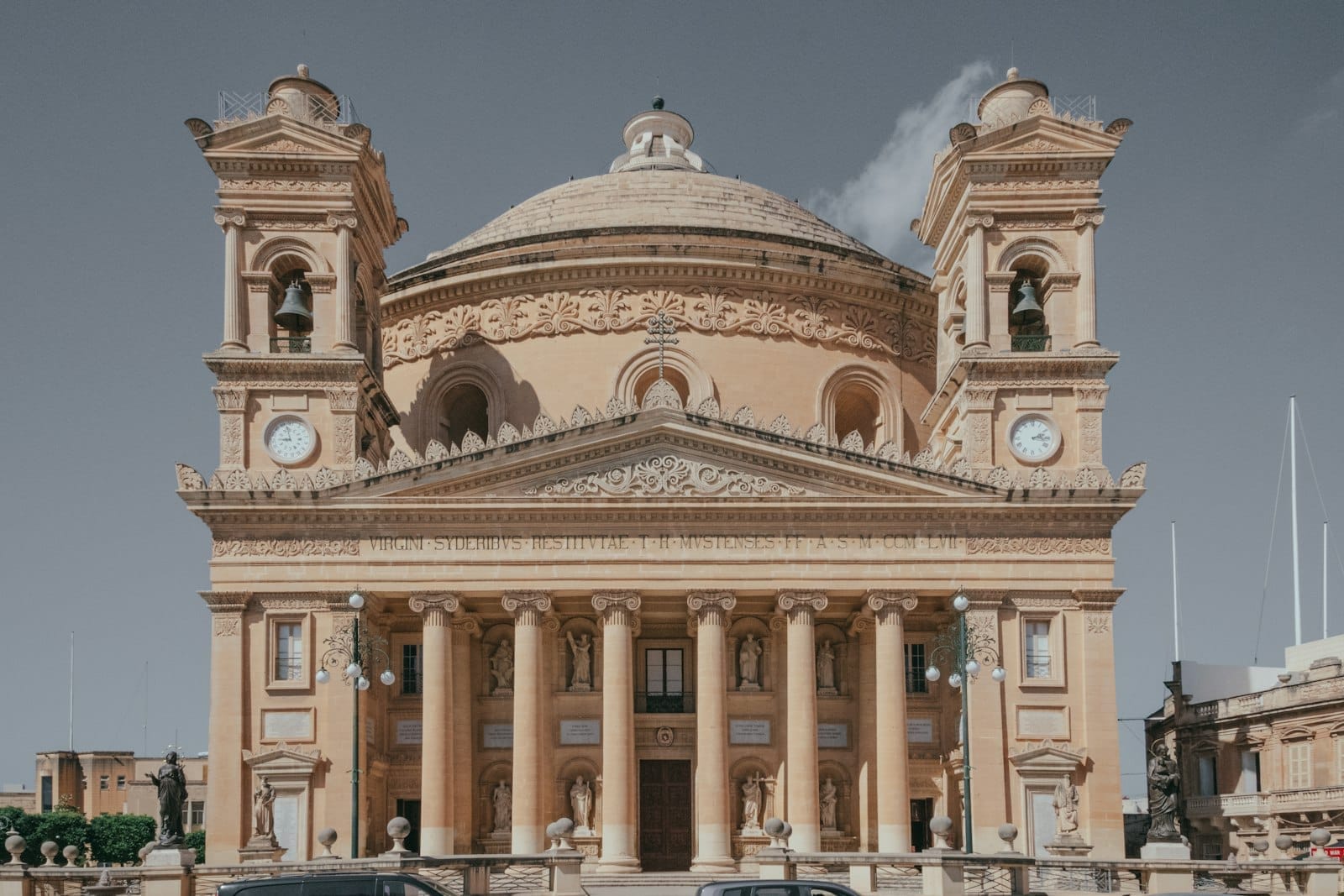
The town itself is organized around the Rotunda, the great parish church whose dome is visible from kilometres in every direction. From that central anchor point, the main commercial streets radiate outward, eventually giving way to dense residential neighborhoods and, on the northern and western edges, the wide open farmland of the Maltese interior. Mosta Valley extends northward from the town, offering one of the few genuinely green corridors in this part of the island.
For travelers building a mental map, Mosta sits roughly 10 km northwest of Valletta, about 5 km north of Mdina and Rabat, and around 12 km south of Mellieha. It is not a coastal town, so it does not compete with Sliema or St. Julian's for beach-focused visitors, but it works well as a base for those who want quick access to both the historic center and the northern beaches without paying coastal prices.
Character & Atmosphere
Mosta functions as a real Maltese town rather than a visitor destination, and that distinction matters enormously for how it feels on the ground. Early mornings are quiet and domestic: the smell of fresh bread from the local ftira shops, the sound of shutters being opened, delivery vans navigating streets that were never designed for them. The Rotunda's bells carry across the rooftops on the hour, a sound that anchors the town's rhythm as reliably as any clock.
By mid-morning, the main square around the church fills with a mix of locals running errands and visitors who have made the detour from Valletta or Mdina. This is when Mosta shows both sides of itself: the Rotunda draws coaches and day-trippers, but step one street away and you are in a residential Malta that sees almost no tourist traffic. The contrast is striking and, for many travelers, exactly what they were looking for.
Afternoons in summer are slow and hot, and most sensibly minded people retreat indoors between about 1pm and 4pm. The streets genuinely empty out. The light in the late afternoon turns the honey-colored limestone facades a deep amber, and the Rotunda in that light is one of the more photogenic sights on the island. Evenings bring a local social scene back to the outdoor tables near the church and along the main streets, with families out for the passeggiata and groups at the cafes.
ℹ️ Good to know
Mosta's festa (village feast) in honour of the Assumption of Our Lady takes place in August and transforms the town centre with elaborate street decorations, brass band marches, and fireworks. If you happen to be in Malta during this period, it is one of the most authentic festa experiences on the island.
What to See & Do
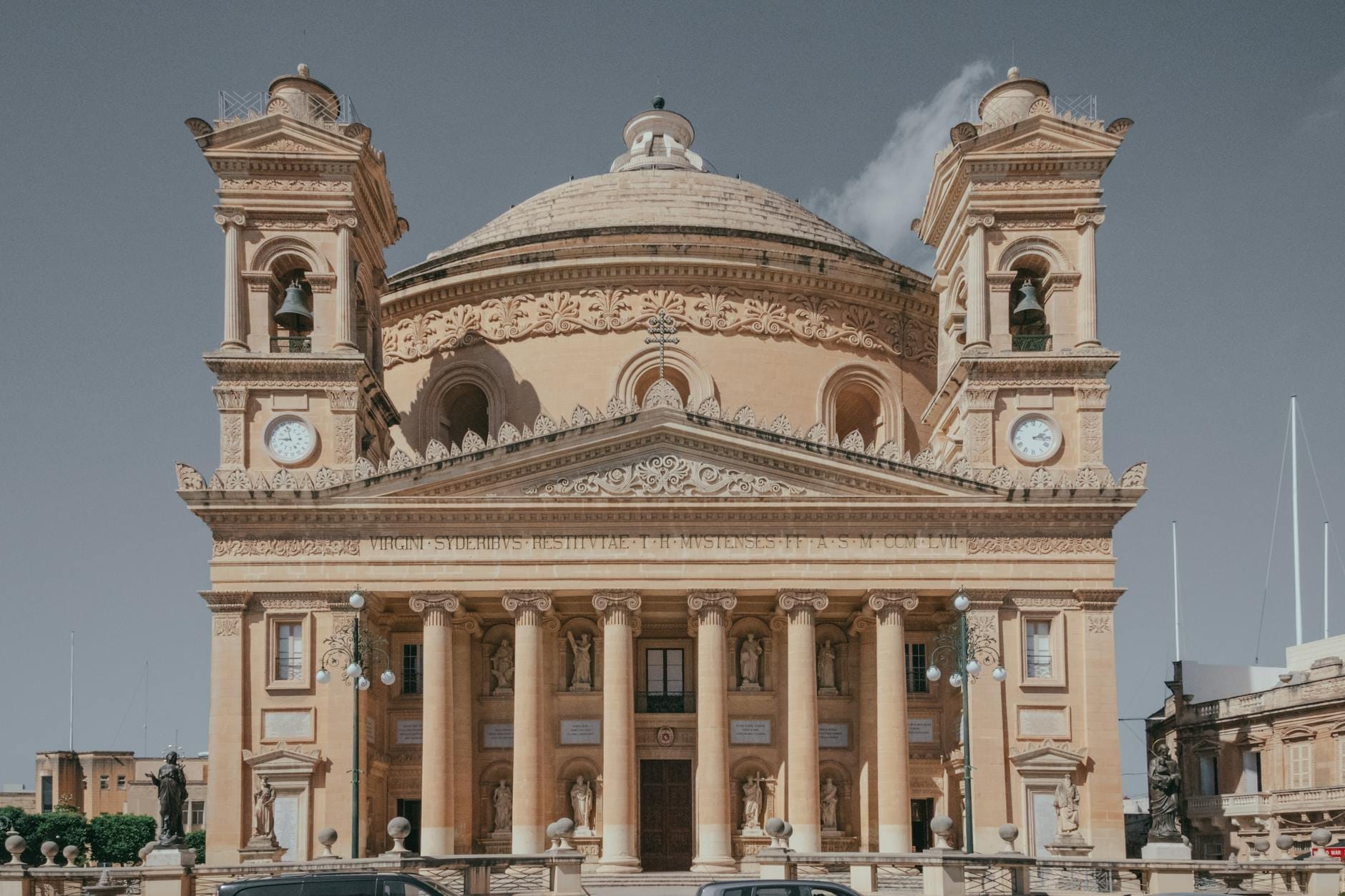
The reason most visitors come to Mosta at all is the Rotunda of Mosta, and it justifies every bit of the detour. Formally known as the Parish Church of the Assumption of Our Lady, the Rotunda was built between 1833 and 1871 and modelled on Rome's Pantheon. The external diameter measures 55.2 meters, with an internal span of 39.6 meters, making it one of the largest unsupported domes in Europe — often cited as the third or fourth largest. Six Ionic columns anchor the main south-facing facade, and twin steeples flank each side.
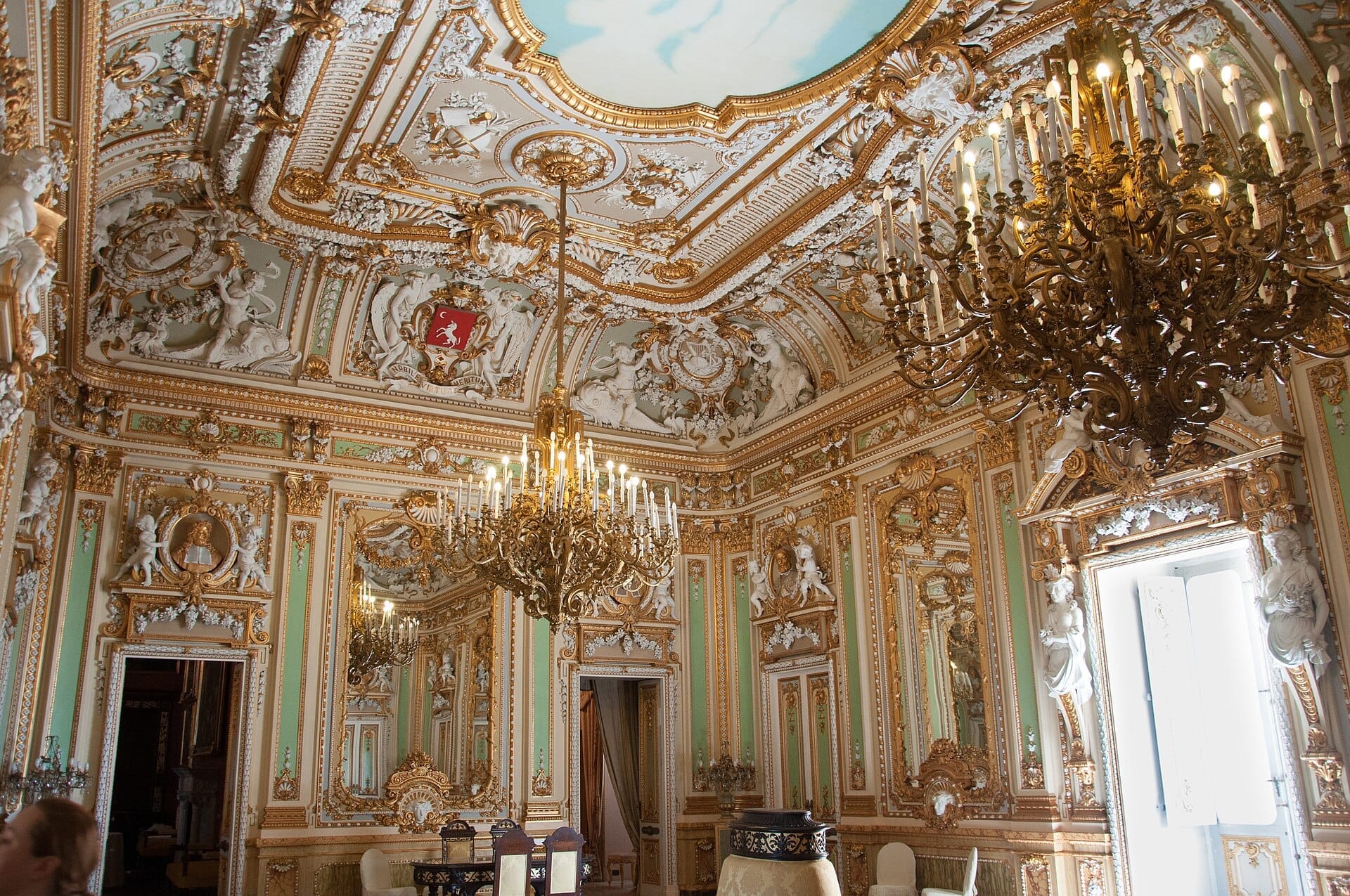
Inside the church, the scale is genuinely astonishing. The gilded interior, the painted ceiling, and the sheer volume of the space create an effect that is more architectural wonder than typical parish church. In the sacristy, there is a replica of a German Luftwaffe bomb that penetrated the dome during a World War II air raid in April 1942 while the church was full of over 300 worshippers. Remarkably, the bomb failed to detonate. The story became one of the defining miracle narratives of wartime Malta, and the replica bomb and a small display remain on show.
Beyond the Rotunda, Mosta offers a quieter set of attractions. The Ta' Bistra Catacombs on the outskirts of town are a rarely visited set of Roman-era underground burial chambers that receive a fraction of the attention given to the more famous catacombs near Rabat. The Cumbo Tower is a historic watchtower that survives in the town as a remnant of Malta's layered defensive history. The Museum Mosta provides local historical context for visitors who want to understand the town beyond the dome.
Mosta Valley, accessible from the northern edge of town, offers a green escape that is unusual in this densely built part of Malta. The valley walk is not a dramatic wilderness route, but it is a pleasant way to experience the cultivated terraced landscape that once defined the Maltese interior. For those with a car, the valley road connects northward toward the coast.
Rotunda of Mosta: the primary draw, free to enter, open most mornings
Ta' Bistra Catacombs: Roman-era catacombs on the town's edge, rarely crowded
Cumbo Tower: historic defensive tower within the urban fabric
Museum Mosta: local history and ecclesiastical artifacts
Mosta Valley: accessible green walking corridor north of town
PAMA Shopping Mall: a practical modern facility at the town's edge for those who need it
💡 Local tip
The Rotunda's interior is most impressive in the morning hours when natural light filters through the dome's upper windows. Arrive before 11am to avoid coach groups and to see the space at its best. Modest dress is required: covered shoulders and knees.
Eating & Drinking
Mosta's food scene is oriented toward local residents rather than tourists, which means prices are honest and the food tends to reflect what Maltese people actually eat rather than what they think visitors expect. The streets around the Rotunda have a cluster of cafes and bars that do a brisk trade in coffee, pastizzi (flaky savory pastries filled with ricotta or mushy peas), and soft drinks. These are the kind of places where a coffee costs under two euros and no one particularly minds how long you sit.
For a broader understanding of Maltese food culture, it helps to know that Mosta's cafes represent everyday eating rather than the set-piece dining of Valletta or Sliema. The local staple snacks, particularly pastizzi and ftira (a local flatbread sandwich), are worth seeking out here precisely because they have not been dressed up for tourism. For a wider guide to what Maltese food looks like across the island, the Malta food guide covers the full range.
Restaurants in Mosta tend toward Maltese and Italian food, reflecting the island's culinary DNA. There are a handful of sit-down restaurants within a short walk of the Rotunda offering rabbit stew (fenek), bragioli (beef olives), and fresh fish dishes at prices noticeably lower than those in coastal tourist areas. The town is not a destination for fine dining, but a lunch here between sightseeing stops is an entirely satisfying experience.
Bar culture in Mosta follows the Maltese pattern: a mix of traditional social clubs and more modern bars, with evening activity concentrated around the central square and the streets leading off it. There is nothing resembling a nightlife district here, which for many travelers is a positive. The town quiets down relatively early, and it stays quiet.
Getting There & Around
Malta's public transport network, operated by Malta Public Transport, connects Mosta to most major destinations on the island. Several bus routes serve the town, linking it with Valletta's main bus terminus (Valletta Bus Terminal), Sliema, St. Julian's, and the northern towns. Journey times vary, but Valletta to Mosta by bus typically takes 30 to 45 minutes depending on the route and traffic. For up-to-date routes and fares, check the Malta Public Transport app or website. A guide to getting around Malta by bus explains the ticketing system and how to use it efficiently.
By car, Mosta is straightforward to reach via the main arterial roads that cross central Malta. Parking near the Rotunda is possible but can be tight during weekday mornings and on Sundays when church services draw large numbers of locals. If driving from Valletta, the route northwest through Birkirkara is the most direct. From Mdina or Rabat, the road north takes around 10 minutes.
Ride-hailing via Bolt or Uber operates across Malta and can be used to reach Mosta from Valletta, Sliema, or the airport for a reasonable fare. A taxi or Bolt from Malta International Airport to Mosta would typically take 20 to 25 minutes and cost roughly in the range of standard Maltese taxi rates for that distance. Mosta is not a walkable destination from any of the coastal towns, so a bus or vehicle is necessary.
Once in Mosta, the town center is compact enough to explore on foot. The Rotunda, the main shopping streets, and the historic quarter around the church are all within easy walking distance of each other. The Ta' Bistra Catacombs and Mosta Valley are a short drive or a longer walk from the center.
💡 Local tip
Mosta pairs efficiently with a visit to Mdina. The two towns are roughly 5 km apart, and combining them makes for a full and rewarding day focused on inland Malta. A morning in Mdina followed by lunch and the Rotunda in Mosta is a well-balanced itinerary that avoids the coastal crowds entirely.
Where to Stay
Mosta is not a hotel town. There are no large resort properties here, and the accommodation options are limited to small guesthouses, B&Bs, and self-catering apartments scattered through the residential streets. For travelers who prioritize staying somewhere genuinely Maltese, this is actually an asset: the experience is closer to renting a room from a local family than staying in a purpose-built tourist complex. For a broader look at where accommodation makes sense across the island, the Malta accommodation guide covers the main options by area and travel style.
The practical argument for staying in Mosta is cost and access to central Malta. Room rates here run noticeably lower than equivalent accommodation in Sliema, St. Julian's, or Valletta. The central location means most of the island's major sites are accessible by bus in under an hour, and there is no premium for the address. The argument against staying here is the absence of restaurants after a certain hour, the lack of a beach within walking distance, and the relatively limited evening activity.
Mosta suits travelers who are self-sufficient, have a rental car, or are following a structured itinerary across multiple parts of the island. For those who want coastal access, a hotel in Sliema or St. Julian's will serve better, with day trips to Mosta easily added to the schedule.
Nearby Attractions Worth Combining
Because Mosta sits at the center of the island, it connects naturally to a wide range of day trips and combined itineraries. Mdina, the medieval walled city, is the most obvious pairing, located just south and easily combined in a single morning. The ancient temples, catacombs, and museums around Rabat add depth to that same route.
Northward from Mosta, the road leads toward Mellieha and Malta's northern beaches at Golden Bay and Ghajn Tuffieha Bay, both accessible in under 20 minutes by car. Travelers spending a week on the island often route through Mosta between inland and coastal sightseeing without stopping long, though the Rotunda alone warrants at least an hour.
For those on a structured itinerary, Mosta fits naturally into a 3-day Malta itinerary as an inland morning stop before heading north or back to Valletta. It also appears in most comprehensive guides to things to do in Malta as a genuine alternative to the coastal circuit.
⚠️ What to skip
Mosta's main roads can get congested during morning and evening rush hours, particularly the routes toward Valletta and Birkirkara. If you are driving, aim to leave or arrive outside of peak hours (roughly 7:30-9am and 4:30-6:30pm). Parking near the Rotunda on Sundays during Mass can be extremely limited.
TL;DR
Mosta is worth visiting primarily for the Rotunda, one of the most architecturally extraordinary churches in Europe, but the town itself rewards those who linger beyond the dome.
The atmosphere is genuinely local: this is not a tourist destination but a working Maltese town where the rhythm of daily life is fully intact.
Best suited to travelers with an interest in Maltese culture, architecture, and history who want to experience a town that functions entirely on its own terms.
Combine with Mdina for a full inland day, or use Mosta as a midpoint stop while moving between Valletta and the northern coast.
Not recommended as a standalone base for beach-focused travelers or those who want vibrant evening dining and nightlife.
Malta's megalithic temples are among the oldest free-standing stone structures on Earth, predating Stonehenge by over a thousand years. This guide covers every major site, practical logistics, seasonal advice, and the archaeological context that makes these temples worth the trip.
Malta's coastline is far more varied than the island's small size suggests. From the turquoise waters of Comino's Blue Lagoon to Gozo's red-sand Ramla Bay and Malta's dramatic rocky inlets, this guide covers every type of beach the archipelago has to offer — with candid notes on crowds, access, and the best times to go.
Malta is a year-round destination, but the timing of your trip changes everything. This guide breaks down every season honestly — weather, crowds, prices, and what's actually open — so you can choose the right month for your priorities.
For a country this small, Malta packs a remarkable density of dramatic scenery. These are the viewpoints that earn the detour, from clifftop sunsets and fortress panoramas to harbor vistas and Gozitan sea inlets.
Malta is small enough to explore fully in a week, but the islands around it reward dedicated day trips. From the prehistoric temples of Gozo to the sea caves of the Blue Grotto and the medieval streets of Mdina, these are the best excursions to take from Malta's main island.
Malta packs an extraordinary amount of history, scenery, and culture into a tiny island, and much of it costs nothing. From UNESCO-listed prehistoric temples to cliff-top walks, baroque city streets, and crystal-clear swimming coves, this guide covers the best free experiences across Malta, Gozo, and Comino.
Malta is small — just 316 sq km — but navigating it efficiently takes some planning. This guide covers every transport option available, from the Tallinja bus network to Gozo ferries, ride-hailing apps, and car rental, with straightforward takes on what works and what doesn't.
Gozo is smaller, quieter, and slower-paced than Malta — and that is exactly the point. This guide covers the ferry, the best things to do, where to focus your time, and why two days here beats a rushed day trip.
Malta rewards curious travelers who look beyond the postcard highlights. From sheltered limestone inlets and rock-cut swimming holes to ancient temples and baroque palaces lost in the countryside, these are the places where the real Malta reveals itself.
Malta packs prehistoric temples, Baroque cityscapes, clear-water diving, and surprisingly good food into just 316 square kilometres. But summer crowds, rocky beaches, and rising prices give some travellers pause. Here is a clear-eyed breakdown of what you get and what to watch out for.
The Knights of Malta left an indelible mark on this archipelago across more than two centuries of rule. This guide traces their history through the fortresses, cathedrals, and palaces they built, with practical advice on visiting each key site today.
Three days is enough to cover Malta's greatest hits if you plan smartly. This itinerary takes you through UNESCO-listed Valletta, the ancient Silent City of Mdina, the prehistoric temples of the south coast, and the rural island of Gozo, with practical advice on timing, transport, and what to skip.
Malta is best understood from the water. Whether you want to drift through sea caves glowing electric blue, anchor above the clearest lagoon in the Mediterranean, or cruise past 700 years of Grand Harbour fortifications, these are the boat trips worth planning your days around.
Malta is one of the Mediterranean's top diving destinations, with crystal-clear water, dramatic underwater topography, and wrecks accessible to every skill level. This guide covers the best dive sites on Malta and Gozo, what to expect at each depth, seasonal conditions, and everything you need to plan a successful dive trip.
Malta makes a compelling case as a romantic destination despite its size. Medieval walled cities, cliff-top sunsets, private boat trips to turquoise lagoons, and candlelit wine bars in a Baroque capital — this guide covers the best romantic experiences in Malta for couples, with clear advice on what's worth booking and what to skip.
Seven days is enough time to experience Malta's greatest hits without burning out. This day-by-day itinerary covers the UNESCO capital of Valletta, the island of Gozo, the Blue Lagoon at Comino, medieval Mdina, and the fishing villages of the south coast, with practical advice on what to skip and how to get around without a car.
Malta's nightlife ranges from the dense club strip of Paceville to the refined jazz bars of Valletta's Strait Street. This guide breaks down where to go by neighbourhood, what to expect at each type of venue, and how to avoid the most common tourist mistakes.
Malta surprises most travelers: it is an EU country with a UNESCO capital, 7,000 years of history, and genuinely affordable daily costs if you know where to look. This guide breaks down realistic daily budgets, free and cheap attractions, transport costs, food prices, and the seasonal timing that makes the biggest difference.
Malta consistently ranks among the world's top 10 countries for personal safety, but that doesn't mean risks don't exist. This guide covers crime statistics, common scams, road dangers, beach hazards, and neighborhood-by-neighborhood safety so you can visit with confidence.
The Malta to Sicily ferry is one of the most rewarding short trips in the Mediterranean. This guide covers the Virtu Ferries catamaran route, ticket prices, seasonal schedules, what to do in Pozzallo and beyond, and everything you need to plan a seamless day trip from Malta.
Malta is a surprisingly strong family destination for its size. English is widely spoken, the country is genuinely safe, distances are short, and the mix of beaches, history, and interactive attractions keeps children of all ages engaged. This guide covers the best kid-friendly spots, seasonal advice, transport logistics, and frank assessments of what works and what doesn't.
Malta packs an extraordinary range of experiences into just 316 square kilometres. This guide covers the best things to do across the archipelago, from Valletta's Baroque cathedrals and prehistoric temples to sea caves, clifftop walks, and the famous Blue Lagoon, with practical advice on what's worth your time and what to skip.
Valletta packs more history per square metre than almost any capital in Europe. This guide covers the top things to do in Valletta, from its world-class Baroque cathedral and a 500-year-old star fort to harbour boat tours and the best spots for Maltese coffee. Practical, opinionated, and built for real trips.
Maltese food is one of the Mediterranean's most underrated culinary traditions. This guide covers the essential dishes, the best street food, seasonal specialities, and practical advice on where to eat well without overpaying.
Choosing where to stay in Malta shapes your entire trip. This guide breaks down the best neighborhoods, from the historic capital Valletta to the beach towns of the north, with honest advice on what each area actually delivers.