Palazzo Parisio: Naxxar's Gilded Baroque Palace and Gardens
Palazzo Parisio in Naxxar is Malta's most ornate private palace, modified between 1900 and 1907 in a blend of Art Nouveau and Sicilian Baroque styles. Its gilded ballroom, frescoed ceilings, and manicured Italian gardens make it one of the most architecturally distinctive historic houses on the island.
Quick Facts
- Location
- Naxxar, Malta (central Malta, approx. 10 km from Valletta)
- Getting There
- Bus from Valletta to Naxxar; several routes serve the village square
- Time Needed
- 1.5 to 2.5 hours
- Cost
- Gardens only: €8; check palazzoparisio.com for full palace and combined ticket prices
- Best for
- Architecture lovers, couples, history enthusiasts, photography
- Official website
- www.palazzoparisio.com
What Is Palazzo Parisio?
Palazzo Parisio and Gardens, known in Maltese as Palazz Parisio u l-Ġardini, is a privately owned historic palace in the village of Naxxar in central Malta. It is sometimes called the 'miniature Versailles of Malta', a nickname that is easy to understand the moment you step through its bronze-studded entrance door. The building is Grade 1 listed, the highest level of heritage protection in Malta, and it remains one of the few aristocratic houses on the island that is open to the public in any meaningful way.
A note on naming: this is not the same as the Palazzo Parisio in Valletta, which is a government building used by the Ministry of Foreign Affairs and has limited public access. The Naxxar palace is the one with the gardens, the gilded ballroom, and the café.
ℹ️ Good to know
Opening hours: Tuesday to Sunday, 9am to 5:30pm (last tour). Closed Mondays. Ticket prices and combined tour options should be confirmed at palazzoparisio.com before your visit, as they are periodically updated.
A Short History: From Hunting Lodge to Aristocratic Showpiece
The story of Palazzo Parisio begins in 1733, when Paolo Parisio built a relatively modest country retreat on this site as a hunting lodge. That original structure gave the estate its name, but the building visitors see today is almost entirely a product of a much later, far more ambitious project.
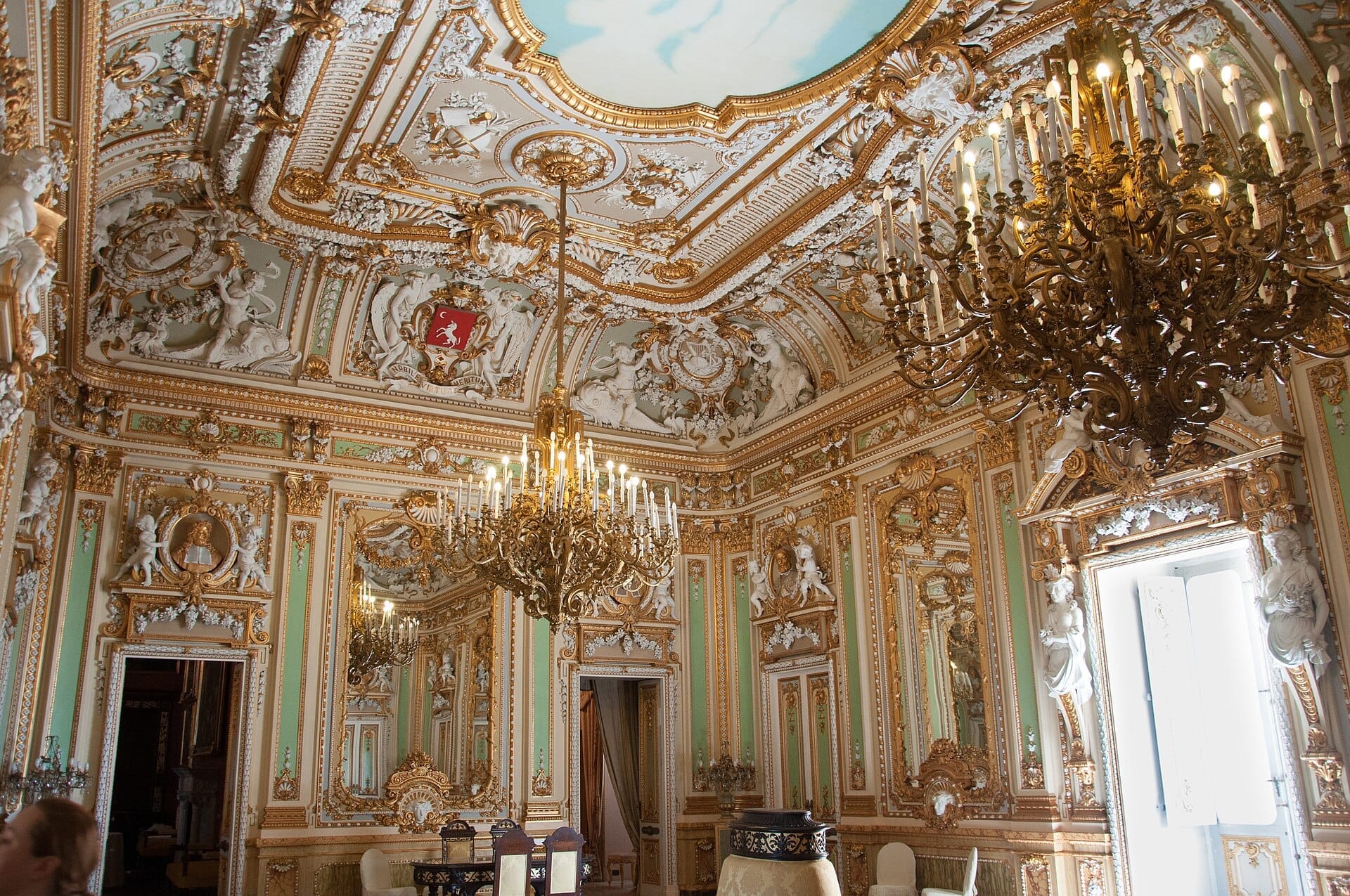
Between 1898 and 1907, the Marquis Scicluna acquired the property and commissioned a total reconstruction. He was wealthy, well-traveled, and had clear ideas about the kind of palatial residence he wanted to build. The result blended Art Nouveau influence on the exterior facades with the heavier, more theatrical vocabulary of Sicilian Baroque inside. Craftsmen brought in plasterwork, gilding, and fresco techniques that were well outside what most Maltese architecture of the era attempted. The ballroom in particular, covered in gold leaf with elaborate ceiling paintings and mirrored panels, has no real equivalent elsewhere on the island.
The palace passed through the Scicluna family and was later restored and reopened to the public by Marie Christianne Scicluna in the 21st century. Today the estate also functions as a venue for weddings, private events, and cultural occasions, which means it is occasionally closed for private hire. Always verify availability before planning a dedicated trip. For broader context on Malta's architectural heritage, the Knights of Malta history guide provides useful background on how centuries of European patronage shaped the island's built environment.
Tickets & tours
Hand-picked options from our booking partner. Prices are indicative; availability and final rates are confirmed when you complete your booking.
City Sightseeing hop-on hop-off bus tour of Gozo
From 20 €Instant confirmationFree cancellationThe Malta Experience Audio-Visual Show and La Sacra Infermeria Tour
From 20 €Instant confirmationFree cancellationLuggage Storage in Malta
From 6 €Instant confirmationFree cancellation6-day heritage and attractions pass in Malta
From 80 €Instant confirmationFree cancellation
The Palace Interiors: What You Actually See
The interior tour, available on selected days and subject to booking, moves through a sequence of formal rooms that reflect the Marquis's taste for controlled opulence. Ceilings are frescoed in trompe l'oeil techniques, giving low-ceilinged corridors the illusion of height. The floors throughout alternate between polished marble and ornate tilework. Furniture and decorative objects are period pieces, many of them Sicilian or continental European in origin.
The ballroom is the undisputed highlight. Gold leaf covers almost every surface that isn't glass or fabric. Large mirrors on opposing walls multiply the light from crystal chandeliers into something close to overwhelming. On a sunny morning when the light comes through at a low angle, the room glows in a way that photographs only partially capture. The scale is smaller than the great Baroque ballrooms of Naples or Palermo, which is where comparisons to Versailles start to feel a little generous, but within the context of what Malta offers, it is genuinely exceptional.
The sweeping marble staircase that connects the entrance hall to the upper floors is worth pausing at. The craftsmanship of the balustrade and the proportions of the space were clearly designed to make an impression on arriving guests, and they still do. Be aware that the staircase and some of the elevated garden paths may present challenges for visitors with limited mobility.
The Italian Gardens: Structure, Scent, and Silence
The gardens are the more accessible and consistently rewarding part of a visit to Palazzo Parisio. They are open independently of the palace tour, with a separate entry fee (€8 for gardens only as of the latest available pricing), and they represent some of the finest formal garden design in Malta.
The layout follows a classical Italian garden schema: symmetrical parterres, clipped box hedges, stone fountains, and gravel paths that draw the eye toward ornamental focal points. In spring (March to May), the gardens are at their most photogenic, with flowering citrus trees adding both colour and a faint citrus scent to the air. In summer the heat intensifies quickly, and visiting before 10am or after 4pm makes the experience significantly more comfortable. The stone paths retain heat, and there is limited shade in the central parterre sections.
The sound environment is part of the experience. Naxxar is not a tourist-heavy village, and the gardens feel genuinely quiet on weekday mornings. The white Maltese limestone of the surrounding walls reflects light rather than absorbing it, giving the space a particular brightness even on overcast days. Birdsong, the low hum of insects in the flowering borders, and the occasional sound of water from the fountain system are all you typically hear.
💡 Local tip
For photography, the gardens are best visited early on a weekday. The low morning light catches the stone textures and water features without the harsh midday shadows. The ballroom interior, if you can access it, is also better in morning light — direct afternoon sun through west-facing windows can create distracting glare on the gilt surfaces.
The Café and the Practical Experience of a Visit
Palazzo Parisio operates an on-site café that opens to the garden terrace. It serves coffee, light lunches, and afternoon tea in a setting that extends the aesthetic atmosphere of the palace itself. Tables are set with proper linen, and the quality of the food is consistently noted as above average for a heritage-site café. Whether you are visiting primarily for the architecture or the gardens, factoring in 30 to 45 minutes at the café is worth doing.
The village of Naxxar itself is quiet and largely off the tourist circuit. It sits roughly 10 kilometres from Valletta, and reaching it by bus from the capital is straightforward, though you should check Malta Public Transport route maps for current services as schedules and route numbers are updated periodically. By car, the drive from Valletta takes around 15 to 20 minutes depending on traffic. There is limited on-street parking near the palace, but the village square usually has space.
If you are building a day around this visit, Naxxar is close enough to Mosta that combining the two is logical. The Rotunda of Mosta is one of the largest unsupported domes in Europe and is worth the short detour.
Who This Attraction Is For, and Who Might Pass
Palazzo Parisio rewards visitors who are genuinely interested in European decorative arts, historic house architecture, or formal garden design. If you have already visited Casa Rocca Piccola in Valletta, the Parisio offers a very different scale and aesthetic, heavier on visual spectacle and with significantly more impressive gardens.
Visitors primarily interested in ancient history, beaches, or outdoor activity will likely find the experience underwhelming relative to what else Malta offers. For those focused on archaeological sites, the Hagar Qim Temples or the Hal Saflieni Hypogeum represent more distinctive global-level attractions. For beach-focused visitors, Malta's best beaches offer more obvious value for time.
Children under 10 may find the pace of a formal house tour slow, and the gardens, while attractive, do not have play elements. Visitors with significant mobility limitations should be aware that the cobblestone paths and marble staircase are not fully accessible, and it is worth calling or emailing the palace in advance to ask about current accessibility provisions.
Practical Details at a Glance
- Open Tuesday to Sunday, 9am to 5:30pm (last tour); closed Mondays
- Gardens entry: €8 (verify current combined ticket pricing at palazzoparisio.com)
- Palace tours are available on selected days; advance booking recommended
- On-site café open during visiting hours
- Occasionally closed for private events; confirm availability before visiting
- Modest dress is not required here (unlike churches), but smart-casual is appropriate for the setting
- Photography is generally permitted in the gardens; confirm rules for interior rooms at the desk
⚠️ What to skip
Palazzo Parisio is an active event venue. On weekends especially, part or all of the estate may be closed for weddings or private functions. Check the official website or call ahead if you are making a specific trip.
Insider Tips
- Weekday mornings between 9am and 11am are the quietest window. On weekends the café fills quickly, and garden access can feel crowded if a private event is ending when you arrive.
- The best single viewpoint in the gardens is from the upper terrace looking down over the central parterre toward the fountain. Position yourself there early before other visitors fill the paths below.
- If you want to tour the interior, check the palace website for guided tour schedules rather than arriving and hoping for walk-in access. Tour availability is more limited than garden access.
- Combine your visit with the Rotunda of Mosta (a 10-minute drive) to make the most of a half-day in central Malta. The contrast between Malta's most ornate private house and one of its grandest religious buildings is genuinely interesting.
- The on-site café serves an afternoon tea that is far better than what most Malta tourist sites offer. If you are visiting for a special occasion, it is worth booking a table in advance rather than hoping for walk-in space.
Who Is Palazzo Parisio For?
- Architecture enthusiasts interested in European Baroque and Art Nouveau
- Couples looking for a refined, photogenic half-day excursion
- Garden lovers and photographers visiting in spring (March to May)
- Visitors who want to see an intact aristocratic Maltese interior beyond Valletta's main circuit
- Travellers building a central Malta day combining Naxxar, Mosta, and Mdina
Nearby Attractions
Other things to see while in Mosta:
- Rotunda of Mosta
The Rotunda of Mosta is a neoclassical basilica in central Malta with one of the largest unsupported domes in the world. Its wartime story, architectural scale, and accessible interior make it one of the most compelling church visits on the island.