Mid-Beach and North Beach occupy the central and northern stretches of Miami Beach island, where iconic Morris Lapidus resort hotels give way to a relaxed, residential shoreline. The area offers some of Miami's best oceanfront access without the noise and crowds of South Beach, making it a strong base for travelers who want beach and style on their own terms.
Mid-Beach and North Beach are the calmer, less theatrical counterparts to South Beach's famous chaos, stretching north along Collins Avenue from 23rd Street to the Surfside border at around 87th Terrace. Mid-Beach brings the architecture and glamour of landmark resort hotels like the Fontainebleau and the Faena District, while North Beach delivers broad, uncrowded sand, MiMo-era buildings, and a daily rhythm shaped by residents rather than tourists.
Orientation
Both neighborhoods sit on the same narrow barrier island as South Beach, connected to mainland Miami by causeways crossing Biscayne Bay. Mid-Beach runs from roughly 24th Street north to about 63rd Street, bounded by the Atlantic Ocean to the east and Indian Creek to the west. North Beach picks up from around 64th Street and continues north to 87th Terrace, where the separate municipality of Surfside begins.
Collins Avenue, also designated State Road A1A, is the main north-south spine through both neighborhoods. It carries buses, taxis, and most of the commercial activity. One block west, Indian Creek Drive offers a quieter parallel route favored by cyclists and joggers, tracing the waterway that separates the island from the Intracoastal developments on La Gorce Island and other private enclaves.
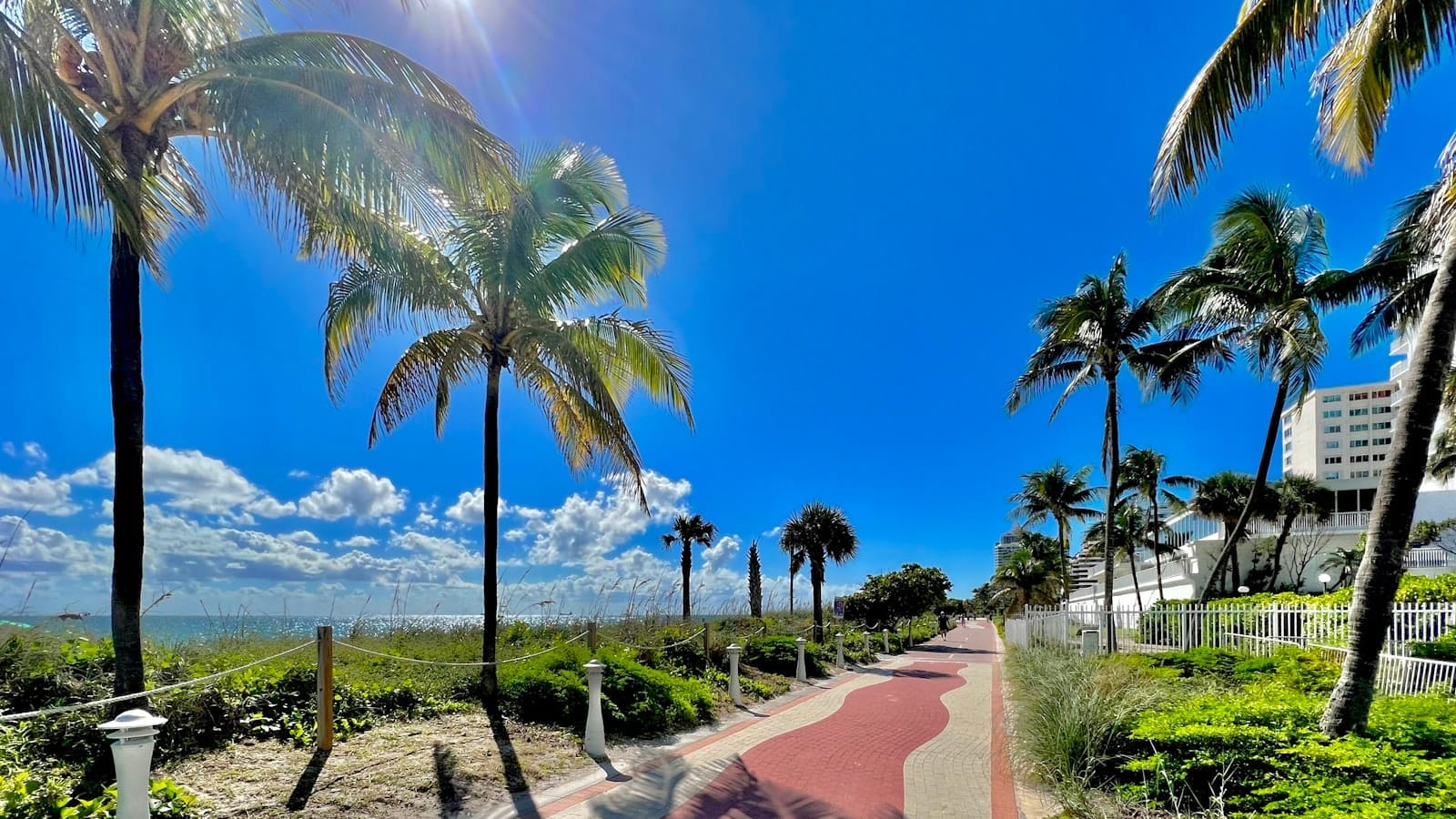
Understanding the geography matters for planning. Mid-Beach is roughly 3 to 4 miles north of the Art Deco Historic District in South Beach, and the journey by bus or car along Collins Avenue takes around 15 to 25 minutes depending on traffic. North Beach sits another mile or so beyond that. The Beachwalk, a paved oceanfront path for pedestrians and cyclists, connects the entire stretch continuously, making it possible to walk or ride from North Beach all the way south without touching a car.
ℹ️ Good to know
Miami Beach is a separate city from the City of Miami, governed by its own municipal administration (City of Miami Beach). Despite being on the same barrier island as South Beach, Mid-Beach and North Beach have distinct characters and are not interchangeable with their more famous neighbor to the south.
Character & Atmosphere
The character difference between Mid-Beach and North Beach is real, even though they share the same island. Mid-Beach carries a resort energy, with wide hotel driveways, valets moving cars in front of grand lobbies, and a Collins Avenue streetscape that mixes luxury condominiums with hotels that have been famous since the 1950s. It has genuine glamour without being self-consciously cool in the way South Beach tries to be.
Early mornings on Mid-Beach feel like the calm before a party that never fully materializes. Joggers work the Beachwalk while hotel pools fill slowly. By mid-afternoon the scene around the Fontainebleau or Faena is polished but not overwhelming: guests, day-trippers, a few photographers. After dark, the hotel bars and restaurants activate, but it rarely tips into the late-night intensity you find around Ocean Drive.
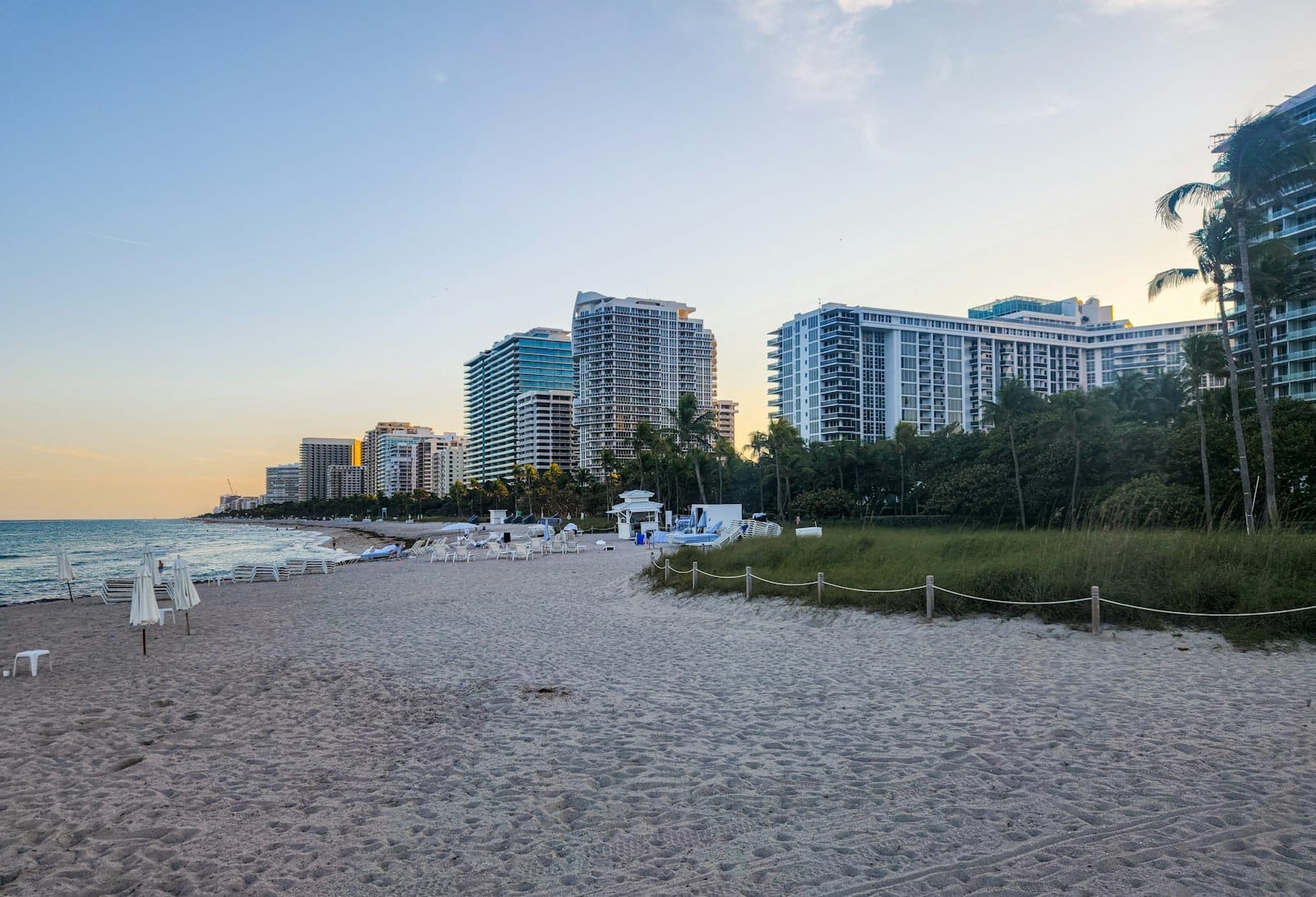
North Beach is a different register entirely. Cross 63rd Street heading north and the hotels thin out, the sidewalks widen, and you start hearing more Spanish and Creole alongside English. The neighborhood has a significant long-term residential population, and the beach at North Beach Oceanside Park, a nine-block green corridor directly on the Atlantic, draws local families and regular beachgoers rather than spring-breakers. In the late afternoon the park fills with people walking dogs, playing music, and using the fitness equipment, and the sand is noticeably uncrowded compared with any part of South Beach.
North Beach's architecture tells its own story. Where South Beach is all Art Deco from the 1930s and 1940s, North Beach is largely MiMo, short for Miami Modern, a mid-century design style from the 1950s and 1960s characterized by angled rooflines, terrazzo floors, kidney-shaped pools, and an optimistic, Space Age quality. Several streets around 71st Street and the Normandy Isle area preserve this look in hotels, apartment buildings, and small commercial blocks.
What to See & Do
The Fontainebleau Miami Beach, at Collins Avenue and 44th Street, is reason enough to walk through Mid-Beach even if you are not staying there. Morris Lapidus designed the original curved tower, and the building's lobby, pool, and grounds are a theatrical lesson in mid-century resort architecture. The adjacent Eden Roc, also Lapidus-designed and opened in 1956, offers a slightly more intimate version of the same era.
The Faena District, running from 32nd to 36th Streets along Collins Avenue, is a more recent cultural insertion into Mid-Beach. Argentine developer Alan Faena transformed a block of hotels and vacant lots into a curated arts corridor anchored by the Faena Hotel and the Faena Forum, a performance and event space by architect Rem Koolhaas. A gilded woolly mammoth skeleton, created by artist Damien Hirst, stands in the Faena Bazaar courtyard and has become one of Miami's more photographed pieces of public art.
In North Beach, the main attraction is genuinely the beach itself. North Beach Oceanside Park stretches for nine blocks and connects to the broader Miami Beach Boardwalk system. The sand here is wider than at South Beach, the water is the same clear blue-green Atlantic, and the lifeguard towers are spaced regularly. It is one of the better places in the Miami Beach area to actually swim and lie in the sun without fighting for space.
The MiMo on Biscayne Historic District, technically centered on Biscayne Boulevard on the mainland rather than on the island, extends the MiMo architectural story for those interested in the era. On the Miami Beach side, the MiMo Biscayne Historic District is worth understanding as context for what you are seeing when you walk North Beach's residential streets.
Fontainebleau Miami Beach lobby and pool area: walk through even as a non-guest, at Collins Ave and 44th St
Faena District courtyard and the Damien Hirst mammoth installation, 32nd-36th Streets on Collins Ave
North Beach Oceanside Park: nine blocks of Atlantic-facing green space, best from 73rd to 79th Streets
Beachwalk cycling or walking south toward South Beach, approximately 4 miles one-way
MiMo architecture walking tour along Collins Avenue in the 60s and 70s blocks
Normandy Isle neighborhood: small-scale residential MiMo buildings around Normandy Drive
💡 Local tip
Hotel pools at the Fontainebleau and Eden Roc are guests-only, but many of the food and drink outlets in these properties are open to walk-in visitors. Going for a drink at the Fontainebleau's lobby bar gives you access to the architecture and atmosphere without booking a room.
Eating & Drinking
Mid-Beach's food scene is dominated by hotel restaurants and upscale standalone spots along Collins Avenue and the side streets between the beach and Indian Creek. The concentration of high-end hotels means you can eat and drink well without leaving the neighborhood, but prices at hotel venues are high. Expect to pay South Beach prices for anything inside the Fontainebleau or Faena properties.
The Broken Shaker at Freehand Miami, a craft cocktail bar that has built a genuine national reputation, sits at 24th Street. It operates in a garden setting with an indoor-outdoor format and a menu that changes seasonally. It is one of the few Mid-Beach drinking destinations that draws locals and visitors equally, and it tends to be more relaxed than the nightclub-style hotel bars further north on Collins.
North Beach's eating scene runs closer to the ground. Normandy Drive, the main east-west commercial street through Normandy Isle, has a cluster of casual restaurants, bakeries, and cafes reflecting the neighborhood's Latin American and European immigrant communities. You can find a Cuban sandwich or a Brazilian pastry bakery at a fraction of what the hotel strip charges. The area around 71st Street has similar options, with a more neighborhood-facing selection of grocers, sandwich shops, and family restaurants.
For context on Miami's broader Cuban food tradition, which shows up in North Beach's casual spots, see the Miami Cuban food guide. The flavors are less curated here than in Little Havana proper, but the basics, from ropa vieja to café con leche, are done properly.
Broken Shaker at Freehand Miami: garden cocktail bar, 24th Street, one of Miami's best-regarded bars
Faena Hotel food and beverage outlets: high-end, hotel pricing, but architecturally memorable
Normandy Drive: casual neighborhood restaurants, bakeries, Latin American specialties at everyday prices
71st Street corridor: grocers, cafes, and affordable local dining in North Beach proper
Getting There & Around
Miami Beach has no Metrorail connection. The island is accessible by causeway from the mainland, and public transit means Miami-Dade Transit buses. Collins Avenue is served by bus routes including the South Beach Local and beach express routes running along A1A. Check current Miami-Dade Transit route maps before traveling, as schedules and route numbers are updated periodically.
From Downtown Miami or Brickell, Uber and Lyft are the fastest and most predictable options for reaching Mid-Beach or North Beach directly. The drive from Downtown via the MacArthur or Julia Tuttle Causeway takes around 20 to 35 minutes depending on traffic, which can be heavy on weekend evenings. Budget around 20 to 40 minutes for an Uber during peak hours. Verify current fare estimates directly in the app before traveling.
Within the neighborhoods, the Beachwalk is the most efficient non-motorized route north to south. It is wide, well-maintained, and popular with cyclists. Bike-share stations (Citi Bike Miami Beach) are spaced along Collins Avenue and the beach side, making it practical to rent a bike for a few hours and cover the full stretch from South Beach to North Beach and back. This is genuinely one of the better cycling experiences in Miami.
For broader advice on navigating the Miami area, including how to get between Miami Beach and the mainland, the getting around Miami guide covers transit, ride-hailing, and driving in practical detail.
⚠️ What to skip
Parking on Miami Beach is limited and expensive, particularly along Collins Avenue on weekends. If you are driving from the mainland, factor in 20 to 30 minutes to find a spot in a garage, or use ride-hailing and skip the car entirely for an evening out.
Where to Stay
Mid-Beach is one of Miami's strongest hotel zones. The density of large resort hotels along Collins Avenue between 40th and 50th Streets means you have multiple price points and styles within a few blocks of each other. The Fontainebleau and Eden Roc are the flagship properties, both large-scale and resort-focused with pools, spas, and multiple restaurants on site. The Faena Hotel is smaller, more design-forward, and commands premium prices. Miami Beach EDITION and the Palms Hotel offer mid-luxury alternatives with distinct identities.
For travelers who want a genuine Miami Beach resort experience but don't need to be on Ocean Drive, Mid-Beach is a serious alternative worth considering. The beach access is excellent, the pools are better maintained than at most South Beach hotels, and the nighttime noise is considerably lower. You are, however, paying resort rates, and most options are priced at the higher end of the Miami market.
North Beach accommodation is more modest and more affordable. Smaller hotels, many of them MiMo-era buildings that have been renovated to varying standards, line Collins Avenue in the 60s and 70s blocks. These appeal to travelers who want a quiet beach base at a lower price point and don't require a full resort infrastructure. Families and longer-stay travelers find the North Beach end of the island practical: proximity to the park, calmer streets, and a few grocery options within walking distance.
For a full overview of which Miami Beach zones suit different traveler types, the where to stay in Miami guide compares neighborhoods across price ranges and travel styles.
Practical Considerations
Both Mid-Beach and North Beach are generally safe neighborhoods by Miami Beach standards. The City of Miami Beach maintains a dedicated police force and beach patrol. Standard precautions apply: watch your belongings on the beach, be aware of rip currents, and use sunscreen. The Atlantic here can produce strong rip currents, and NOAA rip current advisories are posted at lifeguard stations along the beach. Swim between the flags.
The best time to visit is between December and April, when temperatures are warm but not oppressive and humidity is lower than in summer. Miami's summer months from June through August bring heat in the upper 80s to low 90s Fahrenheit, high humidity, and frequent afternoon thunderstorms. The beach is still usable in summer, but plan outdoor activities for the morning. For a full breakdown of when to come, the best time to visit Miami guide explains the seasonal tradeoffs in detail.
Tap water in Miami Beach meets U.S. EPA drinking water standards and is safe to drink. Tipping is standard at all sit-down restaurants and bars: 18 to 20 percent on the pre-tax bill is typical, and some hotel restaurants automatically add a service charge. U.S. electrical sockets are Type A and B at 120V, 60Hz. Visitors from Europe and most of Asia will need an adapter. English is the working language, but Spanish is widely spoken throughout the neighborhood, particularly in North Beach's residential and commercial streets.
💡 Local tip
Ocean water safety: rip currents are common along the Miami Beach shoreline. When in doubt, swim at a staffed beach with active lifeguards, which North Beach Oceanside Park provides. If caught in a rip current, swim parallel to the shore rather than against the current.
Is Mid-Beach or North Beach Right for You?
The honest answer depends on what you want from Miami Beach. If you want the full Art Deco streetscape, the dense bar scene, and the visual theater of Ocean Drive, you want South Beach, not here. Mid-Beach makes sense for travelers who want resort-scale amenities, architectural interest, and beach access without the overwhelming crowds. North Beach makes sense for families, budget-conscious travelers, and anyone who wants to spend most of their time on the beach itself rather than performing on it.
Both neighborhoods are easy to combine with day trips. The best beaches in Miami guide covers options across the bay and further south, including Key Biscayne, which makes a strong half-day from a Mid-Beach or North Beach base.
TL;DR
Mid-Beach (24th to 63rd Street) is defined by landmark resort hotels including the Fontainebleau and Eden Roc, the Faena arts corridor, and a Collins Avenue lined with luxury condos: it suits travelers who want a full resort experience without South Beach's intensity.
North Beach (64th to 87th Street) is a residential neighborhood with MiMo architecture, uncrowded beaches at North Beach Oceanside Park, and a local commercial strip on Normandy Drive: it suits families, budget travelers, and anyone prioritizing genuine beach time over nightlife.
Neither neighborhood has Metrorail access; getting around requires buses, Citi Bike, the Beachwalk path, or ride-hailing apps.
Mid-Beach hotel prices are at the higher end of the Miami market; North Beach offers more affordable options in smaller, often MiMo-era hotels.
Both areas are best visited between December and April for comfortable weather; summer is hot and humid with regular afternoon storms but remains functional for beach trips in the morning hours.
Three days is enough to hit Miami's best neighborhoods, beaches, and cultural landmarks — if you plan smart. This day-by-day guide covers South Beach, Wynwood, Little Havana, and a half-day Everglades excursion, with practical advice on getting around, what things cost, and what to skip.
Miami Beach's Art Deco Historic District contains the world's largest concentration of Art Deco architecture, with over 800 historic buildings packed into a walkable stretch of South Beach. This guide covers where to start, what to look for, the best times to go, and how to make the most of the district on your own terms.
Miami's beaches range from the world-famous to the wonderfully overlooked. This guide covers the best stretches of sand across South Beach, Key Biscayne, and beyond, organized by what kind of beach day you're actually after.
Miami's museum scene is stronger than its beach-city reputation suggests. Whether you're after contemporary art, Cuban history, cutting-edge science, or design history, the city delivers world-class institutions across every neighborhood.
Miami is a year-round destination, but timing your trip makes a real difference. This guide breaks down every month by weather, crowd levels, hotel prices, and key events so you can pick the window that fits your priorities, whether that's perfect beach weather, low-cost flights, or catching a major festival.
Held each March in Little Havana, the Calle Ocho Music Festival draws roughly one million people to a single mile of SW 8th Street for free live music, 300+ food vendors, and a full day of Latin culture. Here's how to make the most of it.
Miami sits at one of the most extraordinary geographic crossroads in North America. Within an hour or two, you can be wading through alligator country, snorkeling coral reefs, or exploring colonial-era lighthouses. These are the best day trips from Miami, organized by destination.
The Everglades sit less than an hour from downtown Miami, yet most visitors leave without a clear plan and end up on the wrong tour for their expectations. This guide covers every option, from budget bus packages to private airboat expeditions, with honest advice on timing, pricing, and what to watch out for.
The Florida Keys are one of the most rewarding drives from Miami, but the logistics matter more than most visitors expect. This guide covers exact distances, key stops along the Overseas Highway, day-trip options, multi-day road trip planning, and honest seasonal advice to help you get the most out of the journey.
Miami rewards budget-conscious visitors more than most cities its size. Between free beaches, no-admission museums, iconic architecture walks, and world-class street art, you can fill several days without pulling out your wallet. This guide covers the best genuinely free experiences across the city.
Miami has more transit options than most visitors expect. This guide covers the Metrorail, free Metromover, Metrobus, trolleys, ride-hailing, and the fastest ways to get from Miami International Airport into the city, with fares, hours, and honest assessments of what actually works.
Little Havana is Miami's most culturally distinct neighborhood, centered on Calle Ocho and shaped by decades of Cuban exile history. This guide covers the top attractions, best food stops, seasonal festivals, walking tour options, and what to know before you go.
Miami International Airport (MIA) is the main gateway to South Florida, handling tens of millions of passengers each year. This guide covers the terminal layout, the arrivals process for domestic and international travelers, every ground transport option with current fare structures, transfer rules you need to know, and how to avoid the most common mistakes first-timers make.
Art Basel Miami Beach is the largest international contemporary art fair in the Americas, drawing 80,000 visitors to Miami Beach each December. This guide covers tickets, VIP access, satellite fairs, logistics, and how to make the most of Miami Art Week without losing your mind.
Miami is the undisputed Cuban food capital of the United States. This guide covers the best restaurants, essential dishes, where to find the perfect Cuban sandwich, and practical tips on prices, neighborhoods, and timing — so you eat well from the first day.
Miami's restaurant scene runs deeper than most visitors expect. Cuban classics, Peruvian ceviche, Haitian griot, and world-class seafood sit alongside a fine-dining circuit that ranked #1 nationally for restaurant quality in 2025. This guide cuts through the noise to tell you exactly what to order, where to go, and when to show up.
Miami delivers a genuinely impressive range of couple-friendly experiences, from Italianate waterfront estates to mangrove kayak trails and rooftop cinemas. This guide cuts through the tourist noise to give you the best romantic activities, honest pricing, and practical advice for planning a memorable trip together.
Miami rewards those who look beyond Ocean Drive. From mangrove paddling trails to a coral-rock swimming pool and tucked-away historic sites, these lesser-known spots reveal the layers of history, nature, and culture that make the city genuinely fascinating.
Summer in Miami means heat, humidity, and afternoon thunderstorms — but also lower hotel rates, thinner crowds, and a city that never actually closes. This guide breaks down exactly what to expect from June through September so you can decide if the off-season trade-offs work for you.
Miami's winter months are the city's peak season for good reason: warm, dry days, minimal humidity, and a packed events calendar. Here's everything you need to know about visiting from December through February, from realistic weather expectations to crowd levels and money-saving tips.
Miami's luxury scene spans oceanfront South Beach party hotels to quiet Bal Harbour enclaves and sky-high Brickell penthouses. This guide breaks down the best neighborhoods, hotels, restaurants, and high-end experiences with honest pricing, seasonal advice, and no filler.
Miami Music Week is the city's biggest annual electronic music takeover, culminating in Ultra Music Festival at Bayfront Park in Downtown Miami. This guide covers everything: how the week works, what Ultra actually involves, where to stay, what to bring, and what first-timers consistently get wrong.
Miami's after-dark scene runs the full spectrum, from A-list DJ clubs open until sunrise to low-key cocktail bars and late-night Cuban diners. This guide breaks down the best neighborhoods, top venues, seasonal tips, and what first-timers consistently get wrong.
Miami has a reputation for flashy excess, but the city is genuinely accessible on a tight budget. Free public beaches, a $2.25 transit fare, zero-cost museums on select days, and a thriving street food scene mean you can do Miami properly without burning through your savings. Here is exactly how.
Miami is safe for tourists in the right areas, but it helps to know exactly where those areas are and what to watch out for. This guide breaks down crime data, neighborhood risk levels, road safety, weather hazards, and practical tips drawn from official Miami-Dade and Miami Beach police guidance.
Miami's shopping scene spans open-air luxury districts, massive malls, artsy markets, and eclectic neighborhood streets. This guide covers the best spots across every style and budget, from designer flagships to Cuban cigar shops.
Miami rewards solo travelers who know where to go and what to expect. This guide covers the safest neighborhoods, realistic daily budgets, transport options, top solo-friendly activities, and seasonal advice to help you plan a trip that actually works.
Whether you're heading north to Fort Lauderdale for a day trip or crossing the state to Tampa, the logistics matter. This guide breaks down every travel option between Miami and both cities, with honest assessments of cost, time, and comfort across all transport modes.
From Ocean Drive's Art Deco hotels to the Cape Florida Lighthouse on Key Biscayne, many Miami Vice filming locations are still standing and visitable today. This guide maps the key sites, separates fact from fan myth, and gives you everything you need to plan your own location tour.
Miami is built around the water, and the activities on offer go far beyond lounging on the beach. This guide covers the best places to kayak, snorkel, paddleboard, sail, and explore by boat across Biscayne Bay, Key Biscayne, and the wider Miami coastline.
Miami's tropical monsoon climate means warm winters, scorching summers, and a rainy season that catches many visitors off guard. This guide breaks down temperatures, rainfall, sea conditions, and crowd patterns for every month so you can plan smarter.
Miami delivers far more for families than sun and sand. This guide covers the best kids activities in Miami, from the only subtropical zoo in the U.S. to shallow lagoons perfect for toddlers, with honest advice on timing, pricing, and what genuinely works with children in tow.
Miami's waters are the main attraction, and renting a boat is the best way to experience them. This guide covers every vessel type, honest price breakdowns, the best departure marinas, and the hidden costs that inflate your final bill.
Miami packs beaches, world-class art, Cuban culture, and two national parks into one metro area. This guide cuts through the noise to show you what's genuinely worth your time, what to skip, and how to plan it all without overpaying.
Choosing where to stay in Miami shapes your entire trip. This guide breaks down every major neighborhood by vibe, price, transit access, and who it suits best, so you can book with confidence and avoid costly mistakes.
Wynwood is Miami's most visually arresting neighborhood, home to the world-famous Wynwood Walls, 70+ galleries, acclaimed restaurants, and craft breweries. This guide covers everything from buying tickets and finding the best murals to navigating Art Walk nights and knowing when to avoid the crowds.