La Villette is northeast Paris at its most eclectic: a 55-hectare park that replaced the old city abattoirs now hosts Europe's largest science museum, a landmark concert hall, open-air cinema nights, and canals lined with picnicking Parisians. Beyond the park, the 19th arrondissement folds into quiet cobbled alleyways, hilltop garden villages, and one of the most ethnically diverse dining scenes in the city.
La Villette is the neighborhood that proves Paris is not just monuments and macarons. Built on the bones of the city's former slaughterhouse district, the 19th arrondissement is now home to Parc de la Villette, one of Europe's most ambitious urban parks, a world-class philharmonic hall, and a waterfront that fills up with local families every warm weekend. It is serious Paris, just without the postcard crowds.
Orientation
La Villette sits in the far northeast of Paris, anchoring the 19th arrondissement. Its northern edge meets the périphérique ring road near Porte de la Villette, where the city transitions toward the Seine-Saint-Denis suburbs. To the west, the Bassin de la Villette stretches toward the 10th arrondissement and Canal Saint-Martin. The southern boundary is less precise: the neighborhood blurs into Belleville and the 20th arrondissement along rue de Belleville, and the leafy slopes of Parc des Buttes-Chaumont form a natural southern landmark.
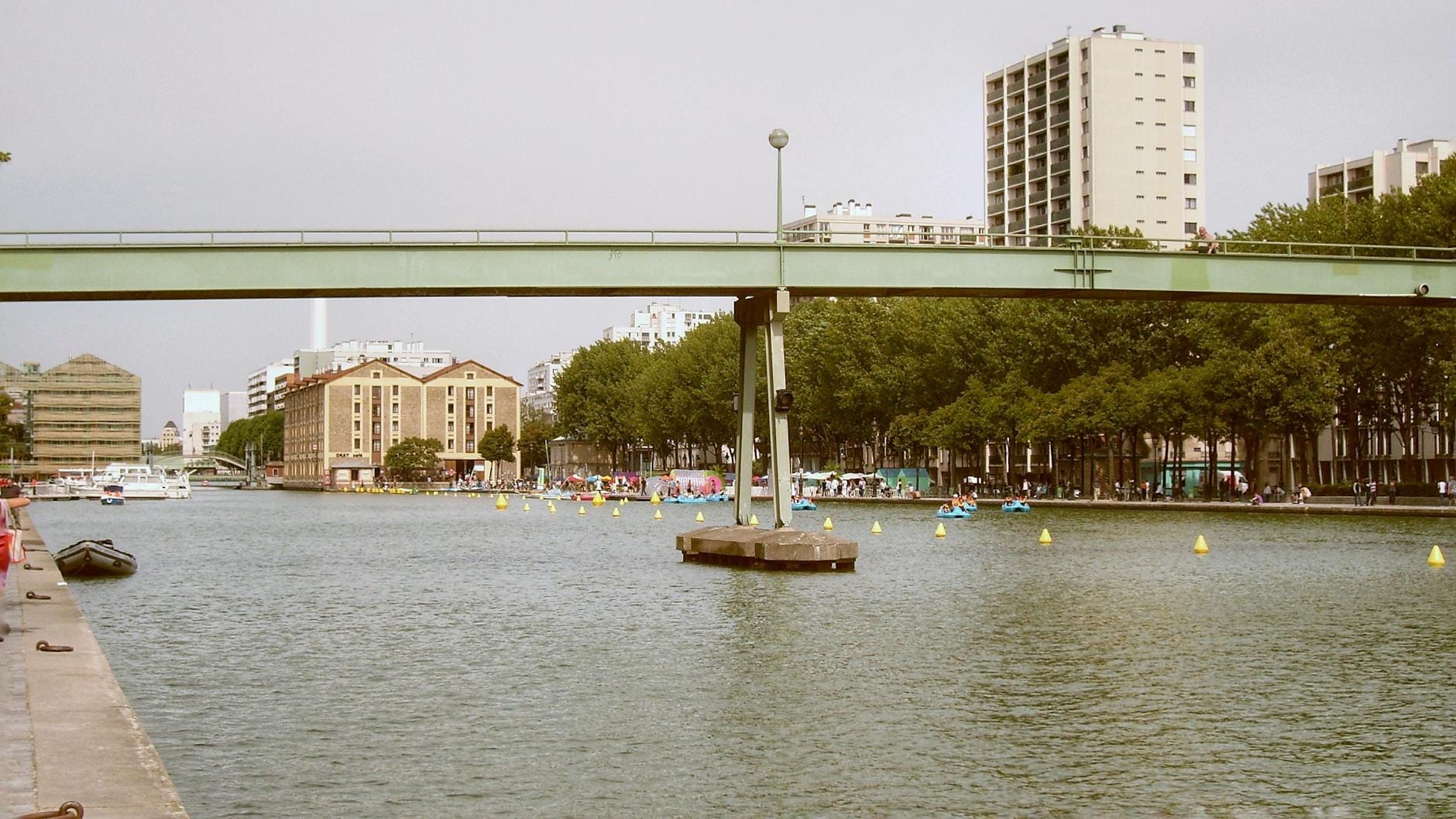
Think of the area as three overlapping zones. First, the vast park corridor running north-south along the Canal de l'Ourcq, anchored by the Cité des Sciences et de l'Industrie to the north and the Philharmonie de Paris and Grande Halle to the south. Second, the waterfront strip of the Bassin de la Villette, where the canal widens into an artificial lake before narrowing again toward the 10th. Third, the residential micro-neighborhoods climbing the hillsides further south: Mouzaïa, a grid of low cottage-lined alleys between the Danube and Pré-Saint-Gervais metro stations, and Butte Bergeyre, a small garden enclave perched above the 19th with views across to Montmartre.
For travelers already familiar with the city's canal culture, La Villette is essentially the upstream continuation of the Canal Saint-Martin scene: bigger, greener, and considerably less crowded with tourists. It borders Canal Saint-Martin and Belleville to the southwest, which makes the two neighborhoods natural complements for a half-day walk.
Character & Atmosphere
The 19th arrondissement is one of Paris's most ethnically and socially diverse quarters, and that diversity is legible at street level. On weekend mornings around rue de Crimée, you hear half a dozen languages before you reach the boulangerie. The park fills with families pushing strollers along the canal towpath, teenagers skateboarding beneath the tubular steel footbridges designed by Bernard Tschumi, and older men playing pétanque in the open plazas.
Afternoons in the park take on a different quality. The light off the Canal de l'Ourcq turns silver-gold in late summer, and the themed gardens stitching together the park's southern half, including the Garden of Mirrors and the Garden of Acrobatics, become playgrounds for children and impromptu rehearsal spaces for dancers. The scale surprises first-time visitors: at 55 hectares, Parc de la Villette is one of the largest parks in Paris proper and feels genuinely open in a way that the Tuileries or the Luxembourg never quite manage.
After dark, the neighborhood divides. The park's concert venues pull in crowds from across the city, and the bars along the canal stay busy until late on weekends. But step two blocks off the main axis into the alleyways of Mouzaïa, and it is entirely quiet: residential Paris, lamps glowing through net curtains, the sound of cats and distant traffic.
ℹ️ Good to know
The neighbourhood's character shifts noticeably by season. In summer, the Bassin de la Villette hosts Paris Plage waterfront activations with outdoor swimming, pedalo hire, and open-air cinema. In winter, the Philharmonie and Cité des Sciences take over as the main draw.
What to See & Do
The obvious anchor is Parc de la Villette itself. Bernard Tschumi's 1980s master plan turned the old abattoir and cattle market into a post-modern urban park structured around red steel follies scattered at 120-metre intervals across the grounds. The design was deliberately anti-pastoral: no sweeping lawns pretending to be countryside, but instead a network of pathways, themed gardens, and cultural buildings. Walking the covered gallery from north to south takes about 25 minutes and links all the major sites.
At the northern end stands the Cité des Sciences et de l'Industrie, Europe's largest science museum. The glass-and-steel structure designed by Adrien Fainsilber houses permanent exhibitions on mathematics, life sciences, and technology, plus a planetarium and the detached Géode cinema with its mirrored dome. The adjacent Cité de la Musique, now integrated into the Philharmonie complex, contains a musical instruments museum worth an hour even for non-specialists.
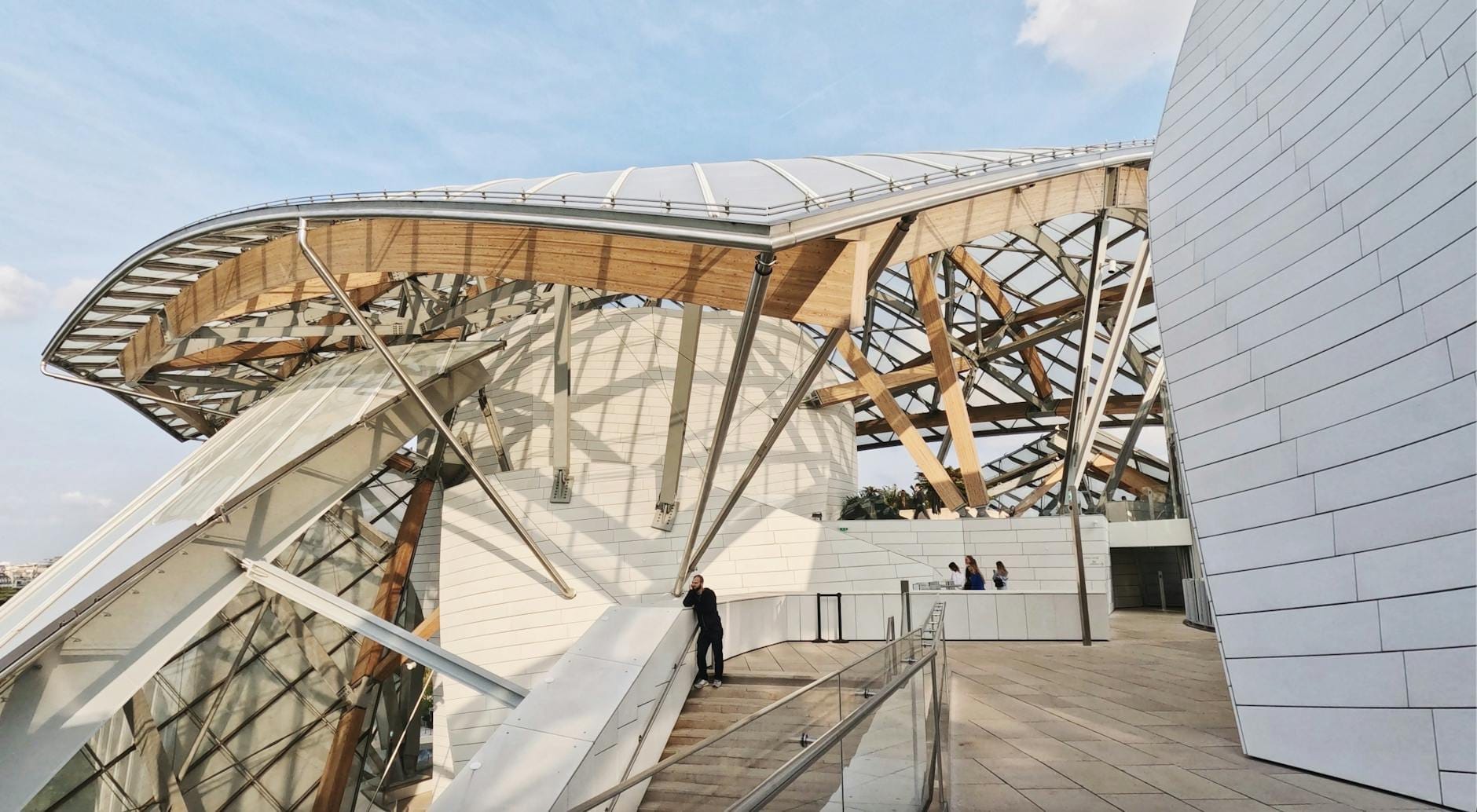
At the southern entrance, the Philharmonie de Paris opened in 2015 to a design by Jean Nouvel: a stainless steel and aluminium structure whose undulating facade catches light differently in morning and evening. Its main concert hall seats 2,380 and is considered one of the finest acoustic spaces in Europe. Even if you do not attend a performance, the building's rooftop terrace offers a panorama across northeast Paris that few tourists ever reach.
Grande Halle de la Villette: a converted 19th-century cattle hall used for major exhibitions and the Paris Jazz Festival each summer
Zénith Paris: one of the city's principal rock and pop concert venues, inside the park
Parc des Buttes-Chaumont: a hilltop park with a lake, suspension bridge, and temple-topped island at the 19th's southern edge
Mouzaïa quarter: a grid of private cottage alleys between rue de la Mouzaïa and rue du Général Brunet, largely unknown to tourists
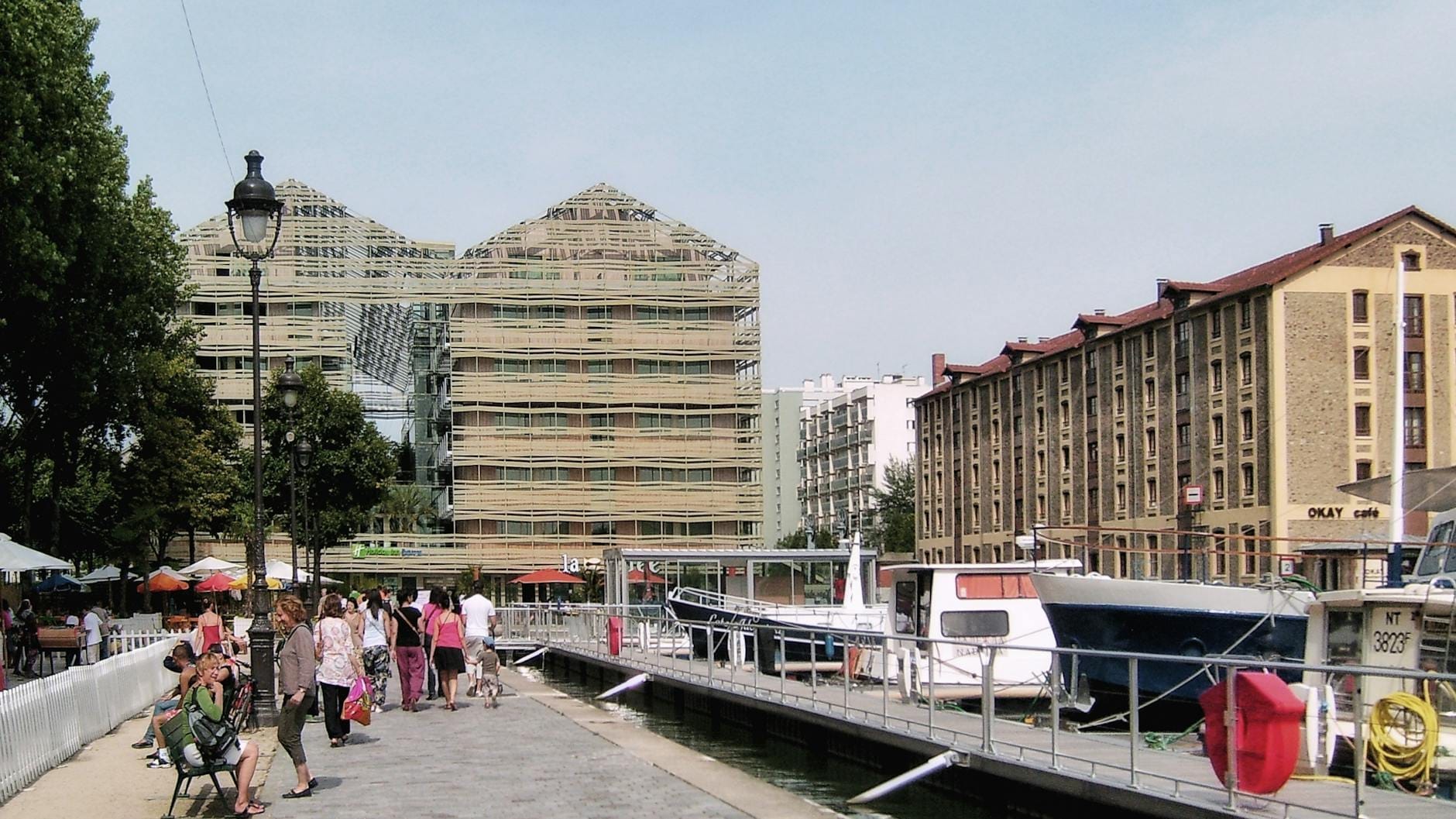
Bassin de la Villette: waterfront promenade connecting the park to Canal Saint-Martin, lined with cinemas and café terraces
💡 Local tip
The Philharmonie de Paris rooftop terrace is free to access on many days. Arrive before noon for clear views toward the Stade de France and Sacré-Cœur. Access hours vary by season, so check the Philharmonie website before visiting.
Eating & Drinking
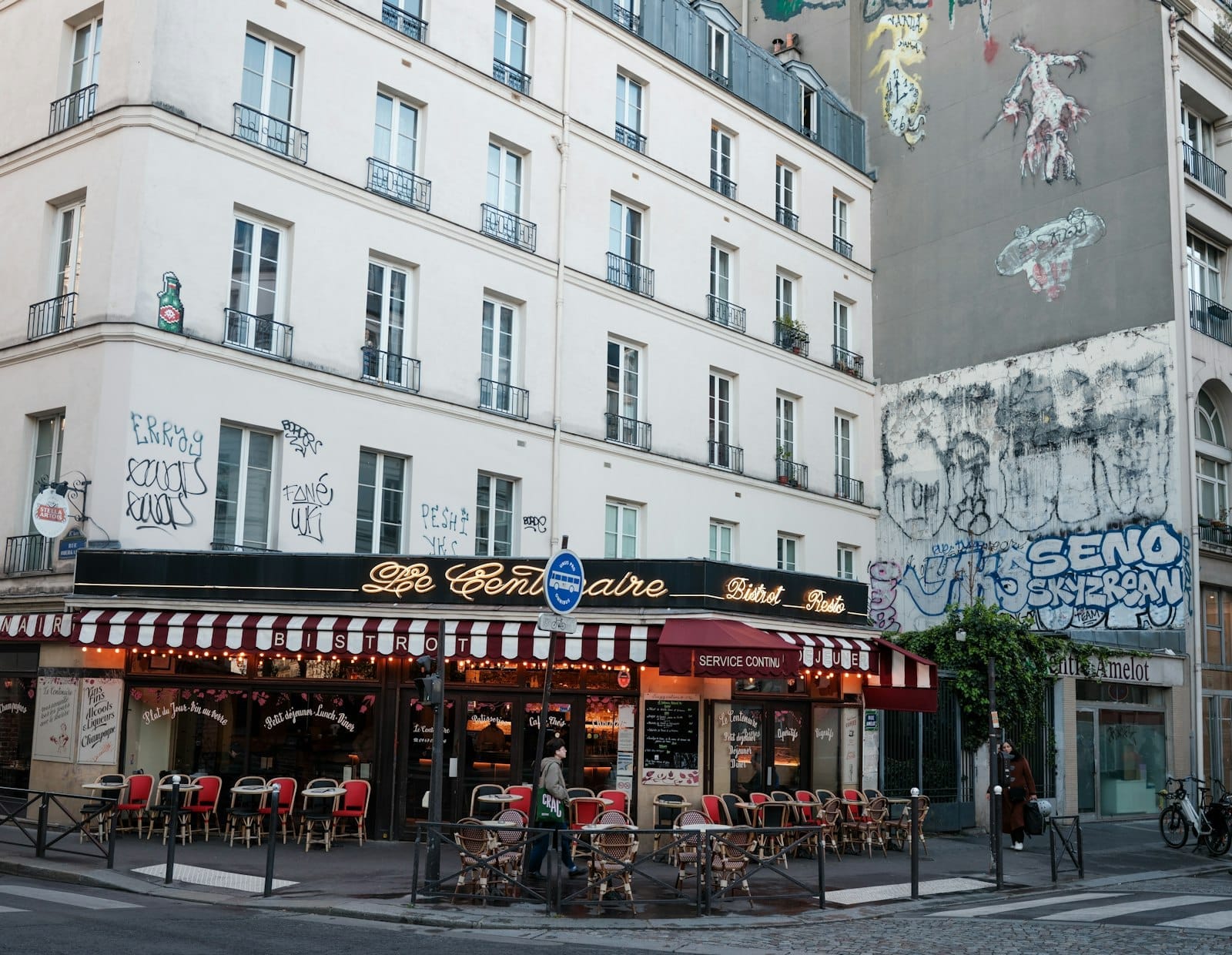
The food scene in the 19th is one of the most genuinely multicultural in Paris, a direct reflection of the neighbourhood's population. Along avenue de Flandre and rue de Crimée you find West African restaurants sitting alongside Vietnamese pho counters, Turkish patisseries, and a handful of newer wine bars targeting the creative crowd beginning to move into the area.
Around the Bassin de la Villette, the café and bar culture is more self-consciously hip: converted barge restaurants, open-air terrace bars on the quais, and the MK2 cinema complex on the east bank of the basin. Prices here remain noticeably lower than in Le Marais or Saint-Germain for broadly equivalent quality, which is part of the neighbourhood's appeal for Parisians looking to avoid tourist-adjusted pricing.
Vietnamese and Chinese restaurants: concentrated along rue de Belleville and avenue de Flandre, among the best-value pho and dim sum in Paris
West African cuisine: several Senegalese and Cameroonian restaurants around the Crimée and Laumière metro area
Canal-side bar terraces: quai de la Seine and quai de la Marne on the Bassin de la Villette, popular on warm evenings from April through September
Barge restaurants: several péniches moored at the basin host regular events and pop-up dining
⚠️ What to skip
Food and drink inside Parc de la Villette itself is overpriced relative to the surrounding streets. Bring a picnic for daytime visits, especially in summer when the lawns along the canal are full of exactly that kind of crowd.
Getting There & Around
La Villette is well connected by metro despite its position at the city's northeastern edge. Line 7 serves Porte de la Villette at the park's northern entrance, while Line 5 runs along the park's southern and western edge, with Porte de Pantin being the stop for the Philharmonie and the Grande Halle. For the Buttes-Chaumont and Mouzaïa areas, Line 7bis serves Botzaris, Buttes Chaumont, and Danube stations. Tram line T3b runs along the park's southern boundary and connects east-west across the outer boulevards.
On foot, the canal towpath from the Bassin de la Villette north through the park is entirely car-free and makes for an easy 2-kilometre stroll. The walk from Gare du Nord to Porte de Pantin takes about 30 minutes, following quai de la Seine on the east bank. Cyclists will find the canal corridor well marked, and the Vélib' bike-share network has docking stations at the park entrances and along the quais. For full transit details and area-by-area navigation tips, see the getting around Paris guide.
Where to Stay
La Villette is not a traditional hotel district. Accommodation here is sparse compared to the 8th or 4th arrondissements, which keeps the neighbourhood feeling residential rather than transient. What you do find are a handful of budget to mid-range hotels and a growing number of apartment rentals near the Bassin de la Villette, where the waterfront setting is genuinely attractive.
The best-positioned area for visitors is around the Bassin de la Villette, roughly between the Jaurès and Stalingrad metro stations. From here you are a 20-minute walk from the Gare du Nord and directly on the canal towpath. Staying here means a 30-to-40-minute metro journey to the Louvre or the Eiffel Tower, which is worth factoring in on short trips. For longer stays, the tradeoff in price and local atmosphere often makes the 19th a smart choice. See the where to stay in Paris guide for a full arrondissement comparison.
Practical Considerations
The 19th is one of Paris's larger and more elongated arrondissements. Visitors sometimes underestimate walking distances within the neighbourhood: the gap between the northern Cité des Sciences and the southern edge of Buttes-Chaumont is nearly 3 kilometres. Plan for significant foot time if you want to cover the full area in a single day.
The park and canal areas are safe and well-lit for evening visits, particularly during concerts. The Stalingrad area at the southwestern corner of the Bassin de la Villette has historically had a more unsettled atmosphere late at night around the metro exits: exercise the same situational awareness you would in any major city at night.
For families, this neighbourhood deserves a serious look. The Cité des Sciences alone justifies a full day, and the park's themed gardens and open lawns give children room to run that is rare in central Paris. Pair it with an afternoon at Parc des Buttes-Chaumont for a genuinely relaxed, non-monument Paris day. The Paris with kids guide covers both sites in detail.
TL;DR
La Villette suits travelers who want a working, diverse, culturally serious side of Paris rather than the postcard version.
Parc de la Villette and the Cité des Sciences are the headline draws: plan a minimum of half a day for the park, a full day if visiting the science museum with children.
The Philharmonie de Paris is one of Europe's great concert halls; checking the programme before arrival can transform an afternoon into an evening highlight.
The neighbourhood sits 30 to 40 minutes by metro from the main tourist sites, which keeps hotel prices lower and crowds thinner than the central arrondissements.
Best for: families, music lovers, architecture enthusiasts, budget-conscious travelers, and anyone curious about the Paris that Parisians actually use at weekends.
Paris has over 130 museums, which makes choosing badly very easy. This guide cuts through the noise with a ranked, honest breakdown of the best museums in Paris, covering art, history, science, and design, with practical details on tickets, timing, and what to skip.
Paris has over 400 parks and gardens, ranging from formal French-style classics to wild woodland escapes. This guide covers the best green spaces across the city, with practical details on what to expect, when to go, and how to get the most out of each one.
Paris is one of the most photographed cities on earth, which means most visitors return home with the same ten images. This guide goes beyond Trocadéro to cover lesser-known vantage points, specific timing advice, and honest assessments of which spots are genuinely worth the effort.
Paris rewards visitors year-round, but the experience shifts dramatically depending on when you go. This guide breaks down each season honestly, covering temperatures, crowd levels, pricing, and the specific events and landscapes that make each period worth considering.
Paris rewards those who look down at it as much as those who walk through it. This guide covers every serious viewpoint in the city, from the famous towers to free terraces most visitors walk past, with honest advice on which are worth the queue and which are overrated.
Paris rewards those who venture beyond the périphérique. Whether you want royal grandeur at Versailles, Monet's living canvases at Giverny, or medieval forests at Fontainebleau, these are the best day trips from Paris — all reachable in under two hours.
Paris has one of the most comprehensive urban transport networks in the world. From the 16-line Métro to river buses and Vélib' bikes, this guide covers every realistic option — with real fares, practical advice, and honest warnings about what to avoid.
Paris rewards the curious traveler. Beyond the Eiffel Tower and Louvre queue, the city holds Roman ruins, forgotten neighborhoods, candlelit sewers, and park temples that most visitors never find. This guide covers 20 genuinely underrated experiences, with practical details on when to go, what to expect, and what to skip.
Planning your first trip to Paris? This guide covers everything you actually need: which arrondissements to stay in, how to get around without overpaying, which passes are worth buying, and how to avoid the most common rookie mistakes. Specific, honest, and built for real travelers.
Three days in Paris is enough to cover the iconic highlights, eat well, and still leave room to wander. This guide breaks down each day by neighborhood, flags what to pre-book, and tells you what to skip so you spend less time in queues and more time in the city.
The Paris Museum Pass covers 50+ museums and monuments, but it's not automatically the right choice for every visitor. This guide breaks down the real costs, savings thresholds, booking rules, and the cases where individual tickets beat the pass.
Paris has a reputation for draining wallets, but the reality is more nuanced. This guide breaks down real 2026 costs across transport, food, accommodation, and attractions, with practical strategies for visiting Paris on a budget without sacrificing the experience.
Paris works brilliantly for families, but only if you plan it right. This guide covers the best kid-friendly attractions, parks, museums, transport logistics, and honest advice on what to skip, so you can enjoy the city without the meltdowns.
Paris rewards visitors who go beyond the obvious itinerary. This guide covers the best things to do in Paris across every interest and budget, from world-class museums and Seine river cruises to neighbourhood markets, immersive art installations, and day trips worth the train fare.
Paris has more restaurants per square kilometer than almost any city on earth, which makes choosing one genuinely hard. This guide cuts through the noise with neighborhood-by-neighborhood recommendations, honest budget breakdowns, booking advice, and the dishes you should actually order.
Choosing where to stay in Paris shapes your entire trip. This guide breaks down the city's key neighborhoods by character, price, metro access, and who they suit best, so you can book with confidence rather than guesswork.