Best Photo Spots in Paris: 25 Iconic & Hidden Locations
Paris is one of the most photographed cities on earth, which means most visitors return home with the same ten images. This guide goes beyond Trocadéro to cover lesser-known vantage points, specific timing advice, and honest assessments of which spots are genuinely worth the effort.
Plan and book this trip
Tools from our partner Travelpayouts help you compare flights and hotels. If you book through them, we may earn a commission at no extra cost to you.
Flights
Hotels map
TL;DR
- The Trocadéro is crowded for a reason, but Avenue de Camoens offers the same Eiffel Tower framing with a fraction of the foot traffic.
- Golden hour light in Paris hits differently in spring and autumn — see when to visit Paris for month-by-month light and crowd conditions.
- Many of the best locations are free to access: the Louvre courtyard, Bir-Hakeim Bridge, and covered passages require no ticket.
- Arrive at iconic spots before 8am to shoot without crowds — especially Sacré-Cœur, Pont Neuf, and Place des Vosges.
- Pair your photography route with a 3-day Paris itinerary to cover the most ground efficiently across different arrondissements.
Eiffel Tower: Beyond the Trocadéro
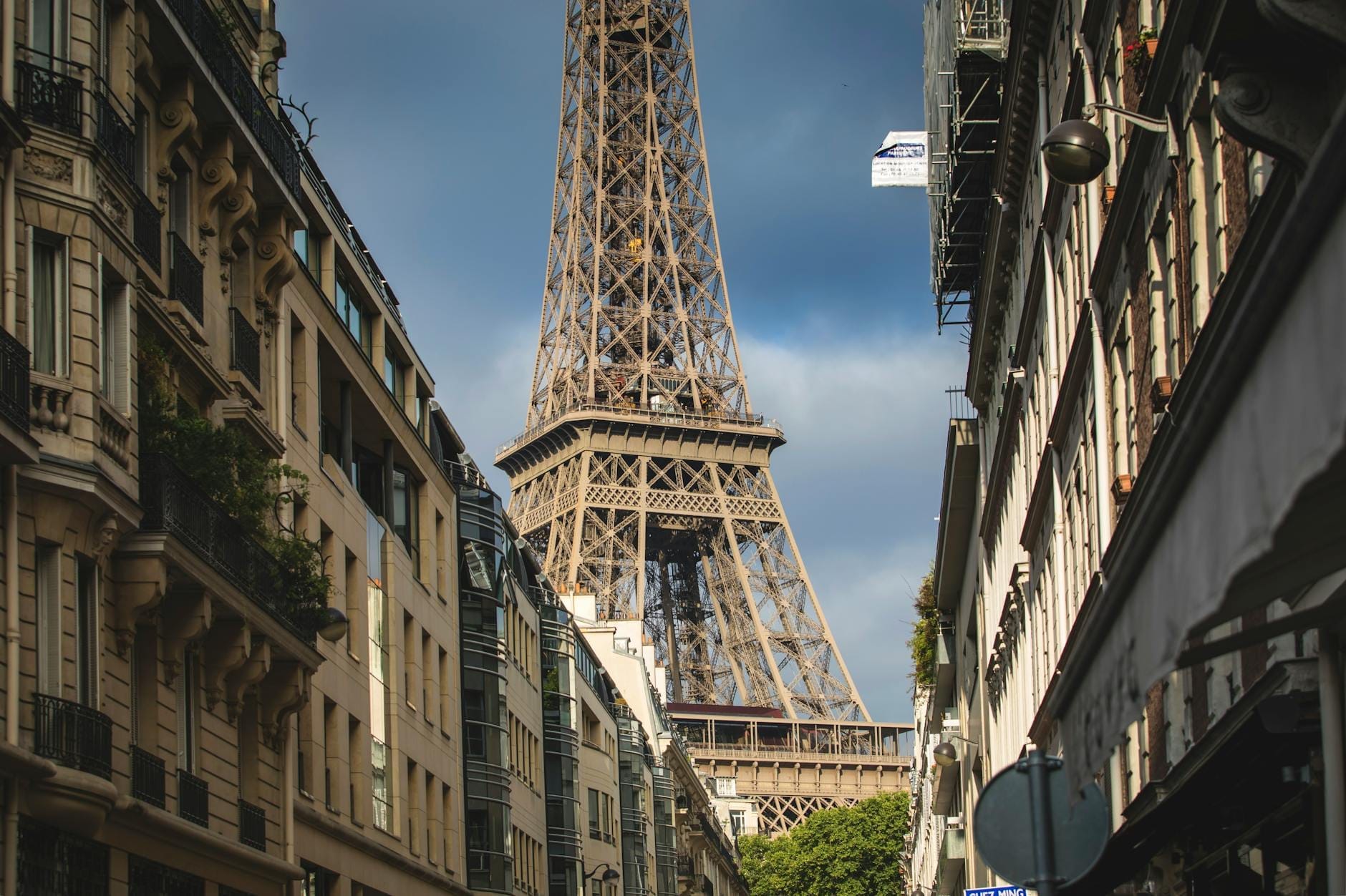
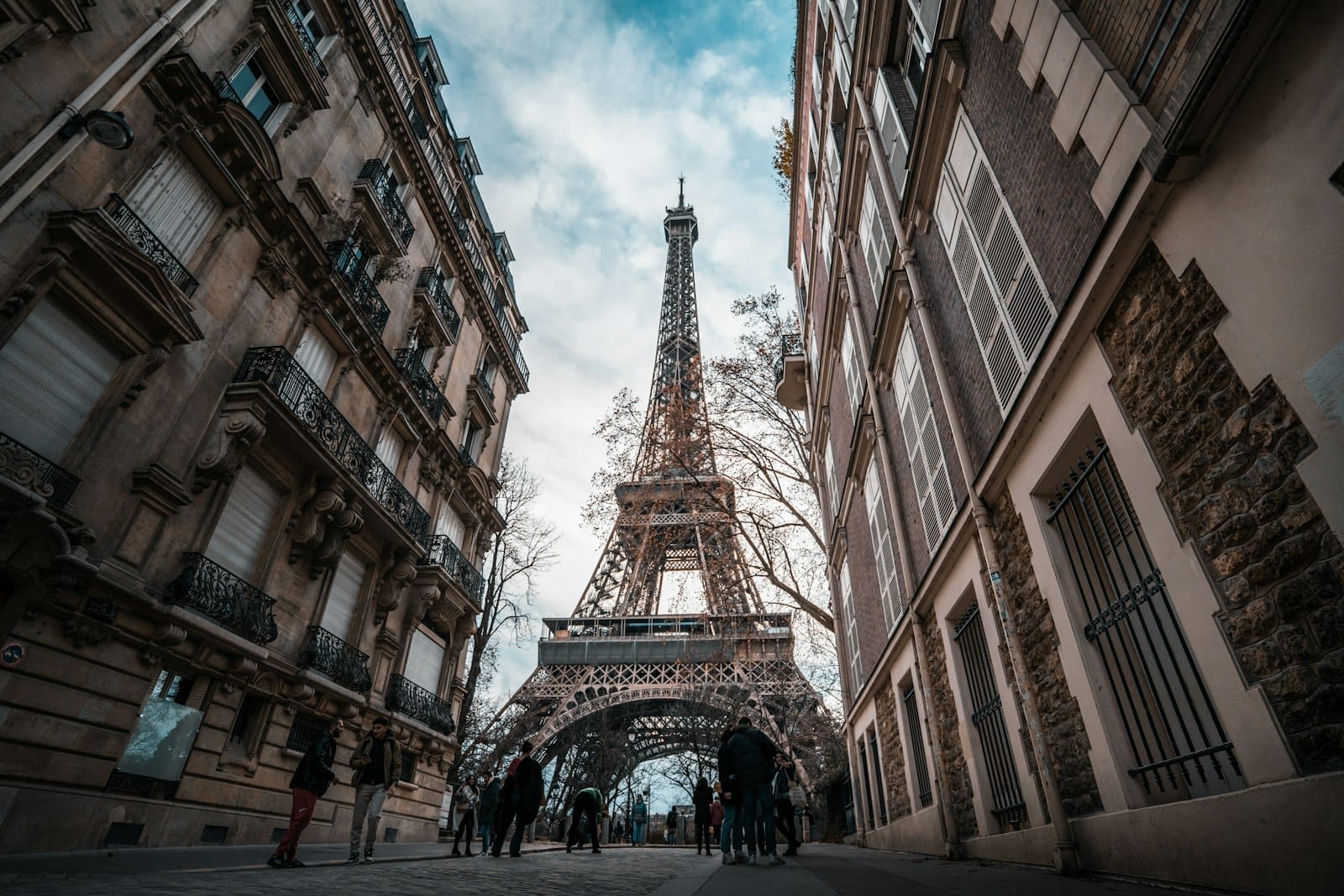
The Eiffel Tower is unavoidable, and it shouldn't be avoided. But the angle from Trocadéro, while classic, puts you elbow-to-elbow with hundreds of other photographers and the persistent hassle of souvenir vendors. There are four alternatives that deliver equally strong compositions with significantly less competition.
- Avenue de Camoens (16th arr.) A curved residential street with Haussmann lamp posts and iron railings that frame the tower perfectly. Almost always quiet, even in summer. Best at dusk when the tower begins its hourly light show.
- Bir-Hakeim Bridge The double-decker metal bridge used in Inception offers dramatic lines and tower reflections in the Seine. Shoot from the mid-span walkway looking northeast. Morning light is ideal.
- Champ de Mars (from the southeast end) Walk past the crowds gathered at the northwest lawn and shoot from the opposite end looking back. You get the full tower with the green expanse of the park in the foreground.
- Pont d'Iéna (middle of the bridge) Stand dead center on this bridge for a symmetrical reflection shot at dawn. The road closes to cars early on Sunday mornings, making it even cleaner.
💡 Local tip
The Eiffel Tower sparkles for 5 minutes on the hour from dusk to 1am daily. Arrive 15 minutes early, frame your shot, and be ready. Tripods are permitted on public streets — but technically restricted inside the Champ de Mars park for commercial use.
Montmartre: Past the Postcard Shots
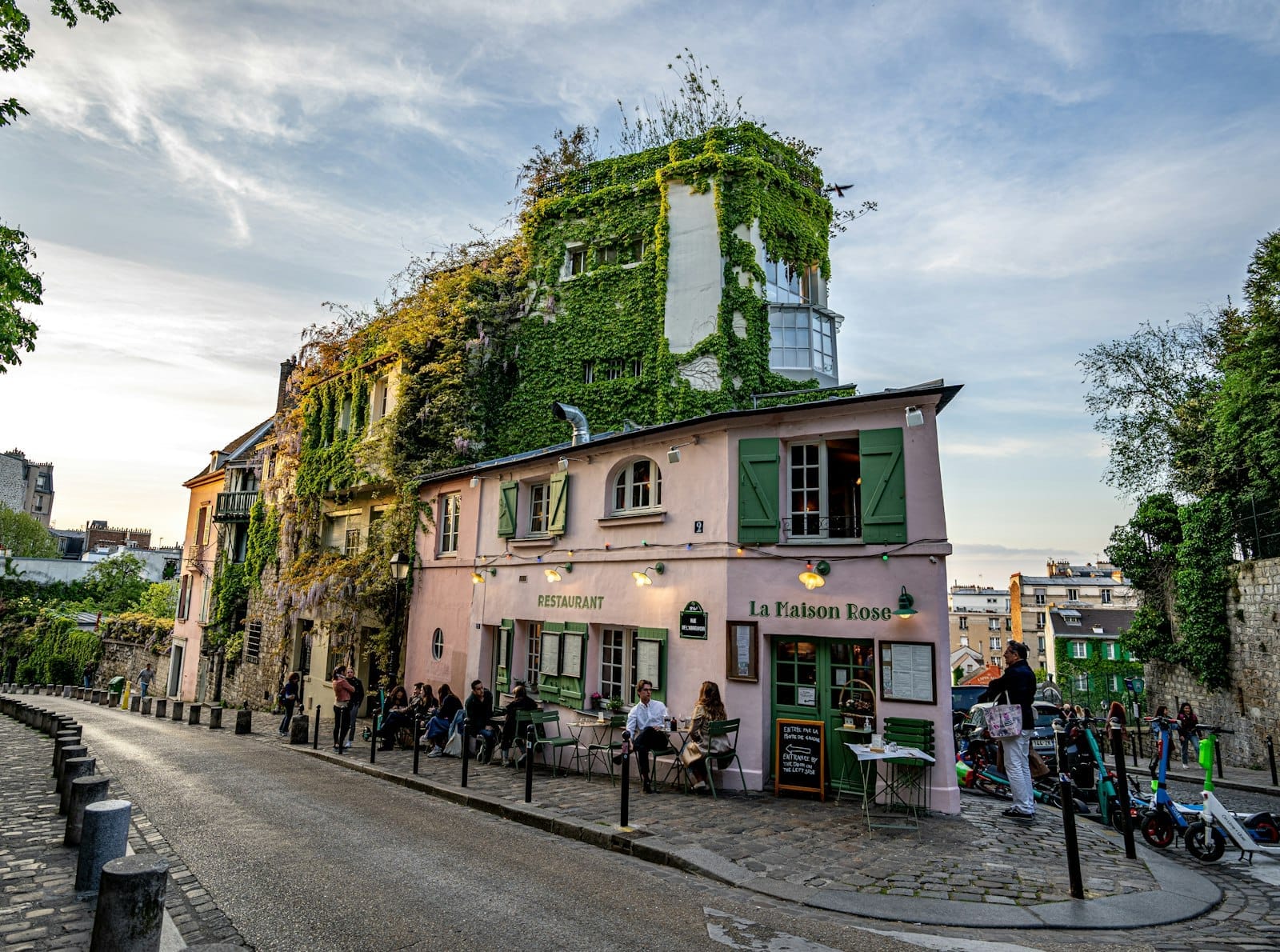
Montmartre's Sacré-Cœur Basilica is the obvious centerpiece, and the view from its steps over Paris is genuinely spectacular. But the front facade is chaotic from mid-morning onwards — touts, crowds, and backpacks in every frame. Walk around to the back of the basilica after sunset, and the scene is entirely different: near-empty, atmospheric, and lit by a soft glow from the building's white stone.
Place Dalida is one of Montmartre's most rewarding stops for photographers who do their research. Named for the Egyptian-French singer who lived nearby, this small square offers a view of Sacré-Cœur framed by pink Haussmann buildings and a bronze bust of Dalida herself. Early morning on weekdays it's almost always deserted. The pink-and-cream color palette makes it unusually photogenic for what is essentially a residential junction.
Further down Rue Lepic, the Moulin de la Galette is one of only two surviving windmills in Paris. It stopped milling grain in the 19th century and became a famous dance hall immortalized by Renoir. Today it functions as a restaurant, but the exterior windmill structure is photographable from the street. The combination of rustic wooden sails against Parisian zinc rooftops is genuinely rare in a city this modern.
⚠️ What to skip
The steps leading up to Sacré-Cœur are a known pickpocket hotspot, particularly the areas where bracelet sellers approach tourists. Keep your camera strap secure and your attention on your gear, not just your composition.
The Seine and Its Bridges
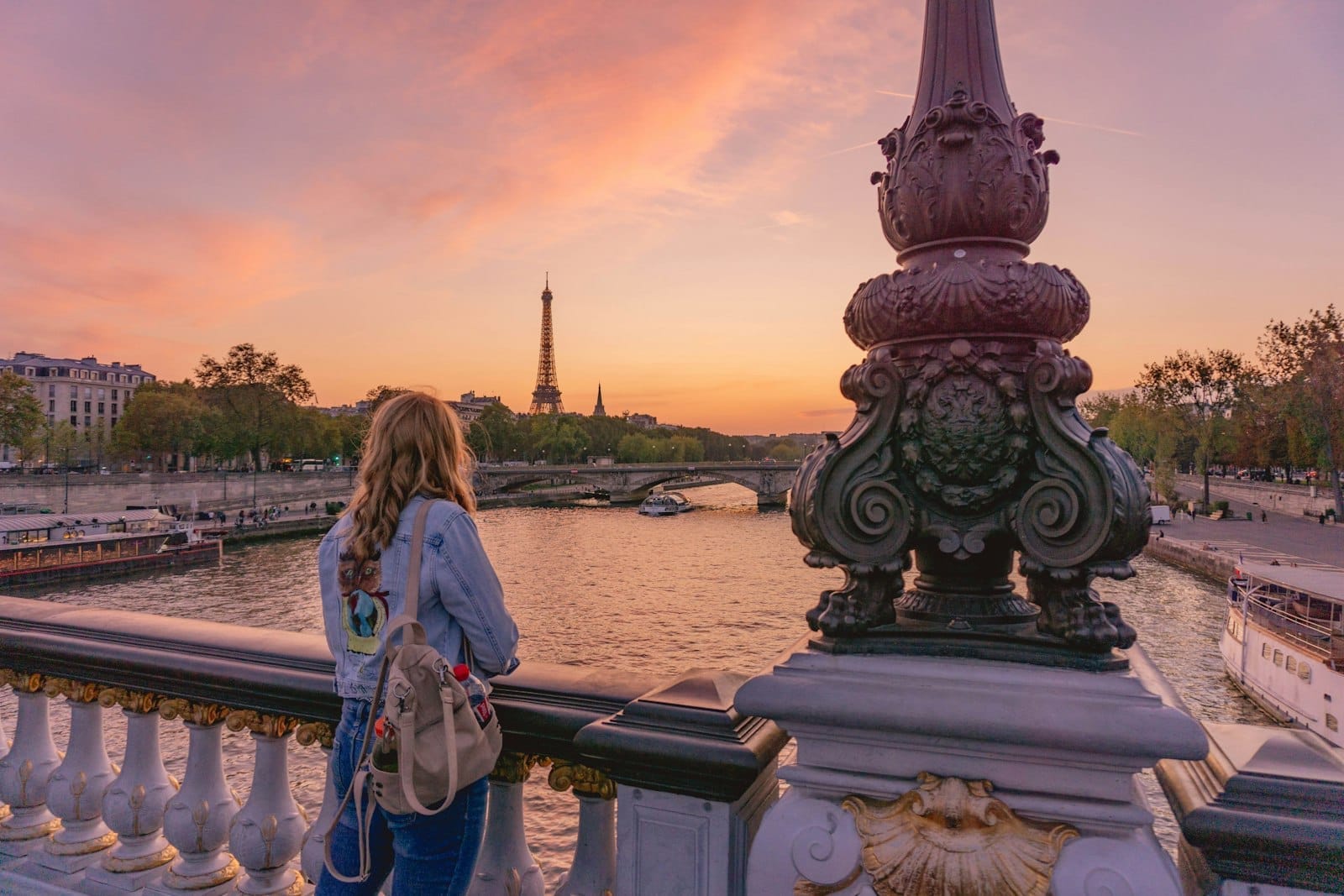
Paris has 37 bridges crossing the Seine, and each produces a different relationship between water, stone, and sky. Pont Alexandre III is the most ornate, a Belle Époque construction dripping with gilded statues, bronze lamp posts, and cherubs. It photographs best in late afternoon when the low western sun catches the gold leaf. Avoid midday when the light is flat and harsh.
Pont Neuf, despite its name meaning 'New Bridge', is actually the oldest standing bridge in Paris, completed in 1606. Shoot from the triangular stone promontory at its base (accessed from the western tip of Île de la Cité) for a low-angle view of the bridge arches with the Seine on both sides. This spot also frames the Eiffel Tower in the distance on a clear day.
For Seine reflections, the stretch between Pont de la Tournelle and Pont de l'Archevêché offers unobstructed water shots with Notre-Dame as a backdrop. The ongoing restoration of Notre-Dame Cathedral reopened in December 2024, though some external works on the spire, surrounding sacristy, and forecourt continue. The remaining scaffolding can actually make for striking industrial-meets-Gothic compositions if you embrace it rather than work around it.
Covered Passages, Courtyards, and Interior Spaces
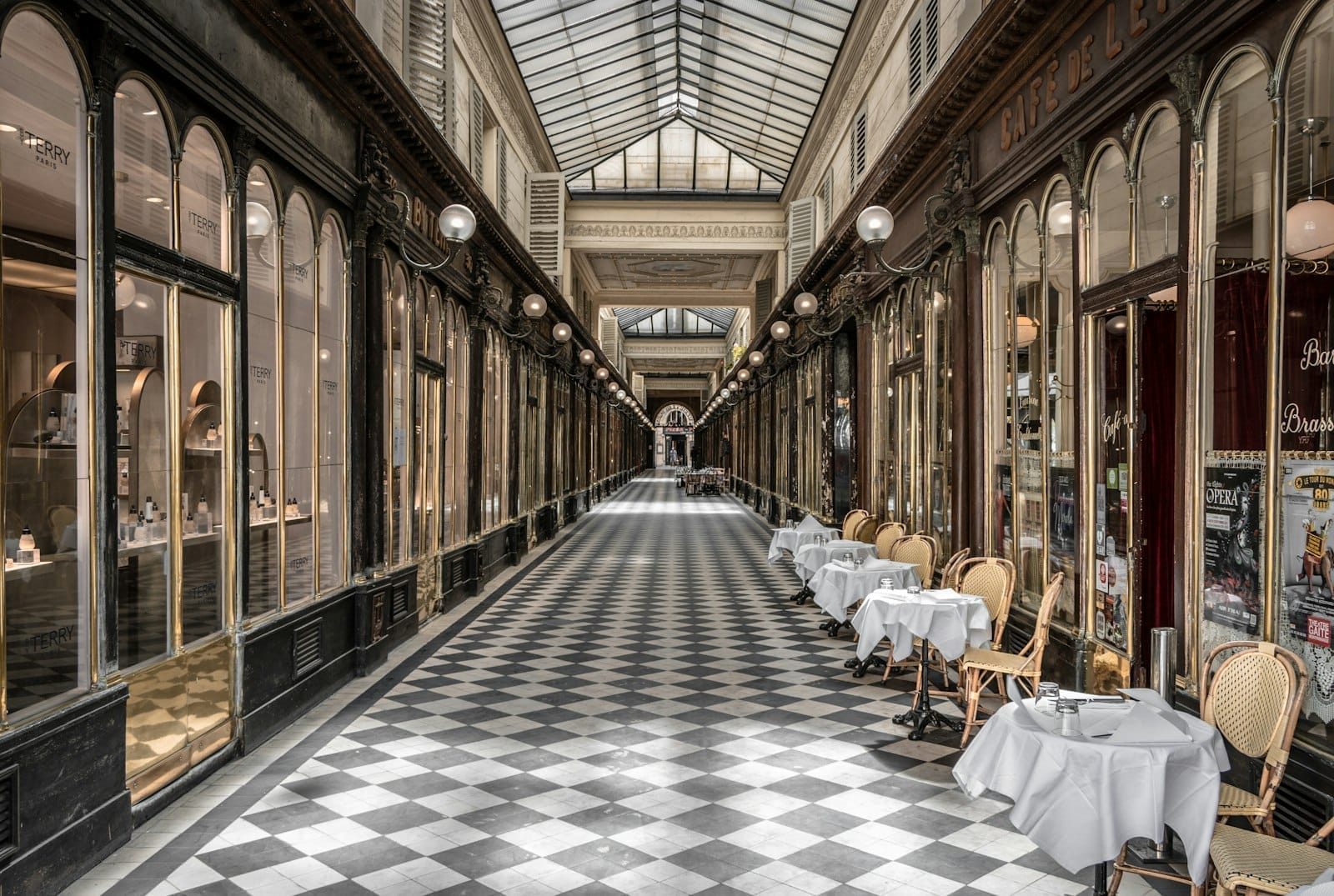
Paris's covered passages are among the city's most underused photography locations. Built in the early 19th century as proto-shopping malls, they feature glass roofs, mosaic tile floors, and gas-lamp-style lighting that creates a genuinely unique visual environment. Passage des Panoramas, opened in 1800, is the oldest surviving example. The combination of vintage shop fronts, hanging lanterns, and the diffused glass-filtered daylight is unlike anything else in Paris.
- Galerie Vivienne (2nd arr.) The most elegant of the covered passages, with mosaic floors and Neoclassical decoration. Best shot with a wide-angle lens pointing toward the glass roof. Quietest on weekday mornings.
- Passage des Panoramas (2nd arr.) The oldest and most atmospheric — cramped, layered with vintage stamp dealers and old-school brasseries. The narrow width creates natural leading lines.
- Cloître des Billettes (4th arr.) A free-entry medieval cloister that now doubles as an exhibition space. One of the few surviving Gothic cloisters in Paris, with arcaded walkways and a quiet garden courtyard.
- Louvre Courtyard The glass pyramid and the Cour Napoléon are fully accessible without a museum ticket. Shoot the inverted pyramid underground in the Carrousel du Louvre shopping complex for an unusual angle.
- Palais Royal Garden (1st arr.) Arcaded walkways surrounding a formal garden, plus Daniel Buren's striped columns in the courtyard. Extremely photogenic but often overshadowed by the Louvre nearby.
✨ Pro tip
For interior shots in Paris's covered passages, overcast days are actually better than sunny ones. Direct sunlight through the glass roofs creates harsh contrast and blown-out highlights. A cloudy sky diffuses the light evenly across the tile floors and shop fronts.
Architectural Photography: Beyond the Expected
Most visitors concentrate their architectural photography on the 1st and 7th arrondissements. The 13th arrondissement offers something genuinely different. Les Olympiades is a residential complex built between 1969 and 1974, featuring towers reaching up to 134 metres, connected by elevated walkways, staircases, and open-air plazas at multiple levels. It's brutalist-adjacent, photogenic in a completely different register from Haussmann Paris, and almost entirely tourist-free. The area also has a significant East Asian community, so the visual culture layered onto the concrete architecture adds further interest.
For Haussmann street photography, Rue Crémieux in the 12th arrondissement is one of the most colorful residential streets in the city, with pastel-painted facades that look almost too designed to be real. It's consistently popular on social media but remains relatively quiet before 9am. Residents have reportedly pushed back against tourism pressure here, so arrive early, be respectful of private property, and don't block doorways.
The Palais Royal and Place des Vosges in Le Marais represent two contrasting but equally rewarding architectural environments. Place des Vosges, the oldest planned square in Paris (completed 1612), has identical red-brick facades on all four sides creating symmetrical compositions whatever angle you shoot from. The arcaded ground floor and central garden make it worth multiple visits at different times of day.
Timing, Light, and Practical Logistics
Paris sits at 48°N latitude, which means the sun tracks lower across the sky than in southern European cities. In winter, golden hour can last most of the late afternoon. In summer, the sun sets after 9pm but rises before 6am, giving serious photographers two extended golden-hour windows. The sweet spot for most locations is roughly 30 minutes before and after sunrise, when light is warm but not yet harsh, and crowds haven't materialized.
Spring (April to June) is broadly the best season for photography in Paris. Temperatures sit between 12 and 20°C, cherry blossoms appear in the Jardin des Plantes and Parc de Sceaux in late March to early April, and the famous Paris rain is less frequent than autumn. See the full breakdown in the best time to visit Paris guide, which covers month-by-month light conditions and crowd levels.
- Arrive at sunrise: Sacré-Cœur back facade, Pont Neuf promontory, Place des Vosges, Canal Saint-Martin
- Best at golden hour (late afternoon): Pont Alexandre III, Avenue de Camoens, Champ de Mars from the south
- Night photography: Eiffel Tower light show (on the hour until 1am), Seine embankments, Galeries Lafayette rooftop
- Rainy day alternatives: Covered passages, the Louvre Carrousel underground, Musée d'Orsay interior, Galeries Lafayette dome
- Avoid midday (11am-3pm): Harsh light flattens Haussmann facades and creates ugly shadows on monuments
ℹ️ Good to know
Commercial photography (with professional equipment, lights, or for paid clients) in public parks and on certain public squares may require a permit from the Mairie de Paris. Personal photography and content creation for non-commercial use is generally unrestricted in outdoor public spaces.
FAQ
What is the best time of day to photograph the Eiffel Tower?
For clean shots without crowds, sunrise (around 6am in summer, later in winter) is the most reliable window. The blue hour just before dawn gives the sky a deep blue that contrasts beautifully with the tower's yellow sodium lighting. The hourly light show runs from dusk until 1am daily and is worth planning around for evening shots — arrive 10-15 minutes early and have your composition set.
Are there any free photography locations worth visiting in Paris?
Most of the best photography locations in Paris are completely free. The Louvre courtyard and pyramid, Bir-Hakeim Bridge, Pont Alexandre III, the covered passages, Place des Vosges garden, Palais Royal courtyard, Canal Saint-Martin, and all of Montmartre's streets require no admission. Even the Eiffel Tower itself can be photographed from multiple angles without paying the climb or elevator fees.
Which Paris neighborhoods are best for street photography?
Le Marais (4th arr.) is the most rewarding for layered street life, mixing medieval architecture with contemporary galleries and daily market activity around Marché des Enfants Rouges. Canal Saint-Martin (10th arr.) is excellent for a more local atmosphere, with iron footbridges, tree-lined waterways, and independent café culture. Montmartre's backstreets away from Sacré-Cœur also reward slow exploration.
Is a drone permitted for photography in Paris?
Recreational drone flight is heavily restricted in Paris. The city center is classified as a no-fly zone (zone interdite) under French civil aviation regulations. Permits for commercial aerial photography are available but require significant advance planning and approvals from the DGAC (Direction Générale de l'Aviation Civile). Attempting to fly without authorization risks fines and equipment confiscation.
What camera gear is recommended for Paris photography?
A mirrorless or DSLR with a versatile 24-70mm equivalent lens handles most situations: street scenes, architecture, and landmark shots. A 35mm or 50mm prime is ideal for the covered passages and narrow streets. For the Eiffel Tower light show and blue-hour shots, a tripod and remote shutter release significantly improve results. A polarizing filter reduces Seine reflections and cuts glare off Haussmann stonework in midday light.