Eiffel Tower: The Complete Visitor's Guide to Paris's Most Famous Monument
Standing 330 metres above the 7th arrondissement, the Eiffel Tower is the world's most visited paid monument. This guide covers everything you need to know before you go: ticket tiers, best visiting times, transit options, and honest advice on what the experience actually delivers.
Quick Facts
- Location
- Champ de Mars, 5 Avenue Anatole France, 7th arrondissement, Paris
- Getting There
- Métro Line 6: Bir-Hakeim; RER C: Champ de Mars–Tour Eiffel; Bus 82, 87
- Time Needed
- 2–3 hours (ground to summit and back); allow extra for queues without a pre-booked ticket
- Cost
- Adults €14.80–€36.70 depending on floor and access type (lift vs. stairs); children €3.80–€18.40. Book online in advance for best prices.
- Best for
- First-time visitors, couples, families, architecture and engineering enthusiasts
- Official website
- www.toureiffel.paris
What the Eiffel Tower Actually Is
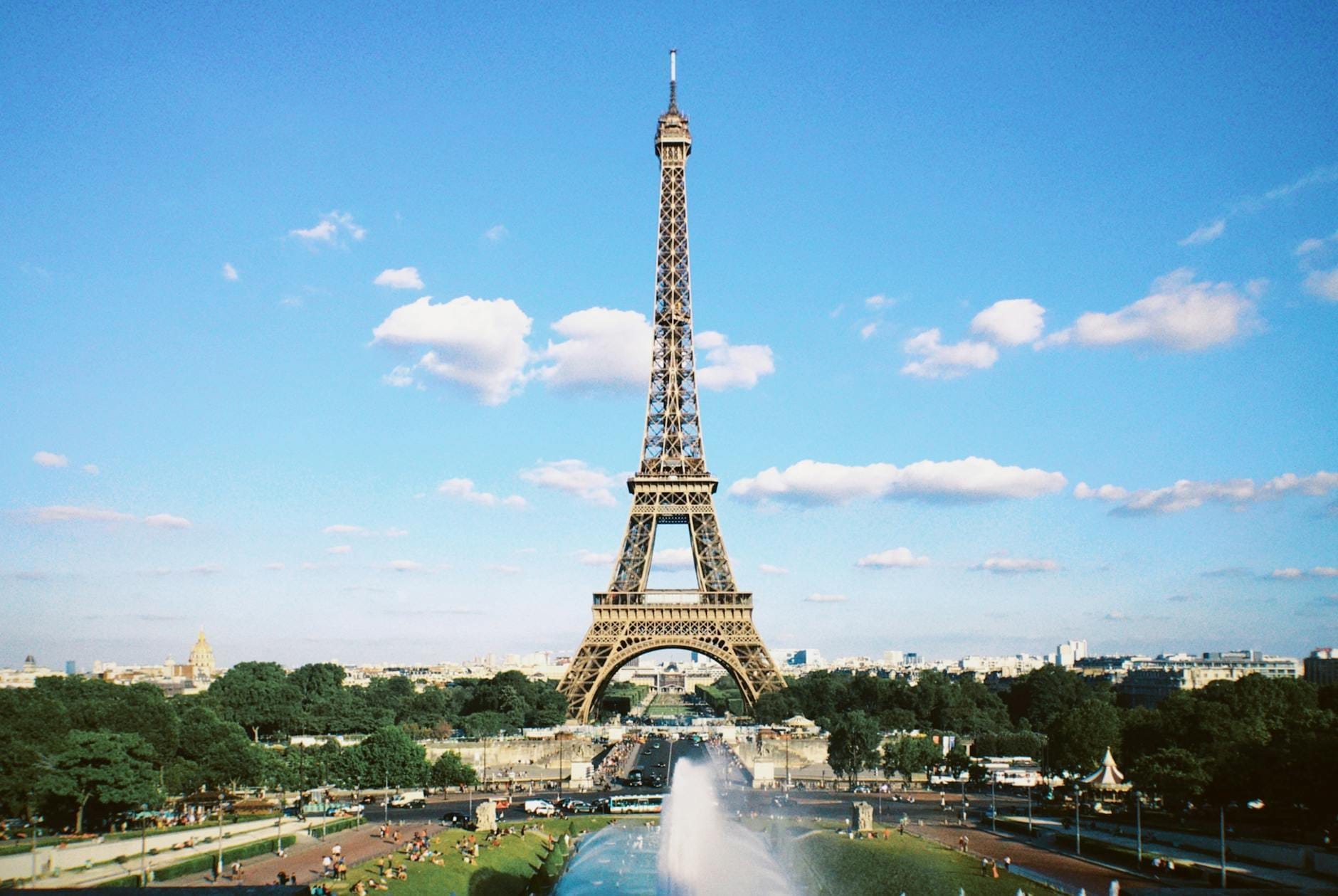
The Eiffel Tower, or Tour Eiffel in French, is a wrought-iron lattice tower built 1887–1889 on the Champ de Mars in central Paris. It was designed by engineer Gustave Eiffel, with structural work led by engineers Maurice Koechlin and Émile Nouguier, and architectural detailing by Stephen Sauvestre. Originally built as the entrance arch for the 1889 International Exposition, which commemorated the centenary of the French Revolution, the tower was never intended to be permanent. Critics called it an eyesore. Today it draws more paid visitors than any other monument on earth, welcoming more than 200 million visitors since its inauguration.
The numbers alone tell part of the story: 300 metres of iron structure (330 metres including antenna), 10,100 tons total weight with 7,300 tons of metal frame assembled from individually shaped pieces connected by 2.5 million rivets, put together by a crew of around 300 workers in just over two years. The construction ran from January 1887 to March 1889 — a timeline that stunned contemporaries. Along the first-floor balustrade, 72 names of French scientists, engineers, and mathematicians are engraved — a detail easy to miss in the excitement of the ascent but worth pausing for.
💡 Local tip
Book tickets online at toureiffel.paris before you leave home. The tower is one of the few Paris attractions where walk-up queues genuinely can mean a 2-hour wait, especially in peak summer. Timed-entry e-tickets arrive by email and let you skip the main ticket line.
The Three Floors: What Each Level Offers
The tower has three visitor levels, each with a distinct character. The first floor sits at 57 metres (187 feet) and has undergone the most dramatic renovation in recent decades. A glass-floored walkway lets you look straight down to the esplanade below — not recommended if vertigo is even a mild concern. The floor hosts Madame Brasserie, a full-service restaurant, and a permanent exhibition on the tower's history and construction. It is also the calmest level: most visitors pass through quickly on their way up or down, so lingering here means you often have the balcony railings to yourself.
The second floor at 115 metres is the practical sweet spot. The views here are wide, unobstructed, and easy to photograph without shooting through glass. On a clear day you can read the Paris street grid from this height, and the Seine curves look particularly clean from the southeast corner. There is a smaller restaurant and a gift shop. Crowds are heavier here than on the first floor but thinner than outside at ground level. The second floor is also the departure point for the summit lift.
The summit observation deck sits at 276 metres (the tower's full 330 m height includes the antenna above). The views reach beyond the city on clear days, but the platform is compact and can feel genuinely crowded in summer. Gustave Eiffel's recreated private apartment is viewable here, with period furniture and wax figures of Eiffel receiving Thomas Edison — a slightly theatrical touch but a real historical reference to a meeting that took place in 1889. Wind is a factor at the top: bring a layer even in summer.
Tickets & tours
Hand-picked options from our booking partner. Prices are indicative; availability and final rates are confirmed when you complete your booking.
Eiffel Tower reserved elevator entrance to 2nd floor with walking tour and Seine cruise
From 94 €Instant confirmationFree cancellationBest of Paris city tour with Eiffel Tower lunch and Seine cruise
From 144 €Instant confirmationFree cancellationDirect Access Eiffel Tower Tour with Access to the 2nd Floor
From 69 €Instant confirmationSeine River cruise with French crepe tasting near the Eiffel Tower
From 25 €Instant confirmationFree cancellation
How the Experience Changes by Time of Day
Morning entry, from opening at 09:30 until around 11:00, is the quietest window on most days. The light at this hour hits the iron lattice from the east, casting long geometric shadows across the Champ de Mars. The esplanade below is occupied mostly by joggers and dog walkers. Security lines move faster, the lifts are less packed, and you can spend genuine time at railings rather than shuffling in a crowd.
Late afternoon into sunset is the most photographed window, and for good reason. The golden hour turns the tower's painted ironwork a warm amber, and the view of Trocadéro and the Seine from the second floor becomes genuinely cinematic. However, this is also when queues on the stairs and at the lift are longest. If you want the light without the full crowd, a second-floor ticket timed for around 17:00 on a weekday is a reasonable compromise.
After dark, the tower's light show runs for five minutes on the hour, every hour, from nightfall until midnight (1 a.m. in summer). From street level or the Trocadéro terrace, this is free to watch and worth seeing once. From inside the tower, the sensation is different: standing on the second floor as 20,000 lightbulbs spark into sequence around you is one of the more memorable things Paris offers. Night visits also mean cooler temperatures and a different crowd — more couples, fewer school groups.
ℹ️ Good to know
The tower's hourly light show runs from dusk until 00:45. The show itself lasts five minutes. From outside, the Trocadéro esplanade and the central Champ de Mars lawn are both good free vantage points.
Tickets, Pricing, and What You Actually Need to Book
Adult ticket prices range from €14.80 to €36.70 depending on the floor you visit and whether you take the lift or climb the stairs. Stair access goes up to the second floor only, and stair tickets are the cheapest option. Children and young people (under 25 with proof of age) pay €3.80 to €18.40. The tower has reduced rates for disabled visitors on presentation of a disability card.
The official ticket office at toureiffel.paris is the only place that guarantees official prices. Third-party resellers frequently charge premiums for the same timed slots. If online slots are sold out, a small number of walk-up tickets are sold on the day, but availability is not guaranteed. The Paris Museum Pass does not cover Eiffel Tower entry — this is one of Paris's most common visitor misconceptions.
⚠️ What to skip
The Paris Museum Pass does NOT include Eiffel Tower entry. Do not assume it does. You must book and pay separately, regardless of what pass you hold.
Getting There: Transit and Approach
The most atmospheric approach is from the north, crossing the Seine at Pont d'Iéna and walking toward the tower from the Trocadéro. The full tower comes into view as you crest the Trocadéro terrace, framed by the formal gardens on either side. It is one of the few moments in Paris that genuinely stops people mid-stride.
By Métro, Line 6 to Bir-Hakeim is the closest stop, a 10-minute walk along the river. The above-ground section of Line 6 between Bir-Hakeim and Passy gives a lateral view of the tower from the train that is worth knowing about. RER C to Champ de Mars–Tour Eiffel puts you directly on the south side of the tower, useful if you're coming from the Musée d'Orsay or Les Invalides. Buses 82 and 87 also serve the area. Cycling via the Seine riverbank paths is increasingly popular and well-signed.
Avoid arriving by taxi or rideshare on busy summer days: the drop-off zones around the tower are frequently congested, and the time lost in traffic can exceed the time saved over walking from Bir-Hakeim.
Photography, Weather, and What to Bring
For exterior shots, the Trocadéro esplanade is the classic position, but it requires you to deal with a dense cluster of souvenir vendors and selfie-stick operators. For cleaner compositions, the northern tip of the Champ de Mars lawn offers a direct central axis view with fewer people in frame. The tower also appears in striking form from the elevated tracks of Métro Line 6, or from the terraces of the Palais de Tokyo. If you're chasing the best photo spots in Paris, note that the light show photography works well from street level with a tripod but is difficult to capture on a phone inside the tower itself.
Paris weather is oceanic and changeable. Bring a light jacket even in summer: the tower is significantly windier than ground level, and temperatures drop noticeably at the summit. In winter, the views are frequently sharper due to cleaner air, and crowds are thinner — but wind chill at the top is real, so dress accordingly. Rain makes the metal surfaces slick and can reduce visibility to near zero, which makes a wet visit to the summit a waste of the summit price. Check the forecast before booking a timed slot.
💡 Local tip
For the sharpest views, avoid visiting on hazy summer afternoons. Winter mornings after a clear cold night often give you visibility all the way to the hills beyond Versailles. A misty or overcast day at the summit is genuinely disappointing.
Honest Assessment: Who This Is For (and Who Might Reconsider)
The Eiffel Tower deserves its reputation as an engineering landmark, and seeing it in person — particularly at night with the light show running — is a genuinely different experience from any photograph. For first-time visitors to Paris, skipping it would be a mistake.
That said, the view from the summit is not the best view of Paris. The Montparnasse Tower observation deck, for example, is cheaper, faster to access, and actually includes the Eiffel Tower in its panorama. Visitors who care primarily about views rather than the monument itself should factor that in. The ground-level experience — walking under the iron arches, looking up through the latticework, reading the engraved names — is free and often underrated. You do not have to buy a ticket to understand the scale of the thing.
Visitors with severe vertigo should know that the glass floor on the first level and the open-railing platforms at height are legitimately disorienting. Families with young children will find the tower manageable — there are lift options at every stage — but note that prams and pushchairs cannot access the summit. For a deeper dive into the 7th arrondissement context, the Eiffel Tower and Invalides neighborhood pairs naturally with a walk to Les Invalides or the Musée Rodin for a full half-day.
Insider Tips
- The stairs-only ticket (second floor maximum) is the cheapest and fastest way up on busy days. The physical climb is 674 steps but the pace is entirely your own, and the intermediate landings give you views not visible from inside the lift cage.
- Tuesday and Wednesday mornings tend to be the least crowded weekdays. Weekend afternoons, particularly Sunday between 14:00 and 18:00, are the busiest windows of the week.
- The 72 engraved names on the first-floor balustrade are a genuine historical detail that almost everyone walks past. Take a minute to find them — they circle the tower and include names like Fourier, Cauchy, and Daguerre.
- Gustave Eiffel's private apartment at the summit is viewable through a window rather than entered — the recreation includes period furniture and a wax tableau of Eiffel receiving Thomas Edison, referencing an actual visit in 1889.
- If you want to photograph the nightly light show from inside the tower, position yourself on the second-floor exterior walkway before the hour. The show starts exactly on schedule and lasts five minutes — there is no delay and no second chance.
Who Is Eiffel Tower For?
- First-time visitors to Paris who want to experience the monument that defines the city's skyline
- Couples seeking the iconic night light show from either inside the tower or the Trocadéro
- Families with children who can use lifts and want a tangible sense of Paris's scale
- Architecture and engineering enthusiasts interested in 19th-century iron construction
- Photographers working both the exterior and the aerial views of central Paris
Nearby Attractions
Other things to see while in Eiffel Tower & Les Invalides:
- Les Invalides
L'Hôtel National des Invalides is far more than a single monument. Spread across a 15-courtyard complex in the 7th arrondissement, it combines Napoleon's tomb beneath a 110-metre gilded dome, the vast Musée de l'Armée, and a working veterans' institution that has stood since Louis XIV commissioned it in 1670.
- Musée d'Orsay
Housed in a converted 1900 railway station on the Seine's left bank, the Musée d'Orsay holds the world's most comprehensive collection of Impressionist and Post-Impressionist art. From Monet's water lilies studies to Van Gogh's self-portraits, the building itself competes with its contents for your attention.
- Musée Rodin
Housed in the 18th-century Hôtel Biron near Les Invalides, the Musée Rodin brings together more than 6,800 sculptures and a three-hectare garden where The Thinker, The Burghers of Calais, and The Gates of Hell stand in open air. It is one of the most rewarding museum visits in Paris, combining world-class art with one of the city's finest historic gardens.
- Pont Alexandre III
Pont Alexandre III is the most elaborately decorated bridge in Paris, a single-arch steel span dripping in gilded statues, winged horses, and Belle Époque lampposts. Free to cross at any hour, it doubles as an open-air sculpture museum with some of the finest views of the Eiffel Tower and Invalides along the Seine.